
Loading page…
Loading page…
Unit outlets, shared pipes and chamber enquiries assessed with site access
A blocked industrial-unit floor drain, pooling in a loading area and several units backing up need different assessments. PipeButler accepts unblocking, pipe-cleaning and desilting enquiries for industrial buildings, factory premises, warehouses and offices in industrial buildings. Work is proposed according to use, accessible pipes and site conditions. Inspection and authorisation for unit branches, shared mains and chambers are clarified separately; jetting suitability depends on pipe and blockage conditions.
See how pricing is assessed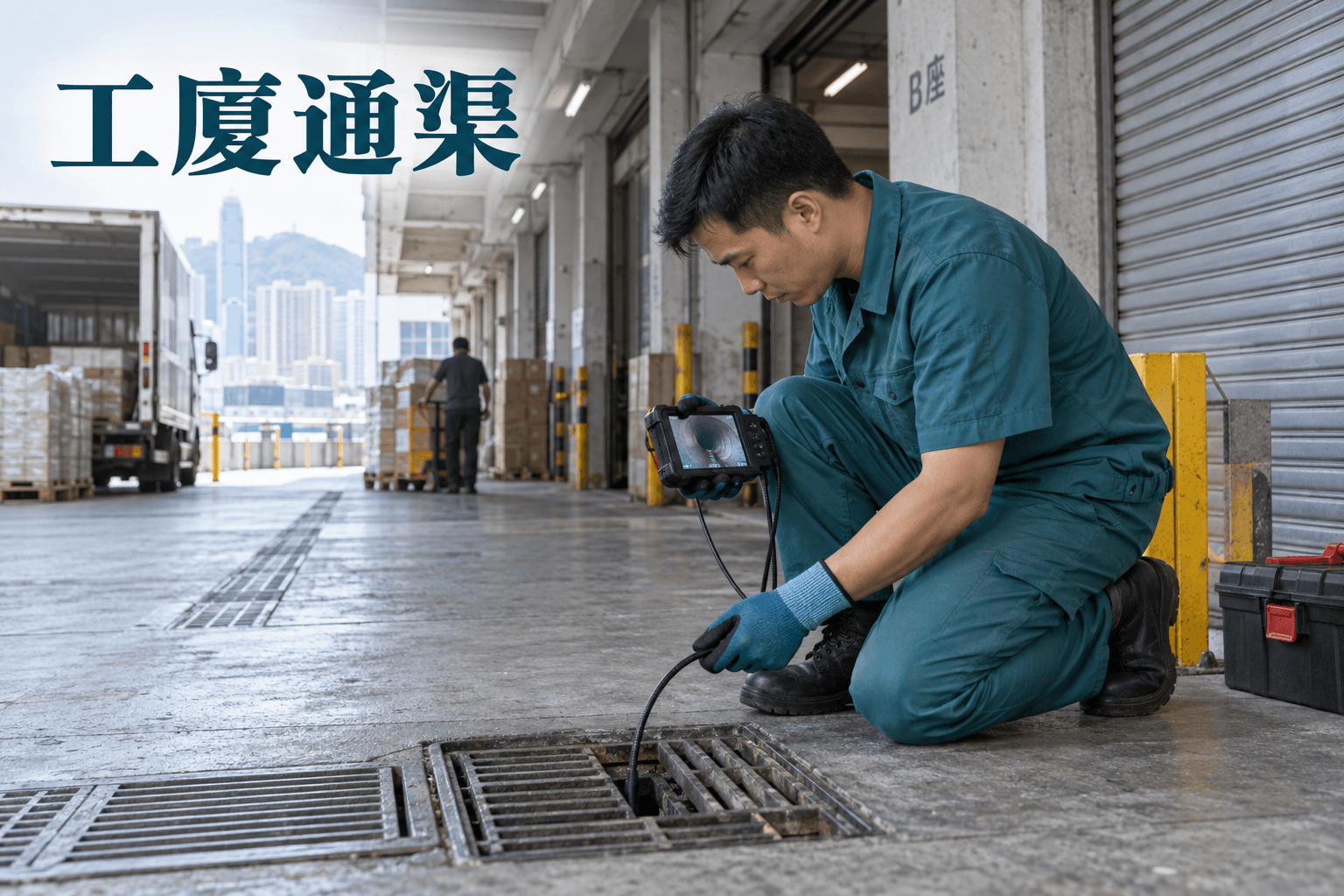
AI-generated scenario image, not a customer-site photograph.
Record whether one outlet, several within the unit, or other units and common areas are affected. For simultaneous problems, notify management and assemble locations and timings to help trace potentially shared routes. Symptoms provide clues; the actual pipe section needs site verification.
Water in a loading area can involve stormwater, surface grilles or another source rather than a foul-main blockage. Weather, pooling location and existing drawings help guide checks. Reporting arrangements for private drains and public-road facilities are separate.
An outlet obstruction, deposits inside a pipe and sediment in a chamber involve different work. Jetting is not suitable for every pipe; material, condition, access and deposits need assessment. Recurring blockage or an unknown route may justify discussing further inspection.
Different uses produce different drainage conditions; not every industrial unit has grease waste. Declare chemicals, unknown wastewater, specialist waste or any confined-space requirement when enquiring so suitable specialist arrangements and work boundaries can be confirmed.
Confirm unloading, goods-lift dimensions and times, routes from the entrance, water access and contractor-registration requirements. Equipment access, safe approach to covers and disruption to other users need checking before work.
Pricing depends on the pipe section, blockage, equipment, labour, timing and reinstatement. Ask whether assessment, desilting, inspection, waste handling and reinstatement are included. An unconfirmed item is not automatically covered; another issue found on site requires a revised agreed scope and price.
Retain the location, observed deposits, method and post-work drainage record for each incident before discussing maintenance scope and frequency. Different uses and stormwater or foul routes should not automatically share one schedule. Damage, joint problems or other defects need separate assessment rather than repeated desilting in place of repair.
A clear process from enquiry and assessment to an agreed scope of work
Tell us the drain problem and district and ask about available timing.
Confirm timing based on the district and schedule, then inspect the blockage or odour issue.
Explain the proposed approach, scope and price before agreed work begins.
Use suitable tools for the site conditions and agreed scope of work.
After the agreed work, test drainage and explain the observed result and any next steps.
Enquiries are welcome across Hong Kong Island, Kowloon and the New Territories; timing and access are confirmed individually.
WhatsApp with the problem and district, and we will confirm available timing.