
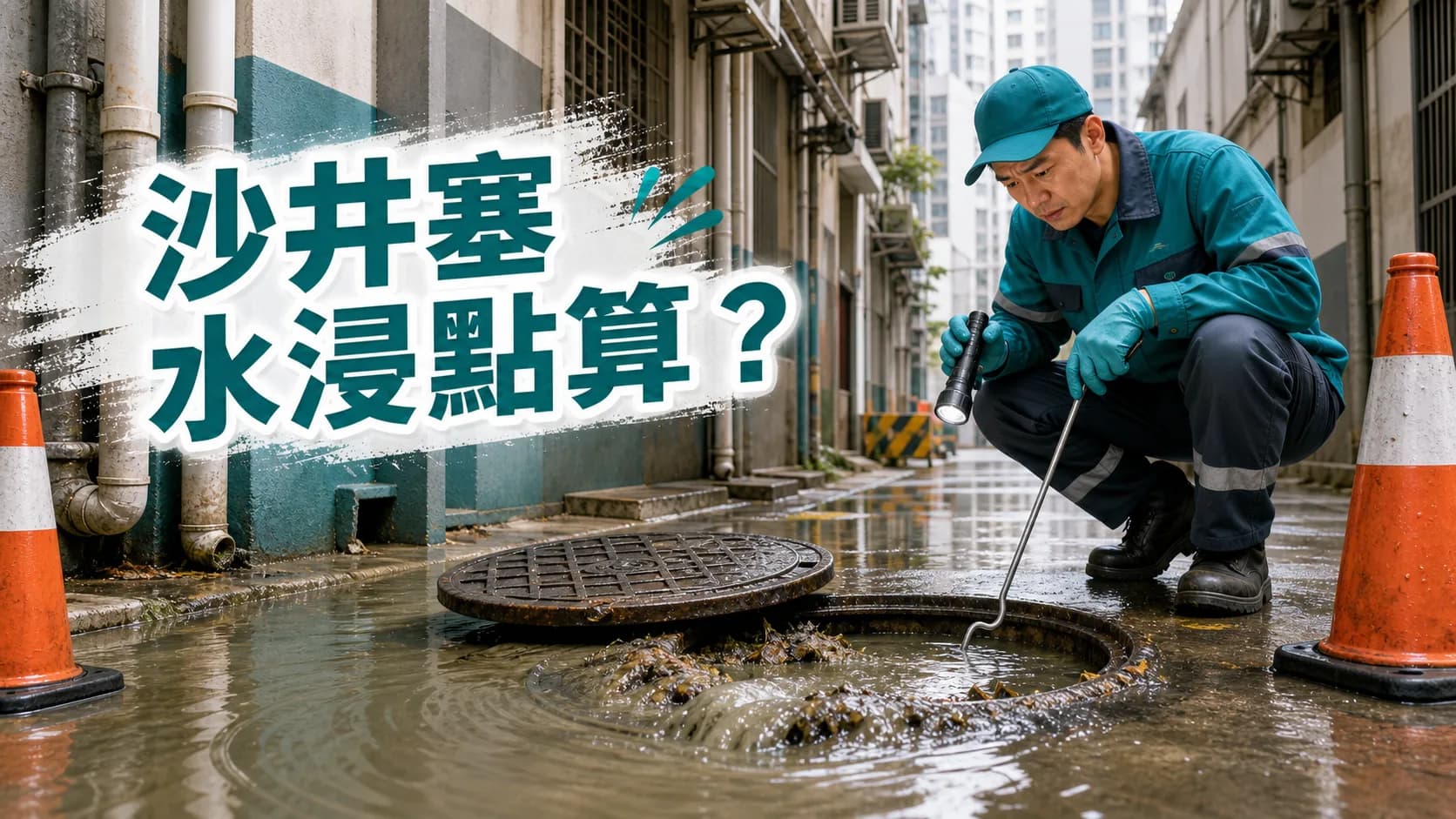
A blocked inspection chamber, sewage backflow or rear-lane flooding often extends beyond one outlet. Chambers connect building mains, shop drains, rear-lane drainage and street connections. A restriction can affect lower-floor toilets, floor drains and shops together, as well as neighbouring premises and pedestrians.
Keep people and vehicles clear and avoid sewage contact. Do not open chamber covers, enter a chamber or clean it alone. Establish whether public-road drainage or private building drainage is involved, then use the appropriate reporting or professional assessment route.
Why do chambers block?
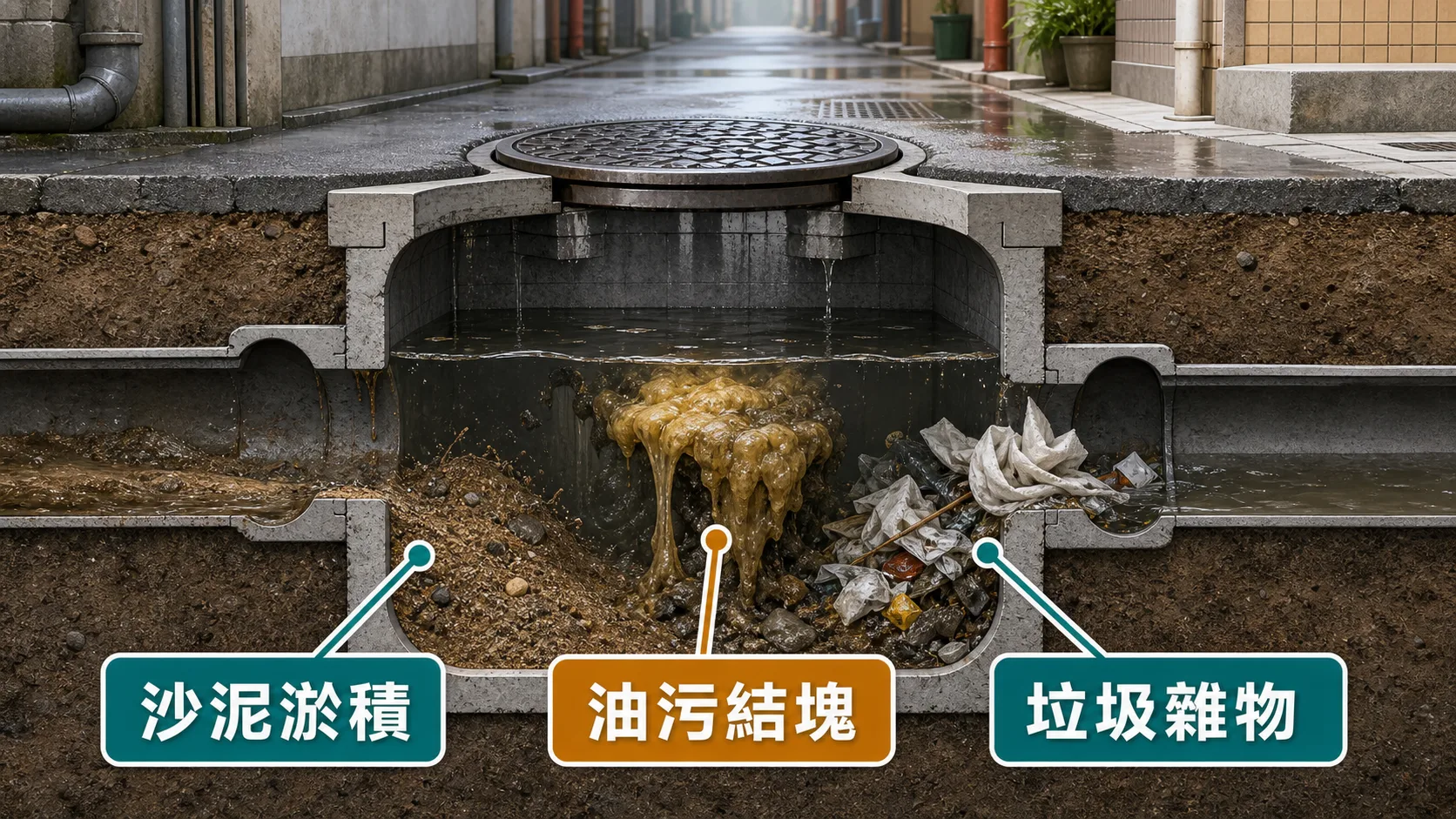
Chambers provide inspection access and junctions. Where flow slows, sand, stones, grease, food, wipes and rubbish can accumulate at the bottom. Capacity falls gradually until rain, busy restaurant discharge or simultaneous building use causes backflow or overflow.
Without desilting, deposits become thicker. Jetting a passage through them can restore temporary flow while leaving the material behind. Serious or recurring cases may need sediment removal or extraction, with pipe jetting as appropriate.
Five immediate safety steps
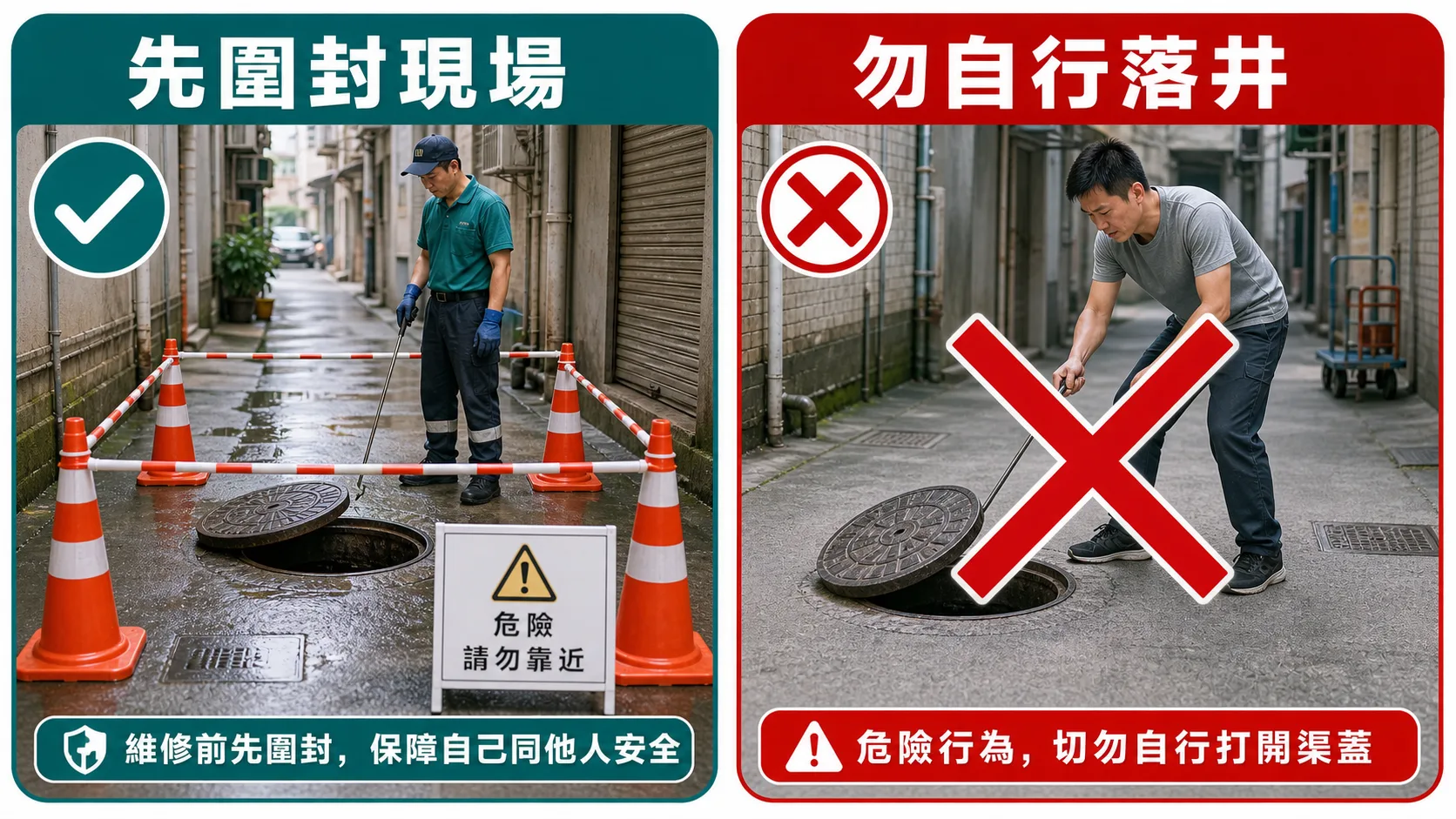
- Keep the area clear: place cones, warning tape or suitable barriers safely to alert pedestrians and vehicles.
- Avoid sewage: do not handle it bare-handed; keep children, pets and customers away.
- Never enter the chamber: oxygen deficiency, toxic gases and falls are serious hazards.
- Record the incident: capture water levels, backflow direction, affected outlets and nearby covers from a safe position.
- Identify the responsible system: report public-road or public-drain issues through 1823 or the relevant department. Notify management, owners or the responsible party for private building, shop and chamber drainage.
Public drain or private chamber?
Blockages on public roads, roadside gullies and public drains should use government reporting channels. Building rear-lane drainage, shop interiors, estates, village-house private drains and private chambers normally require the responsible owner or manager to arrange inspection.
Responsibility may not be obvious from appearance alone. Record whether the cover is on a pavement, road, rear lane, shop floor, estate platform or in a building service room, and whether one or several premises are affected.
Unblocking, desilting, jetting and extraction
Unblocking opens a restriction to restore flow. Desilting removes settled sand, grease and debris to restore chamber capacity. Jetting washes deposits from connected pipes. Extraction equipment removes substantial sludge, wastewater or sediment.
Recurring chamber blockage, lower-floor backflow or suspected collapse, incorrect connections and roots may require CCTV to locate the defect and assess condition, rather than surface cleaning alone.
When is prompt help needed?
- Sewage overflows or strong odour comes from a chamber or cover.
- Lower-floor toilets, floor drains, sinks or basins back up together.
- Flooding affects a rear lane, entrance, estate or village-house surroundings.
- The same place floods repeatedly after heavy rain.
- Restaurants, shops or industrial drainage are disrupted, affecting operations or hygiene.
- Blockage returns days or weeks after clearance.
- Cracks, collapse, roots or chamber structural damage are suspected.
WhatsApp PipeButler on 5340 0748 with the chamber location, backflow video and photos of nearby covers and affected outlets. These help assess whether clearing, desilting, jetting or further investigation is appropriate. Agree the scope before work begins.
Preventing recurrence
- Maintain grease traps and chambers at restaurants, pantries and shops before overflow occurs.
- Keep wipes, cloth, bags, sand, building debris and large quantities of grease out of drains.
- Check low points, rear lanes, platforms and village-house external drainage before the rainy season.
- For repeated chamber faults, consider desilting and CCTV rather than only opening a temporary passage.
- Management and owners' organisations should keep records to track chambers prone to sediment and backflow.
Frequently asked questions
Can I open and clean the chamber myself?
This is not recommended. Oxygen deficiency, toxic gases, pathogens, slipping and falls make it a high-risk location. Keep clear, record the situation and involve management, the relevant department or suitable drainage personnel.
Does every blockage need jetting?
No. Accessible rubbish or a local obstruction may need suitable tools; deeper wall deposits and long restrictions may suit jetting. Heavy chamber sediment requires removal or extraction.
Should a private company handle a public street blockage?
Public roads and drainage normally require government reporting. Private contractors primarily address drains and chambers within the property owner's or manager's responsibility.
Can PipeButler arrange chamber desilting?
PipeButler can assess building chambers, private rear-lane drainage, grease traps, building mains, private connections and village-house drains, and arrange appropriate clearing, desilting, jetting or inspection recommendations after agreeing the scope.
Business-premises chamber work and maintenance scope
Record overflow times and other affected outlets from a safe position and notify management. Agree chamber locations, access, deposits, equipment and waste arrangements individually rather than opening a chamber yourself.