
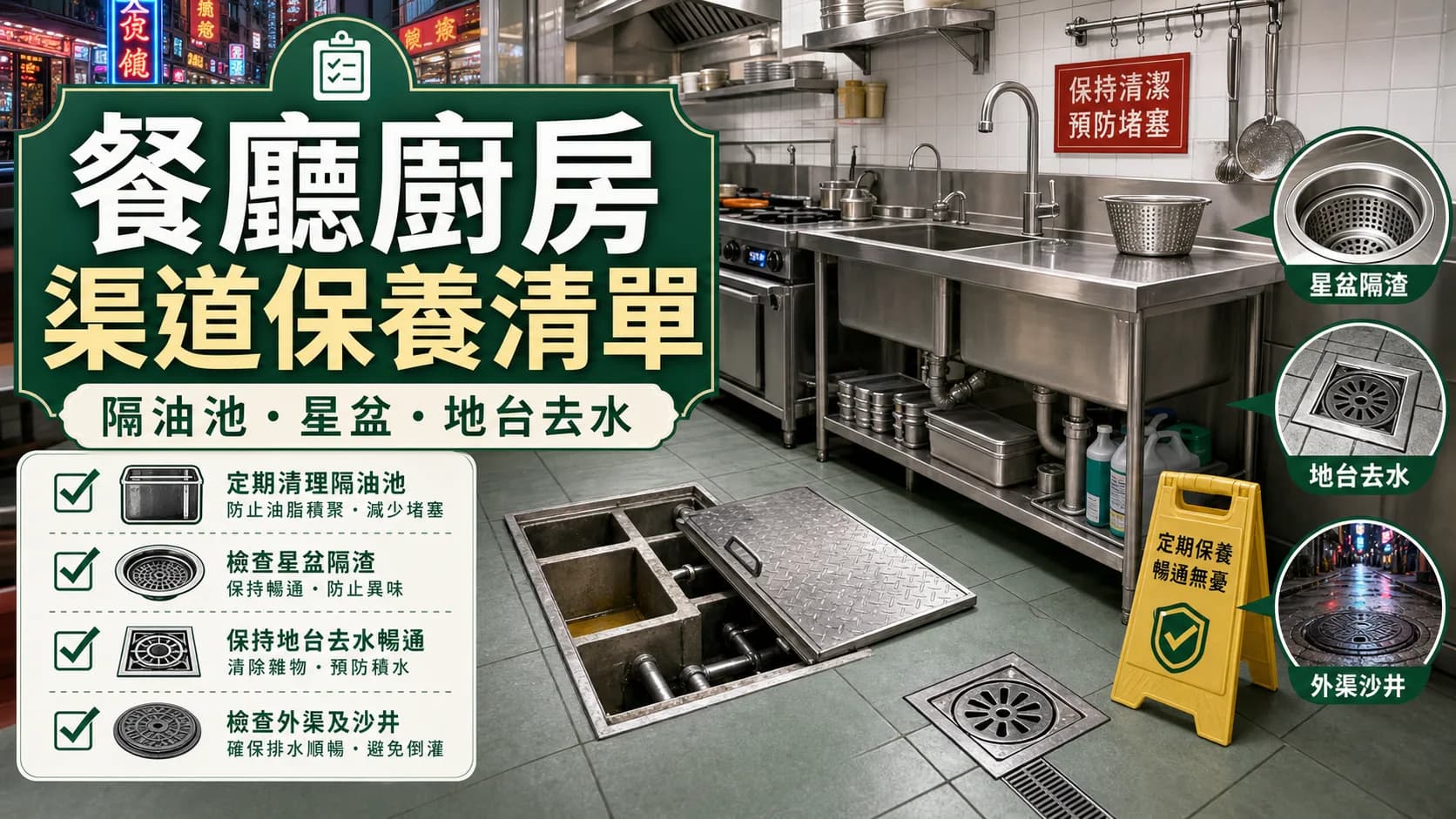
Restaurant drainage failures rarely happen without warning. Grease, food particles, detergent foam, floor sludge and grease-trap sediment accumulate gradually. A slow sink, smelly floor drain or thickening grease layer can become backflow, slippery floors, odour and emergency disruption during dinner service, heavy rain or intensive washing-up.
Manage grease traps, sink strainers, floor drains and rear-lane inspection chambers together. Staff should remove solids and check flow daily; managers should inspect grease and water levels weekly. Schedule desilting, pipe cleaning or, where needed, CCTV inspection periodically and before busy periods.
The Environmental Protection Department's grease-trap material, the Food and Environmental Hygiene Department's food hygiene guidance and Buildings Department drainage-maintenance information share a practical principle: systems need routine care, not reliance on a single unblocking visit. Maintenance protects service continuity, staff safety and hygiene.
What should be checked daily, weekly and periodically?
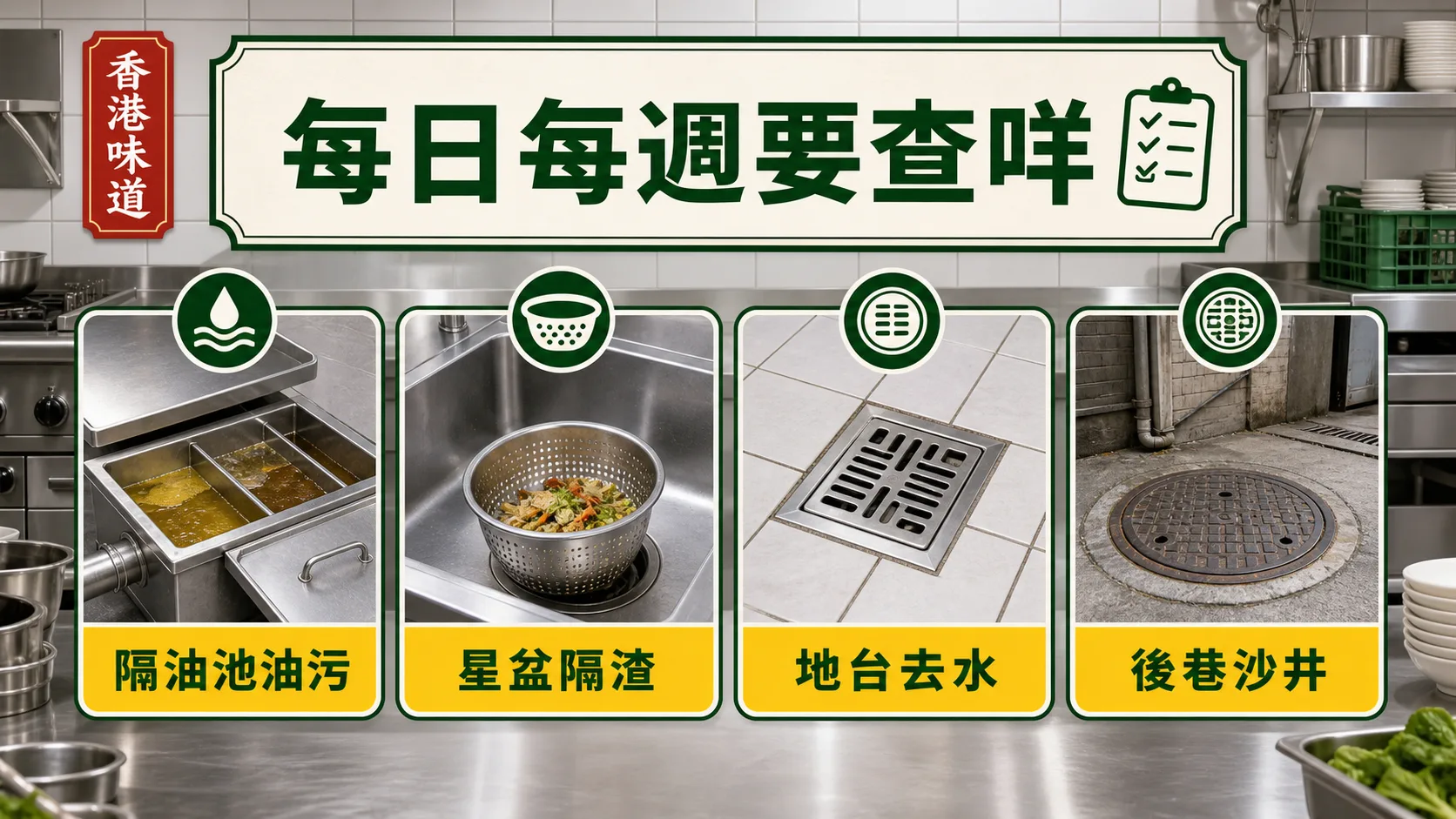
Before closing each day: strain solids, collect grease and check flow
- Strain sink waste: keep rice, vegetables, tea leaves, coffee grounds, flour paste and sauce solids out of the drain. Empty full strainers rather than forcing their contents through with water.
- Collect leftover oil separately: frying oil, soup, hotpot fat, meat juices and substantial sauce residues belong in suitable containers or the premises' waste procedure.
- Clear floor grilles: remove food, bags, tissues and grease the same day, rather than washing them downstream.
- Check normal drainage: after cleaning, observe clean water draining from sinks and floor outlets. Record slow flow, gurgling, smells or bubbles and the time and location.
Weekly or after busy periods: inspect grease, water levels and smells
- Grease-trap layers: increasing floating grease and settled sludge reduce usable capacity. Grease near the outlet or a high water level calls for cleaning.
- Under-sink fittings: look for leaks, loosened traps or flexible hoses and grease around joints. Do not dismantle unfamiliar fittings.
- Floor-drain odour: maintain water seals in little-used outlets. Smells at frequently used drains may indicate grease, downstream restriction or ventilation problems.
- Rear-lane chambers: look around covers for grease, wastewater marks, smells, high water or pests. Persistent high levels need attention before a storm or dinner rush.
Monthly, before peak periods or after menu changes: review deeper maintenance
- Hotpot, fried-food and roast-meat restaurants, cha chaan tengs, central kitchens and intensive washing-up areas have higher grease loads than office pantries and need closer monitoring.
- If drainage slows again soon after grease-trap cleaning, downstream grease or hardened deposits may require pipe cleaning or jetting.
- Recheck trap capacity, floor drains and chamber levels before the rainy season, holidays and takeaway peaks, and after introducing new dishes or equipment.
- Record inspection dates, grease thickness, material removed, odour and backflow. These records help plan work and communicate with management.
Four areas that determine kitchen drainage condition
1. Grease traps: interceptors, not bins
A grease trap retains grease and some solids before they reach downstream pipes and public sewers. Without removal, grease and bottom sludge reduce the working volume and separation time, allowing more grease beyond the outlet to coat pipes.
A clean-looking surface is not enough. Inspect grease depth, bottom sludge, baffles, inlet and outlet, water level and seals. Floor backflow after trap cleaning often indicates a downstream problem.
2. Sinks and washing-up areas: capture solids at source
Sinks introduce large amounts of solids and grease. Strainers, plate scraping, oil collection and staff habits are essential. Coffee grounds, flour paste, cheese, thick soup, hotpot stock and sauces can adhere to pipes as they cool.
A slow sink with a normally draining floor outlet suggests a restriction near the sink or trap. Both slowing together suggests the branch drain or grease-trap outlet.
3. Floor drains: early signs of downstream pressure
Odour, bubbles and backflow can mean the downstream drain cannot cope. Water, grease and foot traffic make backflow a slip, cross-contamination and business-interruption risk.
Do more than clean the grille: check actual flow, black sludge, bubbling during washing-up or floor cleaning, and any storm-related backflow.
4. Rear-lane chambers and downstream branches: act before they fill
An apparent kitchen blockage may originate in long-standing grease, sediment or high water in a rear-lane chamber, external branch or shared building drain. Greasy marks, sour smells, sewage stains and pests warrant early attention.
Distinguish private, shared and public drainage responsibilities. A shop's sinks, floor drains, grease trap and branch normally require coordination among the occupier, owner, management and drainage contractor. Public drainage blockages can be reported through 1823 or the relevant department's reporting arrangements.
Four steps to prevent blockages
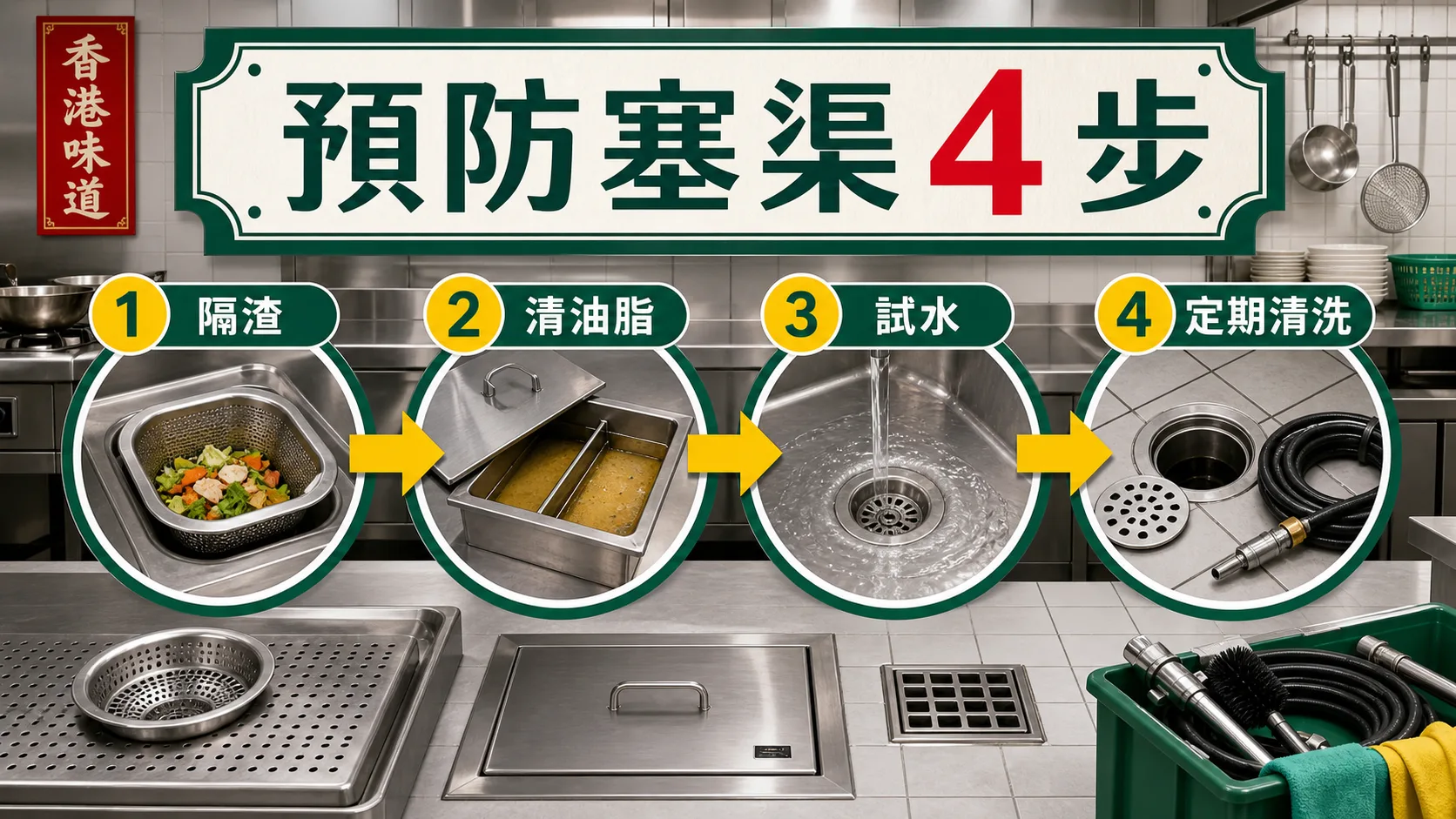
Step 1: Strain solids
Give every preparation and washing-up station a clear routine: scrape plates and empty strainers regularly, before flow stops. This simple step is easily neglected during busy service.
Step 2: Remove grease
Do not treat hot oil, thick soup, meat juices and sauces as harmless water. Cooling grease sticks to pipe walls and catches food and soap. Remove floating grease and bottom sludge from traps regularly; contain the waste securely and use an appropriate disposal procedure.
Step 3: Check flow
Check before closing so developing restrictions are spotted early. Observe ordinary cleaning water draining; do not force large quantities of hot water through. Watch for gurgling, bubbling, smells and rising levels.
Step 4: Arrange regular cleaning
Once deposits develop inside traps, floor drains or branches, cleaning grilles alone is insufficient. Arrange pipe cleaning, desilting or unblocking, preferably outside service hours.
When is routine maintenance no longer enough?
- Several outlets slow together: sink, floor and chamber problems rarely come from one strainer.
- Cleaning the trap does not restore flow: inspect downstream for grease and sludge.
- Floor backflow or bubbles: continuing water use can spread wastewater.
- Recurring smells: investigate seals, ventilation, deposits, chambers and damaged pipes rather than masking odour.
- A full rear-lane chamber: establish whether the private branch, shared drain or public system is involved.
- Repeated blockage in one place: CCTV may help identify collapse, incorrect connections, roots, objects or gradient problems.
WhatsApp PipeButler on 5340 0748 with sink, grease-trap, floor-drain and chamber photos plus a flow video. The location and risks guide the choice of unblocking, cleaning, desilting or CCTV; agree the scope before work starts.
Choosing cleaning, desilting, jetting or CCTV
Grease-trap cleaning: remove intercepted waste
This removes floating grease, sludge, food deposits and dirt on baffles and edges. It helps prevent downstream grease accumulation but does not clean the entire kitchen branch.
Unblocking: restore flow through a restriction
A sink or floor outlet that no longer drains needs its blockage cleared first. Local unblocking may restore flow, but extensive wall deposits can make it slow again.
High-pressure pipe cleaning: address wall deposits and long runs
Jetting may suit commercial kitchens, long branches, floor drains and rear-lane drains affected by grease and recurrent slow flow. Its purpose is to remove accumulated material, not merely open a narrow passage through it.
Desilting: remove chamber sediment
Rear-lane chambers, external drains and industrial floor channels can collect sand, rubbish, grease and sediment. They require site-appropriate desilting, rather than sink cleaning alone.
CCTV: investigate recurring problems and record evidence
Repeated blockages, suspected collapse or a need to explain findings to owners or management can justify CCTV. It is particularly useful after renovation, in older buildings and rear-lane branches, or where objects and structural defects are suspected.
Safety and waste handling
- Avoid indiscriminate strong drain cleaner: acid and alkaline products can burn or react dangerously and do not replace proper grease-waste removal. Never mix bleach, acid cleaner, baking soda and other drain chemicals.
- Do not enter chambers or underground tanks: sewers and large traps can contain harmful gases, oxygen-deficient atmospheres and sewage, with serious slip risks. Appropriate personnel, equipment and procedures are required.
- Contain grease waste: never return grease, sludge or food deposits to a drain. Arrange suitable collection and disposal for large or underground traps.
- Keep records: cleaning dates, quantities removed, photos, smells, backflow and reported faults support future maintenance and management discussions.
- Plan quieter working times: maintenance can be scheduled outside service hours to reduce emergency disruption.
Frequently asked questions
How often should a restaurant grease trap be cleaned?
There is no single interval for every kitchen. Grease load, meals, washing-up, trap capacity, menu and blockage history all matter. Hotpot, fried-food, roast-meat and central kitchens usually need closer checks. Record grease and sludge depth and adjust the interval accordingly.
Why is the floor drain still slow after trap cleaning?
Grease may have reached the downstream branch and formed wall deposits or hardened lumps. Check the outlet, floor drains, rear-lane chamber and branch; pipe cleaning or jetting may be needed.
Does a sink strainer prevent every blockage?
No. Grease, thick soup, coffee grounds, flour paste and fine food particles can pass through. Combine straining with oil collection, daily cleaning and inspections.
Can staff maintain drains with chemical cleaner?
Strong drain cleaner should not be the maintenance routine. Grease, wastewater and multiple cleaning products create mixing risks; chemicals can also harm old pipes or complicate later work. Stop using affected outlets when backflow or several slow drains develop and identify the restriction.
Can PipeButler arrange regular restaurant drainage maintenance?
PipeButler can assess traps, sinks, floor drains, chambers and downstream branches, with unblocking, cleaning, desilting or CCTV selected as appropriate. Send photos and videos to begin the assessment.
Distinguish food uses, offices and industrial maintenance
Kitchen grease differs from an office pantry or warehouse deposits. List actual fixtures, pipe sections and record requirements before arranging care rather than applying grease-trap cleaning to every business building.