
Loading page…
Loading page…
Jetting can remove grease and sediment from pipe walls and long runs, but access, pipe condition and the blockage type must be assessed first.
WhatsApp with the problem and district, and we will confirm available timing.
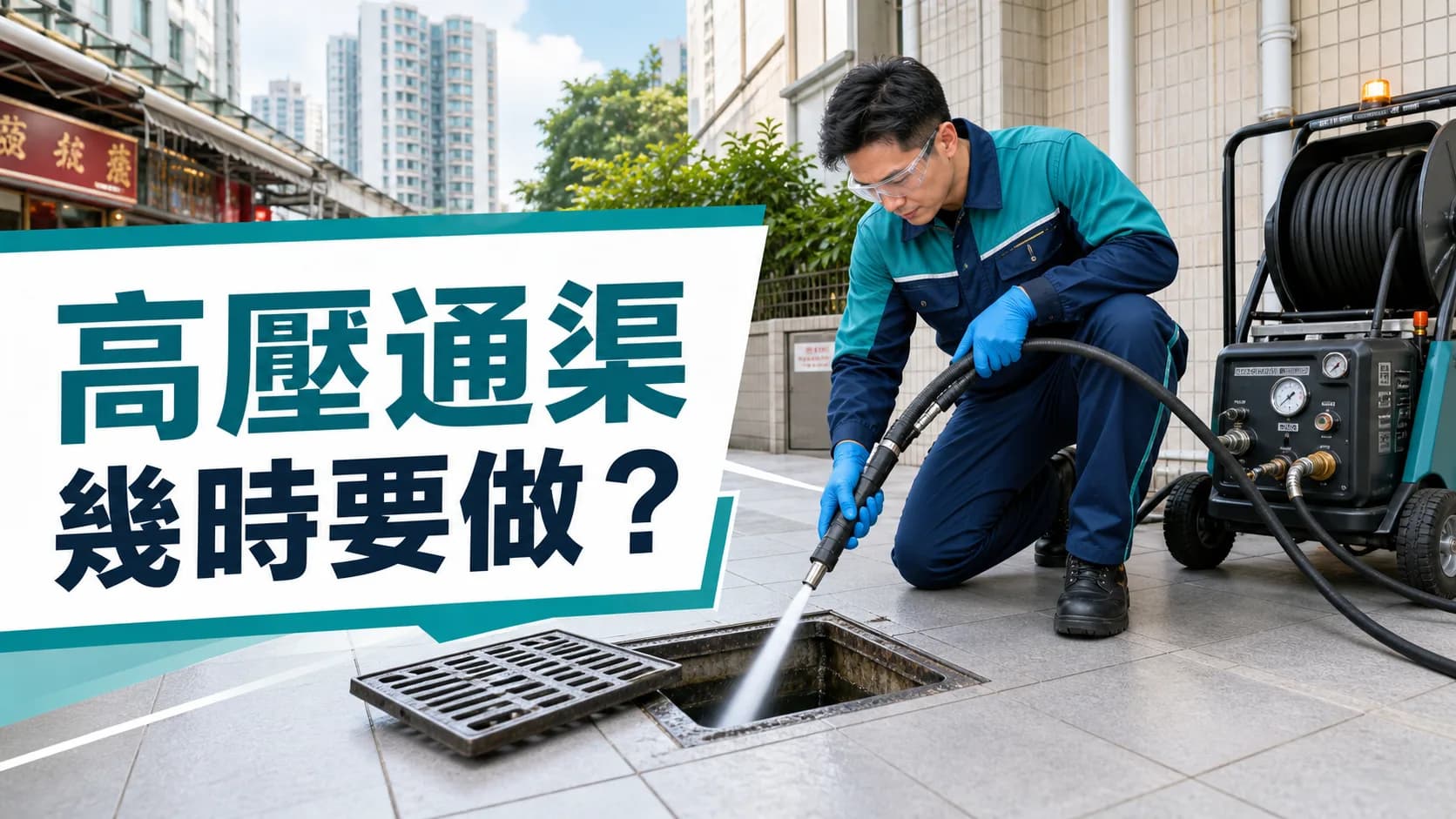
Not every blocked drain needs jetting. It can be useful when ordinary clearing helps only briefly, kitchen grease repeatedly builds up or sand restricts chambers and building branches. The aim is to wash deposits from walls and restore more of the pipe's flow area, rather than merely opening a narrow passage.
Jetting may suit hardened grease, sediment, long recurring restrictions and commercial kitchen branches. Old, cracked or possibly collapsed pipes, trapped objects and recent strong drain-cleaner use require assessment before pressure is applied.
The practical questions are whether water can remove the material, whether the pipe is suitable, whether safe access exists and whether CCTV or desilting is needed first.
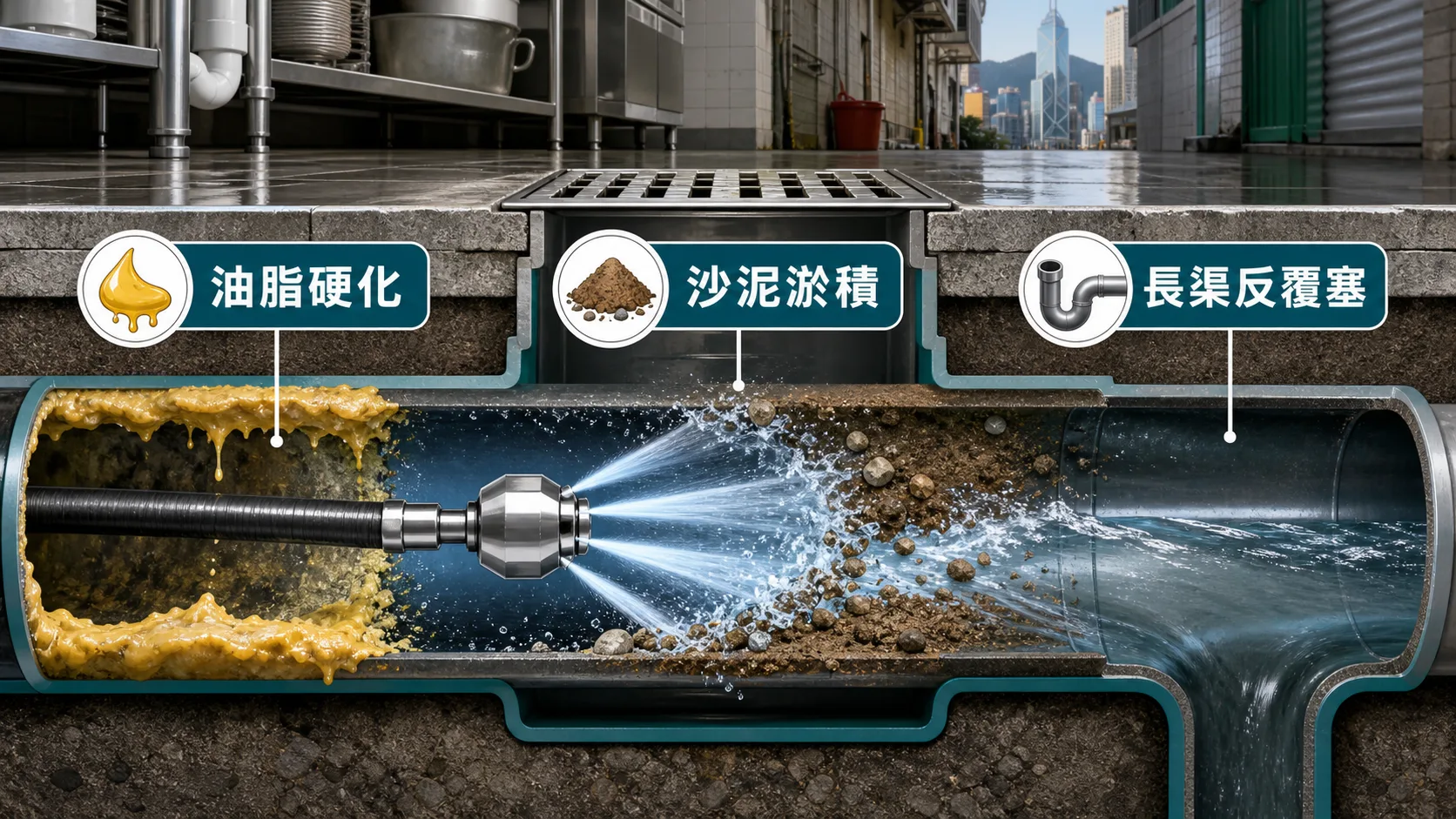
Hydro jetting sends pressurised water through a hose and suitable nozzle. Depending on its design, forward jets break up material while rear-facing jets help advance the nozzle and wash the walls, moving grease, sand, soap and debris.
A drain cable is useful for retrieving hair, clearing paper and opening a local soft blockage. Jetting can clean a broader wall surface. The appropriate choice depends on the material and pipe condition.
Thick grease, soap or sediment may remain after a small passage is opened. Repeated slowing can justify pipe cleaning instead of another identical clearing attempt.
Cooling fat catches rice, vegetables, batter and solids. Domestic sinks can become slow and smelly; restaurant branches can develop hardened deposits beyond the grease trap. A clean trap with poor outlet flow may require downstream cleaning too.
Floor channels, rear-lane chambers and village-house drainage collect sand, leaves, rubbish and sludge. Jetting can loosen pipe deposits, but substantial chamber sediment also needs desilting or extraction so it is actually removed.
Long runs, many bends, poor falls and shared discharge can place restrictions far from visible outlets. A jetting hose needs suitable access and drainage conditions. First establish whether a private branch or shared building section is involved.
Local accessible deposits may need a simpler approach. Wall deposits and longer recurring restrictions may suit jetting, but more powerful equipment requires careful pipe assessment.
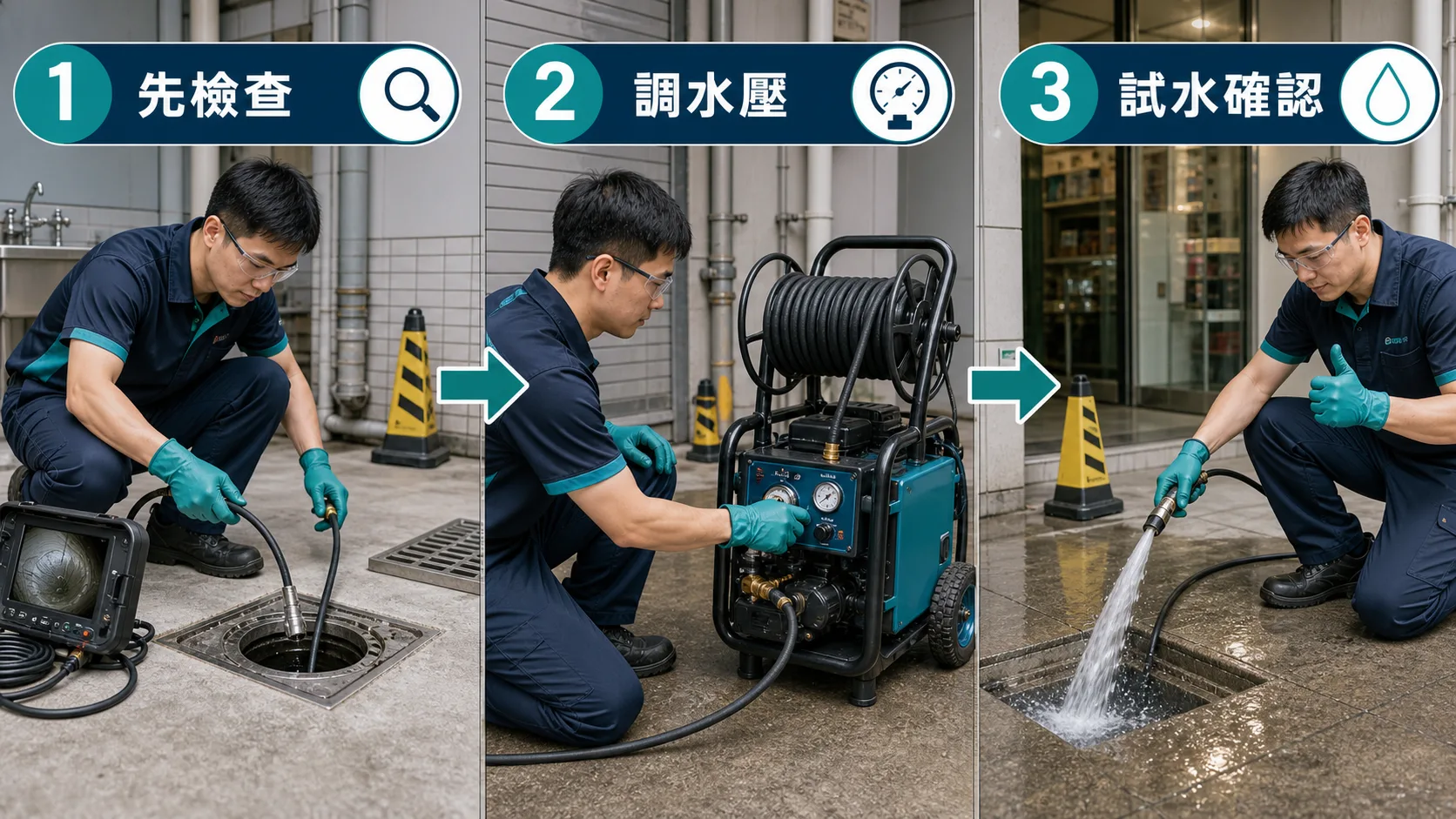
Establish which outlets slow, recurrence frequency, backflow, smell, grease, sediment, objects and leaks, and whether one outlet or several areas are involved.
An outlet, access fitting, trap, chamber or connection must allow safe insertion and return flow. Narrow entry, fragile fittings or insufficient drainage space may require another method or controlled dismantling.
PVC, cast iron, old pipes, exposed or concealed sections and shared systems have different conditions. Select pressure and nozzle for diameter, material, deposits and the site; maximum pressure is not the objective.
Contain return water, sewage and debris. Kitchens, shops and common areas need slip precautions, separation from occupants and suitable cleaning arrangements.
Use an appropriate controlled flow test and check for gurgling, backflow, odour and leakage. Rapid slowing afterwards may indicate remaining restriction, chamber sediment or a structural problem.
Jetting equipment and preparation vary by site. Assess these factors before selecting the method:
PipeButler reviews photos, videos and site conditions before recommending ordinary unblocking, jetting, CCTV or desilting. Agree the appropriate scope before work starts.
Useful for local hair, paper and soft restrictions. It can restore flow quickly but may not clean the whole circumference of greasy walls.
Useful for grease, sand, soap and longer wall deposits. It needs appropriate access and drainage space, with extra care for old or damaged pipes.
Records internal conditions rather than clearing them. It helps investigate recurrence, collapse, roots, cracks, leakage and renovation debris. Basic clearing may first be needed for visibility.
Large deposits in chambers, open channels and traps need physical removal. Water that merely disperses sediment without removing it may leave recurrence likely.
Pressurised water involves reaction forces, hoses, nozzles, wastewater, powered equipment and slippery surfaces. The source references water-jetting safety principles of training, protective equipment and procedures. Injection injuries and cuts from high-pressure jets can be serious.
Chambers, grease traps and enclosed or partly enclosed drains can contain hydrogen sulphide or oxygen-deficient atmospheres, alongside falls and sewage hazards. Do not enter chambers or work alone around large opened covers.
Disclose any drain cleaner, caustic soda or other chemical previously used. Residues can burn skin and eyes or splash during washing. Never add or mix further chemicals.
No. Deep deposits and recurrence may suit jetting; accessible hair or a simple soft restriction may need only ordinary tools.
Suitable pressure and methods can clean sound pipes, but cracks, corrosion, loose joints and possible collapse need assessment. Do not use maximum pressure indiscriminately.
No. Ordinary grease or sand may be cleared and tested first. Recurrence, previous leakage, suspected collapse, objects, renovation faults and shared drainage concerns make investigation more valuable.
Distinguish the trap from its downstream pipe. A full trap needs waste removal; hardened grease beyond its outlet may need jetting. Some sites require both.
It may clear a connected pipe, but substantial sand, sludge and rubbish in the chamber need removal or extraction. Leaving deposits behind encourages recurrence.
This is not recommended for serious blockage, old pipes, shared drains or chambers. Unsuitable equipment can cause back-spray and injury. Limit DIY work to safely accessible strainers or traps and seek assessment for recurrence.
WhatsApp PipeButler on 5340 0748 with drainage videos, outlet or chamber photos, duration and chemical-use history to discuss jetting, CCTV, ordinary clearing or desilting.
Provide location, pipe information, use, work routes and water access. Confirm equipment suitability and access together; jetting, desilting and defect repair are different work scopes.