
Loading page…
Loading page…
Assess the complete route through grease traps, floor drains, chambers and downstream pipes to prevent recurring commercial drainage problems.
WhatsApp with the problem and district, and we will confirm available timing.
Tsuen Wan and Chai Wan Kok contain industrial buildings, food factories, central kitchens, takeaway premises, warehouses, workshops and street-level restaurants. Their drainage problems rarely concern just one outlet. Grease traps, floor drains, chambers and downstream pipes form one route: thick grease or sediment in one section can cause backflow, odour or slow drainage elsewhere.
If a floor drain blocks, a grease trap fills, a chamber level rises or a strong drain smell develops, stop affected discharges, cordon off slippery surfaces and record the visible water level and outlets. Arrange desilting, pipe cleaning or commercial unblocking as appropriate. Do not send staff into chambers or mix drain cleaner, bleach and degreaser.
See our Tsuen Wan service coverage. This guide explains how operators and building managers can distinguish the sections and select further investigation.
Commercial discharge volumes, materials and responsibility boundaries are more complicated than in a home. Kitchens and food premises discharge grease, sauces, batter, food particles and cleaning water; warehouses, workshops and loading bays can introduce sand, paper, packaging, metal dust and floor-washing sludge. These materials may gradually reduce capacity before a complete blockage develops.
The key is whether pipe-wall grease, chamber sediment and grease-trap outlets have been cleared, not merely whether a small passage has been opened. Otherwise slow drainage, odours or backflow may return within days or weeks. Coordinate kitchen drain maintenance, grease-trap servicing and downstream cleaning.
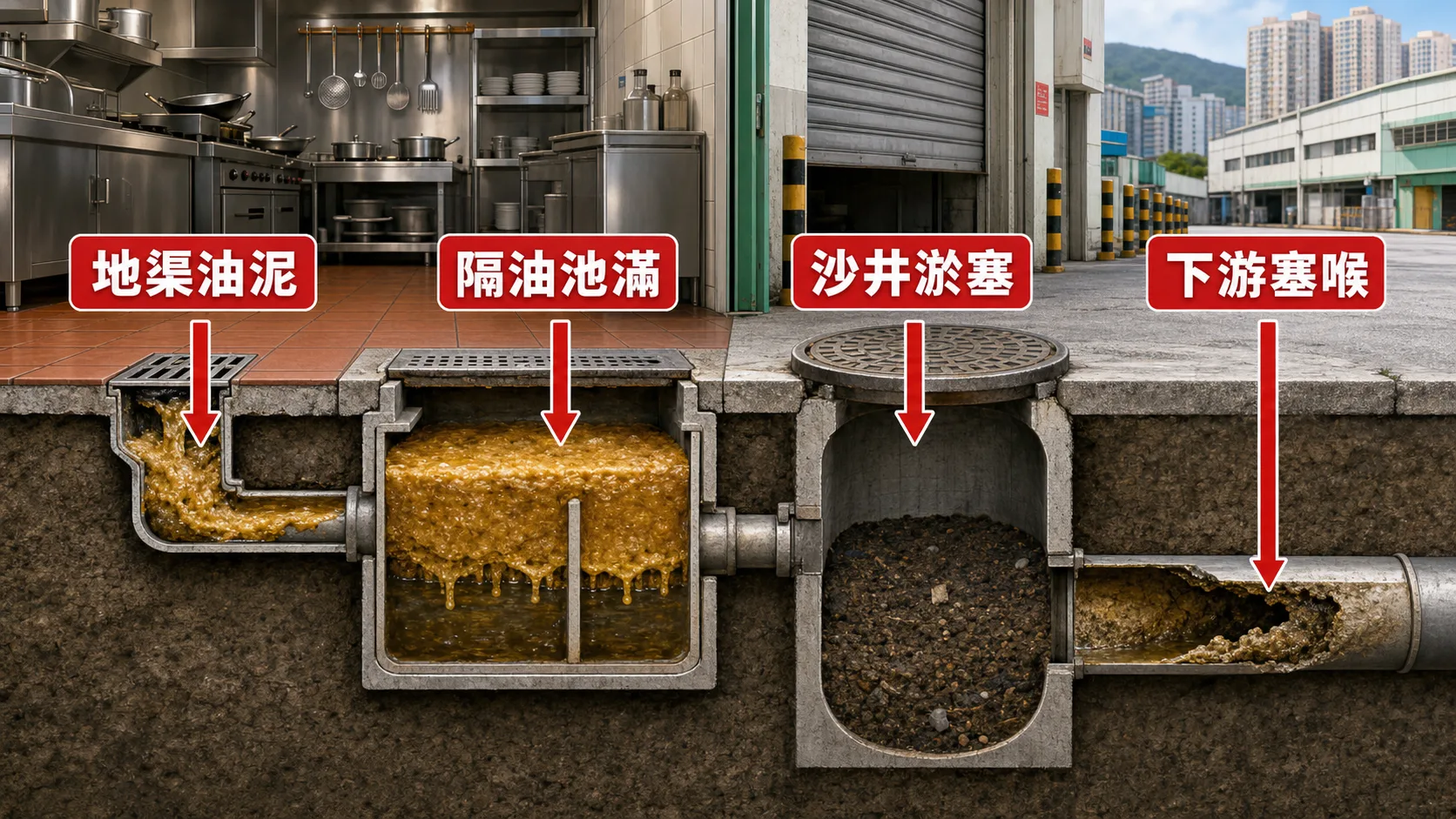
The trap retains grease and food solids before they reach downstream pipes. Unremoved floating grease, sediment and outlet deposits raise the water level and carry contamination onwards. Restaurants, food factories and central kitchens should keep dated photographs and cleaning records; see the restaurant grease-trap cleaning guide.
Floor outlets, kitchen channels and wash-down drains collect grease, food, sand and cleaning residue. Early signs include slow drainage or gurgling; peak service and wash-down periods can then cause backflow. Rapid recurrence suggests internal deposits rather than only visible debris on the grate.
Chambers in rear lanes, outside shops, at loading bays and in shared passages collect discharge and sediment from several outlets. Thick deposits reduce capacity and can raise upstream levels. Confirm access and responsibility with management where the chamber is shared.
If cleaning the trap and opening the floor drain does not restore sustained flow, a horizontal downstream pipe, shared main or chamber outlet may be restricted. Pipe cleaning and sectional flow testing may be needed, with CCTV or jetting where suitable.
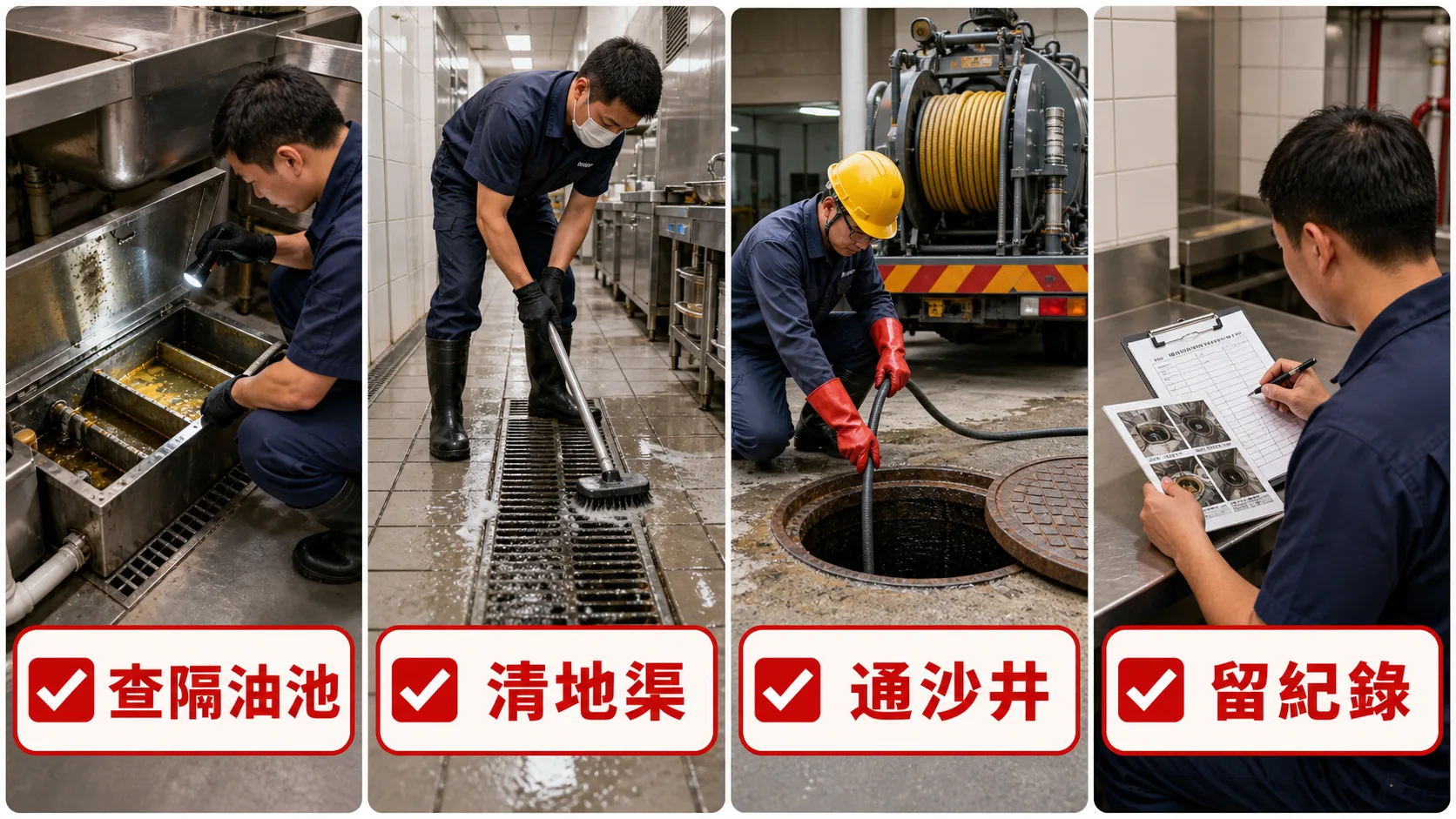
Confirm safe access and authority before opening. Untrained staff should not reach inside or expose themselves to gases. An appropriate inspection records water level, floating grease, sediment, baffles, outlet obstruction and the last cleaning date.
Stop washing down and remove accessible surface food, tape, paper and sand. Cordon off grease and wastewater to protect staff, delivery workers and customers. Large amounts of hot water can push grease downstream, where it solidifies again.
High levels, thick dark sludge, foam and strong odour require appropriate people and equipment. Staff must not enter chambers: confined-space, gas, oxygen-deficiency and slipping hazards may be present.
Retain photographs, obstruction locations, disruption times, affected outlets, methods and follow-up dates. This helps distinguish a tenant branch or trap issue from a shared chamber or main-pipe issue and improves future work planning.
Grease-trap cleaning removes floating grease, settled solids and obstructions inside the trap. It does not necessarily clear deposits already in the outlet or downstream pipe.
Unblocking addresses an individual outlet, branch or local obstruction, such as trapped debris or a slow sink. Recurrence warrants assessment of deeper grease or silt.
Pipe cleaning removes pipe-wall grease, soap deposits, sand and accumulated material along longer runs to restore capacity. It can form part of maintenance for persistently slow commercial drains.
Desilting removes deposits from chambers, channel bottoms, loading-bay drains and other settling points. Substantial sand, grease sludge and debris may need removal before deciding on jetting.
See desilting versus unblocking and send site photographs for an initial assessment.
Jetting can address deposits along longer runs, but not every old pipe is suitable. Relevant situations include:
Suspected cracks, settlement, incorrect connections or past leaks require assessment before increasing pressure. See appropriate uses of high-pressure jetting or arrange sectional checks.
Smells may come from decomposing trap deposits, inadequate floor-drain water seals, high chamber levels, downstream backflow, cracks or ventilation-pressure problems. Persistent smells after unblocking call for source investigation, rather than fragrance, bleach or disinfectant to disguise them.
Do not mix drain cleaner, bleach, acid or alkaline cleaners, or unidentified degreasers. Tell the technician which products were used, approximately how much and when: residues increase the risk when drains or chambers are opened.
Ordinary staff should not enter chambers, deep channels or confined spaces, particularly where strong smells occur. Stop discharge, isolate the area, ventilate where safe, photograph from outside and notify management so appropriate personnel and procedures can be arranged.
Use our contact page or WhatsApp photographs and video to help define the work.
Capture solids: suitable strainers at sinks, wash stations and floor drains help keep food, tape, paper, sand and metal fragments out.
Manage grease: match trap cleaning to actual use, and do not discharge oil, soup stock, batter or large quantities of food waste.
Maintain the whole route: assess the trap outlet, floor drains, chambers and downstream pipes according to site use, not only the most visible outlet.
Keep a maintenance history: record blockages, cleaning, desilting, jetting and odour complaints. Evidence is more useful than competing recollections when management, landlords or neighbours are involved.
For industrial buildings, restaurants or food premises in Tsuen Wan and Chai Wan Kok, WhatsApp PipeButler on 5340 0748 with the building name, affected outlets, trap and chamber photographs, backflow video and maintenance history. We will assess the required method and agree the work before starting.
No. More wash water carries additional grease, sand and residue towards the restriction and can spread backflow. Stop discharge, isolate slippery areas and arrange assessment.
No. One removes material inside the trap; the other treats outlets, branches and downstream pipes. Both may be needed where grease has accumulated throughout the route.
Its location and the areas it serves matter. A private branch is generally raised with the occupier or owner first; shared chambers or simultaneous problems across units and lower floors should be reported to management for investigation and clarification of responsibility.
No. It suits certain deposits and longer runs, but ageing, cracks, incorrect connections or an unknown obstruction require risk assessment. Select the method for the actual pipe and blockage.
It should not be the main approach. Strong acids, alkalis and unknown degreasers can damage materials, react dangerously and expose technicians. Identify the material and location first.
Trap deposits, a weak water seal, high chamber levels, pipe cracks or downstream backflow may remain. Investigate the source rather than masking the smell.
Assess industrial offices, warehouses and food uses from their actual fixtures. Clarify unit branches, shared areas and access before quotation; for planned maintenance, first assemble an asset list and work history.