
Loading page…
Loading page…
Maintain grease-trap capacity by removing grease and sludge, checking downstream pipes and arranging appropriate waste handling before overflow develops.
WhatsApp with the problem and district, and we will confirm available timing.
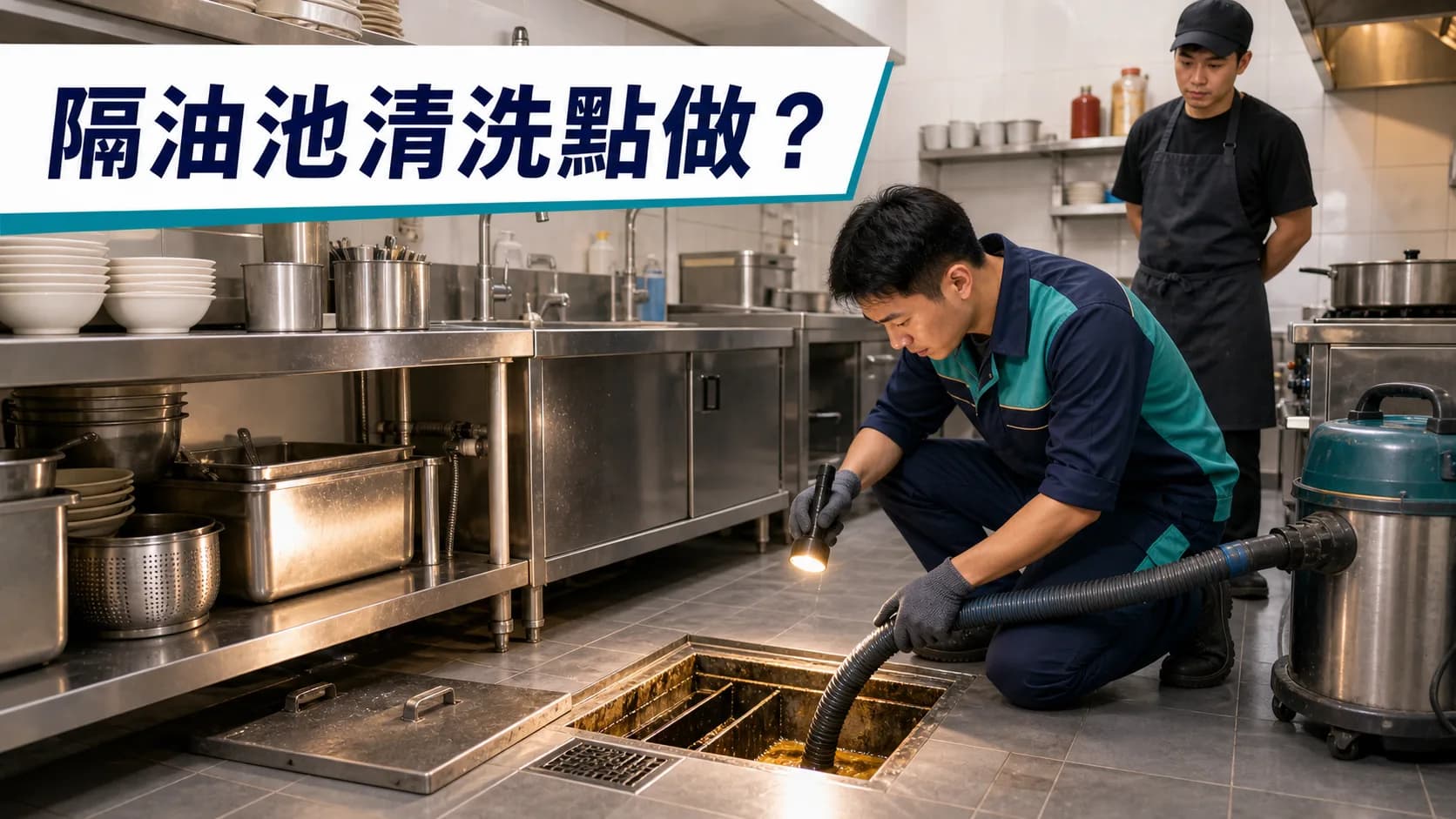
Grease-trap cleaning is routine drainage maintenance for restaurants, cafés, cha chaan tengs and food factories, not merely an emergency response. The trap retains grease and some solids before wastewater reaches downstream drainage. Without cleaning, deposits thicken, flow slows and odour or backflow can develop.
If the trap overflows, floor drains back up, sour grease smells develop or sink discharge causes sewage to rise, stop adding wastewater, keep people away from slippery areas and arrange cleaning and inspection. Do not force hot oil, strong chemicals or large quantities of hot water into the drain.
The source's official-guidance principles are adequate capacity, regular inspection, prompt removal of excessive grease and proper disposal. Good maintenance reduces odour, pests, blockage and disruption.
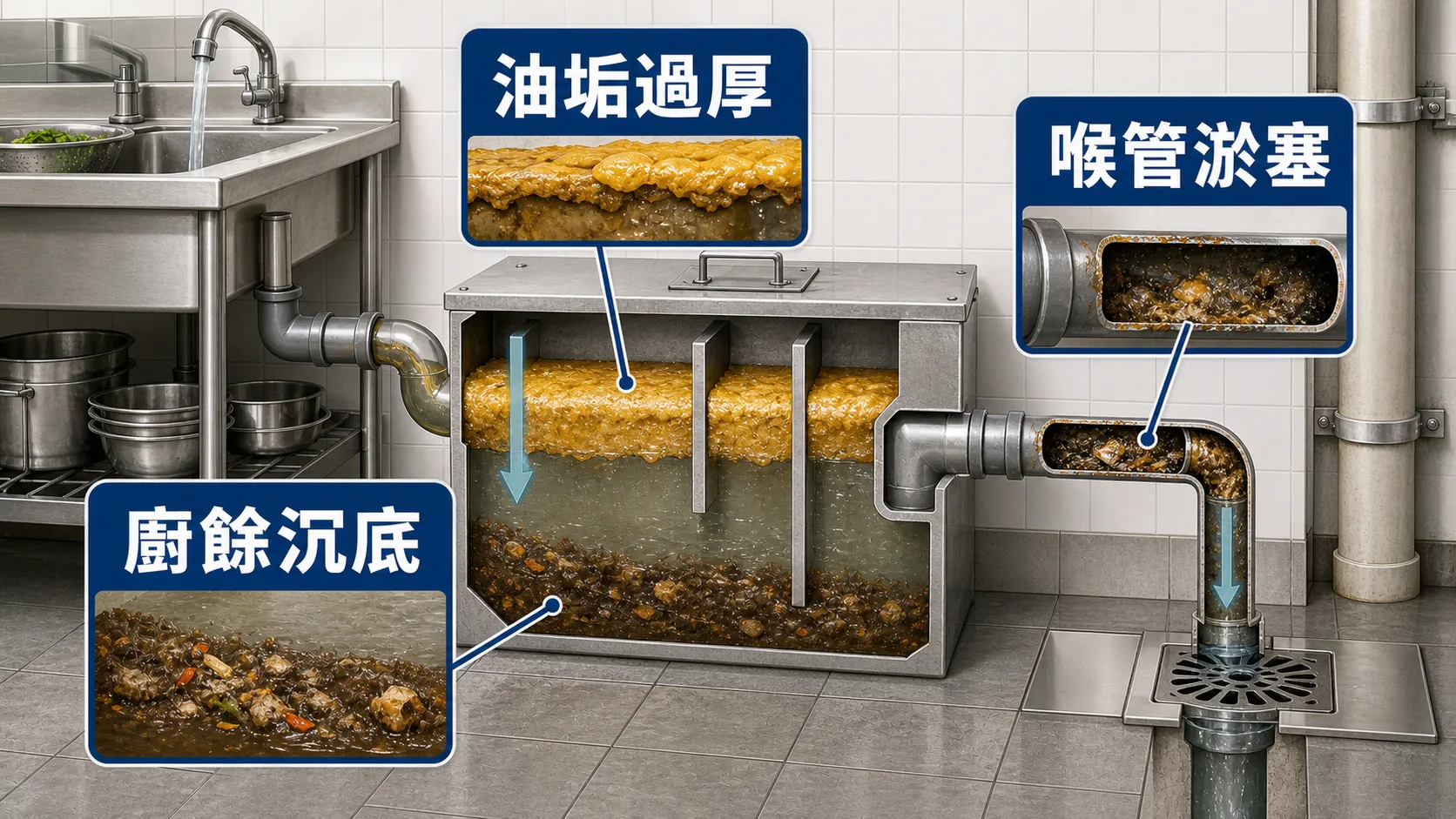
Grease floats above the water. Retaining it is the trap's purpose, but an increasingly thick layer restricts flow and can be carried beyond the outlet into kitchen drainage.
Rice, vegetables, flour paste, soup solids, coffee grounds and cleaning-cloth fibres reduce usable capacity. Less separation time can allow grease to escape with the outgoing water.
An apparently full trap may also have a restricted downstream branch. Skimming the surface alone may not help; pipe cleaning or jetting may be needed.
Meal output, washing-up, frying and the number of sinks affect loading. Undersizing, ineffective baffles, excessive inlet turbulence and unsuitable outlets can impair separation. Reassess capacity and branches after opening, menu changes or new equipment if blockages become frequent.
No interval suits every premises. Inspect regularly and remove excessive deposits promptly. Practical warning signs include:
Low-grease pantries or cafés may need a different schedule from hotpot, fried-food, roast-meat or central kitchens. Record layer thickness, odour, flow and waste removed, then adjust the interval using actual conditions.
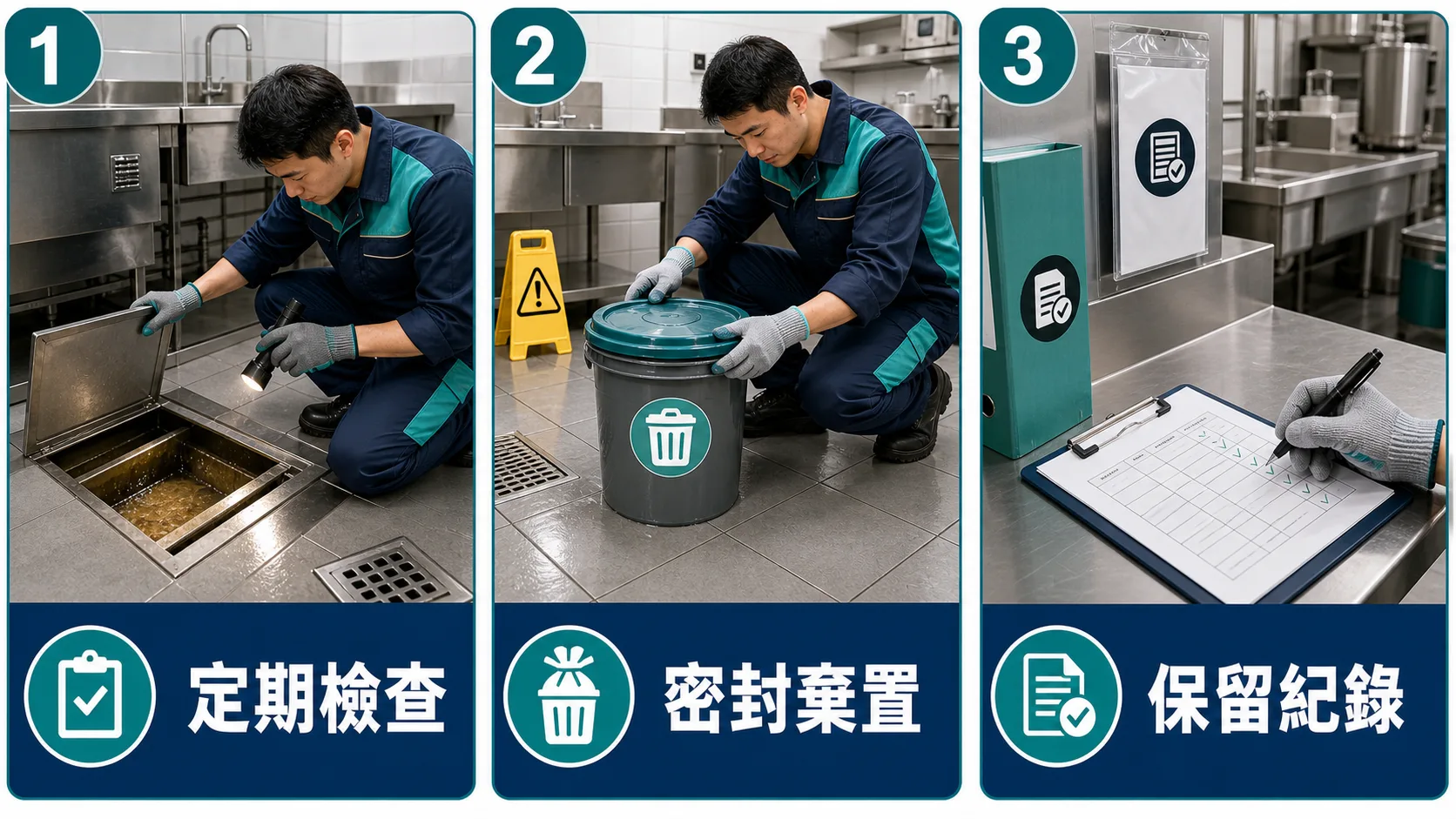
For a small accessible under-counter trap with little grease, trained staff may perform suitable routine surface cleaning using gloves and preventing food or worktop contamination, with waste securely contained. Underground, large, very smelly or heavily loaded traps and downstream blockages need more than skimming.
Arrange professional assessment when:
Never enter an underground trap or chamber or handle substantial sewage alone. Harmful gases, slippery surfaces and chemical residues require suitable equipment and safe procedures.
Removes retained grease, sludge, food deposits and dirt on baffles and lid edges, restoring capacity and separation performance.
Locates and clears a restriction causing sink, floor or outlet backflow. It does not necessarily clean the trap itself.
Removes grease that has already accumulated downstream. A clean trap can still drain poorly if the branch is restricted. Jetting or, for chambers and substantial sediment, desilting may be needed.
Yes. A layer occupying substantial liquid depth impairs separation and can send grease downstream. Waiting for overflow may mean both cleaning and unblocking are needed.
Not necessarily. Decomposing grease, food and deposits around baffles, lid edges or the outlet can smell before flow stops. Slow flow, foam, pests and backflow strengthen the need for inspection.
It is not recommended. Strong chemicals do not replace waste removal and can cause burns, residues and damage. Use appropriate mechanical removal, collection, disposal and pipe cleaning.
Large-trap waste needs an appropriate collector and disposal arrangement. The source describes leakproof bags or containers for suitable small-trap waste under applicable guidance; prevent contamination and confirm the appropriate disposal route. Commercial premises should retain records.
Hardened grease or partial blockage may remain at the outlet, floor drain or downstream building branch. Investigate that section instead of repeatedly skimming the trap.
WhatsApp PipeButler on 5340 0748 with trap location, grease-layer photos, drainage videos and opening hours to plan trap cleaning, pipe cleaning, unblocking or maintenance, preferably outside service hours where practical.