
Loading page…
Loading page…
Understand separation, effective capacity and flow time, and recognise when grease has already accumulated downstream.
WhatsApp with the problem and district, and we will confirm available timing.
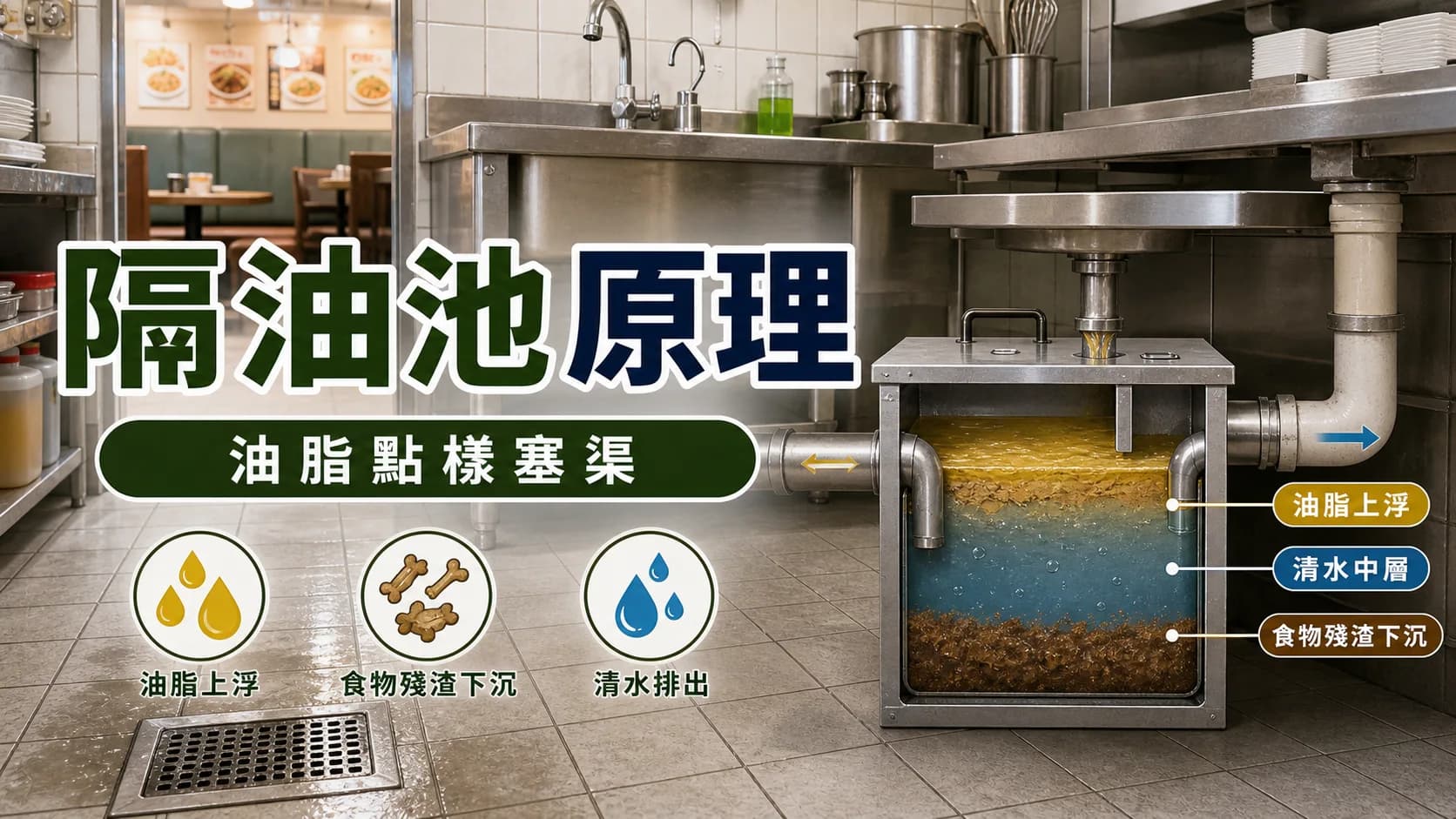
A grease trap does not make oil disappear. It slows wastewater so lighter grease rises, heavier food solids settle, and relatively clearer water can leave. If capacity is inadequate, flow too rapid, grease loading excessive or cleaning neglected, oil and solids pass into kitchen drains, chambers and building mains.
Effective separation needs sufficient capacity, suitable retention time and regular removal of deposits. Slow flow, odour, floor-drain backflow, chamber grease or overflow should not be treated only with hot water or degreaser. WhatsApp PipeButler on 5340 0748 with kitchen, trap and safe chamber photographs and the type of operation to assess desilting, cleaning, unblocking or CCTV.
This guide explains separation, the effect of size and flow, and why installing a trap does not by itself prevent downstream deposits.
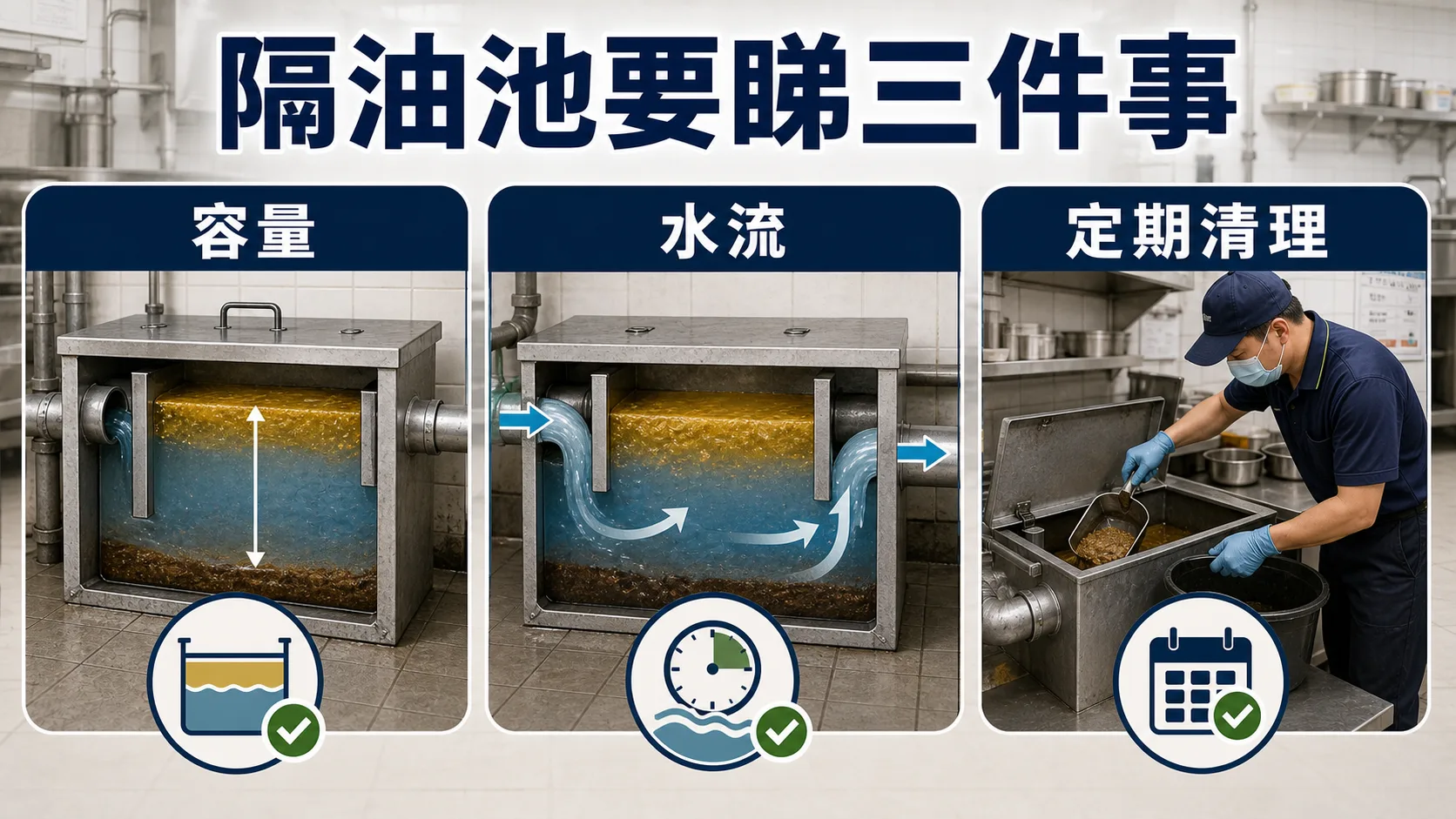
Commercial wastewater contains grease, food particles, sauces, rice or noodle fragments, detergent foam and hot water. The trap slows it down:
Performance therefore depends on capacity, flow, temperature, workload, maintenance and downstream conditions, not merely installation.
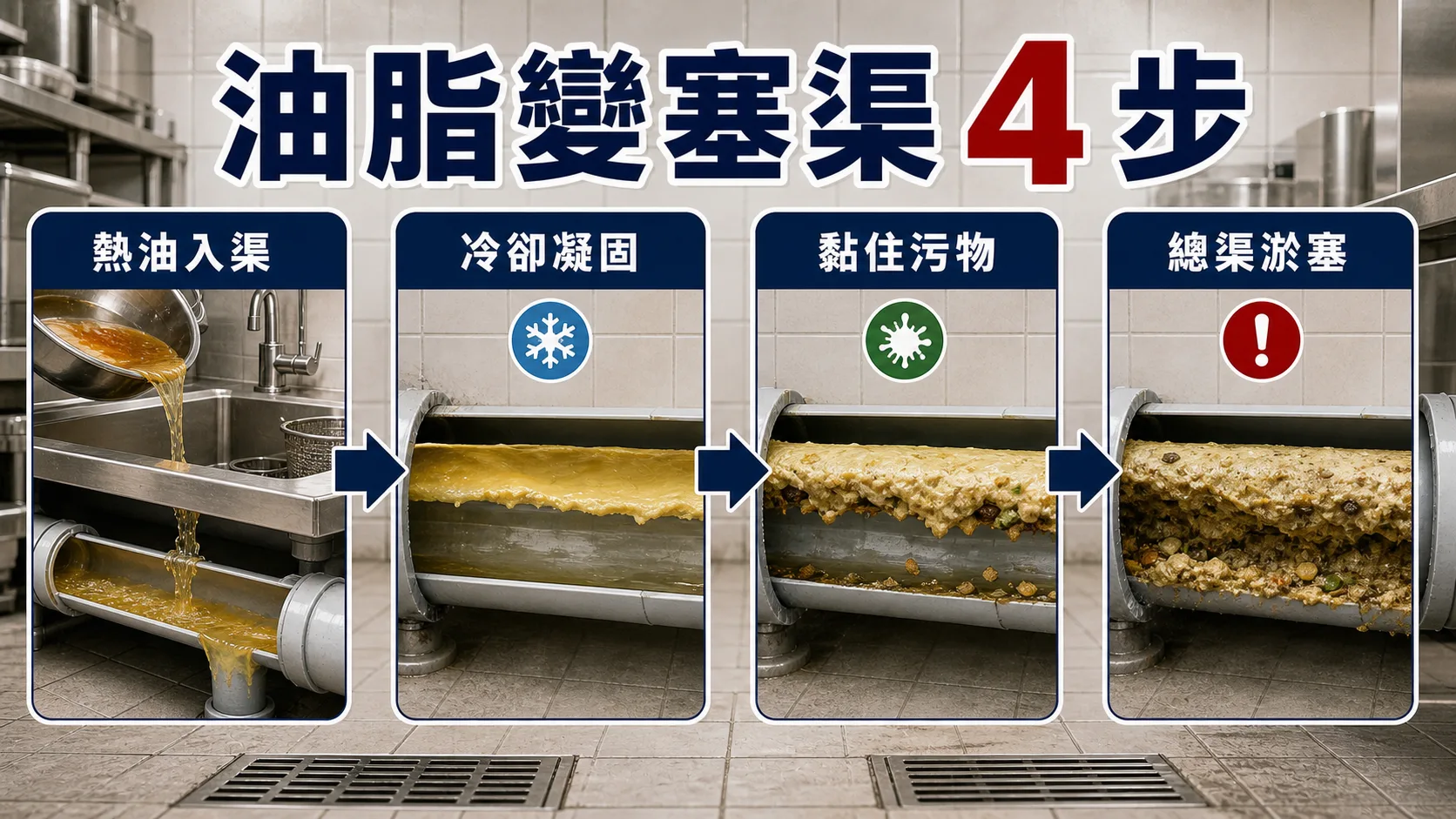
Frying oil, meat juices, stock fat, wok-washing water and sauces may appear to drain readily, particularly when warm water keeps them mobile.
In cooler pipes, chambers and mains, grease sticks to walls, bends, joints and slow-flow areas.
Rice, vegetables, paper, hair, sand, soap and fine solids bind to sticky grease, building a thicker layer. This explains some blockages that return soon after clearance.
Grease passing beyond the trap can affect floor drains, chambers, mains and rear-lane drainage, causing odour, backflow or sewage overflow rather than only a slow sink.
Kitchen floor area alone is insufficient. Consider water use, meal output, frying activity, dishwashing practices, number of sinks, floor drains, dishwashers, operating hours and maintenance access. Too little capacity shortens separation time; accumulated deposits also reduce effectiveness.
Observe how quickly grease fills the trap, how soon smell or slow drainage returns after cleaning, and whether grease appears in downstream chambers. Frequent cleaning with continuing blockages warrants checks of the arrangement and downstream deposits.
No. Dispersed grease still exists and may settle farther away. Hot water only keeps it moving temporarily. Strong drain chemicals add corrosion, irritating-gas and mixing risks, particularly in older commercial pipes and heavily loaded traps.
Reduce grease entering the drain, physically remove floating grease and settled solids, and assess downstream cleaning as needed. See the restaurant cleaning guide and kitchen drainage checklist.
Send kitchen type, output, trap and safely obtained chamber photographs, slow-flow locations, last cleaning date and chemical history to WhatsApp 5340 0748. We will assess desilting, cleaning, unblocking or CCTV. Discuss arrangements through our contact page.
“Grease trap” and “grease interceptor” are common. Smaller indoor units are often called traps, while larger or engineered outdoor installations may be called interceptors. Usage varies by region and supplier.
No. It reduces downstream grease and solids. Inadequate capacity, rapid flow, deposits, bypassed outlets and existing downstream grease can still cause problems.
Assess food output, grease load, capacity, water use and downstream conditions. Monitor lost working space, odour, slow flow and the interval before recurrence. Higher grease loads generally need more frequent attention.
It temporarily mobilises grease, which can cool and adhere deeper in the system. Scrape and collect grease before washing rather than sending it into drains.
Not necessarily. Deposits, insufficient cleaning, traps, pipework, downstream grease and ventilation may be responsible. Clean and investigate first; assess alteration only where capacity or connections are unsuitable.