
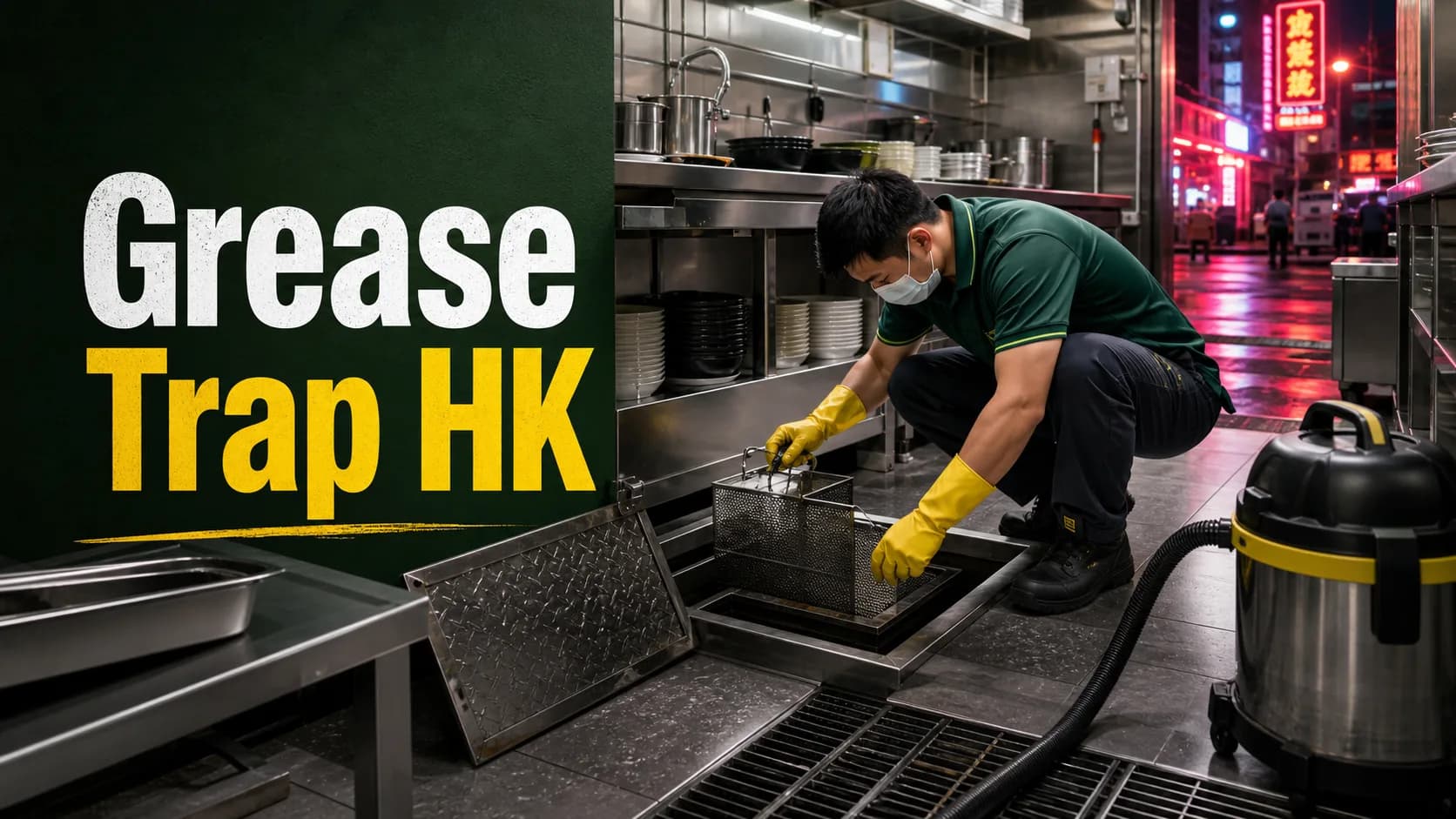
If you run a restaurant, cafe, central kitchen, food factory or hotel kitchen in Hong Kong, the grease trap should not be treated as an emergency-only drain. It is maintenance equipment. When it is ignored, grease, food solids and sludge can block the trap outlet, slow the kitchen sink, create odour, overload downstream pipes and interrupt service.
Fast triage: if the grease trap smells, overflows, has a thick grease layer, drains slowly during service, or the kitchen pipe blocks again after ordinary unblocking, contact PipeButler desilting and grease-trap support. For restaurants, we usually check the trap, outlet flow and downstream pipe condition together instead of treating each symptom separately.
This guide explains what causes grease trap problems, how cleaning should be approached, what records are useful, and when you need pipe cleaning or drain unblocking in addition to trap cleaning.
What a grease trap does
A grease trap slows down greasy kitchen wastewater so fats, oils and grease can separate before the water continues into the drainage system. Grease normally floats near the top. Food particles and heavier sludge settle at the bottom. The outlet should remain clear enough for water to pass through.
That separation only works when the trap is sized, installed and maintained properly. A trap that is too full, poorly cleaned or missing baffles can let grease pass downstream. Once grease coats the pipe, a simple sink unblock may only solve the symptom for a short time.
Warning signs your grease trap needs cleaning
- Slow kitchen sink or floor drain: water leaves the sink slowly, especially during peak service.
- Bad odour: the trap, sink cabinet, floor drain or nearby manhole smells oily, sour or sewage-like.
- Visible grease layer: the top layer is thick, hardened or close to the outlet level.
- Sludge buildup: the bottom of the trap has heavy solids that reduce working capacity.
- Overflow or leakage: greasy water escapes around the cover, sink area or floor drain.
- Repeat blockage: staff call for unblocking, but the same kitchen line slows again within days or weeks.
- Pest or hygiene complaints: odour, residue and stagnant wastewater attract operational attention.
What blocks a restaurant grease trap?
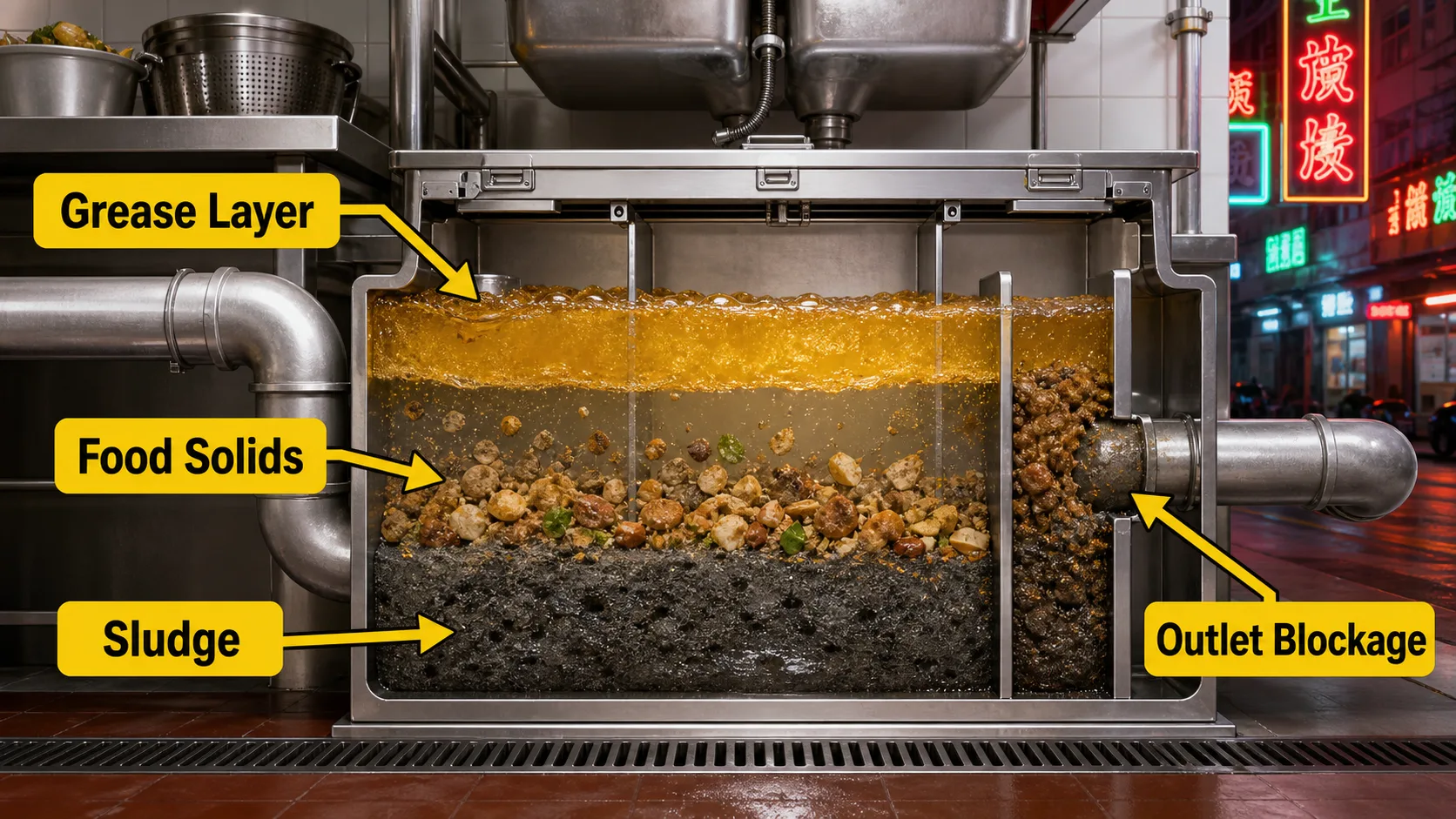
Grease layer
The floating grease layer is expected, but it should not be allowed to occupy too much of the trap. Once the grease layer becomes too thick, it reduces separation space and can move toward the outlet.
Food solids
Rice, noodles, batter, meat scraps, sauces and cleaning residue add solids to the trap. Even small daily amounts build up quickly in a busy kitchen. Sink strainers and staff training reduce the load, but they do not replace cleaning.
Sludge
Sludge collects at the bottom. If only the top grease is skimmed and the bottom is ignored, the trap loses capacity and wastewater has less time to separate.
Outlet blockage
The outlet is the critical point. When the outlet is narrowed by grease, food solids or sludge, water backs up into the trap and kitchen drain. If grease has already moved downstream, the correct service may include pipe cleaning, jetting or desilting.
How often should a restaurant clean a grease trap?
There is no single interval that fits every Hong Kong food premises. A bakery, hotpot restaurant, cha chaan teng, western kitchen, hotel buffet, central kitchen and food factory can produce very different oil and solids loads. The right frequency depends on trap size, menu, daily turnover, dishwashing volume, waste habits, past blockage history and how full the trap is before cleaning.
Use a maintenance log rather than guessing. After each cleaning, record the date, grease thickness, sludge level, odour, outlet flow, photos and whether the downstream pipe was slow. If the trap is already close to full at every visit, shorten the interval. If the trap is clean and flow is stable for several cycles, the interval may be reviewed.
Do not wait for overflow. Once a grease trap has overflowed, the job is no longer just routine cleaning. It may involve contaminated-water handling, odour control, floor cleanup, pipe cleaning and service disruption.
Grease trap cleaning workflow
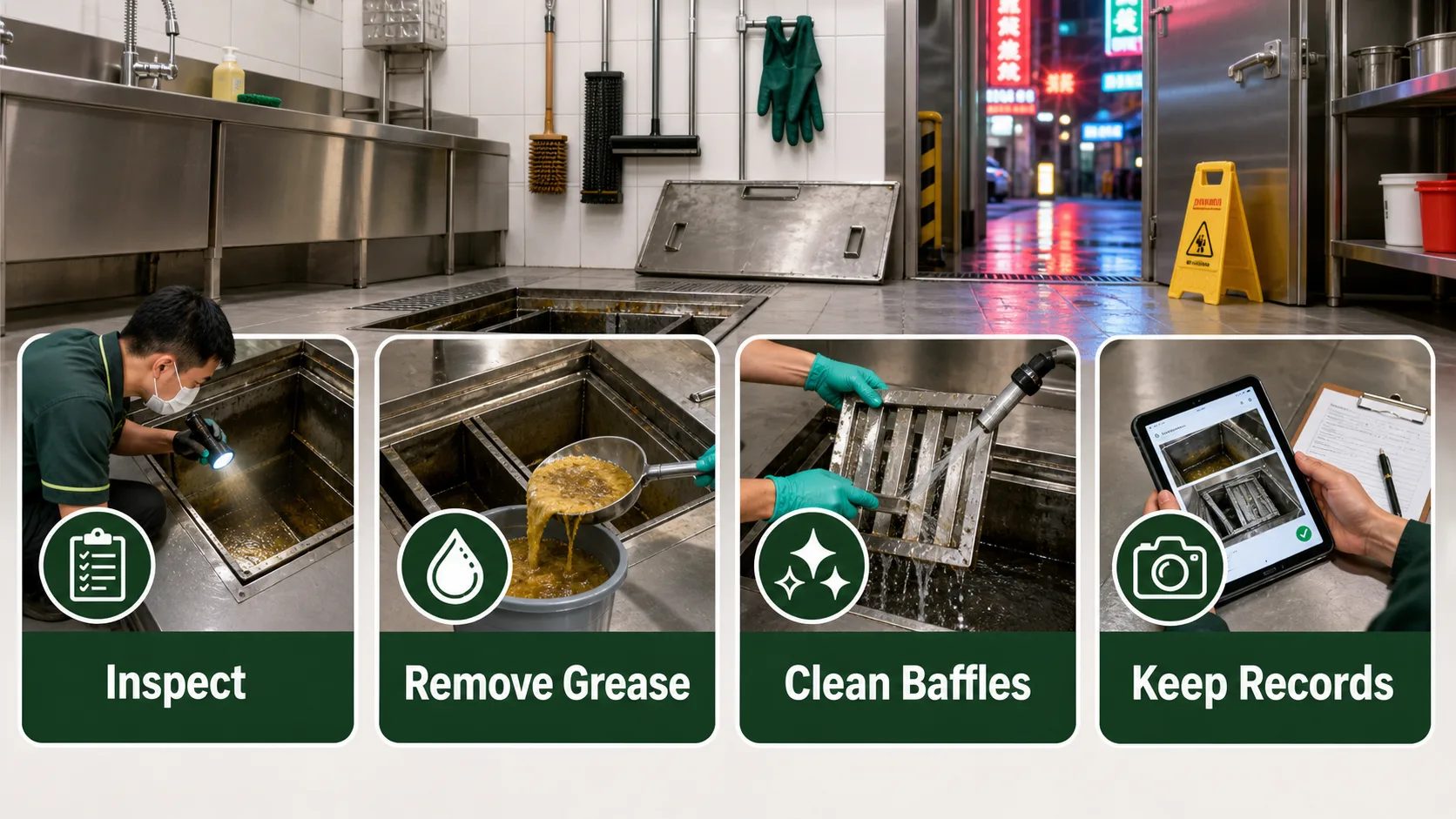
1. Inspect before opening the trap
Check the sink, floor drain, trap cover, outlet flow and surrounding odour first. If there is backflow or overflow, stop using the affected sink or drain where possible and keep staff away from greasy wastewater.
2. Remove floating grease
Remove the floating grease layer carefully. Avoid pushing grease toward the outlet. Grease and sludge should be collected and handled properly; they should not be washed into the drain.
3. Remove sludge and food solids
Cleaning only the top layer is incomplete. Bottom sludge and trapped solids reduce capacity and can keep odour active. The trap should be cleaned down to its working surfaces without damaging baffles or fittings.
4. Clean baffles and check outlet flow
Baffles help separate grease and water. If baffles are loose, missing, clogged or badly coated, the trap may not work properly. After cleaning, test flow through the outlet. If flow remains weak, the downstream pipe may need pipe cleaning or desilting.
5. Keep records
Record photos, date, symptoms, grease / sludge level and follow-up recommendations. For multi-branch restaurants, a simple record makes it easier to compare sites and schedule cleaning before an emergency.
Grease trap cleaning vs drain unblocking vs pipe cleaning
These services overlap, but they are not the same job.
- Grease trap cleaning: removes grease, sludge and solids inside the trap so it can separate wastewater again.
- Drain unblocking: clears an immediate blockage in a sink, floor drain or pipe so water can move again.
- Pipe cleaning: cleans grease-coated pipe walls, usually when slow drainage returns after basic unblocking.
- Desilting: removes heavier deposits from pipes, channels, manholes or drainage runs when sludge and sediment are part of the problem.
If a restaurant keeps cleaning the trap but still has slow drainage, the problem may already be downstream. If staff keep unblocking the sink but never clean the grease trap, the blockage will often return. PipeButler can help identify the correct combination before work starts.
Can chemicals or enzymes replace grease trap cleaning?
No. Chemical or enzyme products should not be treated as a substitute for removing grease, sludge and food solids. Strong caustic drain cleaners can also create safety risks for staff and technicians, especially if someone later opens the trap or pipe. They may temporarily change odour or flow, but they do not remove the physical volume of grease and sludge that reduces the trap's capacity.
If odour is the main complaint, the source may be stagnant grease, dry floor drains, a blocked outlet, downstream pipe buildup or a separate drainage issue. PipeButler can combine grease-trap inspection with odour source tracing when the smell does not match the visible trap condition.
What to do if the grease trap overflows during service
- Reduce or stop water discharge into the affected sink where practical.
- Keep staff and customers away from greasy wastewater.
- Do not pour more drain cleaner into a blocked or overflowing trap.
- Take photos and note which fixtures are affected.
- Call a drainage contractor who can check the trap and the outlet pipe, not just plunge the sink.
- If wastewater has spread across food-preparation or customer areas, consider cleanup and disinfection after drainage flow is restored.
Useful records for restaurant managers
A simple record system is often enough. Keep the cleaning date, photos before and after cleaning, grease thickness, sludge level, outlet-flow comment, odour comment, contractor recommendation and next planned service date. If your restaurant has repeated blockages, add the date and exact location of every sink, floor drain, pipe or manhole problem.
These records help management see whether the issue is routine grease load, staff waste habits, an undersized trap, poor baffle condition, downstream grease buildup or a separate building-drainage problem.
When to call PipeButler
Call PipeButler if the trap is full, smells bad, overflows, drains slowly, has repeated outlet blockage, or if ordinary sink unblocking is not lasting. For restaurants and food premises, we can quote for grease-trap cleaning, kitchen drain unblocking, downstream pipe cleaning, desilting and odour source tracing based on the actual symptom pattern.
You can also check PipeButler pricing before booking. For faster triage, send a WhatsApp video of the affected sink / trap, the trap location, the last cleaning date if known, and whether the issue affects one sink or several drains.
Need grease trap cleaning in Hong Kong? WhatsApp PipeButler at 5340 0748. Send your district, business type, photos of the grease trap, the last cleaning date, and whether the kitchen sink or floor drain is slow. We quote before starting and recommend the service that matches the actual blockage.
FAQ
How often should I clean a restaurant grease trap?
Base the interval on actual grease and sludge buildup, not a fixed guess. Busy kitchens, oily menus, small traps and repeated slow drainage all point to shorter cleaning intervals. Keep a log and adjust after several cycles.
Is grease trap cleaning the same as pipe cleaning?
No. Grease trap cleaning removes material inside the trap. Pipe cleaning removes buildup inside the downstream pipe. A restaurant may need both if grease has already passed the trap and coated the pipe.
Why is the sink still slow after the grease trap was cleaned?
The outlet or downstream pipe may still be restricted. Food solids, grease deposits and sludge can remain beyond the trap, especially after long periods without maintenance.
Can staff clean the grease trap themselves?
Small routine checks may be handled internally if staff are trained and waste is handled properly. For heavy grease, overflow, strong odour, downstream blockage or confined / difficult access, use a professional drainage team.
What should I send before booking?
Send photos or video of the trap, sink and floor drain, your district, the type of food premises, the last cleaning date, whether there is odour or overflow, and whether the problem affects one drain or several drains.