
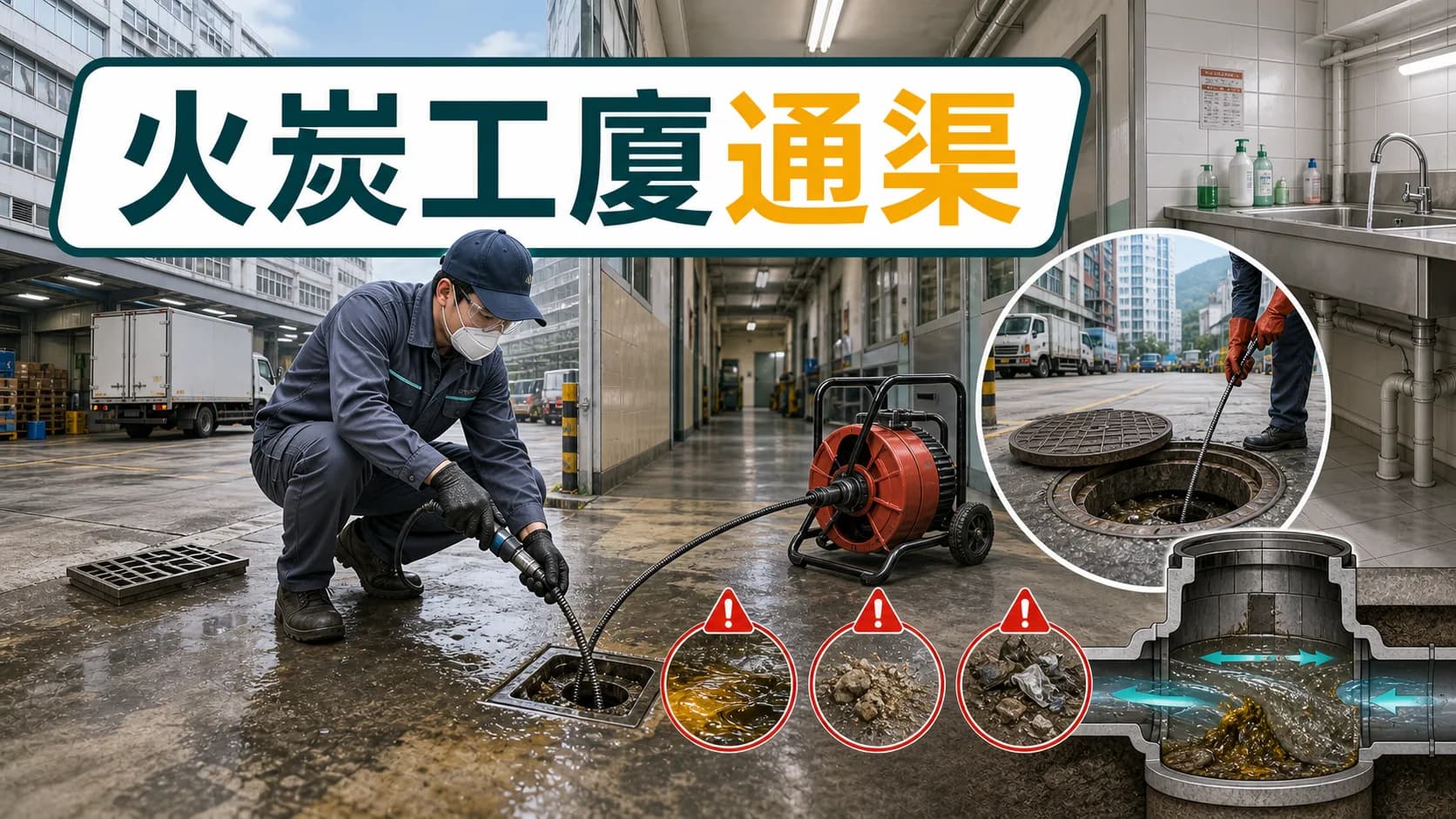
Fo Tan and Sha Tin contain industrial buildings, warehouses, studios, food factories, offices and light-industrial units. Blocked floor outlets, pantry sinks, toilets, loading-bay drains or manholes can cause slippery floors, damaged stock, odours and business interruption, as well as questions about management and shared drainage responsibilities.
For backflow, high manhole levels or slow pantry drainage, stop the affected discharge, isolate wet areas, record water levels and the affected area, and contact management and a drainage specialist. Do not send staff into manholes, add drain cleaner indiscriminately or keep testing with large volumes of water.
This guide covers Fo Tan, Shek Mun, Sha Tin industrial areas and nearby commercial premises, distinguishing internal branches from shared drains and the roles of unblocking, cleaning, desilting, jetting and CCTV. For a general framework see industrial drain blockages.
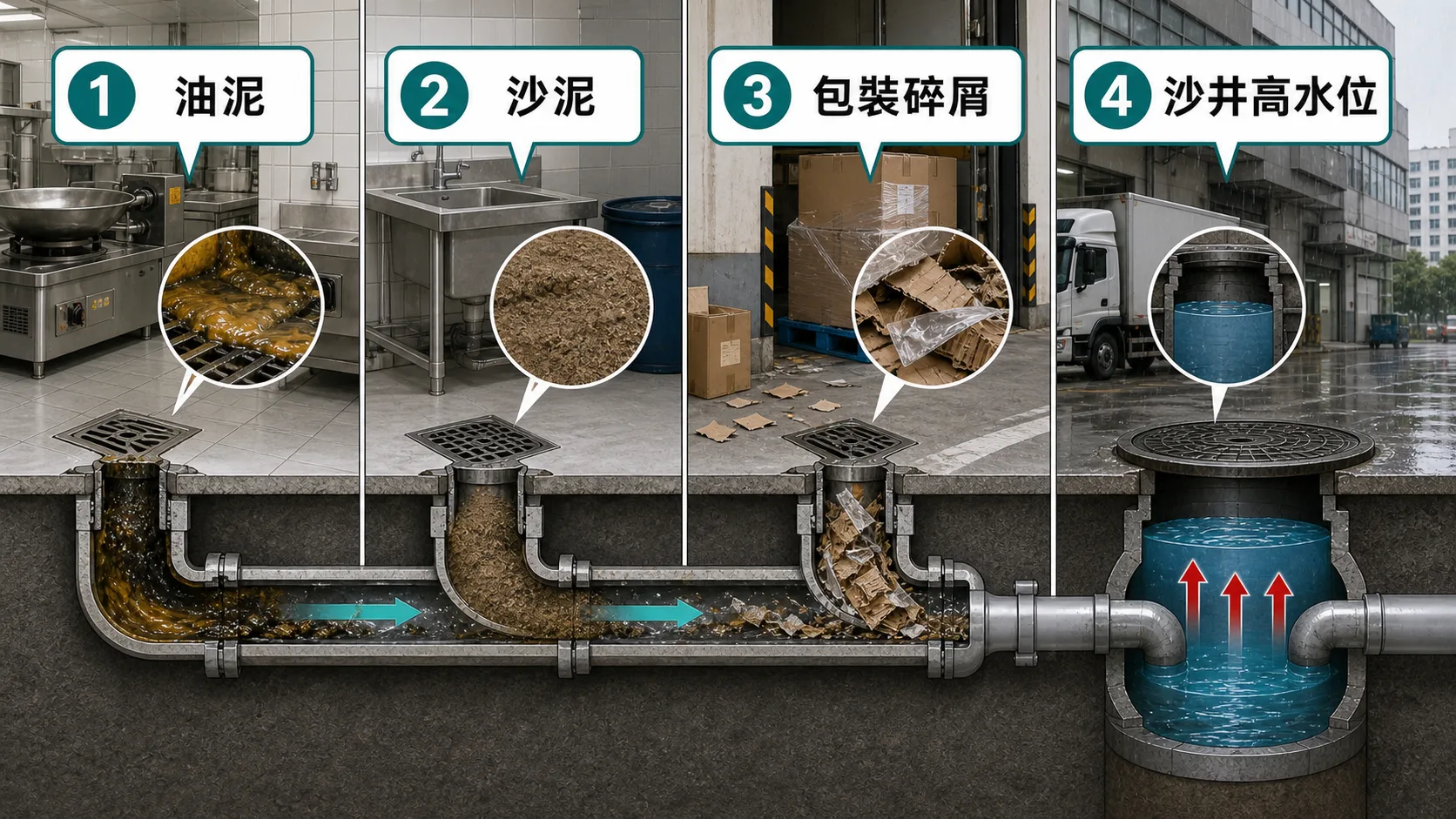
Common causes in Fo Tan industrial buildings
1. Greasy sludge and food residues
Pantries, food factories, central kitchens, staff canteens and cafés accumulate grease and food in traps, horizontal pipes, grease-trap outlets and manholes. Slow flow and smells can progress to floor-drain backflow and full manholes.
2. Grit, dust and washing wastewater
Warehousing, repairs, packaging, printing, engineering and washing processes can introduce grit, dust, fragments and wastewater. These deposits do not dissolve in drain cleaner; they settle at low points, bends and manhole bottoms, reducing capacity.
3. Packaging and hard objects
Tape, film, cardboard, labels, cable ties, fabric and cleaning cloths can catch in traps, bends and shared branches after entering drains or toilets. Chemical products are generally unsuitable for these obstructions.
4. High manhole levels or restricted shared mains
Several affected units, corridor drains, loading bays, communal toilets or rear-lane manholes suggest a shared pipe, manhole or downstream main rather than one outlet. Ask management to establish the extent; see manhole blockages and overflow.
Four steps before attendance
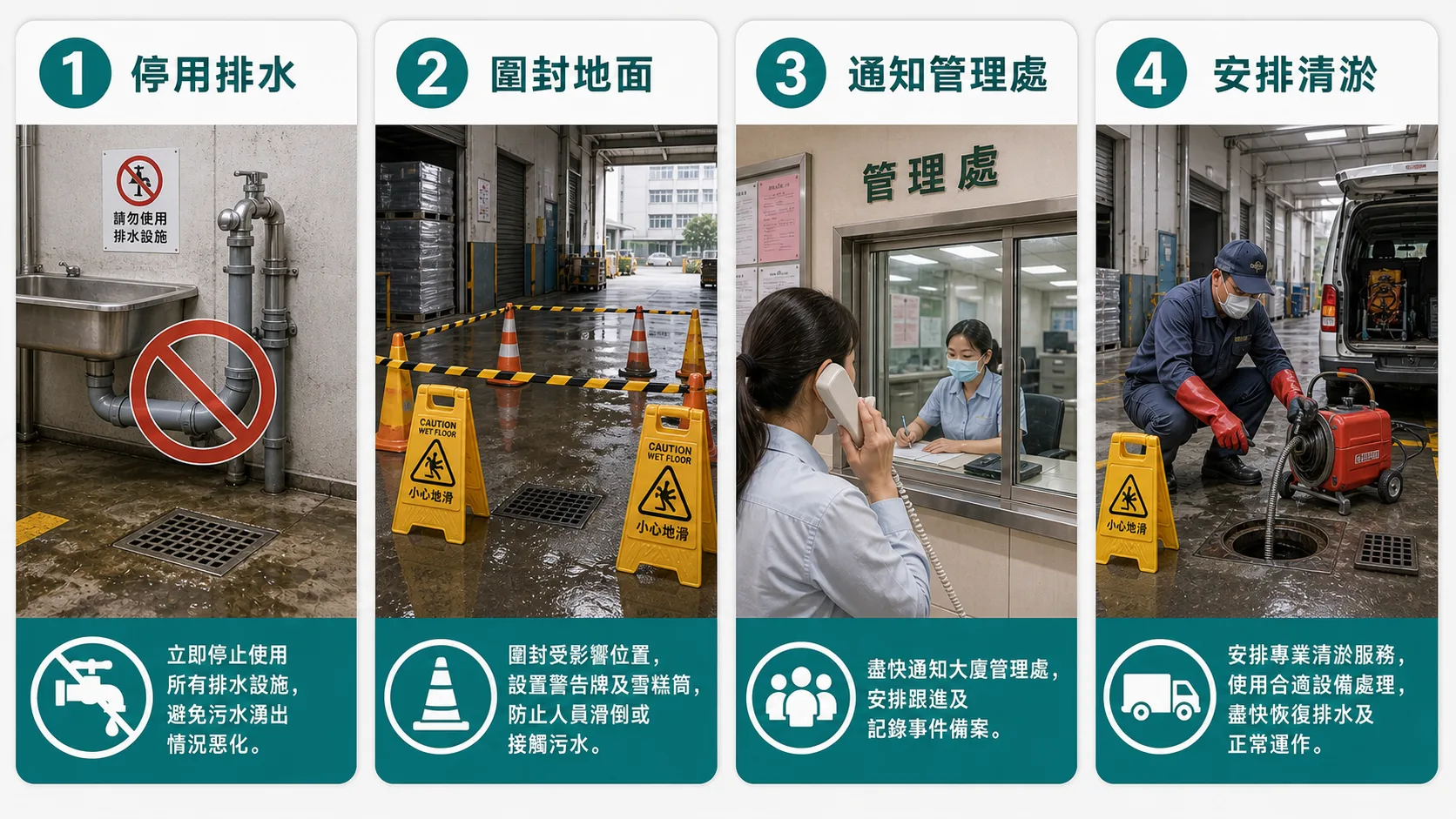
Stop the affected discharge
Pause floor washing, dishwashing, equipment washing, wastewater discharge and heavy flushing. A blocked downstream route can force more wastewater and sludge out through low outlets or manholes.
Isolate slippery floors
Vehicles, trolleys, forklifts and pedestrians make wet industrial floors particularly hazardous. Use cones, signs or tape and move moisture-sensitive stock and electrical equipment away where safe.
Record evidence and inform management
Film where water rises, visible manhole levels, affected outlets, timing, whether floor washing triggered it and other affected units. Ask management to check communal drains and manholes rather than treating only one unit.
Prepare assessment information
Before a WhatsApp enquiry, gather the address, floor, use of the unit, affected outlets, grease-trap details, manhole photographs, previous unblocking or desilting dates and out-of-hours availability. This helps distinguish unblocking, pipe cleaning and desilting.
Choosing unblocking, desilting, jetting or CCTV
Ordinary unblocking: suits accessible obstructions, trap deposits, one slow outlet or a clearly located soft blockage.
Pipe cleaning or jetting: may suit greasy sludge, wall deposits, long horizontal runs, recurrence and industrial floor drains. High pressure is not automatically necessary: assess the material, pipe condition and access first. See drain-jetting suitability.
Desilting: addresses manhole sediment, loading-bay drains, rear-lane chambers and reduced main-drain capacity. The aim is to restore capacity rather than open one narrow passage; see desilting versus unblocking.
CCTV: helps investigate recurrence, unknown concealed routes, hard objects, cracks, displacement, renovation-related faults and evidence for owners or management. It diagnoses rather than immediately drains standing water.
Investigate remaining odours too
Smells may persist after water recedes because of weak water seals, grease on pipe walls, uncleared manhole sludge, cover gaps, shared-drain odours or damp surfaces. Check seals, walls and downstream chambers together instead of merely applying deodoriser.
Where flies, cockroaches or mustiness are present, consider source investigation, pipe cleaning or disinfection. Food-handling units, kitchens, food factories and canteens should include commercial kitchen drainage and grease-trap cleaning in planned maintenance.
When should building management be involved?
A single pantry sink may warrant an internal branch check first. Corridor drains, communal toilets, several same-floor units, loading bays or manholes require management involvement. Shared pipes and mains may need coordinated access and work in communal areas.
Flooding or blockages clearly involving public roads, street drains or public drainage should be reported through 1823 or the relevant department. Private-unit faults and public-drainage problems require separate handling.
Reducing recurrence
- Use strainers and regularly collect cardboard, packaging, food and grit.
- Keep oil, sludge, cloths, tape, cable ties, cat litter and renovation sediment out of drains.
- Sweep up solids before washing workshop floors.
- Maintain grease traps in food factories and canteens according to actual use and keep records.
- Consider planned cleaning, desilting or CCTV for recurring problem sections instead of emergency interventions alone.
Frequently asked questions
What determines the work required in a Fo Tan industrial building?
Assess outlet access, blockage severity, urgency, working hours, whether jetting or CCTV is appropriate, manhole or shared-drain involvement and wastewater handling risks. Send photographs and video through the contact page to establish the scope before authorising work.
Can drain cleaner be used in industrial floor drains?
Do not add it indiscriminately to backflow, standing water or unidentified chemical residues. Grease, grit, hard objects and shared-drain faults may not respond, while chemicals can return onto floors or mix with cleaners. See chemical safety.
Is jetting always necessary?
No. A nearby obstruction may need a simpler intervention. Grease, long runs, sediment, reduced capacity and recurrence may warrant jetting, desilting or CCTV to locate the issue first.
Which local areas can be assessed?
PipeButler can assess drainage requirements in Fo Tan, Shek Mun, central Sha Tin, Tai Wai, Ma On Shan and surrounding industrial, commercial and residential premises, depending on the situation. See Sha Tin service coverage.
For Fo Tan or Sha Tin floor-drain blockages, high manhole levels, odours, backflow after washing or repeated slow drainage, WhatsApp PipeButler on 5340 0748 with video, affected locations, manhole photographs, floor, unit use and management contact status. We can assess the appropriate intervention and agree its scope before work.
Fo Tan access and work records
For Fo Tan industrial enquiries, identify the work entrance, goods lift and water access, separating unit from common areas. Retain testable drainage observations and uninspected locations for later maintenance review.