
Loading page…
Loading page…
Drainage in Lai Chi Kok and Cheung Sha Wan business buildings, offices and upstairs units needs assessment by actual use and fixtures. Hong Kong Spinners Industrial Building is on Cheung Sha Wan Road near Lai Chi Kok station, illustrating why a station or street-area label cannot replace the exact address. Give the building and work entrance, pantry or washroom symptoms and whether a unit or common area is affected. PipeButler proposes unblocking, cleaning or further checks from site findings and accessible pipes.
Attendance is confirmed from building access, work times and the schedule
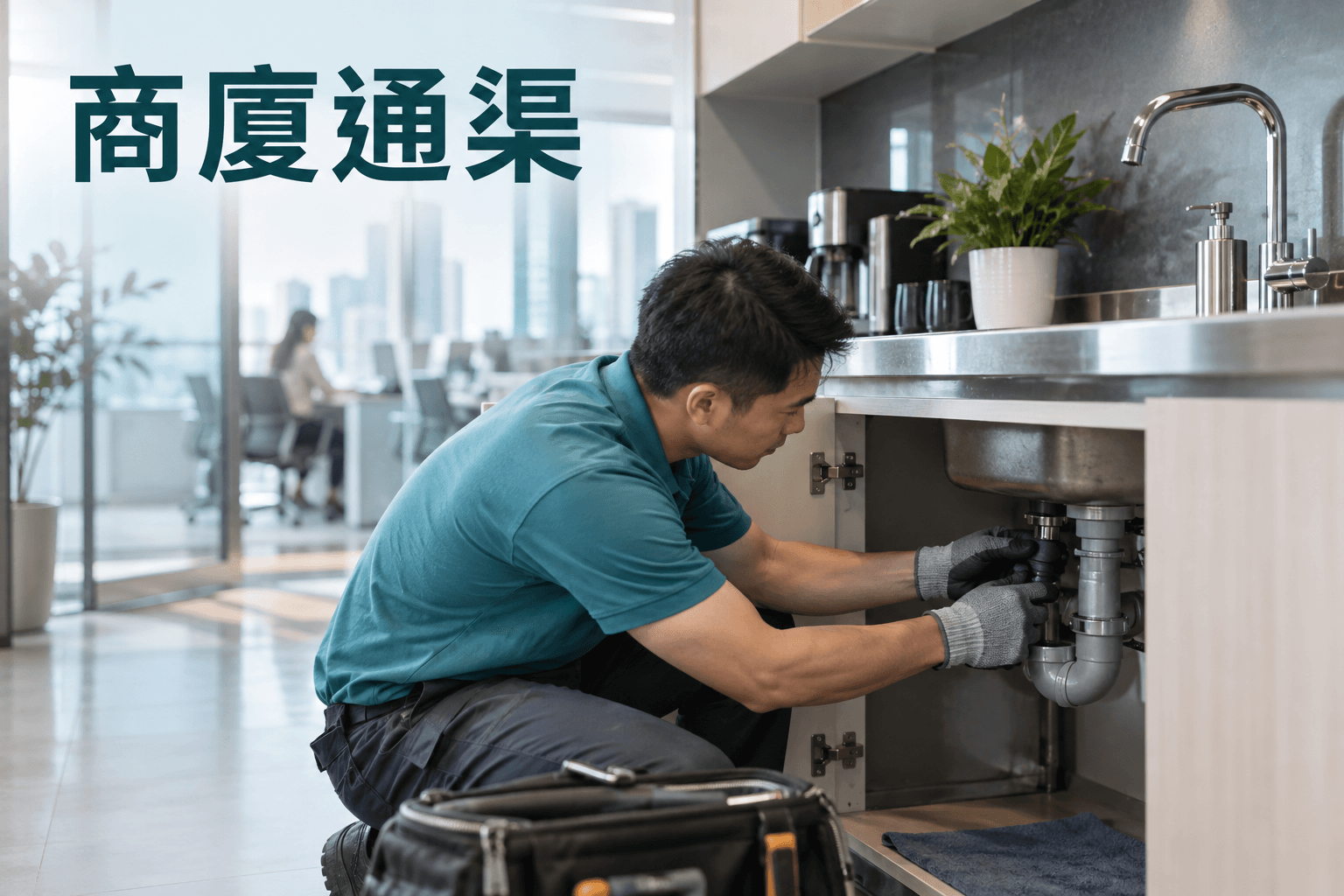
AI-generated scenario image, not a customer-site photograph from this area.
For a slow pantry sink, record observations such as coffee grounds, food fragments or cupboard water marks. For backflow at several washroom fixtures, assemble information from the same floor and other units. These are inspection clues, not a confirmed diagnosis.
Warehouses, studios and offices inside industrial buildings do not necessarily share drainage conditions. Describe actual use and fixtures and declare specialist discharge. Use the commercial enquiry route for office outlets, or the industrial route for floor drains, loading areas and chambers.
Identify affected sinks, toilets, urinals or floor drains, whether it occurs during busy periods and how long earlier work helped. Odour with normal drainage and actual backflow need different checks rather than indiscriminate cleaner use.
Agree access to shared washrooms, ceilings and common pipes with management first. You may request lunch breaks, after-hours or weekends, but availability, noise and registration limits depend on the building and work.
Before booking, give the entrance, floor, available lifts and work times, and confirm who can authorise unit or shared-area work. Equipment, accessible pipes, reinstatement and documents affect pricing; confirm assessment charges and inclusions.
For recurring office or industrial problems, assemble locations, usage and previous work before discussing cleaning, inspection or maintenance. Contract frequency and call-outs are separately agreed; scheduled cleaning is not permanent repair.
Choose an enquiry route for your premises and work scope.
Pantry, washroom and shared-drain enquiries, with scope agreed before work
Scope and booking detailsUnit outlets, shared pipes and chamber enquiries assessed with site access
Scope and booking detailsDiscuss a defined maintenance scope using assets, usage and incident records
Scope and booking detailsPantry, washroom and shared-drain enquiries, with scope agreed before work
Learn MoreUnit outlets, shared pipes and chamber enquiries assessed with site access
Learn MoreDiscuss a defined maintenance scope using assets, usage and incident records
Learn MoreA clear process from enquiry and assessment to an agreed scope of work
Tell us the drain problem and district and ask about available timing.
Confirm timing based on the district and schedule, then inspect the blockage or odour issue.
Explain the proposed approach, scope and price before agreed work begins.
Use suitable tools for the site conditions and agreed scope of work.
After the agreed work, test drainage and explain the observed result and any next steps.
WhatsApp with the problem and district, and we will confirm available timing.