
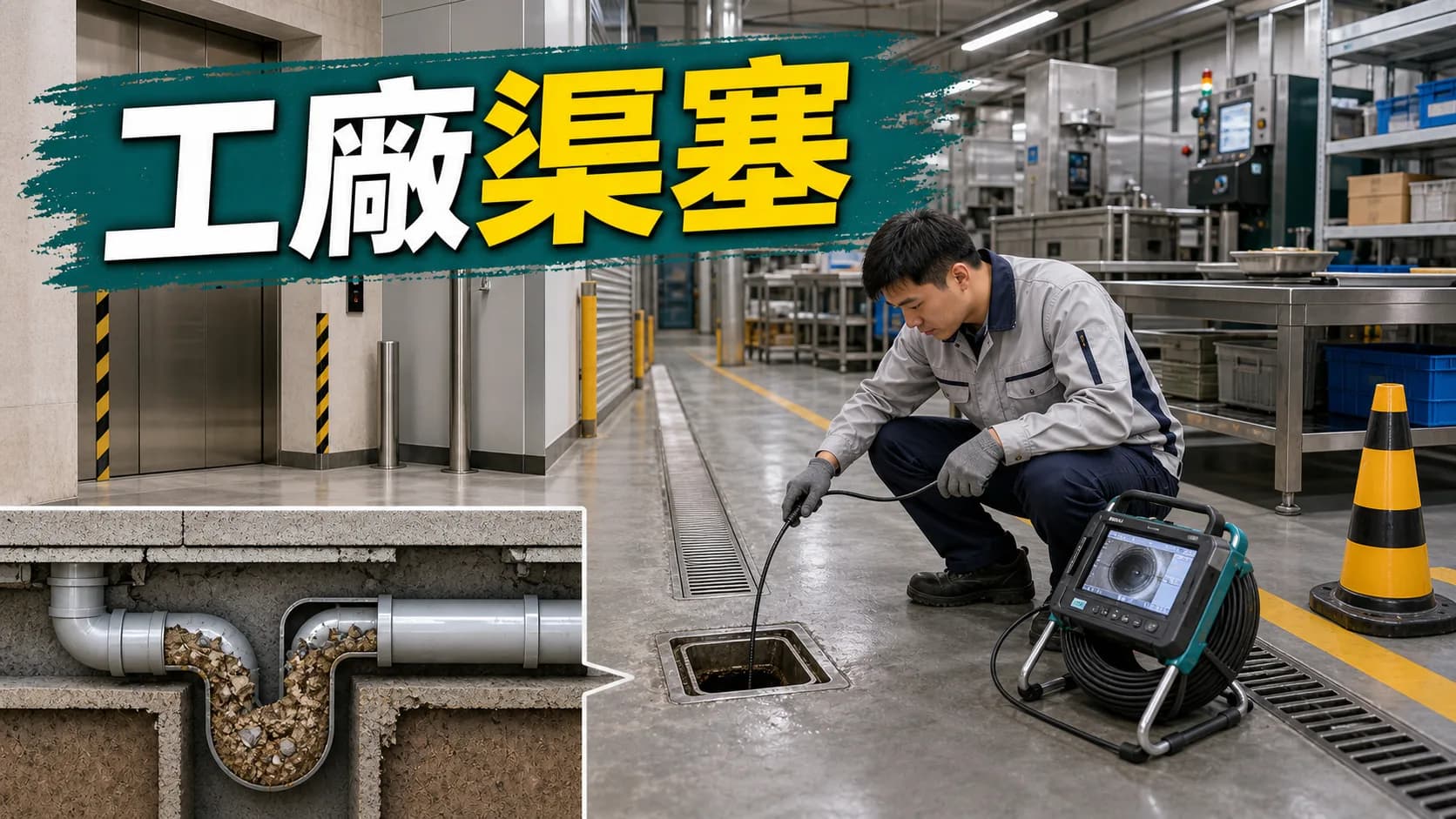
A blocked drain in a factory, warehouse, workshop or industrial-building unit should not be treated as a routine domestic blockage. Restricted floor drainage can affect production, cleaning, stock, staff safety, odour and leakage to lower floors. Chamber backflow, grease, sand, metal filings or chemicals require site control before selecting unblocking, jetting, desilting or inspection.
Stop affected discharge, cordon off slippery surfaces and record visible water levels and affected areas before arranging a commercial drainage assessment. Never send staff into chambers, mix drain chemicals or keep flushing large volumes.
The following guidance covers common Hong Kong industrial and commercial situations, response steps, cleaning choices and maintenance to reduce disruption.
Four common causes
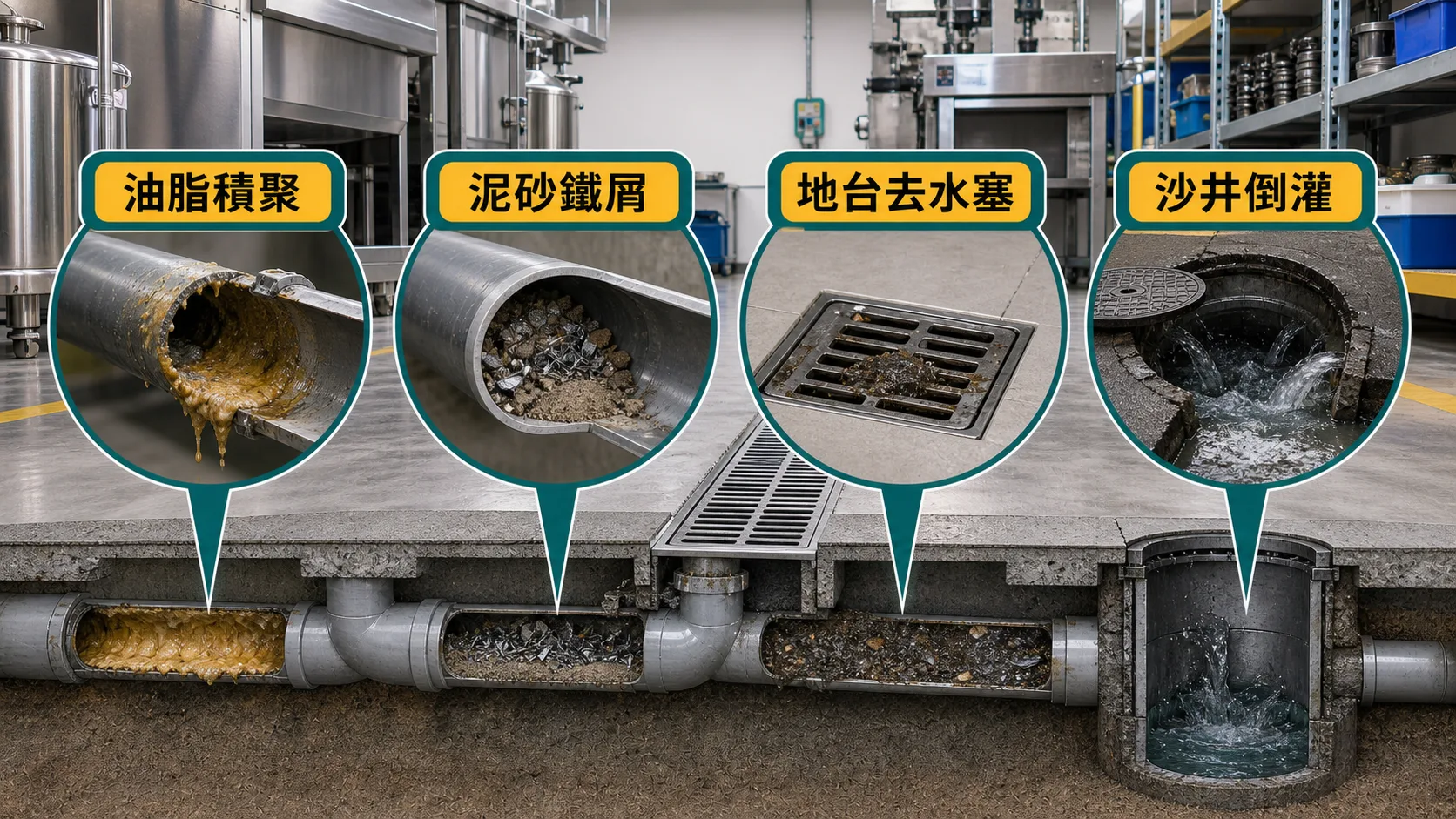
1. Grease accumulation
Food factories, central kitchens, pantries, wash areas and oily processes introduce grease, sauces, food particles and cleaning water. Cooled grease forms deposits on pipe walls, narrowing floor drains, trap outlets and branches. See grease-trap principles and cleaning frequency.
2. Sand and metal fragments
Metalwork, repair, packaging, renovation, warehousing and washing can introduce sand, filings, plastic granules, labels, wood fragments and building dust. Ordinary drain chemicals will not simply dissolve these solids. They settle at bends, chambers and low points, causing recurrent partial blockage.
3. Blocked floor outlets
Bags, tape, cardboard fragments, food waste and mop fibres can obstruct grates, especially where strainers are missing. A small surface accumulation can conceal substantial sludge in the trap or horizontal pipe. Daily wash-down can quickly turn a partial restriction into backflow.
4. Chamber backflow
Several slow outlets, water emerging through floor drains or simultaneous corridor and neighbouring-floor symptoms suggest a downstream chamber, shared pipe or main. Management may need to coordinate examination of the shared route.
Immediate response sequence
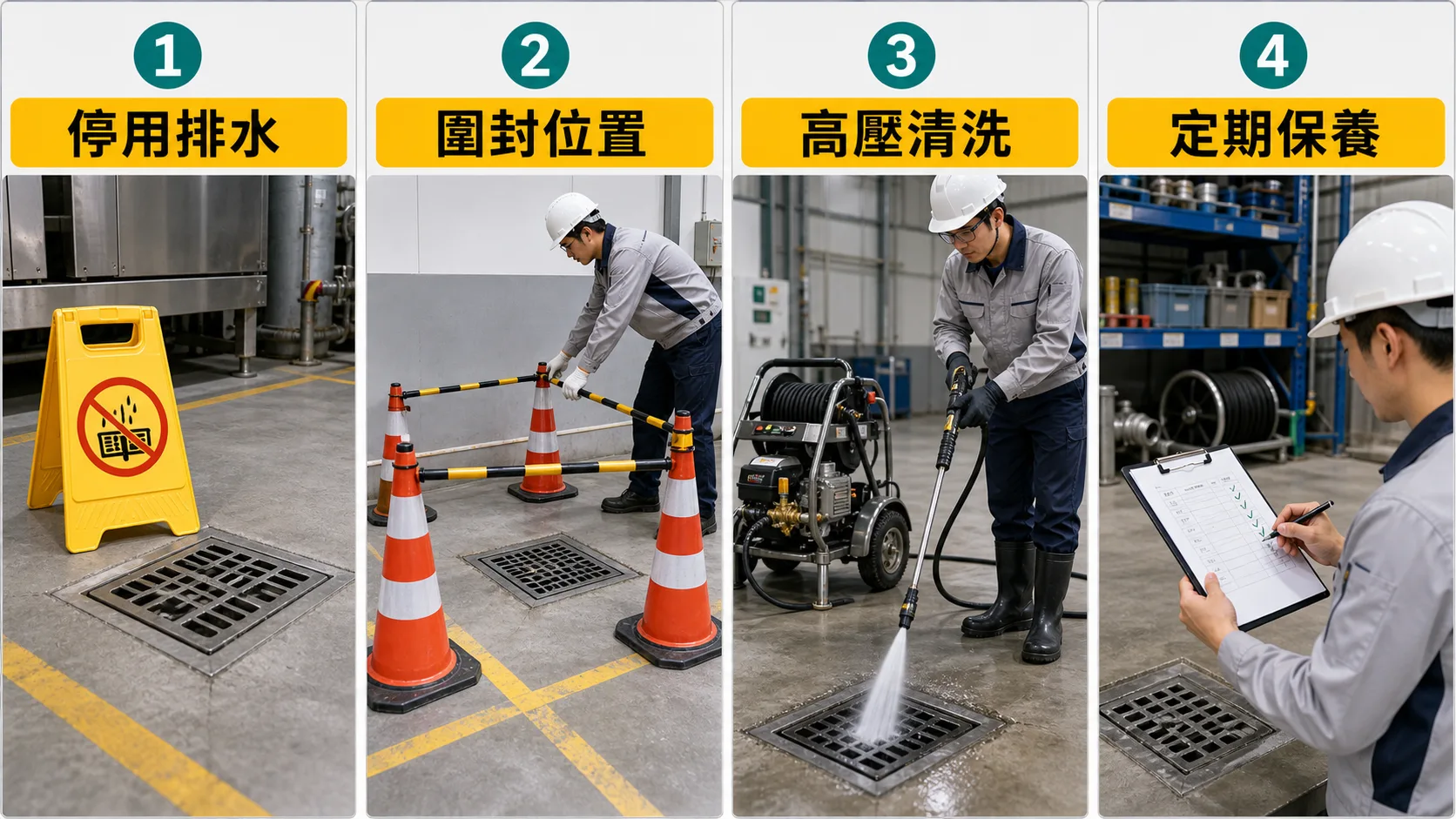
1. Stop discharging water
Stop pouring water into affected floor drains, basins, equipment outlets and washing areas. Continued washing can spread contamination into stock, machinery, cable routes and neighbouring units.
2. Cordon off the area
Use signs, cones or barriers and divert staff. Record where backflow occurs, visible levels, odour, the outlets affected, whether several points are involved and any lower-floor complaints or shared-drain abnormalities.
3. Select jetting or sediment removal
For grease, sludge and pipe-wall deposits, appropriate jetting may provide more thorough cleaning than merely opening a passage with a cable. Sand, metal filings and settled solids may require extraction, desilting or sectional work. Pipe diameter, material, bends, obstruction and damage determine the method. See jetting applications and desilting versus unblocking.
4. Plan maintenance
Where the same section blocks every few weeks or months, repeated emergency responses leave continuing operational disruption. Match pipe cleaning, desilting and grease-trap maintenance to water volumes, grease, wash-down frequency, solids and shared-drain risks.
When to escalate immediately
- Several outlets backing up: a downstream branch, chamber or main may be affected.
- Strong rotten, egg-like or irritating smells: move nearby staff away, avoid close exposure and do not enter chambers.
- Sewage contacting stock, food or worktops: stop using contaminated areas, clean and dry, and arrange appropriate disinfection.
- Water approaching electrical panels, sockets, machines or cable routes: address electrical safety without entering unsafe water and stop further discharge.
- Shared drainage abnormalities: notify management and clarify the private and common drainage boundaries.
Do not enter chambers or improvise with chemicals
Industrial drainage can involve sewer gases, oxygen deficiency, hydrogen sulphide, sewage and unidentified chemicals. Untrained people must not enter chambers, enclosed channels or suspected confined spaces. Opening a cover also requires assessment of gas exposure, slippery surfaces, vehicles and surrounding work.
Do not mix drain cleaners, bleach, acids or alkaline cleaning products. Corrosive residues can damage pipes or skin, produce irritating gases and expose technicians during dismantling. Disclose any chemical already used.
Planning industrial drainage maintenance
No single interval suits every site. Industry, discharge volumes, grease and solids matter. Food preparation, washing, packaging, repair, metalwork, laundry, warehousing and shared kitchens often need closer attention than an ordinary office. Record each blockage's time, location, material, treatment and recurrence interval, then use the evidence to set the schedule.
Where a grease trap is installed, consider it together with downstream pipes. Cleaning the pipe alone leaves incoming grease uncontrolled; cleaning only the trap leaves old downstream deposits. Arrange appropriate disposal of trap waste; see grease-trap waste handling.
WhatsApp PipeButler on 5340 0748 with site video, affected outlets, floor, type of business, grease-trap details and any shared-drain involvement. We will assess unblocking, jetting, sediment removal, odour investigation, disinfection or planned maintenance and agree the scope before starting.
Frequently asked questions
Can the factory continue washing floors?
No. Slow or backing-up floor drains allow wash water to spread contamination and increase slipping, leakage and operational risks. Stop affected discharge and isolate the area.
Does every factory blockage need jetting?
No. A simple surface obstruction may not. Grease, sludge, long partial restrictions and recurrence warrant consideration of jetting or desilting according to the pipe and material.
Is chamber backflow the unit's or building's responsibility?
Location and impact matter. One private branch may be local; corridor, neighbouring-unit and multiple-outlet problems suggest shared drainage. Notify management while the source is established.
Can drain cleaner be used?
It is not an appropriate first step. Sand, metal, plastic or grease sludge may not respond, and corrosive products create additional hazards. Record conditions before choosing treatment.
How often should factory drains be maintained?
Base the interval on industry and usage. Monthly, quarterly or six-monthly inspection may be considered where grease, frequent washing, solids or past blockages justify it. Adjust using actual recurrence and the quantity of material removed.
Industrial enquiries and local information
Before arranging work, provide unit use, affected points, other-unit symptoms and equipment access. Define unit outlets, shared mains and chambers separately; quotations depend on actual pipes, tools and access.