
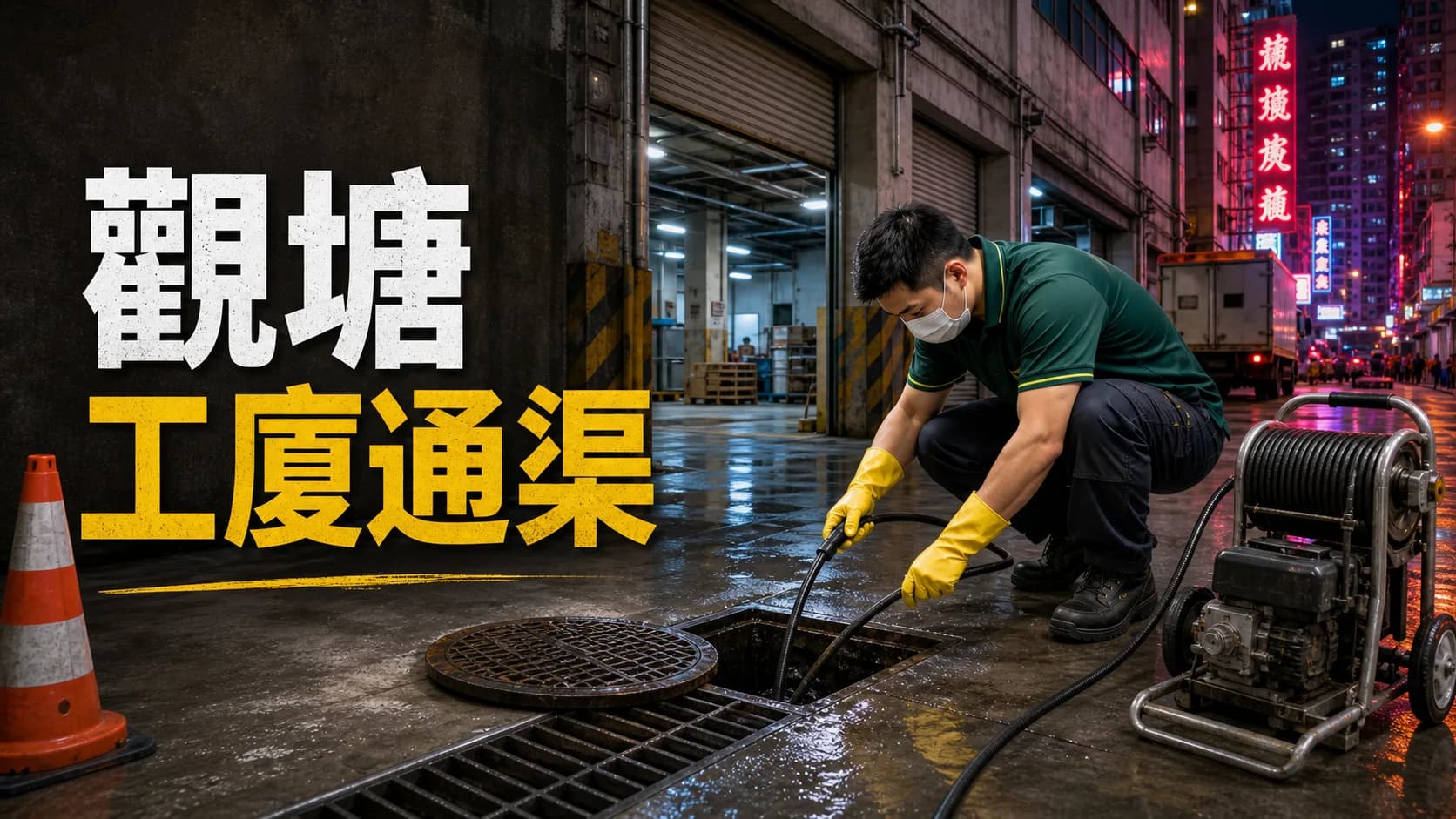
A blocked drain in a Kwun Tong industrial building, studio, warehouse, food factory or commercial unit often involves more than one outlet. Older industrial premises and the wider Kowloon East business area include loading bays, shared toilets, floor drains, rear-lane chambers and food operations. A restricted main, chamber or floor drain can disrupt production, deliveries and storage, create staff hazards and generate management complaints.
For blocked floor drains, high chamber levels, toilet backflow or strong odours, stop affected discharges, isolate slippery surfaces and record visible levels and affected areas. Notify management and arrange desilting or commercial unblocking. Never send staff into a chamber or mix drain chemicals.
See Kwun Tong coverage. The checks below help identify the source, assess jetting and prepare information for management or a technician.
Common blockage locations
Floor drains inside the unit: work areas, washing stations, food-preparation areas and warehouses can accumulate hair, paper, plastic granules, grease, sand and cleaning residues.
Pantry sinks and basins: grease, coffee grounds, batter and food particles gradually narrow branch pipes.
Shared toilets and wastewater pipes: wipes, tissues, bags and cleaning materials can affect neighbouring or lower-floor units.
Chambers and main drains: simultaneous problems in several units, corridors, rear lanes or lower floors suggest a shared restriction.
Four important causes
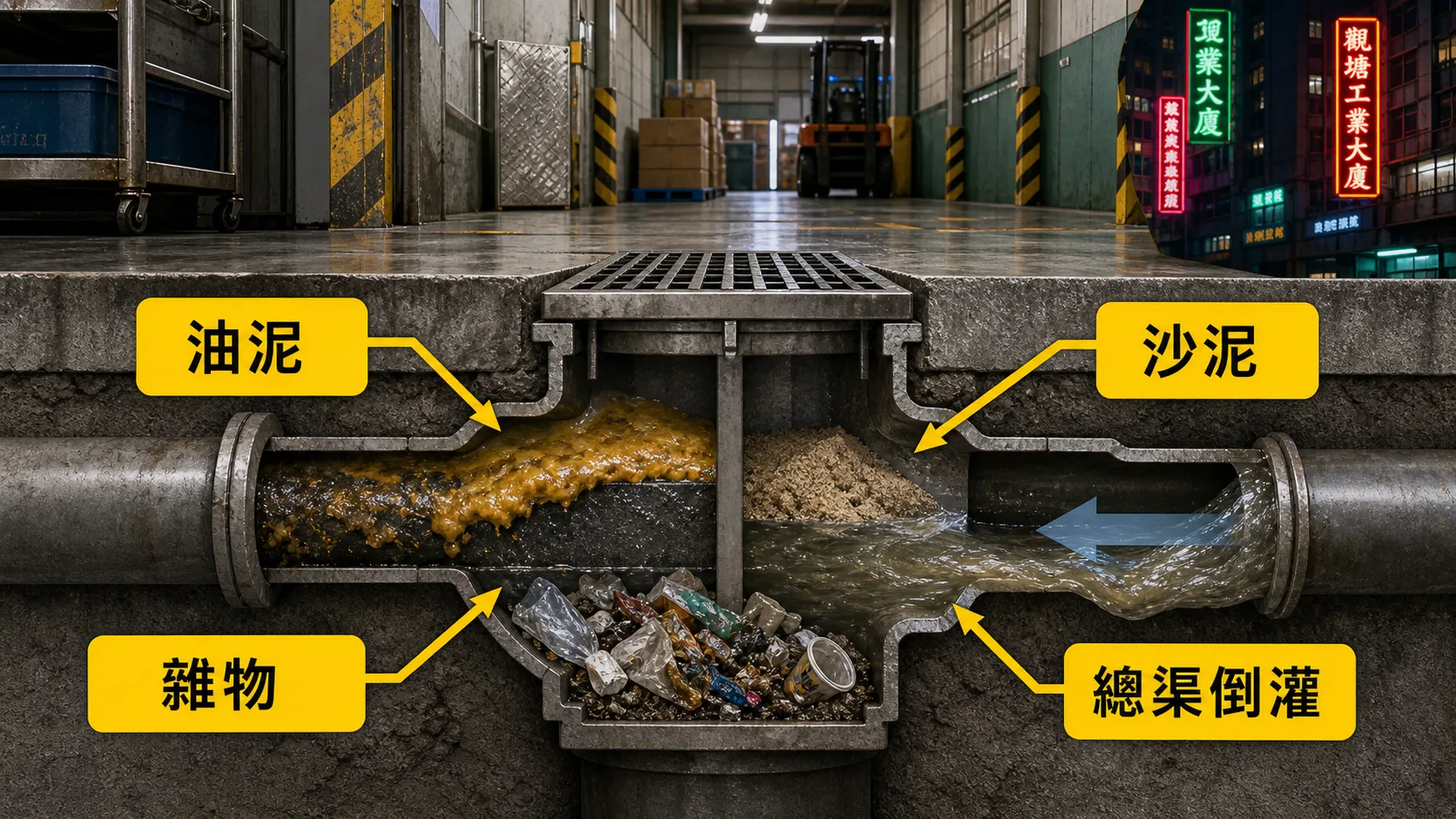
1. Grease deposits
Food factories, pantries, takeaway production and oily washing processes need suitable grease and solids interception. Otherwise cooled grease adheres to pipe walls. Slow drainage can progress to backflow during peak discharge or rain.
2. Sand and sediment
Loading bays, warehouses, workshops and cleaning areas introduce sand, dust, soil, metal powder and other deposits. These settle in floor drains, chamber bottoms and horizontal pipes, reducing capacity.
3. Solid debris
Packaging tape, labels, paper, wipes, plastic granules, food and cleaning materials can lodge at bends, joints or chamber entrances.
4. Main-drain backflow
Rising levels at several outlets, neighbouring units or corridor chambers may indicate inadequate available capacity downstream. Clearing one private outlet may not be sufficient; shared pipes and chambers need assessment.
Four initial actions
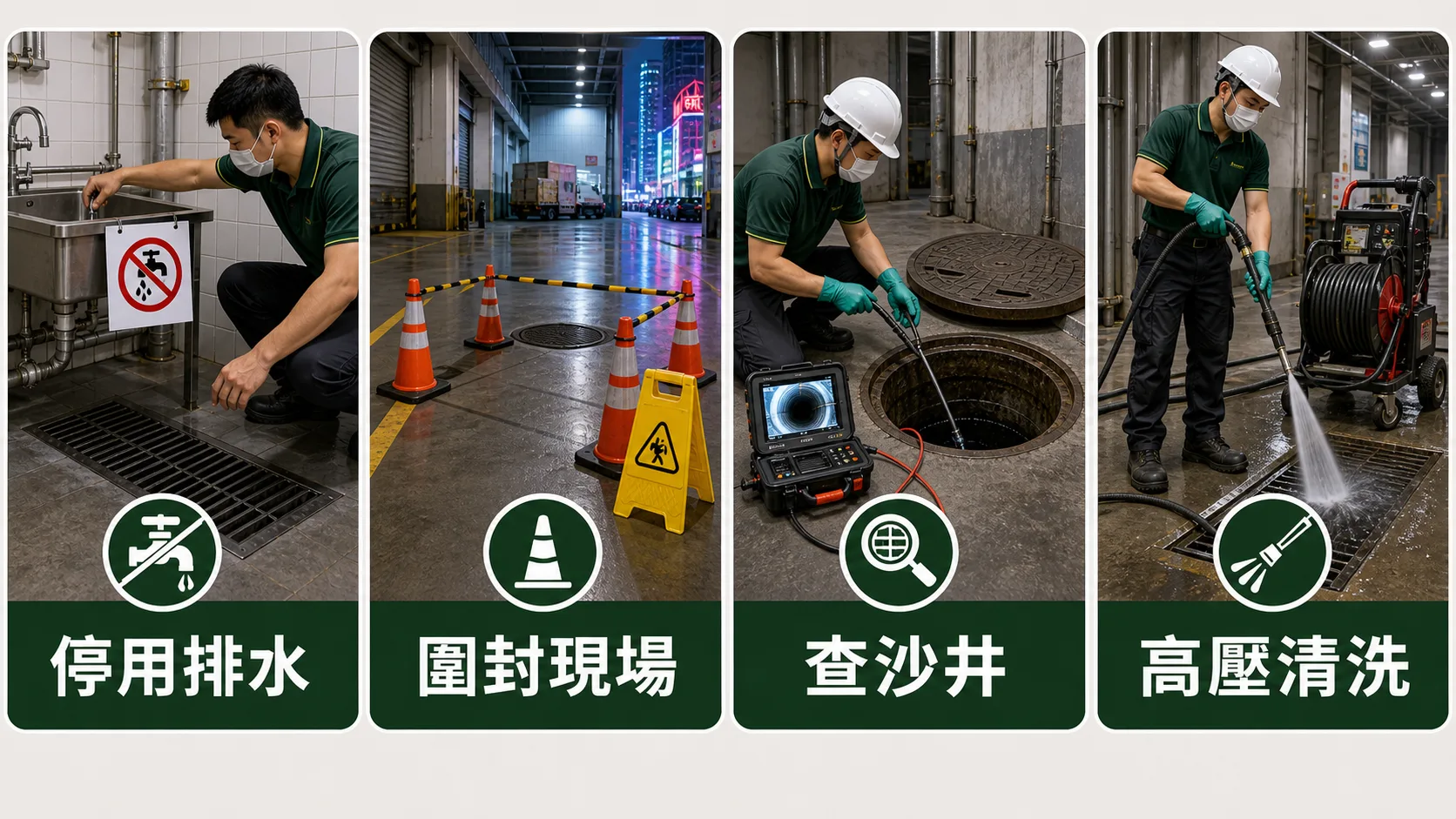
1. Stop discharge
Stop using affected basins, sinks, floor drains, wash-down hoses and production washing points. Continued discharge spreads backflow and makes its origin harder to identify.
2. Isolate the area
Use cones, signs or barriers to keep staff, delivery workers and customers off slippery or contaminated floors. Do not ask staff to handle sewage with bare hands.
3. Identify chambers and affected areas
Record whether water emerges from a private floor drain, shared toilet, corridor chamber, rear-lane chamber or several outlets. Ask management whether the same floor or lower floors are affected.
4. Select unblocking, desilting or cleaning
A local branch obstruction may need unblocking. Grease, sediment and recurrence may require pipe cleaning or desilting. Jetting can treat pipe-wall deposits and longer runs, subject to pipe condition and site risks.
Private branch, shared main or chamber?
One slow outlet: begin with that fitting and nearby branch.
Several slow outlets inside one unit: consider its principal branch, grease trap or connection.
Several units on one floor: notify management to investigate shared mains, chambers and building pipework.
Flooding in a lane, roadside or common area: establish whether it is private drainage or a public-road drain. Report public drainage through the appropriate government channel; private chambers require coordination with the owner, manager or contractor.
Record location, water levels and affected outlets when responsibility is unclear. Do not open or enter chambers yourself: oxygen deficiency, harmful gases and slipping hazards may be present.
When should jetting be considered?
It is not required for every blockage. Industrial grease, silt and dust can narrow long horizontal runs, making further cleaning relevant when:
- The same drain or sink blocks repeatedly within weeks.
- Flow improves only briefly, suggesting a small passage was opened through deposits.
- Grease, sand, sediment or wash-down sludge remains.
- A chamber contains thick deposits requiring removal before pipe flushing.
- Food or catering discharge has a high grease content.
- Cleaning is planned for handover, renovation or management requirements.
Suspected cracking, collapse, incorrect connections or persistent backflow may need inspection or sectional testing first. Read jetting applications and desilting versus unblocking to clarify the scope.
Investigate lingering odour separately
Odour may come from a dry floor-drain seal, defective trap, decomposing chamber grease, cracks, main-drain backflow or pressure problems. If it remains after clearance, arrange source investigation; perfume or bleach does not correct these causes.
Prepare information for the assessment
- Building name, block, floor, unit and nearest goods lift or loading bay.
- Affected floor drains, sinks, toilets, corridor or rear-lane chambers.
- Safe video showing water rise, backflow direction or foam, and a description of odour locations.
- Dates of unblocking, desilting and grease-trap cleaning.
- Other affected units, lower floors and common areas.
- Possible food, grease, powder, metal fragments, sand or chemical discharge.
Clear records support a useful initial assessment. Send them through our contact page or WhatsApp.
Preventing recurrence in industrial premises
Intercept solids: fit suitable strainers at basins, sinks, wash stations and floor drains to capture plastic, paper, food and metal fragments.
Separate grease: maintain grease traps and keep oil, stock, batter and bulk food residues out of drains.
Plan desilting: premises with substantial storage, workshop, wash-down or loading-bay use should match cleaning to sediment loads.
Keep records: dates of blockages, backflow, desilting and jetting help owners and managers distinguish private from shared issues.
WhatsApp PipeButler on 5340 0748 with the industrial-building location, affected outlets, backflow video, safe chamber photographs and maintenance history. We will assess unblocking, desilting, pipe cleaning or odour investigation and agree the work before starting.
FAQ
Can washing down continue with a blocked floor drain?
No. It can spread backflow and carry more sediment, grease and residue into the obstruction. Stop discharge and isolate the area.
Who handles a blocked industrial-building main?
The location determines the next step. A private branch is initially handled through the unit; simultaneous problems across units, shared chambers or lower floors should be raised with management to investigate responsibility.
How do jetting and desilting differ?
Jetting uses water to clean pipe walls and clear suitable obstructions. Desilting removes accumulated sand, grease sludge and debris from chambers and drain bottoms. Recurrent industrial blockages may need both.
Should drain cleaner be poured into a floor drain?
It is not a suitable main response. Strong acids or alkalis can damage pipes and expose staff or technicians. Identify the material and location first.
Does an odour always mean a blockage?
No. Dry seals, defective traps, chamber grease, cracks, backflow and ventilation problems can also cause odour. Persistent smells need source investigation.
Kwun Tong guidance and service booking
This guide helps organise industrial blockage and shared-route questions in Kwun Tong. To arrange work, provide the building, unit or common-area location, access route and work times, then confirm scope and quotation.