

From City One Shatin and central Sha Tin to Tai Wai, Ma On Shan and Wu Kai Sha, estate households use bathrooms, basins, kitchen sinks and laundry drains daily. Slowness, odours, gurgling and recurrence do not always come from one opening. Hair and soap, dry seals, trap deposits and restricted shared pipes need different responses.
One slow outlet suggests checking its trap and branch first. Smells across the bathroom, basin and kitchen may involve shared drainage or ventilation. Similar symptoms at neighbours or communal areas warrant management contact. Assess clearance or odour-source investigation according to the findings.
This guide uses common situations around City One, Tai Wai, Ma On Shan and Fo Tan to explain separate outlet tests, evidence and next steps. See Sha Tin service coverage.
Four common causes
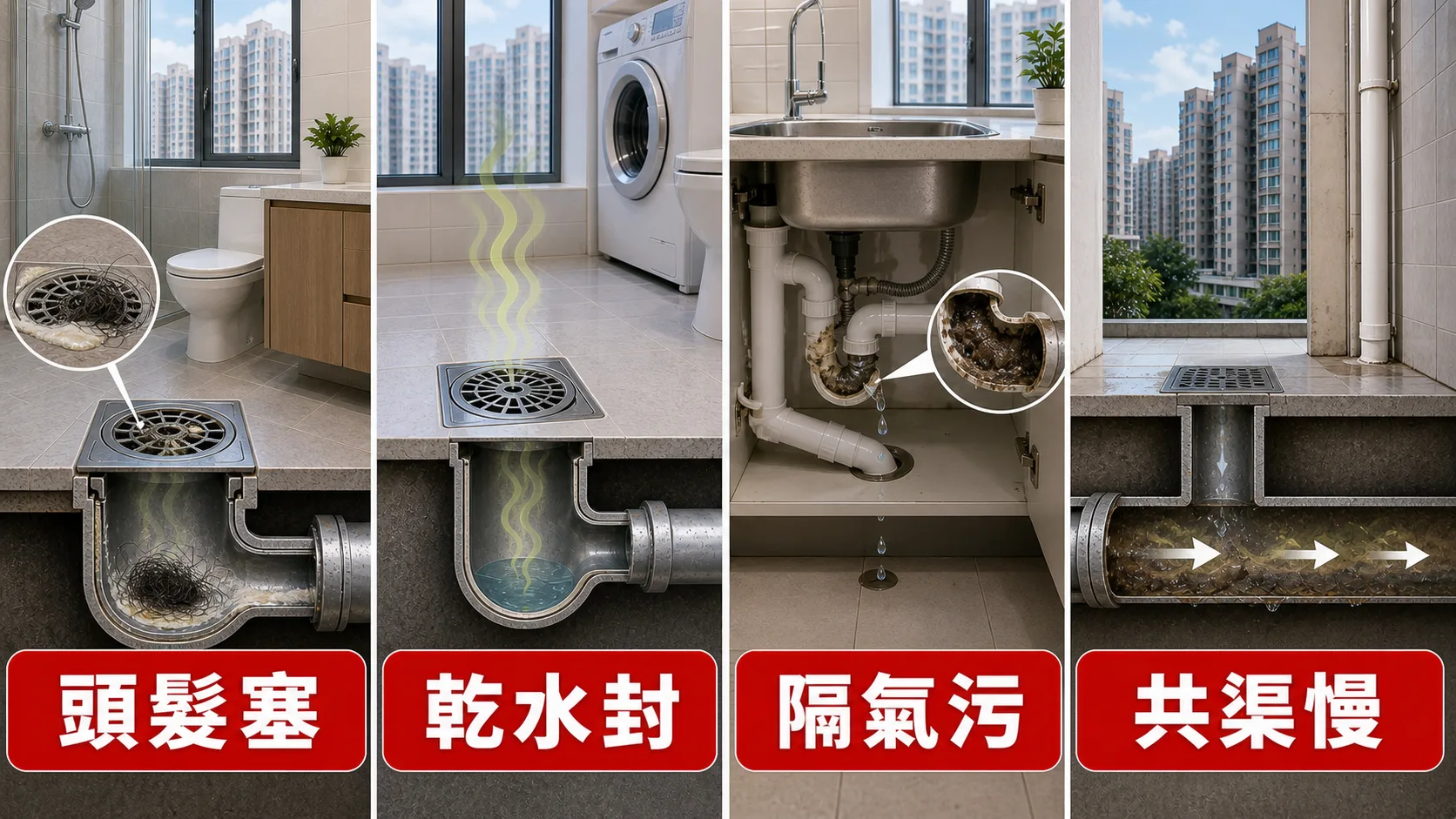
1. Hair in bathroom floor drainage
Frequent household showers introduce hair, soap, shampoo, conditioner and dust to outlets, traps and bends. Initial slowness can become pooling, smells and black deposits. For one affected outlet, clear accessible hair and test separately where safe.
Persistent slowness suggests deposits below the floor, in a trap or branch. Hot water or chemicals may not remove a compacted hair-and-soap mass. See blocked floor drains.
2. Dry water seals: smells without necessarily slow flow
Floor drains, basin traps and toilets retain water to exclude drain air. Seldom-used bathrooms, guest toilets, balconies and laundry outlets can dry out. Extraction fans, closed windows and pressure changes may make smells more noticeable without an obvious blockage.
Where flow is normal, replenish the floor drain with clear water and observe after ten to fifteen minutes. Improvement suggests a seal-related cause. Smells returning within a day or two may involve shallow seals, leaking traps, ventilation or downstream restriction. See seal maintenance and bathroom odour sources.
3. Trap deposits at basins and kitchen sinks
Basins collect hair, toothpaste, soap and shaving debris; kitchens collect grease, rice, soup solids and cleaning residue. For one smelly or slow sink, open the cupboard for a visual check of the trap, hose, seals and water marks.
Deposits obstruct flow and generate odours. See slow basins and kitchen grease blockages.
4. Shared pipes: several outlets react
Simultaneous slowness across bathroom, kitchen and laundry, or similar smells at neighbours and corridors, suggests shared pipes, manholes, ventilation or managed areas. In large estates, one restricted shared route may produce symptoms at different times in different homes.
Record the full extent rather than simply clearing one opening. See multiple blocked drains and recurring blockages to guide management and technical coordination.
Four resident checks
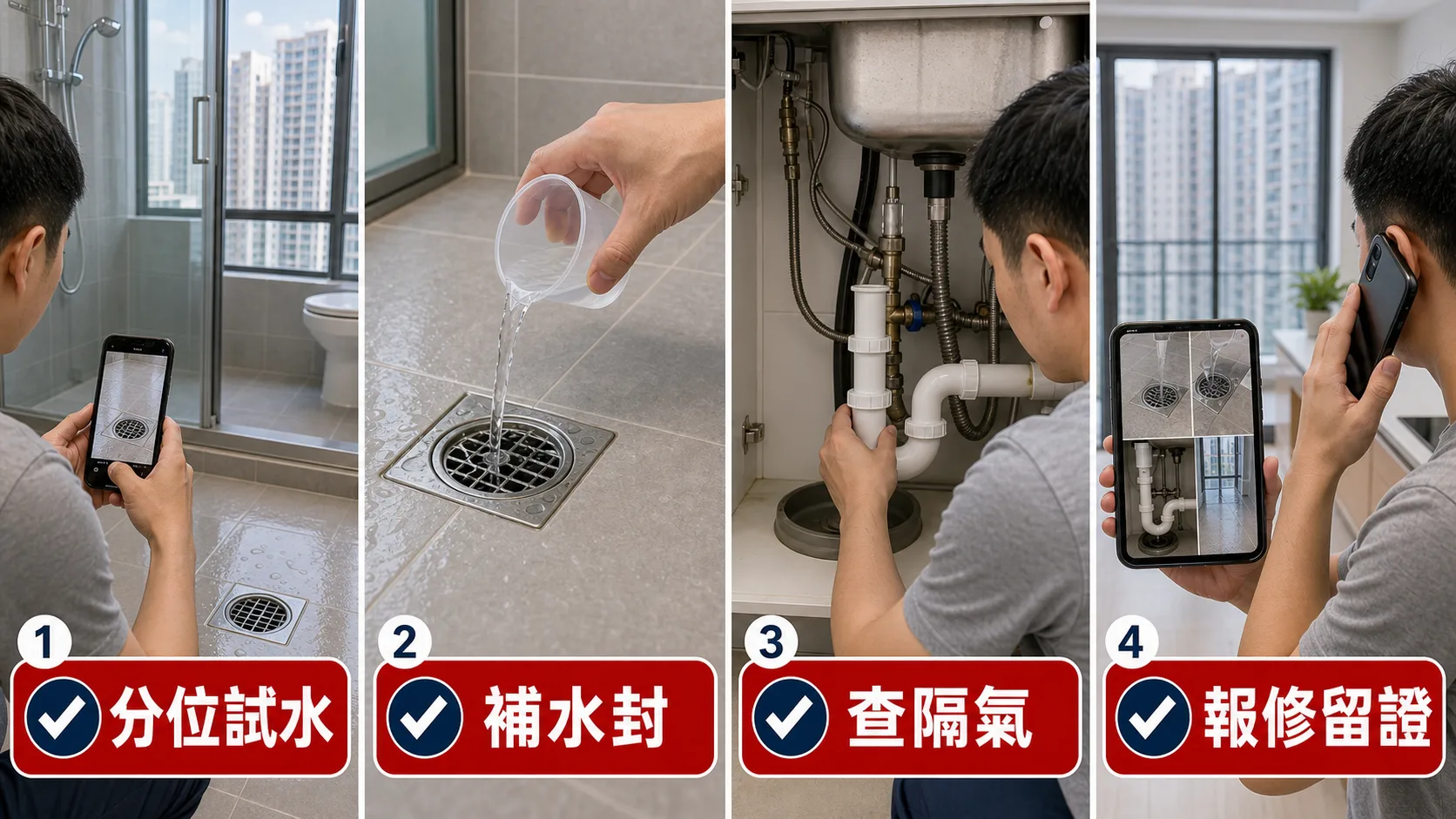
1. Test one outlet at a time
Where there is no active overflow or chemical hazard, observe the floor outlet, basin, kitchen sink, laundry and toilet separately. Record water volume, speed, pooling, gurgling, smells and timing. Running everything together makes the source harder to identify.
2. Replenish seals
Add clear water to seldom-used drains and observe odours. Record when improvement starts and when a smell returns to distinguish evaporation from siphoning, trap leakage or downstream pressure.
3. Inspect traps visually
Open cupboards and look for loose traps, sagging hoses, displaced seals, water marks and mustiness. Smells or drips after one tap runs suggest that branch or connection should be checked first.
4. Report and preserve evidence
Retain test videos, photographs, dates, locations, other affected homes, management replies and previous clearance records. Specific evidence supports shared-drain follow-up.
When to contact management
- Several outlets in one home: deeper branches, horizontal pipes or shared routes may be involved.
- Neighbours also smell drains: ask management to check communal drainage and ventilation.
- Corridors, refuse rooms or lift lobbies smell: document those shared areas too.
- Storm backflow or high manholes: assess downstream and external drainage; see rain-related backflow.
- Rapid recurrence: assess cleaning, desilting or CCTV.
Fo Tan industrial and commercial premises: consider grease
Industrial units, studios, restaurants and pantries can accumulate grease, grounds, food and cleaning residue in sinks, floor drains and grease traps. Recurring slowness and smells require a combined maintenance view of traps, pipe cleaning and sediment removal rather than waiting for a complete blockage.
See commercial kitchen maintenance and jetting suitability.
Do not rush to add chemicals
Chemicals may affect only part of a hair, soap or grease deposit and cannot correct objects, grit, inadequate fall, shared-pipe resistance or leaking traps. Residue in standing water exposes anyone subsequently dismantling or clearing the pipe. Mixing cleaning products adds further risks.
Stop using affected outlets, record symptoms and choose clearance, odour investigation, cleaning or management follow-up. Backflow, contaminated floors or damp mouldy cupboards may also require cleaning and disinfection. See chemical safety and assessment arrangements.
For problems around City One, central Sha Tin, Tai Wai, Ma On Shan, Wu Kai Sha or Fo Tan, WhatsApp PipeButler on 5340 0748 with the estate location, outlet photographs, separate test videos, other affected points and management contact status. We can assess clearance, source investigation, cleaning, desilting, CCTV or management-led shared-drain checks.
Frequently asked questions
Does a slow City One bathroom always need unblocking?
No. Remove accessible hair and test separately. Persistent slowness, pooling, gurgling or recurring smells suggest a trap or branch restriction requiring assessment.
Will adding water remove floor-drain smells?
It often helps a dry seal. Immediate persistence or rapid return warrants trap, ventilation, downstream and shared-drain checks.
Can I dismantle a slow basin trap?
Only if you understand the fittings and can reconnect them safely, with gloves and a catch basin. Do not dismantle after chemical use or where fittings are aged or loose; seek help instead.
Should management be told about several smelly outlets?
Yes, particularly if neighbours have similar symptoms. Shared pipes, ventilation and downstream flow may be involved.
Does recurrence always need CCTV?
No. It is more useful for repeated restrictions, objects, sediment, deformation, fall or shared-pipe concerns. A one-off accessible hair blockage may need only clearance and maintenance.