
Loading page…
Loading page…
Repeated blockage can involve grease, hair, objects, renovation waste, poor falls, damaged pipes or shared drains. Investigate the cause before repeating the same treatment.
WhatsApp with the problem and district, and we will confirm available timing.
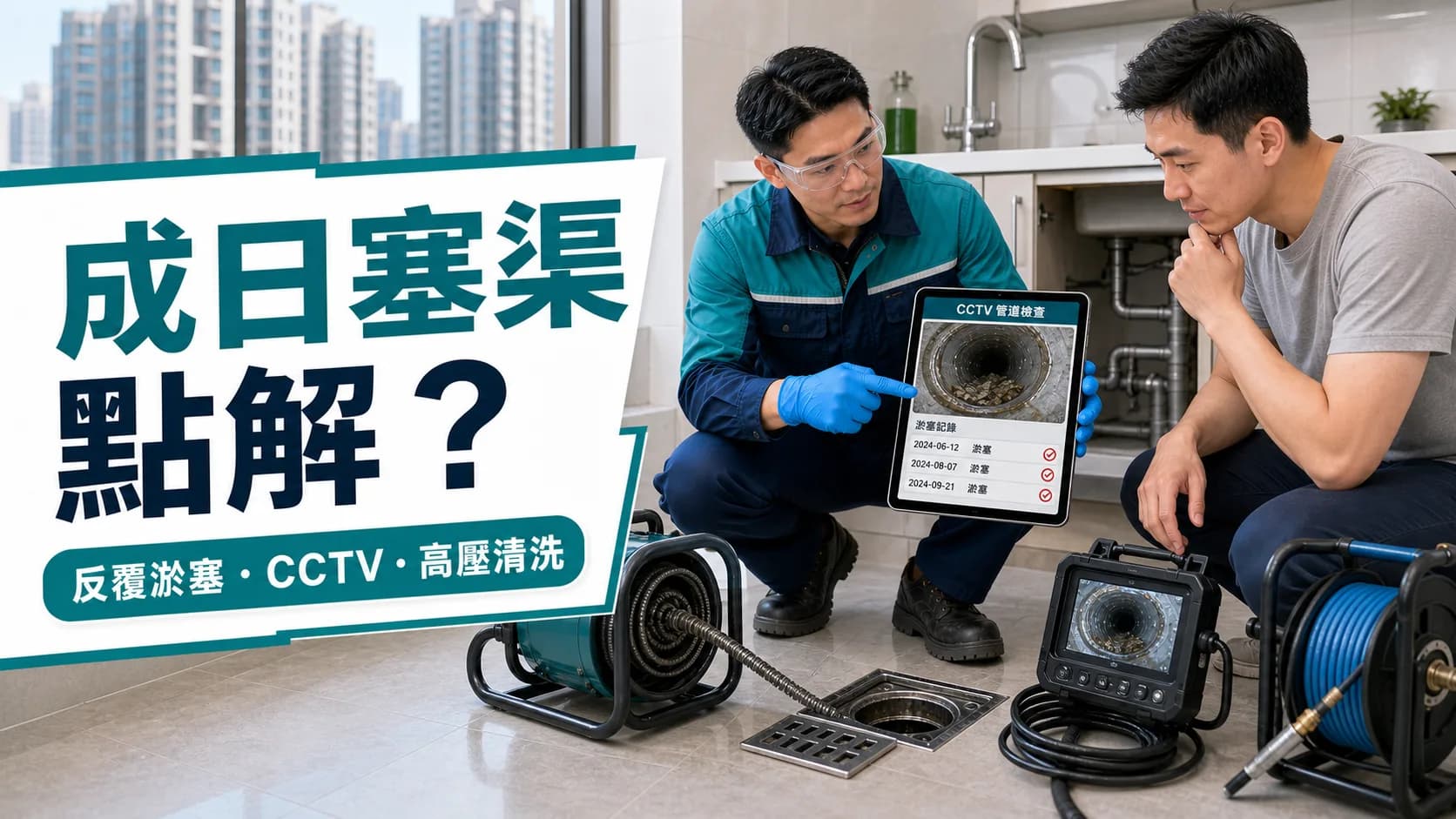
A drain that blocks again within days or weeks rarely needs simply more chemical cleaner. Ordinary clearing may open a passage while grease, hair, sediment, objects or structural defects remain. Flow briefly improves, then the same outlet slows or backs up again.
If a drain repeatedly blocks within a month, several outlets slow together, water rises, odour or backflow occurs, or previous visits only helped briefly, investigate the source. CCTV, jetting, desilting or management coordination may be more appropriate than another identical clearing attempt.
These seven causes help distinguish cases suited to ordinary unblocking from those needing pipe cleaning or investigation.
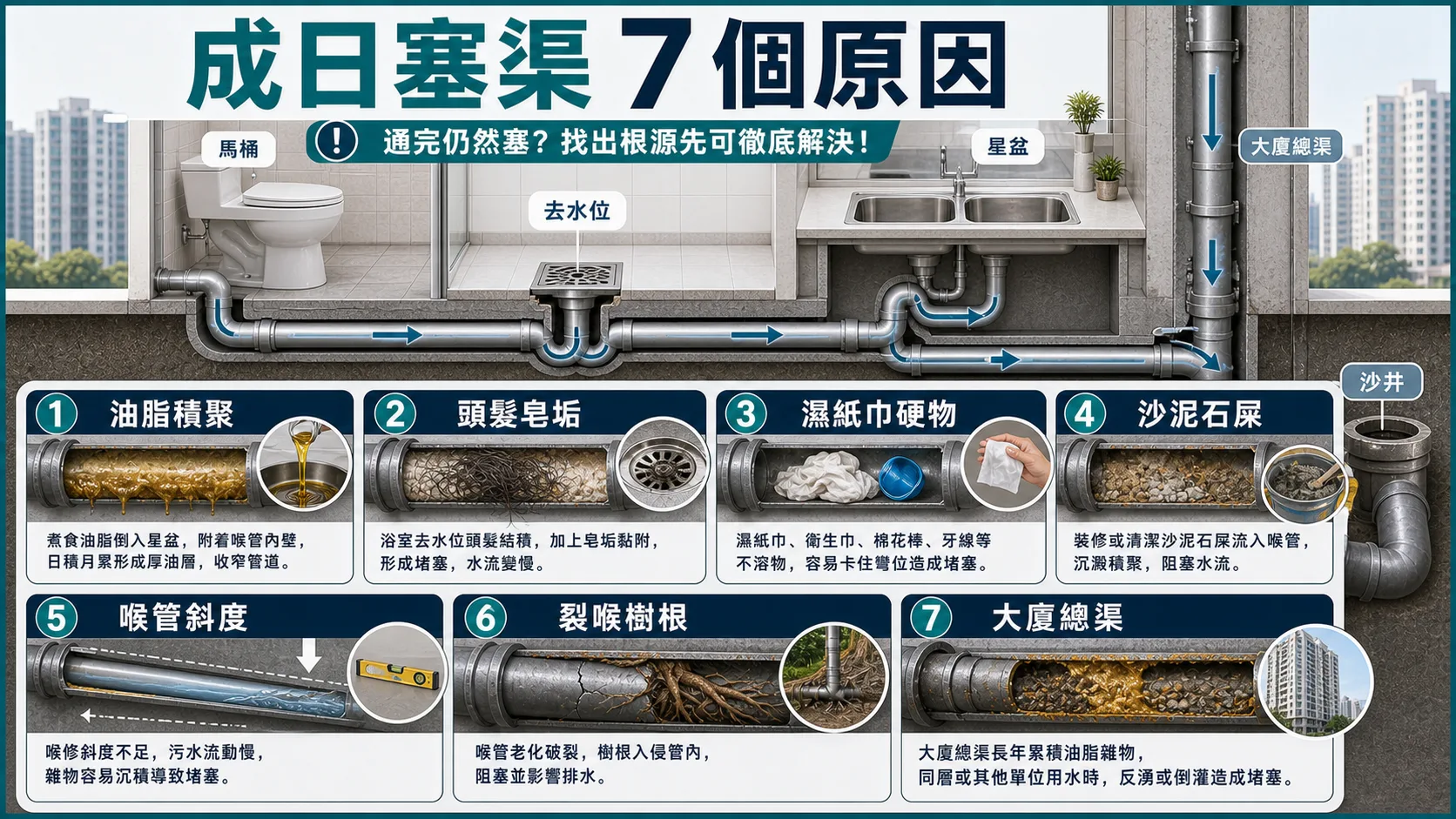
Oil, soup, sauces and food cool and stick to walls. As the layer thickens, a cable may only open a narrow central passage. New grease and food soon close it again, especially in restaurants, pantries and food premises.
Floor drains, showers, baths and basins collect hair, soap, skin debris and product residue. Pushing a hair bundle deeper without removing trap and outlet deposits can give only temporary improvement.
Wipes, cotton buds, floss, caps, toys and unsuitable paper can lodge in toilet bends. Chemicals cannot reliably remove them, and a trapped object can catch material on every flush.
Cement powder, sand, tile fragments, plastic, sealant and other debris can collect at bends and low points after renovation. Water and chemical cleaner may not remove them; appropriate cleaning or CCTV may be needed.
Drain gradients must carry water and solids together. Flat sections, sagging, offsets, deformed old pipes and long unsuitable concealed routes leave material behind. Clearance does not correct the underlying layout.
Village houses, ground-floor properties, external chambers and drains near planting can suffer cracks, settlement or root intrusion. Roots are less typical inside high-rise flats, but cracks, loose joints and leaks can still trap deposits.
Several slow outlets, lower-floor backflow, full chambers, smells and neighbouring symptoms may indicate a shared branch, main or public drainage problem, requiring management or owners' coordination.
Local hair, paper, light grease and single-outlet restrictions can respond well to ordinary clearing. Thick wall deposits, long affected sections, sediment, objects, poor falls and shared-pipe faults may remain after a passage is opened.
Unblocking restores a route through a restriction; jetting cleans deposits from walls; CCTV investigates whether the cause is grease, an object, a crack, an offset or sediment. No method suits every cause.
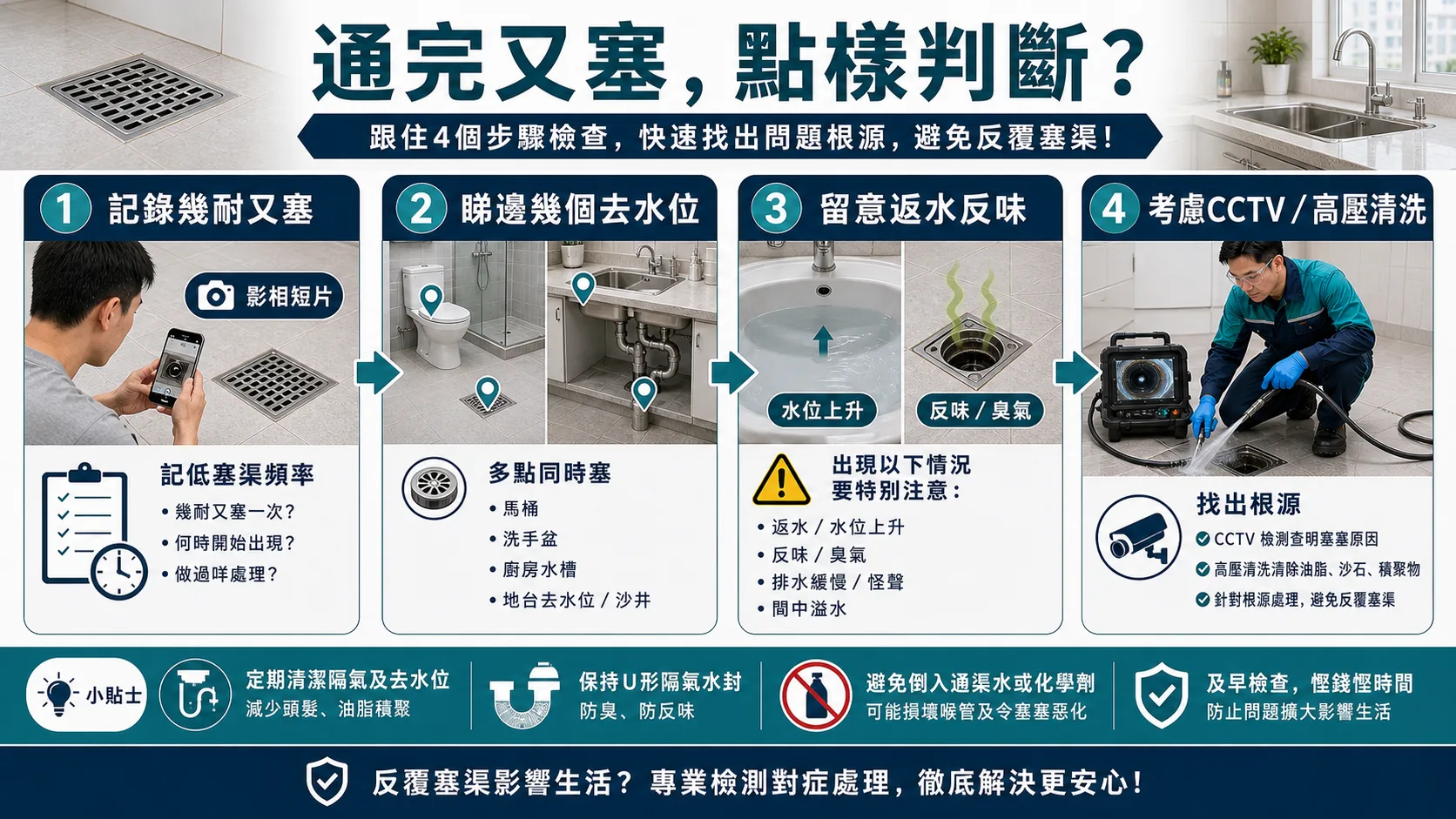
Not every blockage requires a camera. It helps with recurring concealed-pipe faults, problems beginning after renovation, suspected objects, cracks or offsets, repeated external or lower-floor backflow, and evidence for management or owners.
Its purpose is diagnosis, not immediate flow restoration. Findings help select cleaning, retrieval, sediment removal, repairs or shared-drain work.
Jetting can suit grease, sludge and long deposits in commercial kitchens, pantries, floor drains and sections around chambers, especially when normal clearing gives brief relief. Its value is matching the method to wall deposits and the affected length.
Hard objects, cracks, offsets, poor falls or public-main faults may require another first step. Assess condition and risks, using CCTV or management coordination where necessary.
This helps plan ordinary clearing, jetting, CCTV, desilting or management coordination. Review drainage-visit planning and contact PipeButler to establish the scope.
Not necessarily. A local restriction may have been cleared while thick deposits, sediment, objects, poor falls or a shared fault remained. The recurrence pattern and location matter.
No. Chemicals do not correct objects, sediment, cracks, poor falls, shared faults or all thick grease deposits, and repeated use adds hazards.
No. It suits wall deposits and longer affected runs. Local blockages may need ordinary clearing; objects or structural faults may first need CCTV.
A common branch, main or chamber may be involved. Notify management when lower-floor backflow or several units are affected.
Reduce risk by keeping oil out of sinks, never flushing wipes or objects, removing hair and strainer waste, maintaining grease traps and keeping renovation debris out. Poor falls or damage still need investigation and repair.
WhatsApp PipeButler on 5340 0748 with location, videos, recurrence timing and previous methods to assess whether the source is local, wall deposits, an object, a chamber or shared drainage.