
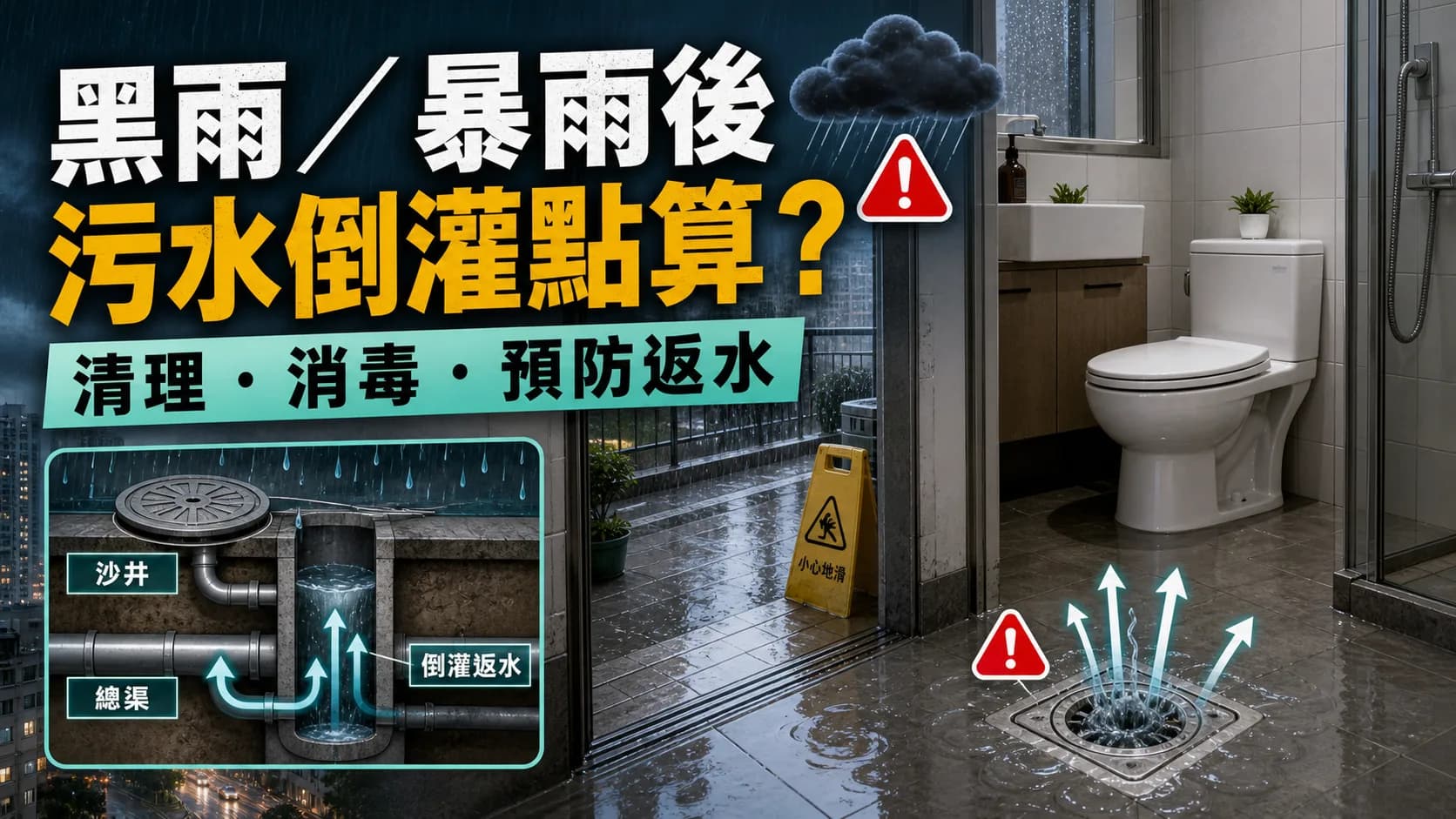
If sewage rises through a floor drain, toilet, shower, kitchen channel or inspection chamber after heavy rain, do not keep flushing to test it or add drain cleaner. Storms increase pressure on external drainage, chambers, shared lower-level pipes and existing restrictions. If downstream flow is blocked, additional water can return indoors.
Stop water use, avoid sewage contact, record where the water emerges, notify management or the responsible party and arrange drainage assessment or desilting. Control the source before concentrating on floor cleaning.
This guide covers causes, cleaning and prevention for lower-floor flats, older buildings, village houses, shops and estates in Hong Kong.
Immediate action
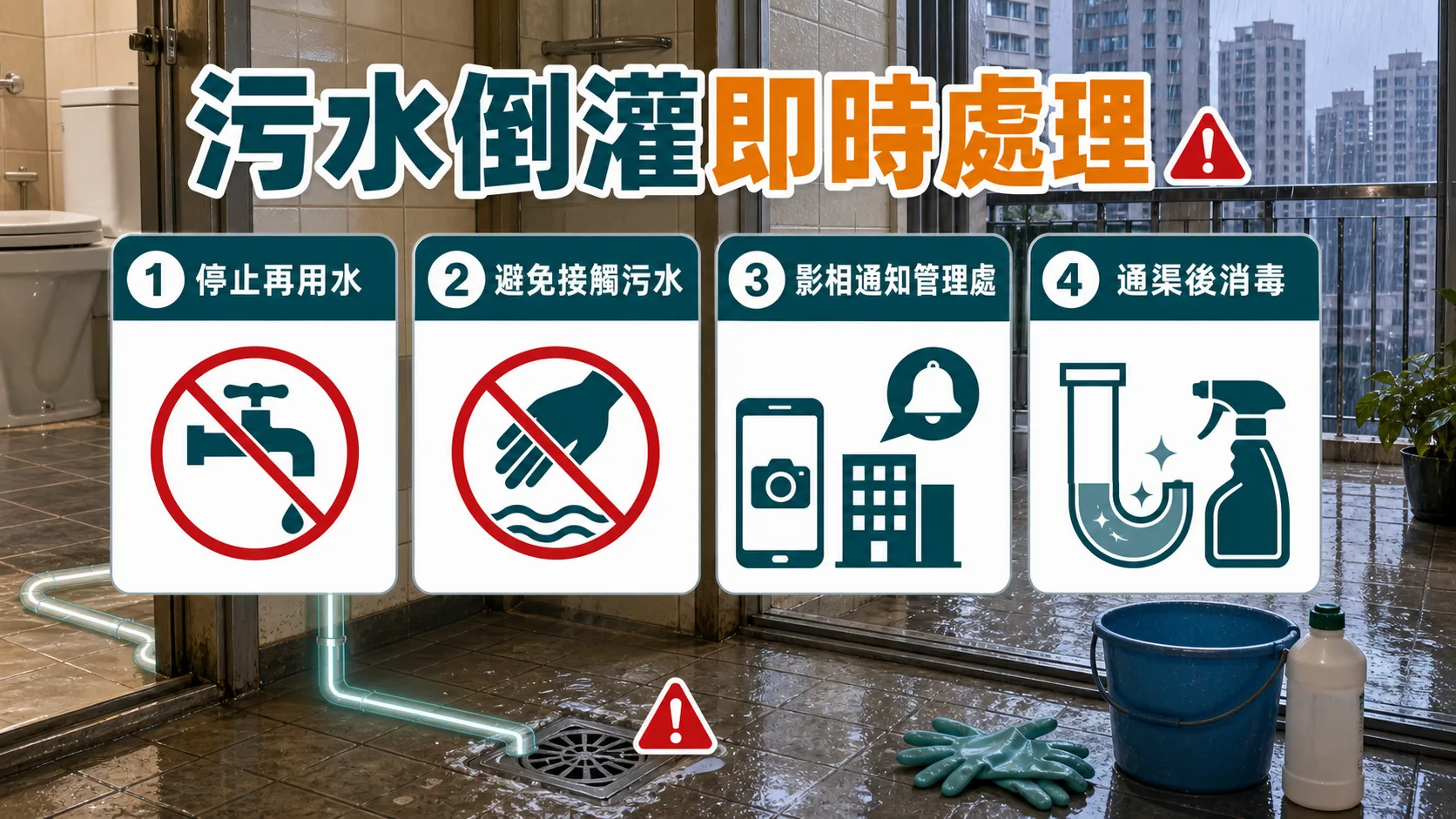
- Stop using water: pause flushing, laundry, washing-up, bath emptying and substantial tap use. A full downstream drain or chamber cannot accept more discharge safely.
- Avoid contact: sewage can contain faecal matter, grease, sediment and cleaner residues. Do not walk barefoot in it; suitable gloves, slip-resistant footwear and washable clothing are minimum precautions for any limited clean-up.
- Record evidence: photograph the outlet, water depth, chamber conditions, affected rooms, damaged belongings and timing for management, owners, technicians or insurers.
- Notify management and neighbours: lower-floor backflow, several outlets, full chambers or neighbouring problems suggest a wider fault.
- Clear first, then disinfect: stop backflow and remove wastewater before thorough cleaning, or the area will be contaminated again.
Why does sewage back up after rain?
Rain may expose an existing restriction rather than create it. Grease, sand, towels, wipes, renovation waste, leaves and rubbish can allow limited normal flow but fail under storm pressure, high external chamber levels or increased building discharge.
Lower floors and shared drainage
A blockage in a shared sewer, horizontal pipe, chamber or bottom connection often affects lower units first. Several gurgling, smelly or overflowing fixtures warrant the approach in multiple blocked drains.
Full chambers or external drains
Accumulated mud, grease and rubbish reduce chamber capacity. Storm inflow can cause overflow into upstream floor channels and shops. Chamber desilting and downstream clearance may be needed rather than cleaning one floor outlet.
Village houses, ground-floor shops and older buildings
Rear lanes, gardens and car-park channels collect sand, leaves, bags and grease. Water entering from a doorway, channel or chamber may be surface flooding, a private restriction or a public drainage problem; distinguish them.
Restaurant grease and commercial deposits
Poorly maintained kitchen drains and grease traps allow grease to harden on walls and in chambers. Heavy rain or busy-service discharge can turn a chronic restriction into odour and backflow.
Cleaning and disinfection
First confirm backflow has stopped and ventilate where safe. Do not handle flooded appliances, extension leads, sockets or wiring: electrical safety comes first. Deep or extensive contamination, faecal material, commercial premises or areas used by children or older people warrant professional cleaning and disinfection.
- Remove wastewater and solids first: use cleanable equipment, keeping it separate from normal household cleaning tools to avoid spreading contamination.
- Separate contaminated belongings: cardboard, fabric, carpet, absorbent boards and sewage-soaked soft materials may not be fully disinfectable and may require disposal.
- Clean before disinfecting: sediment, grease and organic matter reduce disinfectant effectiveness. Follow the suitable product's label after removing dirt.
- Never mix products: bleach, acidic cleaners, drain chemicals and other products can react. Disclose earlier drain-cleaner use.
- Watch for remaining damp and odour: persistent smells, mustiness or wet wall bases can indicate restriction, leaks or hidden contamination.
Management, 1823 or a private technician?
A single affected outlet may involve private pipework. Multiple outlets, lower floors, neighbours, full chambers or sewage in a lobby or rear lane require management or the owners' corporation to check shared drains. Public roads, gullies and public drainage should be reported through 1823 or the relevant department.
Both private contractors and management may need to coordinate: management identifies common sections while the contractor investigates private drains, with CCTV, jetting or desilting as appropriate. Repeatedly clearing one outlet without establishing the extent may miss the source.
Keep evidence before discussing responsibility
Responsibility depends on the actual fault, insurance policy, lease and building documents. PipeButler's drainage findings do not replace legal or insurance advice. Preserve records rather than relying on recollection.
- Backflow start and end times and rainstorm conditions.
- Photos and videos of outlets, depth, belongings, chambers and common areas.
- Management notifications, work records, technician reports and CCTV or clearing findings.
- The affected extent: one outlet, several, the whole home, shop, neighbours or common areas.
- Receipts and records for cleaning, disinfection, repairs and replaced belongings.
Checks before the rainy season
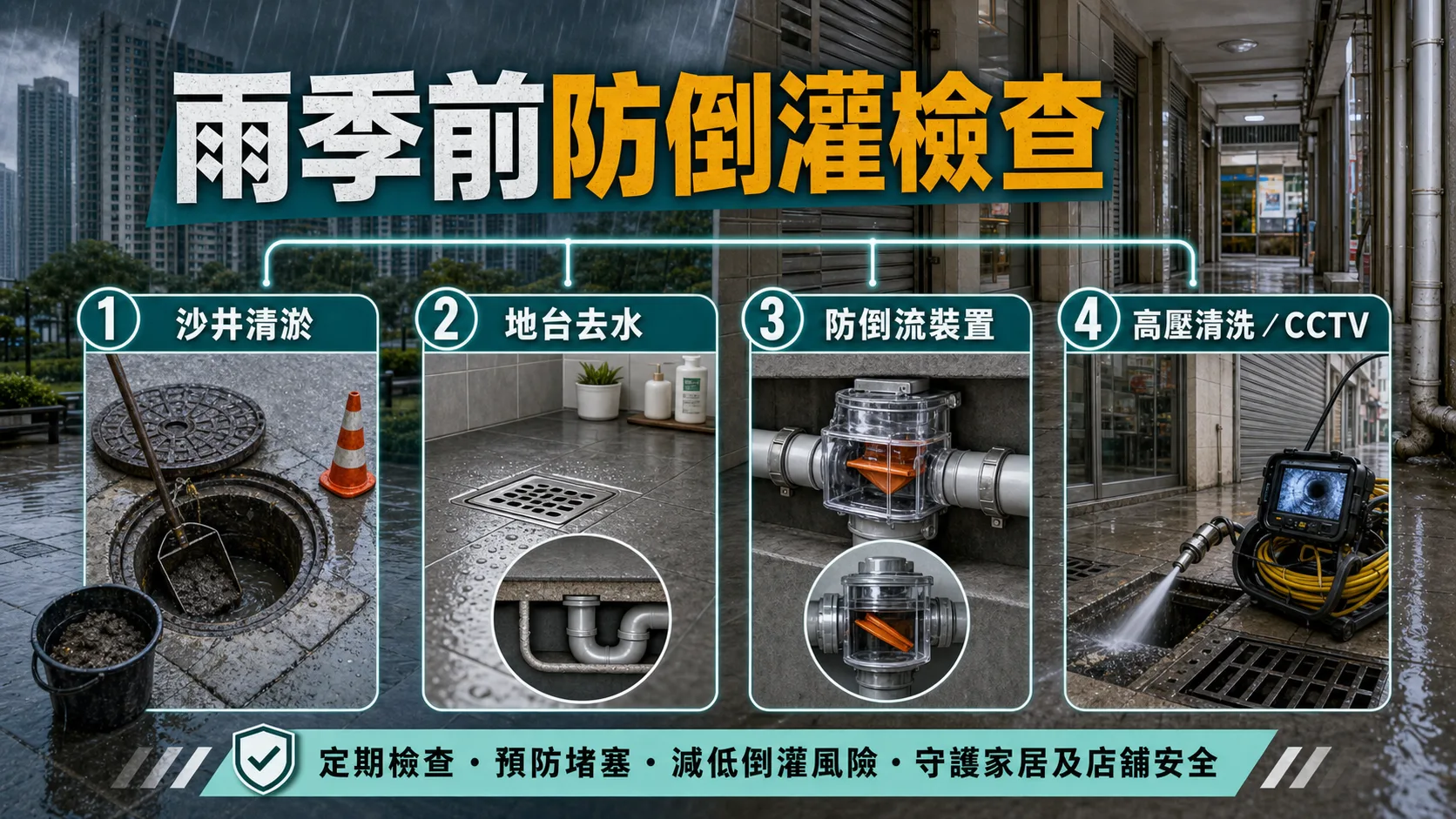
1. Clear outlets and strainers
Remove accessible hair, leaves, food and rubbish from bathroom, balcony, roof, entrance, kitchen and rear-lane outlets. Keep little-used trap seals topped up.
2. Inspect and desilt chambers
Lower floors, village houses, restaurants, industrial units, ground-floor shops and older buildings should check water levels and sediment before the rainy season. Surface rinsing may not restore capacity lost to deposits.
3. Investigate recurring backflow with CCTV where appropriate
Repeat storm backflow or quick recurrence after clearance can justify inspection for objects, sediment, cracks, offsets, inadequate falls and shared drainage defects.
4. Assess backflow protection for the actual system
Non-return valves may help at some locations, but cannot simply be fitted to every outlet. Incorrect installation can affect drainage and maintenance. An appropriately qualified person should consider layout, floor level and management requirements.
Frequently asked questions
Can I keep flushing to test a backed-up floor drain?
No. More water may increase sewage backflow. Stop using affected outlets, record what is happening and arrange assessment.
Should sewage-contaminated areas be disinfected?
Yes, after controlling the source and removing wastewater and dirt. Select treatment for the surface and material; extensive or commercial contamination warrants professional handling.
Does lower-floor backflow prove the building main is blocked?
No. Private branches, shared horizontal pipes, chambers, external drainage and public systems are possible. Check how many outlets, units and chambers are involved.
Should I open a full chamber myself?
No. Sewage, gases, slipping and falls are serious hazards. Keep clear or cordon the area safely and contact management or appropriately equipped personnel.
Does a non-return valve guarantee protection?
No. Suitability depends on design, flow, location and maintenance. It is one possible measure alongside cleaning, inspection and appropriate drainage use.
How is post-storm work planned?
Location, depth of restriction, access timing, jetting, CCTV, chamber desilting, disinfection, personnel and equipment determine the scope. See planning a drainage visit or contact PipeButler with photos and videos.
WhatsApp 5340 0748 with backflow videos, affected locations, floor level, chamber conditions and management's response. PipeButler can assess the likely private, shared, chamber or external source and the appropriate clearing, cleaning, investigation or disinfection sequence.