

Loading page…
Loading page…
Investigate drain odours after handover or renovation in Tseung Kwan O, preserve evidence and distinguish internal fittings from shared systems.
WhatsApp with the problem and district, and we will confirm available timing.
Tseung Kwan O has many modern high-rise estates around LOHAS Park, The Wings, Metro Town, Park Central, Hang Hau, Po Lam and Tiu Keng Leng. A newer building does not guarantee fault-free drainage. After handover, renovation or moving in, floor-drain smells, basin gurgling, slow kitchen sinks and leaking cupboard connections can still occur.
Do not immediately mask smells with fragrance or add aggressive drain cleaner. Record separate outlet tests, replenish water seals, inspect traps visually and keep repair records. Distinguish an internal branch, renovation connection, shared drainage or an issue needing odour investigation or clearance.
This guide explains four common possibilities and evidence residents can gather. For broader handover checks see new-estate drainage problems; also see post-renovation smells and bathroom odour sources.
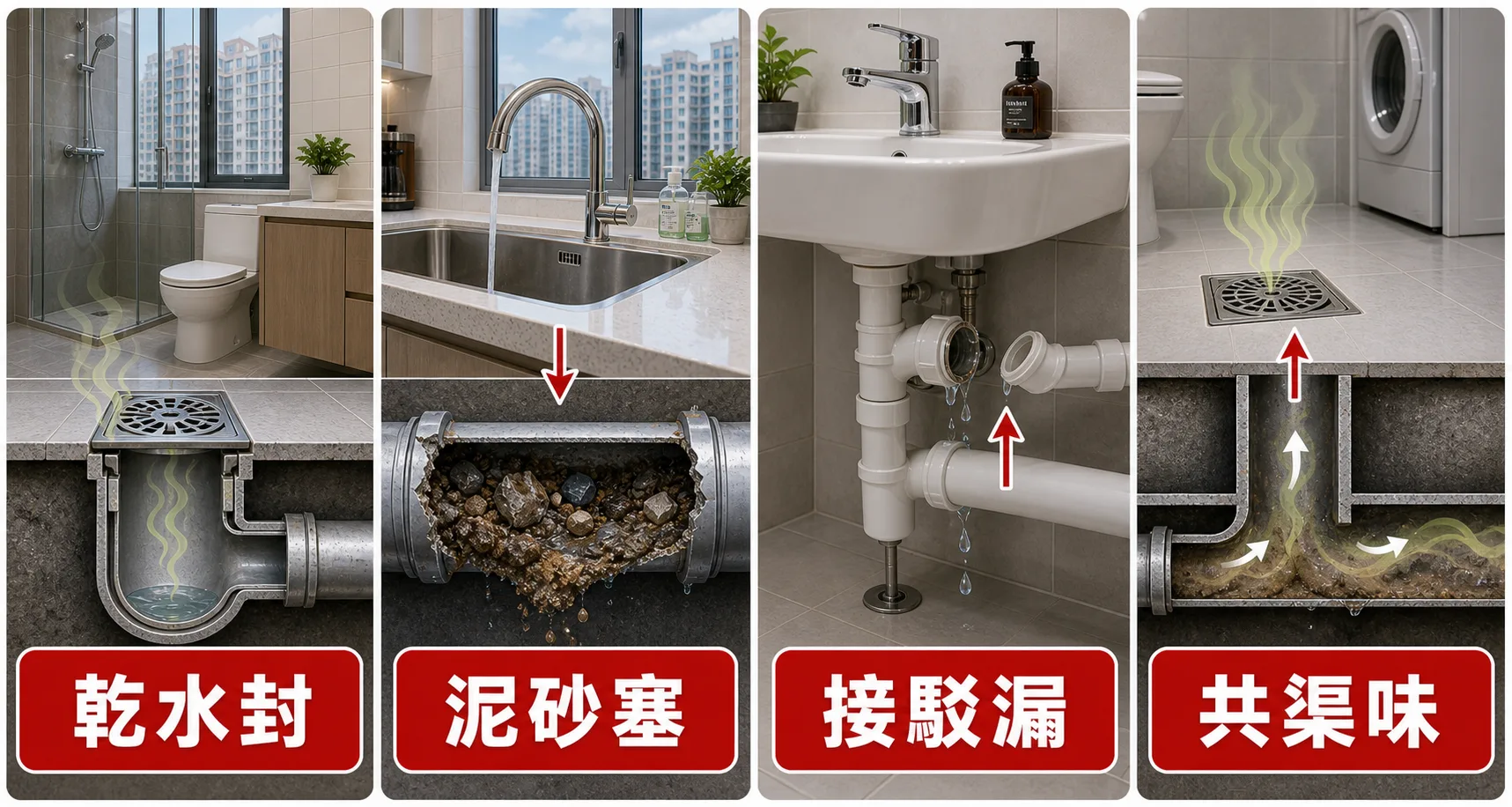
Floor drains, basin traps and toilets retain water to exclude drain air. Vacant flats and little-used outlets can dry out. Extraction, wind through windows and pressure changes during discharge may make smells more noticeable. Replenish the floor outlet with clear water where flow is normal and observe.
If the smell disappears but returns within a day or two, investigate shallow seals, unstable traps, altered outlets, ventilation or anti-siphonage. See water-seal maintenance.
Handover repairs, renovation and cleaning can introduce grit, mortar, stones, tape, film, hair and dirty water. Partial deposits at bends, traps and horizontal runs may cause slowness, gurgling and odours before a complete blockage. Symptoms beginning after work in any estate make the timeline a useful clue, not proof of cause.
Chemicals do not make grit and objects disappear. Choose equipment according to location and assess cleaning or staged inspection. Suspected mortar, objects or unknown concealed routes may justify CCTV.
Moving in often involves changing basins, sinks, cupboards, laundry equipment, air-conditioning drains or bathroom fittings. Poorly installed traps, hoses, seals, clamps or waste connections can leak and smell. Look for damp cupboards, mustiness, drips, laundry backflow or smells only after one fixture is used.
This is not necessarily shared drainage. Record connections, the leak location, which tap triggers it and renovation completion dates. Altered drains or fixtures may require installation and connection repairs or follow-up by the original contractor.
Smells across floor outlets, basins and kitchens, or at neighbours, other floors, corridors and refuse rooms, may involve shared pipes, manholes, ventilation or management-controlled areas. Treating one private opening may be insufficient.
Large estates have extensive routes and mixed residential-commercial areas. Notify management about simultaneous symptoms and record dates, times, locations, wind, extraction-fan status, test videos and neighbours' observations.
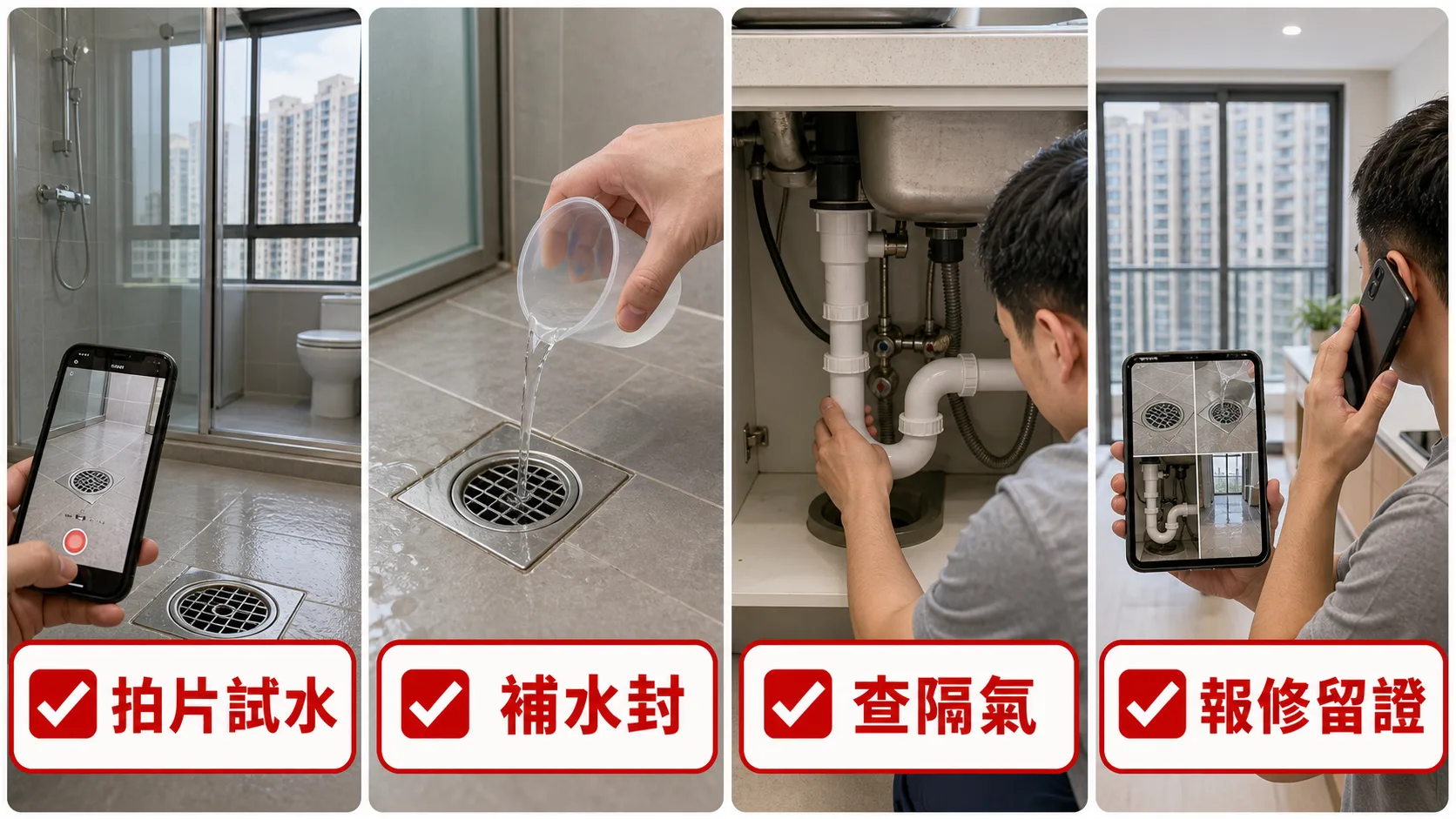
Where safe, record the bathroom floor outlet, shower, basin, kitchen sink, laundry, balcony and toilet separately. Do not run everything at once. Show water volume, drainage speed, pooling, gurgling, backflow and when the smell appears.
Add clear water to seldom-used outlets and observe after ten to fifteen minutes. Improvement suggests a seal-related cause. Persistent or rapidly returning smells require trap, ventilation, blockage and shared-system checks.
Open basin and sink cupboards and look for loose traps, displaced seals and water marks. Laundry and air-conditioning drainage may have been connected during renovation and also need checking. Symptoms after one tap runs suggest starting with that connection or branch.
Keep handover documents, renovation drawings, work orders, management responses, photographs and video. The timeline helps establish responsibility and allows technicians to plan equipment and scope.
A slight smell after long vacancy may first be checked by replenishing seals. Do not delay recurring floor-drain smells, simultaneous kitchen and bathroom odours, slowness with gurgling, cupboard drips, abnormal toilet levels, complaints from several homes or repeated blockages soon after moving in.
Do not assume every smell is a new-building or cleaning-product smell. Drain-related odours may be strongest near outlets, cupboards, floors, extraction operation or after water use. Persistent, sharp smells or backflow should not simply be masked.
New-flat symptoms often involve seals, grit, objects, connections, fall or shared systems rather than grease. Aggressive products create risks for people, fittings, seals and surrounding surfaces, particularly if standing water remains or pipes later need dismantling.
Film the symptoms, stop affected use and retain evidence of levels and leaks before arranging inspection. See chemical safety and assessment arrangements.
For new-flat odours, slow outlets, post-renovation smells or leaking connections around LOHAS Park, The Wings, Metro Town, Park Central, Hang Hau, Po Lam or Tiu Keng Leng, WhatsApp PipeButler on 5340 0748 with the estate, photographs, test video, handover or renovation timeline and other affected points. We can assess source investigation, clearance, cleaning, fitting work or management-led shared-drain checks. See Tseung Kwan O coverage.
Dry seals after vacancy are not unusual. Smells that persist after replenishment, quickly recur, affect several outlets or accompany slowness and backflow should not be accepted as normal.
Record video, clear accessible hair and replenish with clear water where safe. Persistent slowness, gurgling, backflow or smells should not be treated blindly with chemicals; grit, objects and connections are possible causes.
Not necessarily. Start with its trap, cupboard connections, grease and branch flow. Symptoms across bathrooms, basins, kitchens and neighbours more strongly suggest a shared system.
Establish which drains, fixtures, cupboards, laundry connections, air-conditioning drains or floor falls changed. Preserve evidence for the contractor when timing relates to the work. Slow flow, partial restrictions or objects may also need drainage inspection.
No. A dry seal can first be replenished. CCTV becomes more useful with recurrence, suspected grit or mortar, unknown concealed routes, difficult post-renovation faults or rapid recurrence after clearance.