
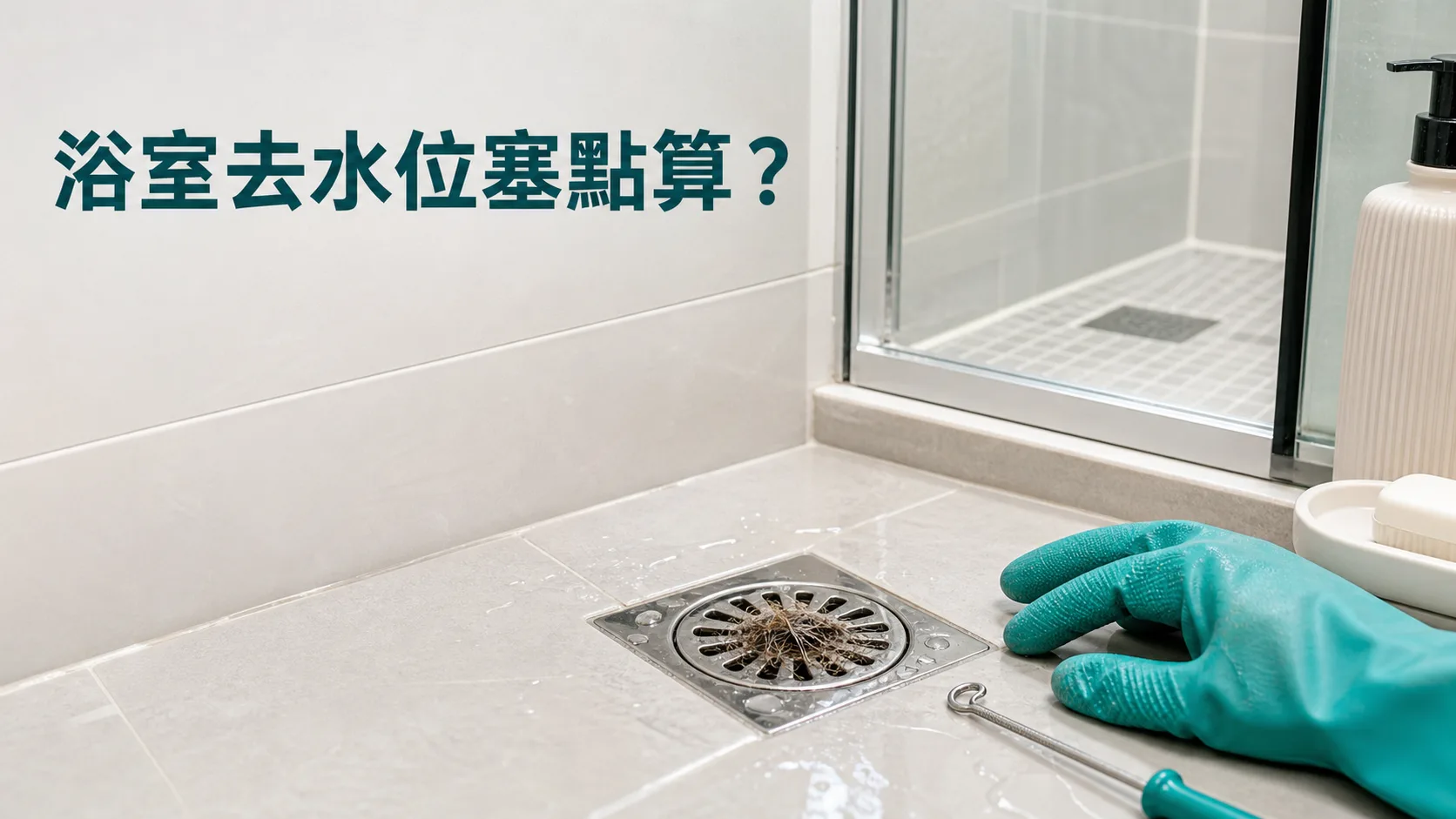
Water pooling after a shower, a slow shower tray or drain odour may indicate more than a temporarily slow flow. Hair, soap, conditioner and washing residues collect around the outlet and trap in compact Hong Kong bathrooms. If surface cleaning does not restore drainage, a deeper restriction may be present.
Stop the water first and remove accessible hair and debris from the cover. Only make a small clean-water check where it will not worsen flooding and no chemicals have been used. Never mix bleach, drain cleaner, baking soda or other cleaning products.
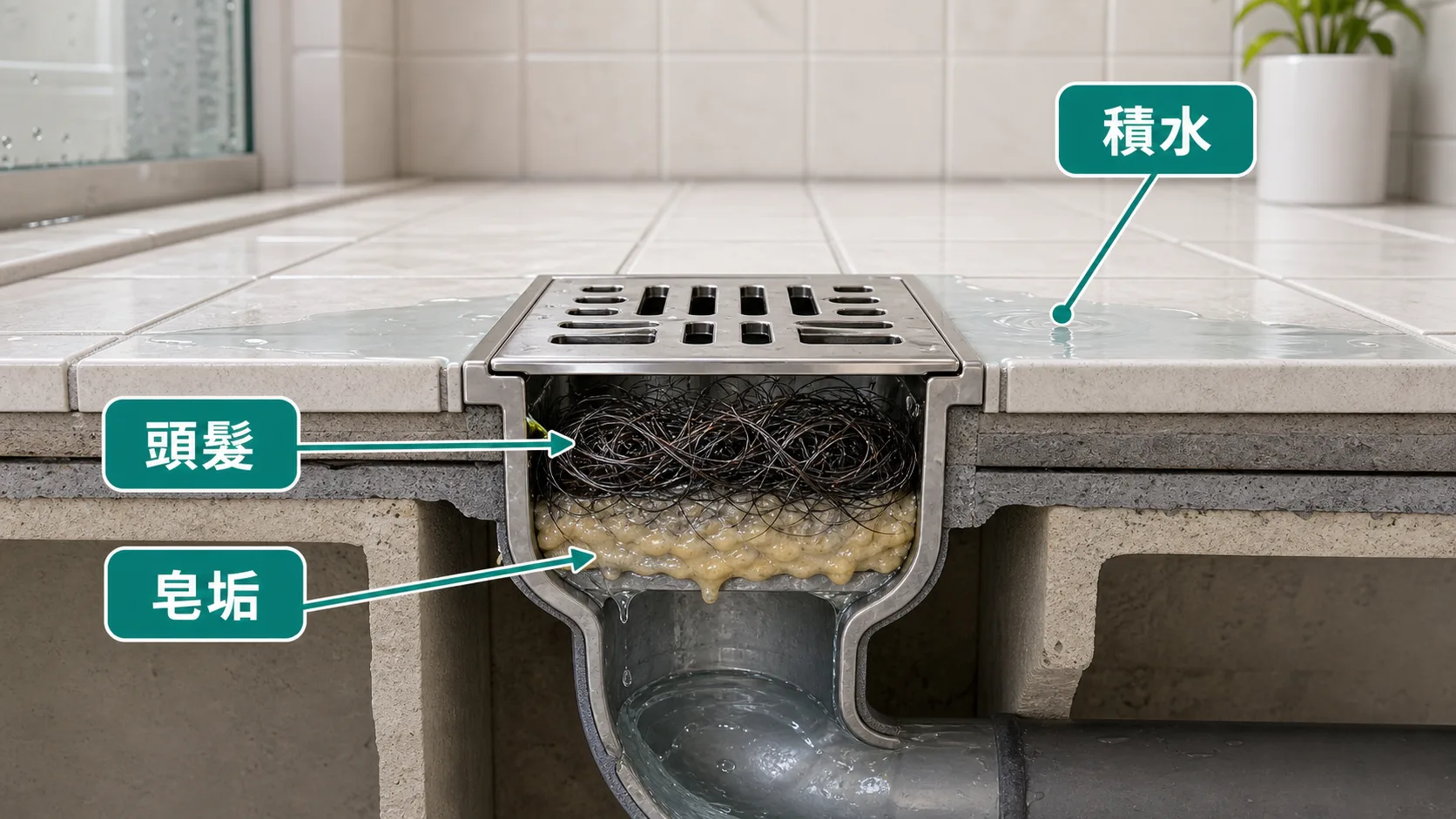
Common causes of a blocked bathroom drain
Hair catches on the cover or around the trap, combining with soap, conditioner, skin oils and dust into a sticky obstruction. Early slow flow can progress to standing water, backflow and odour.
An infrequently used drain can also smell because its trap dries out. The Buildings Department's Healthy Drains guidance explains the role of effective water seals at floor drains, basins, baths and showers, and the need to replenish infrequently used trapped outlets.
Safe initial steps
- Stop the water and contain the pooling: prevent spread towards timber frames, cabinets and corridors. Keep clear of electrical hazards.
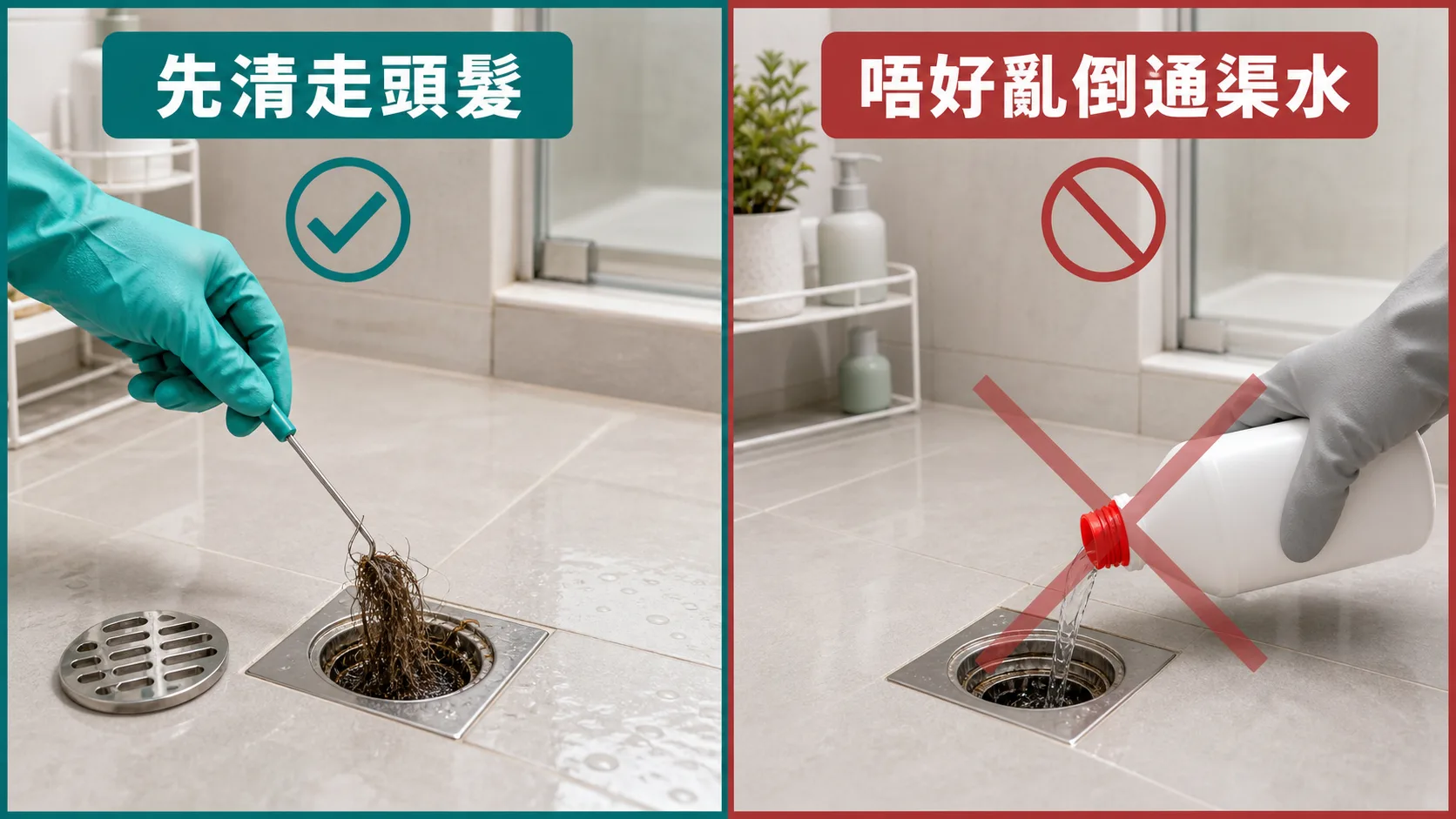
- Remove only a safely removable cover: use gloves and a suitable retrieval tool or disposable material to collect visible hair. Do not reach blindly into the drain.
- Make a small controlled clean-water check: where safe, note whether the level recedes, remains still or produces bubbles and odour. Stop if backflow appears.
- Avoid improvised chemical treatment: corrosive products may not resolve tangled hair, objects or deeper sediment and can create splash and material risks.
- Record what happens: photographs of pooling, the affected outlet and any backflow help a technician plan assessment.
Surface hair or a deeper restriction?
If removing visible hair restores prompt flow, the restriction was probably close to the outlet. Continued slow recession, gurgling, odour or simultaneous trouble at the basin and toilet suggests checking a deeper branch or shared drainage system.
Deep restrictions can involve long-standing soap deposits on pipe walls, hair caught around bends, trap deposits or sediment farther downstream. Suitable professional tools or cleaning may be needed to remove the obstructing material rather than merely opening a narrow passage. The method should suit the pipe condition.
What does odour indicate?
Deposits can produce smell, and an ineffective water seal can allow drain gas indoors. For a little-used trapped outlet, replenishing its water may help. Prompt recurrence, visible leakage, cracks or loose connections warrant inspection rather than repeated masking.
PipeButler's odour investigation considers the source, water seal, connection seals, pipe condition and deposits. Fragrance and cleaning products alone do not correct these faults.
When to arrange professional drainage help
- Standing water remains after accessible hair is removed.
- Sewage backflows, dark deposits emerge or strong odour persists.
- Several fixtures drain slowly together.
- A chemical product has failed to improve the situation.
- Gurgling or repeated water-level changes occur.
- A common drain, chamber or public drainage fault is suspected.
Send PipeButler photographs or existing video of the bathroom outlet through WhatsApp 5340 0748. Explain any chemical use and affected neighbouring fixtures so the likely investigation area and available scope can be agreed.
Reducing future blockages
- Use a suitable hair catcher and remove collected hair after showering.
- Replenish little-used trapped floor drains regularly; a weekly check can help maintain the routine, with the actual need depending on conditions.
- Keep substantial conditioner residue, mud masks and oily products out of the drain where practical.
- Respond to slower drainage before it becomes a complete obstruction.
- Before the rainy season, check relevant balcony, bathroom and shared drainage arrangements and report defects to management.
Frequently asked questions
Can baking soda and vinegar clear a bathroom drain?
Do not rely on them for tangled hair, deep soap deposits or solid objects. Most importantly, do not add them to bleach, drain cleaner or any other chemical already in the drain.
Is drain cleaner the fastest answer?
Not necessarily. Certain products react with some organic deposits, but they may not remove hair tangles, objects, sediment or deep restrictions. Standing water can retain corrosive liquid and create hazards during subsequent work.
Are blockages and odour connected?
They can be. Deposits may smell, while dry or defective traps allow drain gas through. If removing visible hair does not resolve odour, check the water seal, joints and pipe condition.
Can PipeButler clear a bathroom floor drain?
PipeButler handles bathroom outlets, basins, kitchen sinks, toilets, chambers and building drains. Manual tools, suitable cleaning or further inspection are selected according to conditions. Confirm availability and the work scope through the contact page.