
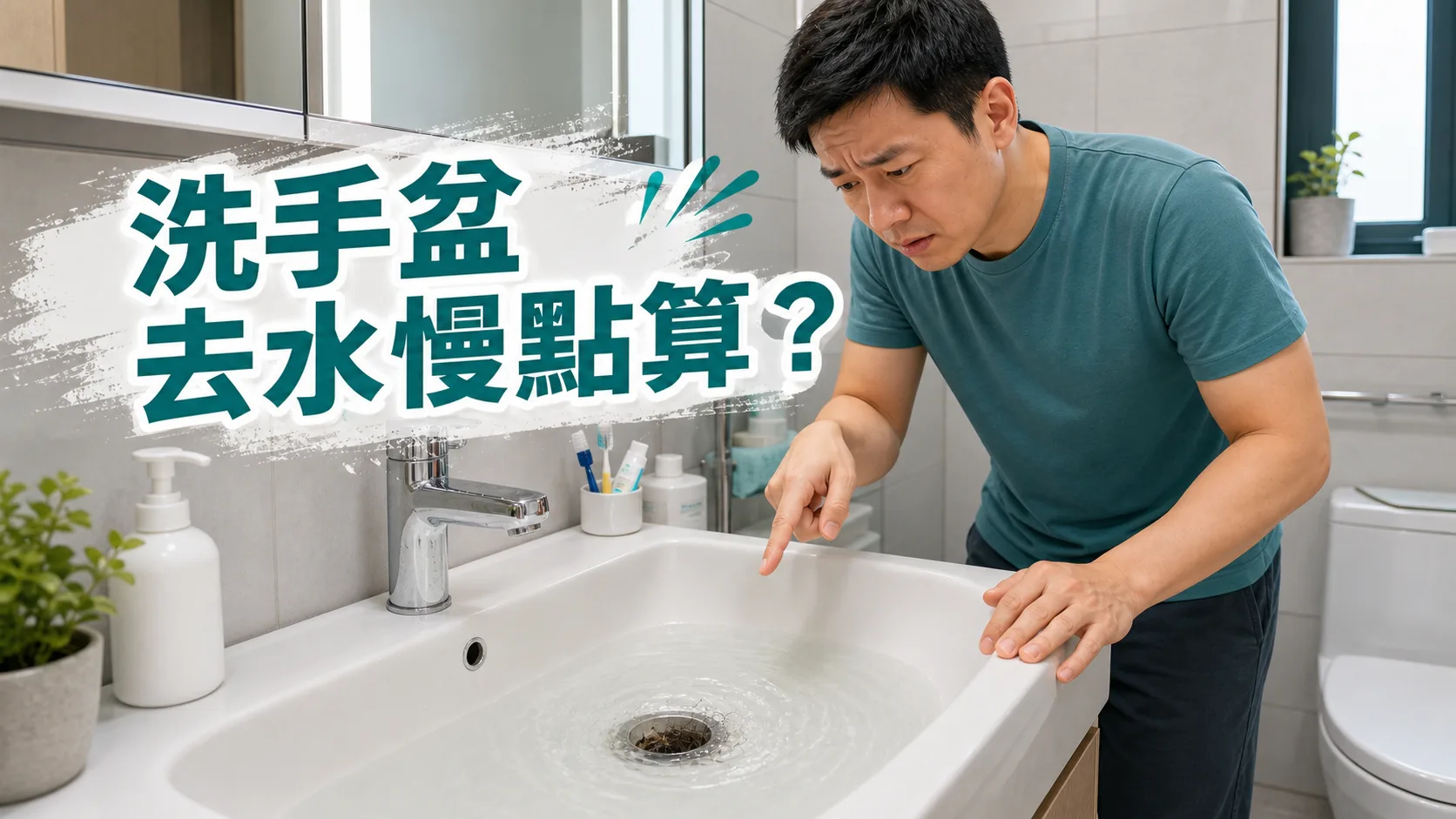
A slow bathroom basin usually deteriorates gradually: water takes longer to disappear, pools during brushing or washing, then may stop draining or smell. Hair, soap, toothpaste, shaving foam, facial products and deposits around the pop-up waste are more common than large objects.
Stop using the basin and remove accessible hair and dirt from the outlet and stopper. If water is standing, do not add drain cleaner or mix bleach, baking soda, vinegar and other products.
Common causes
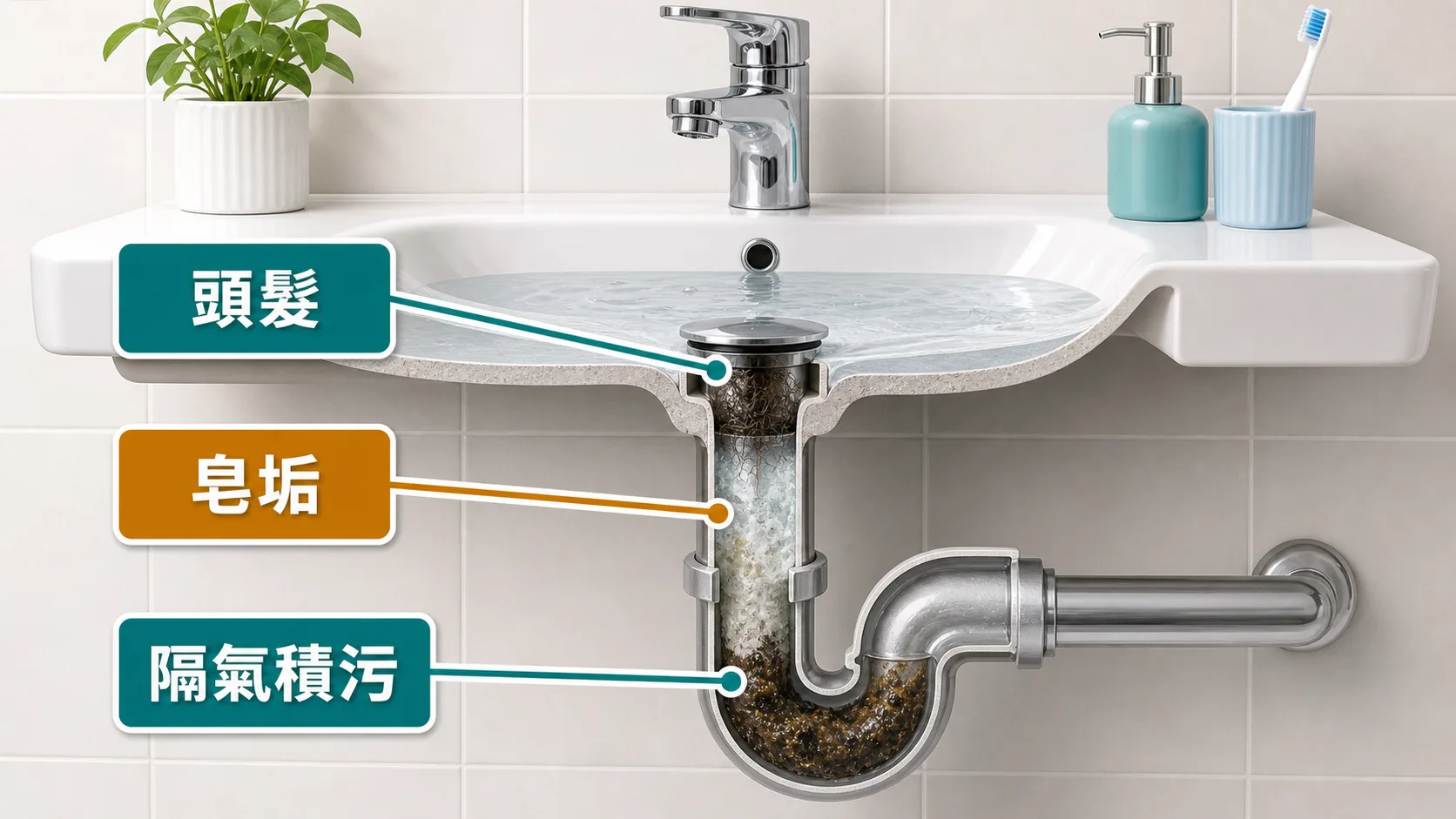
The first restriction is often at the outlet or pop-up stopper. Hair catches around the mechanism, seals and edges, then holds soap and toothpaste. By the time flow slows, only a small opening may remain.
The next likely point is the U-trap or P-trap beneath the basin. Its retained water blocks drain gases, but the bend can collect hair, dirt, soap and black sludge. If removing visible hair does not restore flow, check the trap and downstream pipe.
Safe initial steps
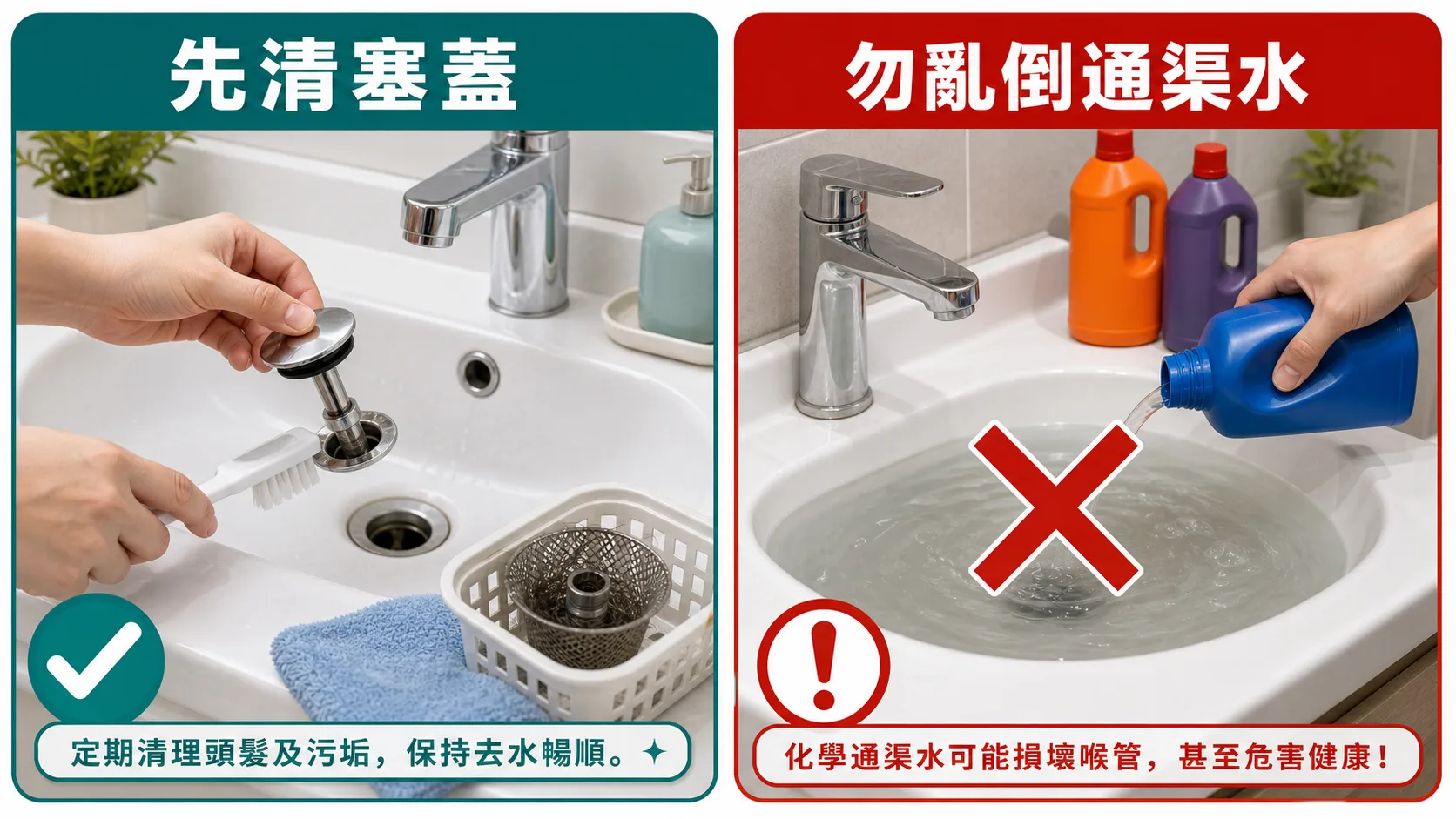
- Clean the stopper and outlet: check whether the pop-up is stuck, fails to rise or is wrapped in hair. Clean safely removable parts with tissue and a small brush.
- Observe drainage: only where safe and not already full, use a small amount of clean water and note slow flow, no flow, gurgling or odour.
- Use warm water for light surface residue: avoid large amounts of boiling water that may affect plastic, seals or older joints.
- Avoid sharp improvised tools: wire and coat hangers can scratch pipes, loosen joints or push material deeper.
- Never mix chemicals: avoid combining drain cleaner, bleach, baking soda, vinegar or other products, especially in standing water.
Do baking soda, vinegar or drain cleaner help?
Household mixtures may give temporary improvement in light surface residue or smell, but do not reliably remove hair bundles, thick soap, trap sludge or deep restrictions. Improvement lasting only a day or two suggests deposits remain.
Drain cleaner and caustic soda can burn skin and eyes and affect breathing. In a blocked basin, liquid can remain or splash, and later trap dismantling exposes the technician to residues. Assess the cause before using any product.
Stopper, trap or deeper pipe?
Immediate normal flow after removing stopper hair suggests a local restriction. Persistent slowness, smells beneath the basin, gurgling or dripping can indicate trap deposits, loose joints or downstream blockage.
If the basin, bath, shower and floor drain slow together, a shared branch or building system may be involved. Repeated chemicals at the basin do not address that wider cause.
When should a technician investigate?
- Standing water barely drains.
- Removing stopper hair does not improve flow.
- Blockage returns shortly after clearance.
- There is strong odour, gurgling, backflow or black sludge.
- The trap, plastic pipe or joints leak.
- The stopper is stuck or fittings are loose and may need replacement.
- A shop, office or clinic basin cannot be used normally.
WhatsApp PipeButler on 5340 0748 with a flow video, a photo of the trap beneath the basin and an outlet close-up. These help assess the likely location and agree the work scope before starting.
Preventing recurrence
- Clean the stopper, outlet and visible hair weekly.
- Collect hair after shaving, grooming or washing rather than rinsing it away.
- Keep substantial toothpaste, clay masks, scrubs, skincare oils and thick product residue out of the drain.
- Act when flow first slows.
- Retain suitable trapping and maintenance access during renovation; do not permanently box in inspection points.
Frequently asked questions
Must the trap always be removed?
No. Stopper and outlet hair often explain the problem. Persistent slowness, odour and recurrence justify further trap or downstream checks.
Does a stuck pop-up mean the drain is blocked?
Not necessarily. Hair, dirt, an ageing spring or a loose linkage can stop it opening. A damaged mechanism needs adjustment or replacement, not simply unblocking.
Can I use a plunger?
A gentle attempt may be suitable with the overflow temporarily covered, but excessive force can loosen old pipes and joints. Do not plunge leaking fittings or a basin containing chemical cleaner.
Can PipeButler help?
PipeButler assesses basins, sinks, baths, showers, floor drains, toilets and drainage pipes. Depending on the findings, work may involve stopper, trap or pipe cleaning, or recommendations for replacement fittings, after agreeing the scope.