
Loading page…
Loading page…
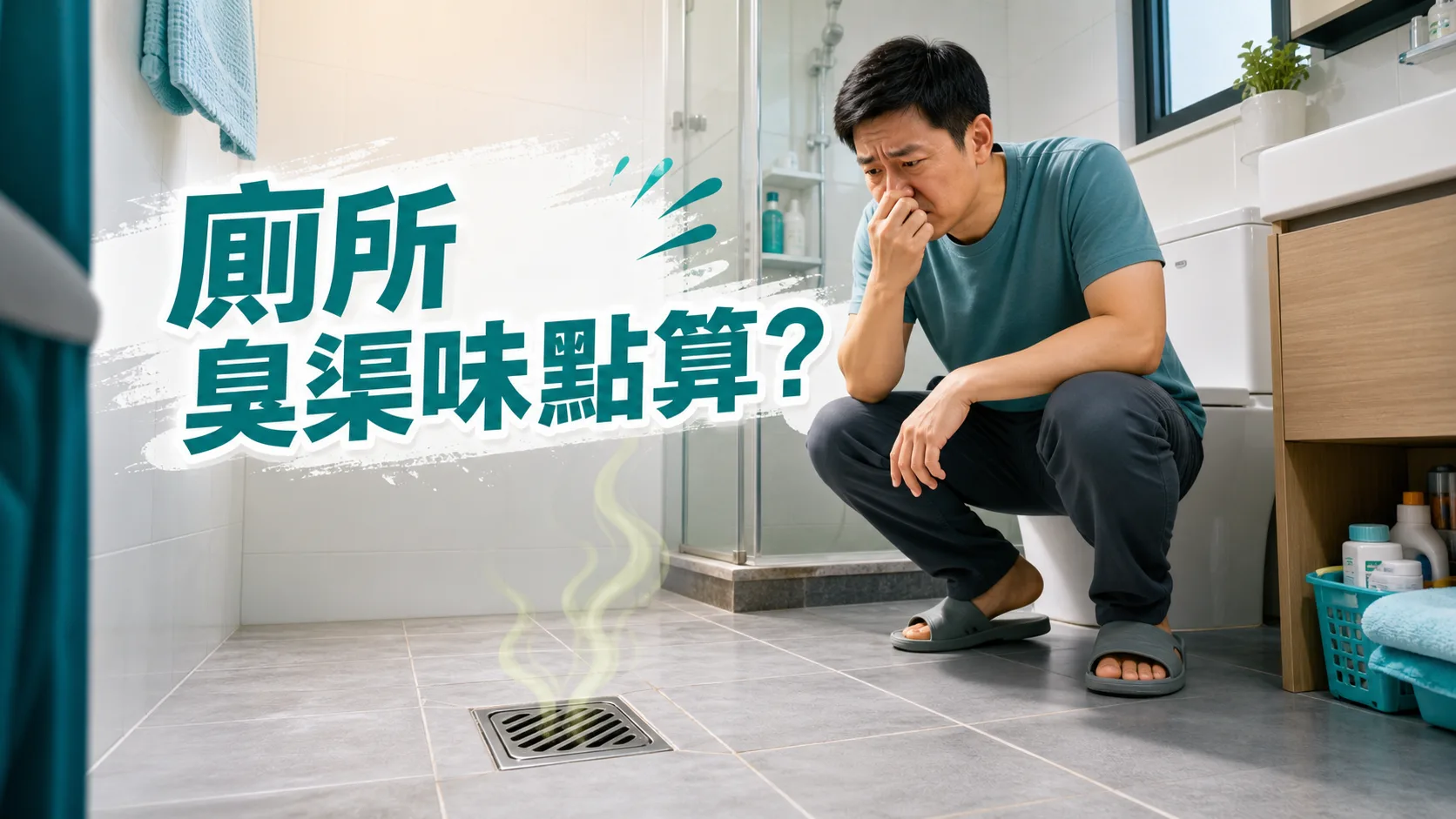
A clean bathroom can still smell if a water seal fails, deposits remain or drainage is defective. Check the source and investigate repeated odour.
WhatsApp with the problem and district, and we will confirm available timing.
A bathroom that smells after cleaning may have more than a surface hygiene problem. Possible sources include a dry floor-drain seal, deposits in a U-trap, blockage, cracks or leaks, or building drainage issues involving siphonage, connections or ventilation.
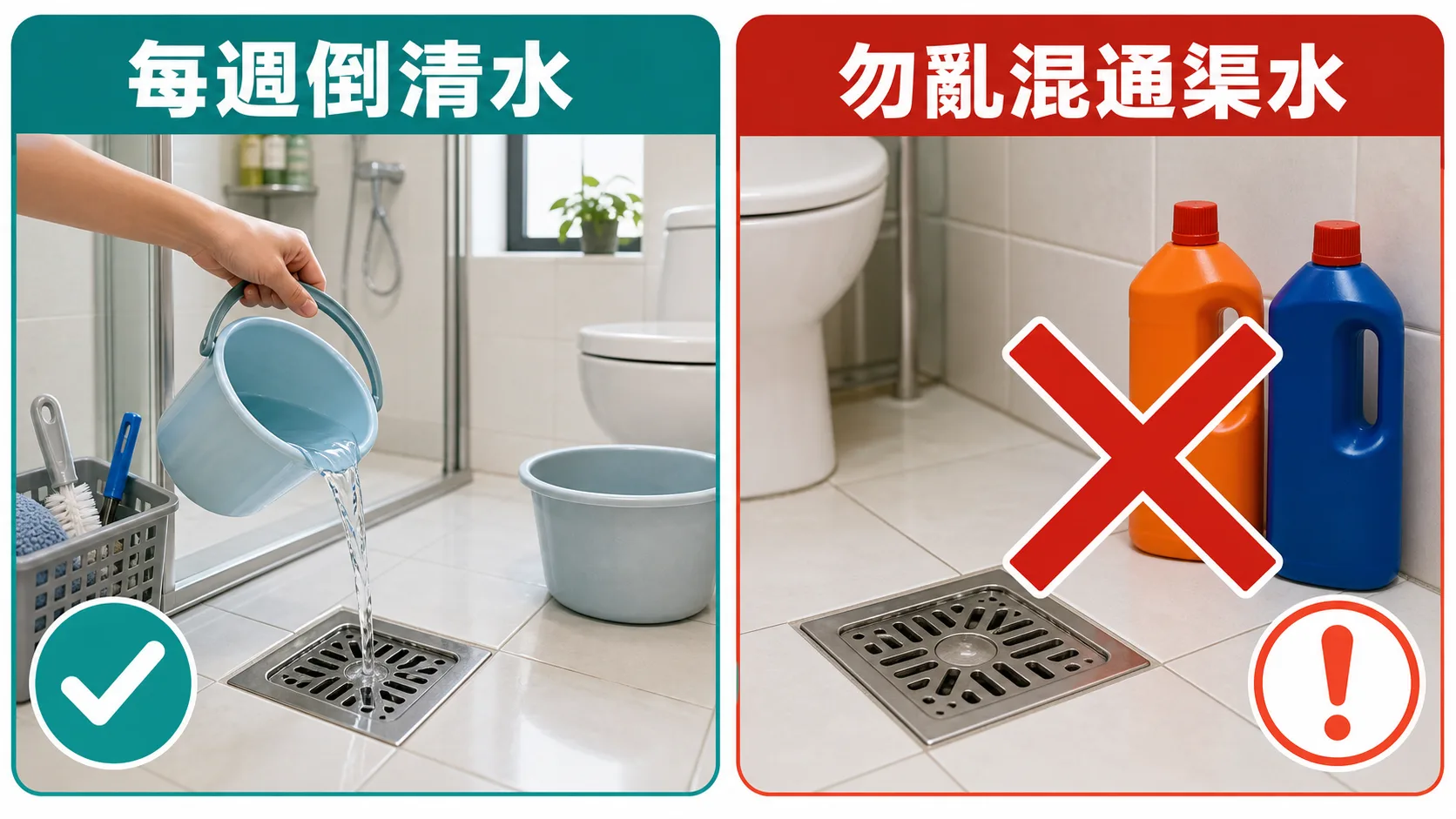
Ventilate where safe and avoid lingering in strong drain odours. Slowly replenish a little-used floor drain with clean water and observe whether the smell improves. Never mix bleach, drain cleaner, baking soda, vinegar or other products.
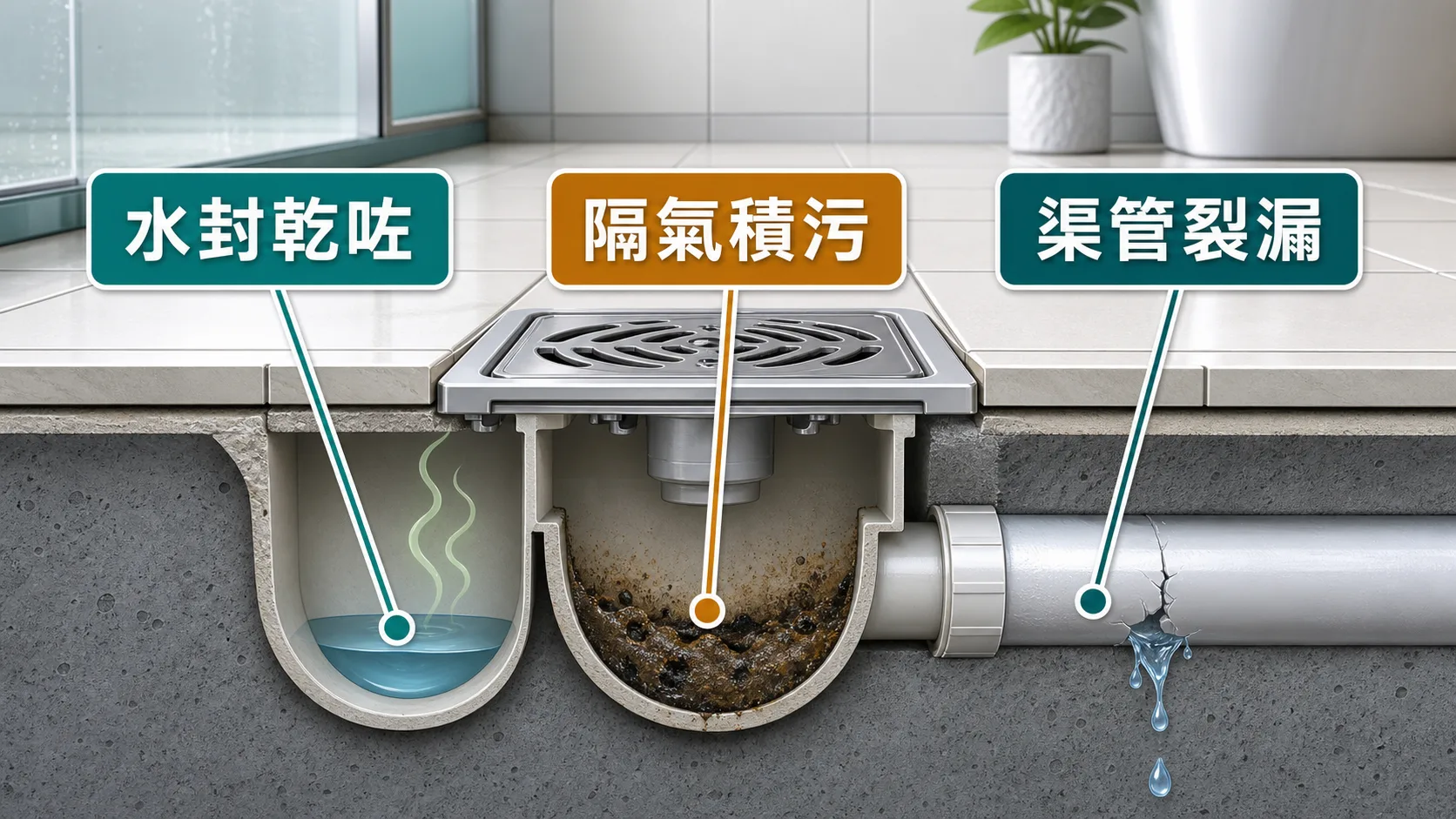
Floor and basin drains generally rely on water retained in a trap to block gases. Infrequent use and dry conditions can deplete the seal; pressure differences and unsuitable ventilation or pipe layout can also contribute to gases entering indoors.
The source cites Buildings Department advice to replenish floor-drain seals and inspect pipes for cracks, blockage and leakage. Establish drainage condition rather than relying solely on fragrance or cleaner.
This is not recommended. The outlet removes floor water and forms part of the drainage system. Tape, a solid cover or cement can conceal odour while hiding cracks, blockage or connection defects and interfering with drainage during leaks or overflow.
If smell quickly returns after topping up or only sealing the opening makes the room tolerable, inspect the trap, fittings and pipework.
A substantial reduction in odour within minutes or hours of adding water suggests evaporation may be involved. Weekly replenishment and grille cleaning can maintain improvement.
Rapid recurrence with gurgling, backflow, black sludge, seepage or several smelly outlets may involve deposits, blockage, cracks, incorrect connections, siphonage or shared drainage. Water and fragrance alone will not correct these.
Surface cleaning can reduce some dirt-related odour, but does not repair a seal, cracked pipe or ventilation fault. Household mixtures have limited usefulness against thick soap, hair bundles, deep restrictions and structural defects.
Drain chemicals may remain in pooled water or splash. Earlier cleaning products can react with new additions, producing irritating gases or corrosive mixtures. Persistent smells call for diagnosis, not increasingly strong chemicals.
WhatsApp PipeButler on 5340 0748 with outlet, toilet-edge, under-basin and visible-pipe photos. These help identify the likely source and agree an assessment plan.
No. Basin traps, toilet joints, baths, showers, shafts, false ceilings and shared drains can be involved. Locate the source rather than blocking one opening.
Yes, when evaporation has depleted the seal. Regular replenishment is part of the Buildings Department advice cited by the source. Rapid recurrence warrants trap and pipe checks.
They may mask odour temporarily but do not repair leaks, failed seals or blockages. Masking persistent drain gases can delay investigation.
PipeButler can assess floor drains, basins, toilets, showers, baths and pipework, recommending unblocking, trap checks, cleaning, odour investigation or repair as appropriate after agreeing the scope.