
Loading page…
Loading page…
Chemical drain cleaners do not solve every blockage. Understand product limitations, mixing risks and what to tell a technician if chemicals are already trapped in the drain.
WhatsApp with the problem and district, and we will confirm available timing.
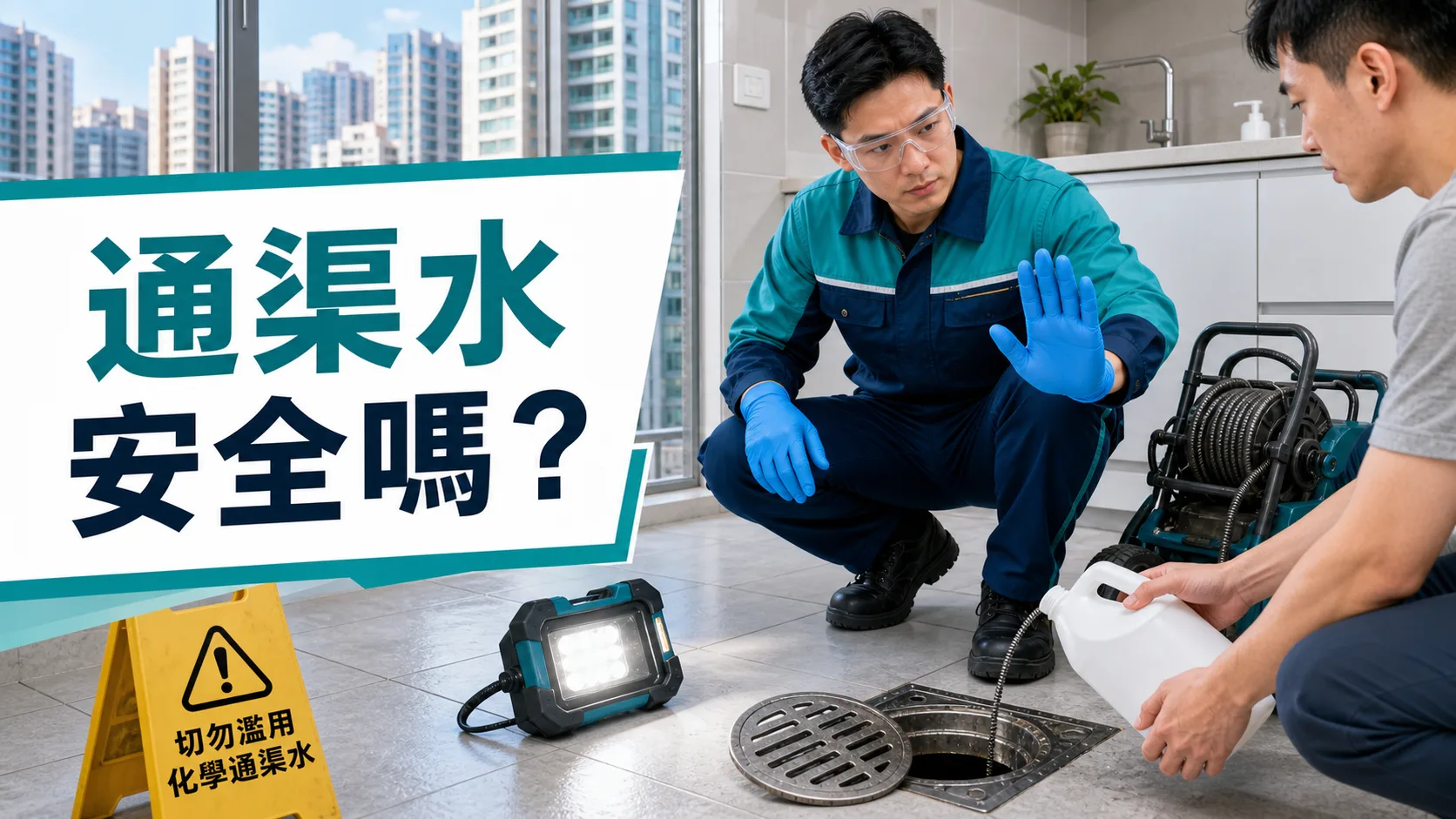
Liquid drain cleaner, caustic soda, drain powder and other chemical unblockers are not universal answers to blocked drains. Many contain corrosive chemicals. A suitable product may help with a limited organic deposit, but misuse can injure skin or eyes, damage vulnerable pipes and leave dangerous liquid behind for the next person working on the drain.
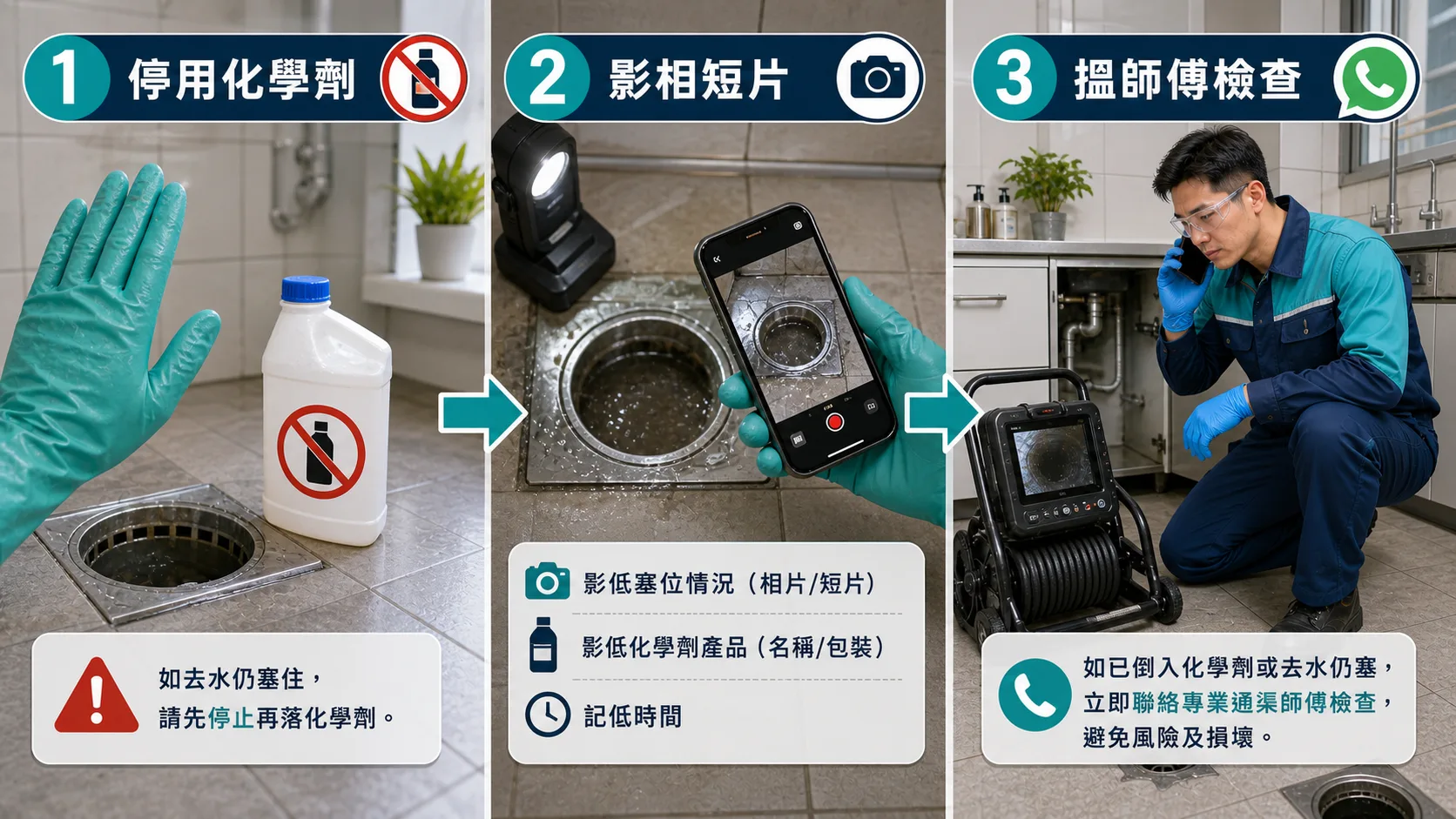
If the drain is completely blocked, water is standing, the toilet level is rising, another cleaner has already been used, or a solid object, old pipe or shared-drain fault is suspected, do not add more drain cleaner. Stop chemical use, retain the product information, record the situation safely and arrange assessment.
This guide explains where a product might help, where it may make matters worse and what to do when it has already failed. It does not recommend a particular brand.
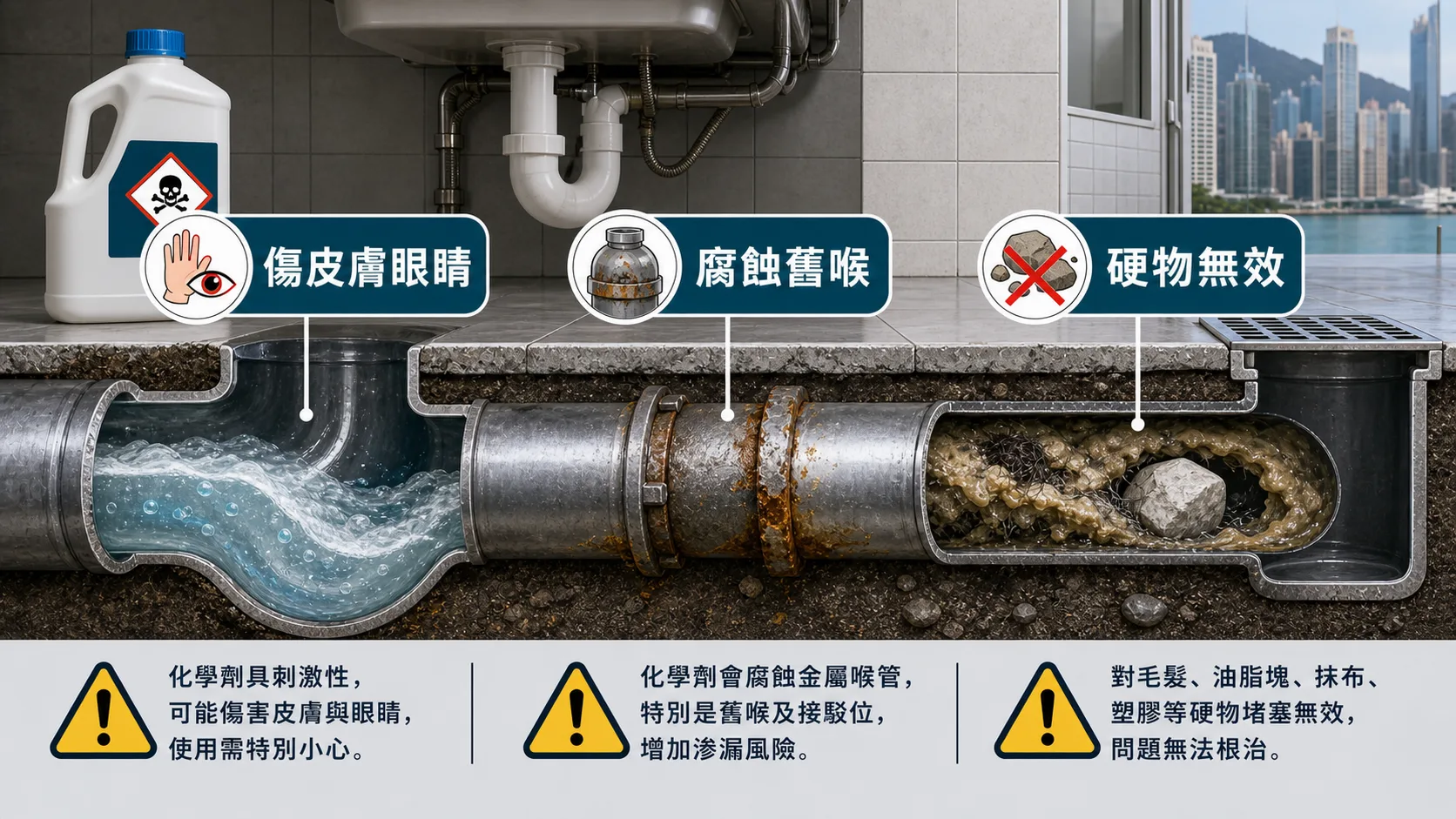
The Consumer Council reviewed 17 products labelled with ingredients including strong alkalis, oxidising agents, strong acids and enzymes. Formulations differ in suitable obstructions, fixtures, materials and application times. Words such as powerful, gel or natural do not establish suitability or safety.
Its guidance explains that alkalis can act on certain grease deposits, some oxidisers break down hair proteins, and strongly acidic products are highly corrosive and generally intended for professional handling. Chemicals cannot dissolve every blockage: hard objects, cement, sand, collapsed pipes and common-drain faults need different investigation.
Consider lower-risk physical methods first. If chemical treatment is still being considered, the product label must explicitly permit the fixture, pipe material and obstruction, and all of the following should be checked:
Follow the label exactly. Do not increase the amount or contact time, add hot water or combine products. More is not necessarily more effective; repeated application after failure increases the hazard.
Chemical injury is a medical issue, not something to postpone until a drainage technician arrives. For skin contamination, promptly rinse with plenty of clean water and seek medical attention for burns or significant exposure. For chemical splashes in the eyes, the cited Labour Department first-aid guidance advises copious clean-water irrigation for at least 20 minutes or until ambulance personnel arrive; rinse from the inner corner outward, away from the other eye. Do not rub the eyes and call for an ambulance. If fumes cause symptoms, move to fresh air only where safe. Call 999 for ingestion, breathing difficulty, impaired consciousness or serious symptoms, and provide the original packaging. Follow emergency-service instructions.
Damage is not inevitable after every use. Risk increases with high concentration, excessive quantities, complete obstruction, prolonged contact, ageing material, weak joints and chemical mixing. Strong acids and alkalis are corrosive, and some reactions release heat. Liquid trapped in a U-trap or around vulnerable joints and cracks needs particular care.
This is why a technician asks whether chemicals have been used. Residue can escape while a trap is removed or equipment is operated, affecting protective measures and tool selection.
Remove visible debris from strainers and accessible hair catchers. Only clean a removable trap where you understand the fitting and can do so safely. A suitable plunger or simple tool may help a minor blockage before chemicals have been introduced.
An appropriate retrieval tool may address the deposit more directly. Do not force it until it jams or pushes an object deeper; unsuitable tools can damage fittings.
Kitchen grease, commercial branches, soap deposits and deep accumulation may require mechanical clearing, jetting or pipe cleaning, selected for the site's condition.
A rising toilet, backflowing floor drain, full sink or several affected fixtures warrants professional drainage assessment. Persistent smells may also need source investigation.
This helps distinguish ordinary clearing, trap work, mechanical treatment, pipe cleaning and further investigation while identifying chemical hazards before arrival.
It is not a suitable first choice. Toilet obstructions may involve paper, solids, plastic components or deeper faults, while retained corrosive liquid increases splash risks during later work.
No. Mixing chemicals may produce irritating or toxic gases or a vigorous reaction. Do not add another chemical after one has already been used.
Do not ignore it. Avoid inhaling near the outlet and ventilate safely. Stop use and seek appropriate assistance for pungent fumes, eye or airway irritation, foam, heat or persistent obstruction.
Not necessarily, but old or cracked pipes, complete blockage, overuse, prolonged contact and mixing increase risk. Repeated chemical dosing is not a maintenance plan.
No. Labels such as enzyme or biological do not establish safety. In the cited review, one product listed enzymes as its main active ingredient; performance was slower and dependent on conditions such as temperature and pH. Follow ingredient, compatibility and protection instructions, and do not use such claims to justify treating unknown obstructions or backflow.
Yes. Provide the container, amount, time and current water condition so suitable precautions can be planned.
The Chinese source recorded these references as reviewed on 18 August 2026. Follow the current original product label and obtain medical help for symptoms following chemical exposure.
For a drain that remains blocked after chemical use, send PipeButler the location, existing footage, product photograph and quantity through WhatsApp 5340 0748. Confirm the risk, suitable unblocking or cleaning method, scope and limitations before work.