
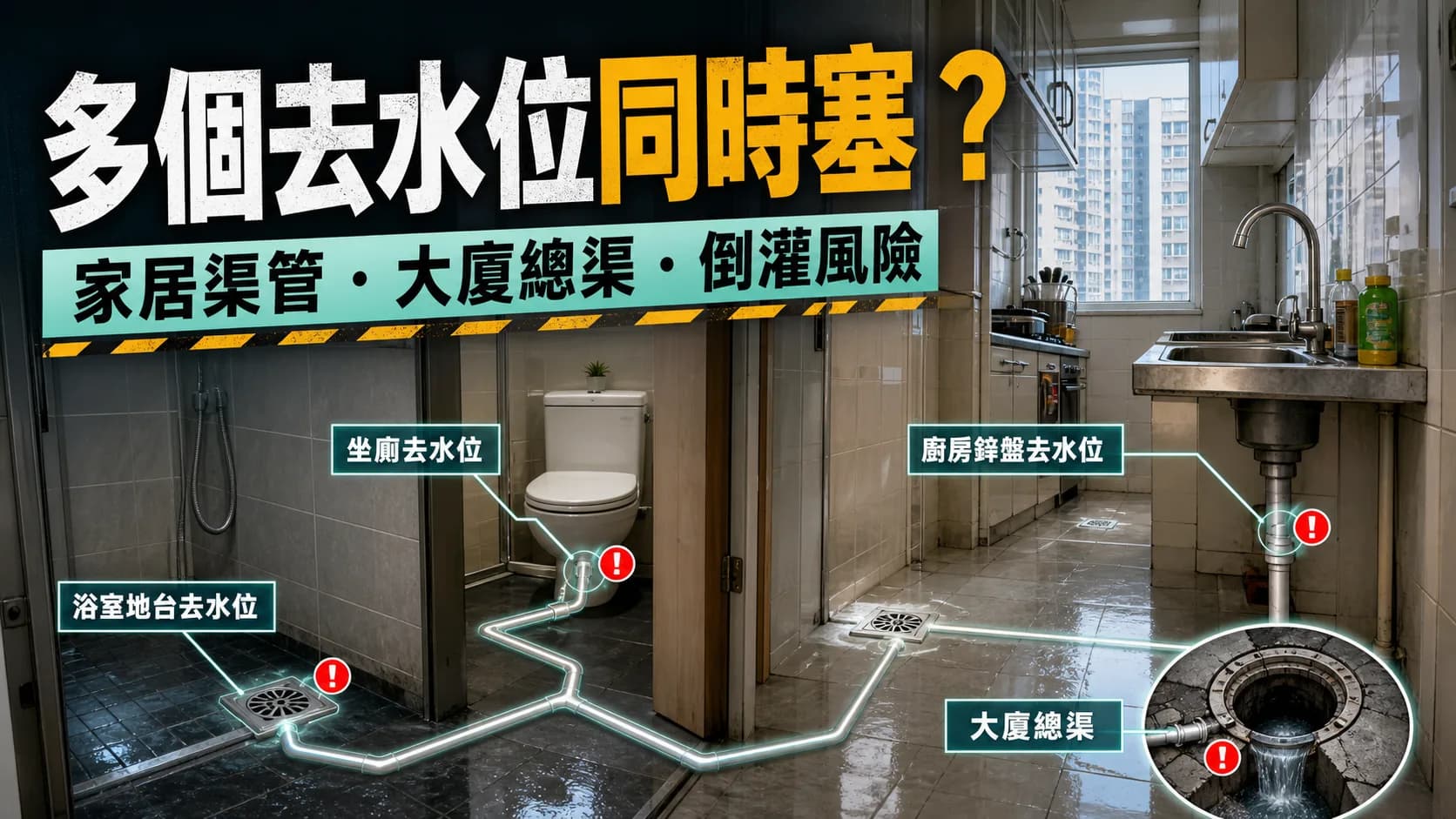
One slow basin often points to its trap, hair, soap or a nearby branch. But toilets, floor drains, sinks, laundry and balcony outlets slowing together—or a toilet flush causing floor backflow—suggest a downstream problem. This may involve a branch, main pipe, chamber or shared building drainage.
If sewage rises, a floor drain overflows, toilet water climbs or several outlets stop draining, stop using water. Do not keep flushing or running taps to test. Record where water emerges, check the extent with management or neighbours and arrange a drainage inspection.
This guide distinguishes local blockages from wider faults that may require management coordination, desilting, jetting or CCTV.
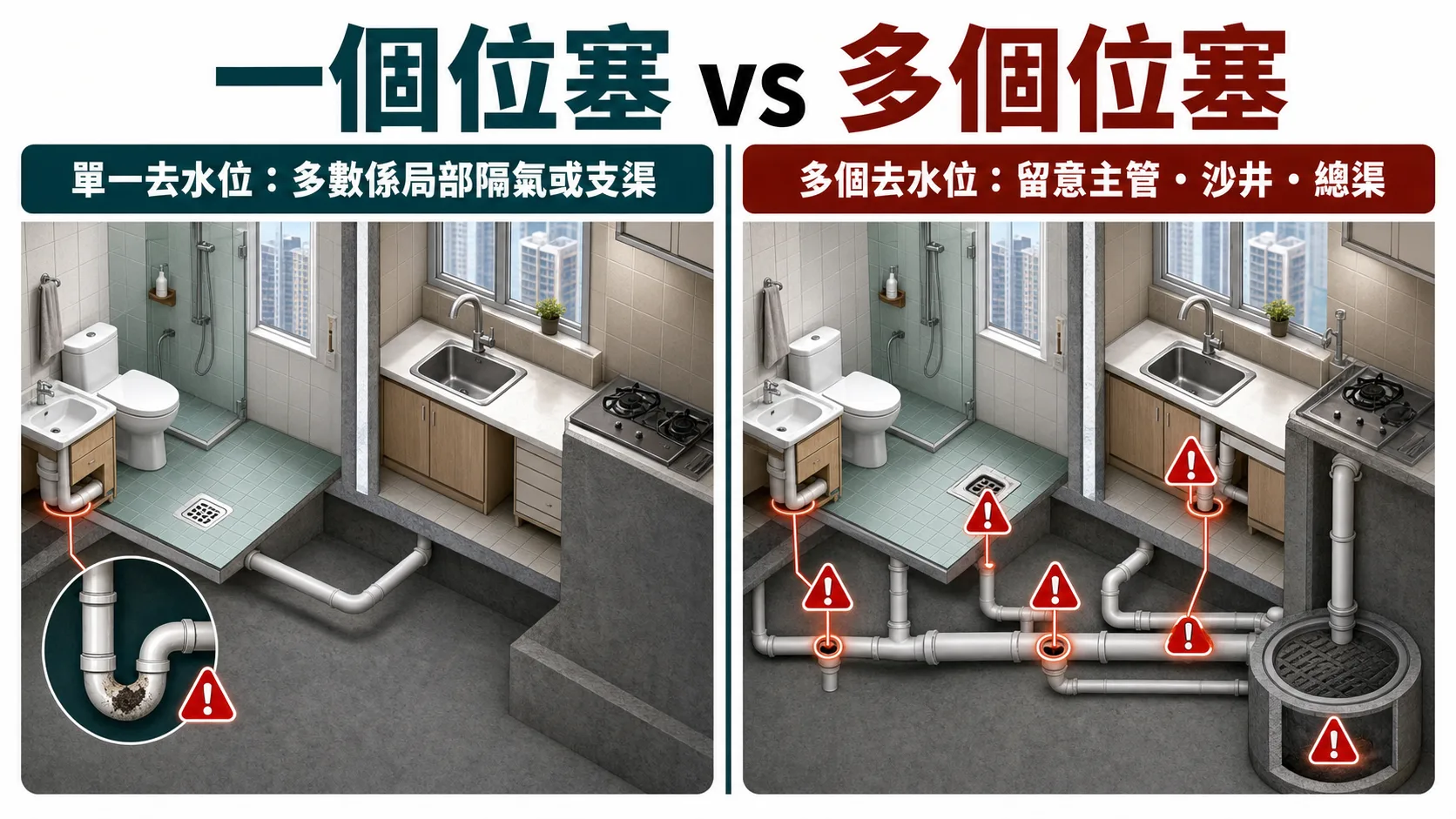
One outlet or several?
Only one basin, sink or floor drain is slow
If other fixtures drain normally, first suspect the outlet, trap, bend or short branch. Hair, soap, food, grease, floss, cotton buds, wipes and small objects are common. Accessible cleaning, trap removal or ordinary unblocking may be sufficient.
Several fixtures in one bathroom are slow
A shared bathroom branch, connection or concealed downstream section may be restricted. Clearing only one outlet may miss it. Existing gurgling, bubbles or backflow at the floor drain during flushing help identify the relationship; do not deliberately add water if it is already backing up.
The kitchen, bathroom and toilet are affected together
Widely separated fixtures slowing together suggest a common branch, main, chamber or building drain. Lower-floor odour, gurgling, floor backflow and rising toilet levels should not be treated as a single-fixture blockage.
Neighbours are affected or a chamber is full
Similar symptoms next door or above and below, or full rear-lane, podium, garden or car-park chambers, may extend beyond one unit. Notify management, owners or the responsible party and arrange suitably equipped inspection.
Warning signs to stop DIY attempts
- Floor backflow: wastewater rises from a floor, bath or another outlet during discharge.
- Several slow outlets: toilets, sinks, floor drains, basins and laundry drains are affected together.
- Abnormal toilet levels: water rises, remains high or another outlet gurgles.
- Odour, foam or dark water: sewage, sand or contaminated water returns.
- Lower-floor or rain-related worsening: ground, podium, village-house or lower-level outlets back up.
- Chamber overflow: sewage or persistent odour appears around external covers or rear-lane channels.
Avoid forceful plunging and additional drain cleaner. Chemical residues can return with sewage, while more water can worsen overflow from a blocked downstream main.
Four immediate steps
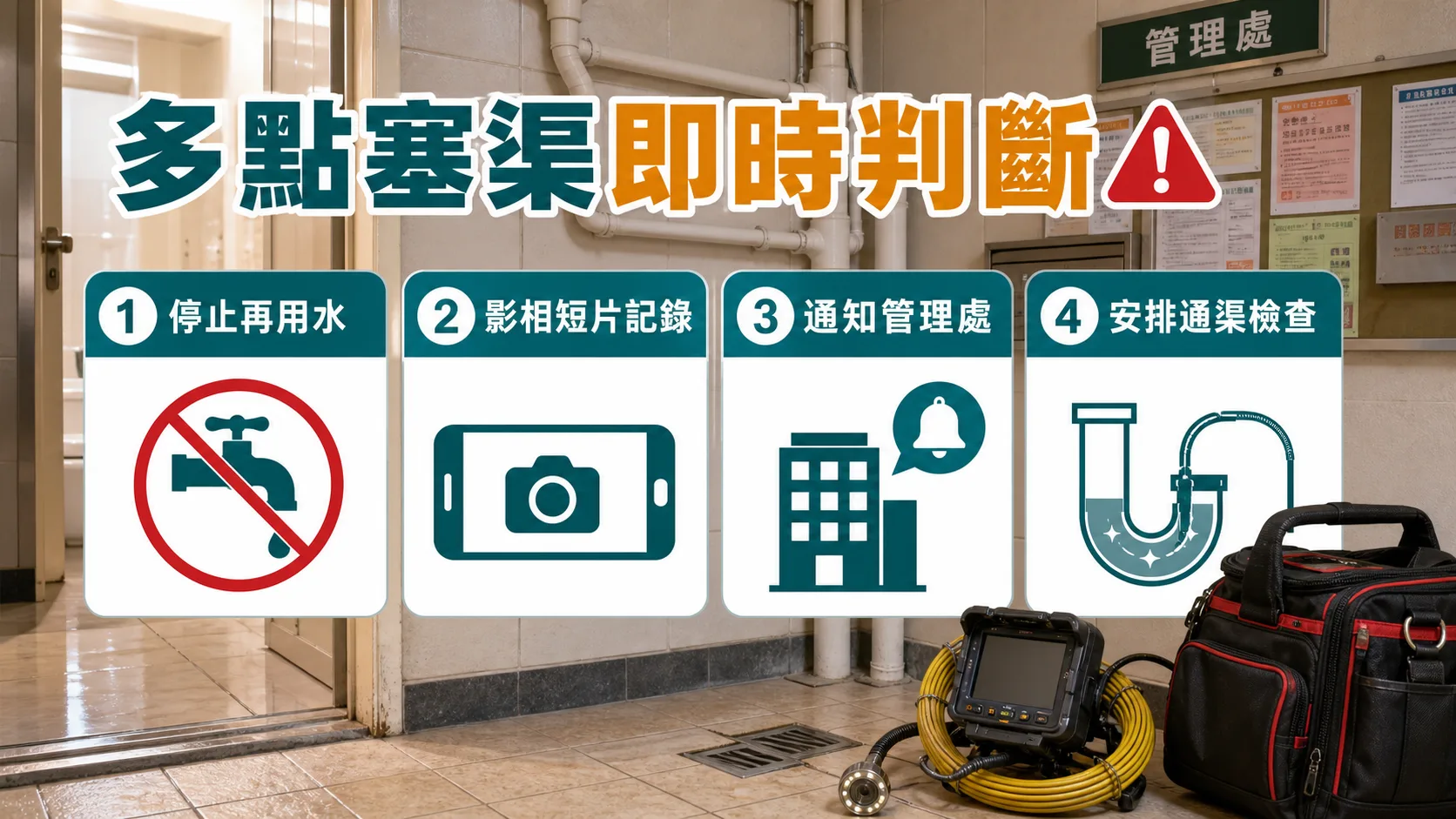
- Stop water use: pause flushing, laundry, washing-up, bath emptying and substantial tap use.
- Record photos and videos: affected outlets, emergence points, changing levels, chambers, foam and sediment help establish the direction of backflow.
- Notify management and neighbours: check the same floor and units above or below. Several affected units change the investigation scope.
- Arrange assessment: determine whether the private branch, main or chamber needs unblocking, desilting, jetting or CCTV.
Common causes
1. A blocked shared branch
Several bathroom or kitchen outlets may join one branch. Downstream grease, hair, soap, sediment or renovation waste can slow them together. Locate the actual restriction rather than attempting every outlet independently.
2. A blocked main or shared building pipe
Stacks and shared pipes carry discharge from upper floors. Grease, paper, textiles, objects and long-standing deposits can affect lower units and those nearest the restriction first.
3. Full chambers or external drains
Several pipes meet at chambers and mains. Sediment, grease, rubbish or poor external flow can cause upstream backflow. Indoor outlet clearing alone may not suffice; check levels and consider desilting or jetting.
4. Grease and food build-up
Cooling grease coats pipes in kitchens, pantries and food premises. A downstream bottleneck can affect nearby floor drains as well as the sink. Restaurants also need grease-trap maintenance.
5. Wipes, cloths and objects
Wipes, towels, sanitary products, bags and objects can lodge at bends, joints or shared sections. Drain cleaner may not dissolve them, and they can move farther downstream.
6. Renovation sediment or damaged pipework
Post-renovation symptoms can involve sand, cement powder, tile fragments, plastic or sealant. Older, underground and village-house pipes can also suffer settlement, cracks, offsets or inadequate falls. CCTV or site checks may be required.
Private, managed or public drainage?
One outlet suggests starting inside the unit. Several outlets in one unit with unaffected neighbours may involve its branch or connection. Several units, lower floors or a shared chamber require management or the owners' corporation to investigate. Public roads and drains should be reported to the relevant department or 1823.
Responsibility depends on the fault location, management boundaries, lease and building documents. Operationally, the priority is locating the restriction: clearing the wrong outlet may only give temporary relief.
When are CCTV, jetting or desilting appropriate?
CCTV helps with unclear or recurring faults, suspected objects, post-renovation problems, lower-floor backflow and evidence for management. It identifies conditions rather than removing wastewater itself.
Jetting can address grease, sludge and long deposits in kitchens and commercial drains, especially where ordinary clearing only helps briefly. Objects, cracked pipes and public-main faults require assessment first.
Desilting removes accumulated material from chambers, channels and external drains. Opening a small passage through sediment may leave capacity inadequate for the next heavy discharge. See chamber blockage and overflow.
What information should you send?
- Affected fixtures: toilet, bathroom floor, basin, sink, washing machine, balcony, commercial channel or chamber.
- Where water emerges and which discharge triggers it.
- Whether one outlet, one bathroom or separate rooms are affected.
- Floor level and context: ground or podium level, village house, older building, restaurant, recent renovation or rain-related worsening.
- Neighbouring symptoms, chamber levels and management's drainage records.
- Previous chemicals, plunging, trap removal, clearing, jetting and dates.
These details support selection of unblocking, cleaning, desilting or CCTV. Sewage contamination may also require cleaning and disinfection after drainage is restored.
Frequently asked questions
Do several blocked outlets prove the building main is blocked?
No. A private downstream branch, common connection, main or chamber can cause similar symptoms. Compare the affected fixtures and units.
Can I keep flushing to test floor backflow?
No. Stop adding water, record the incident and arrange assessment to avoid pushing more sewage indoors.
Should I use drain cleaner?
It is not a suitable first step for widespread blockage. Objects, cloth, sediment, main and chamber problems may not respond, and backflow increases chemical-contact risks.
Should lower-floor backflow be reported to management?
Yes, particularly with neighbouring symptoms, full chambers, rain-related worsening or multiple outlets. Management records help identify wider patterns.
Is CCTV always necessary?
No. Simple local restrictions may not need it; recurring multi-outlet faults, unclear causes, suspected objects, cracks or renovation sediment make it more useful.
How is the work scope decided?
Location, severity, required jetting, CCTV, desilting, emergency access, personnel and equipment matter. See planning a drainage visit or contact PipeButler with images.
WhatsApp PipeButler on 5340 0748 with affected locations, videos, floor level, chamber information and any neighbouring symptoms to identify the likely branch, main, chamber or shared-system issue.