
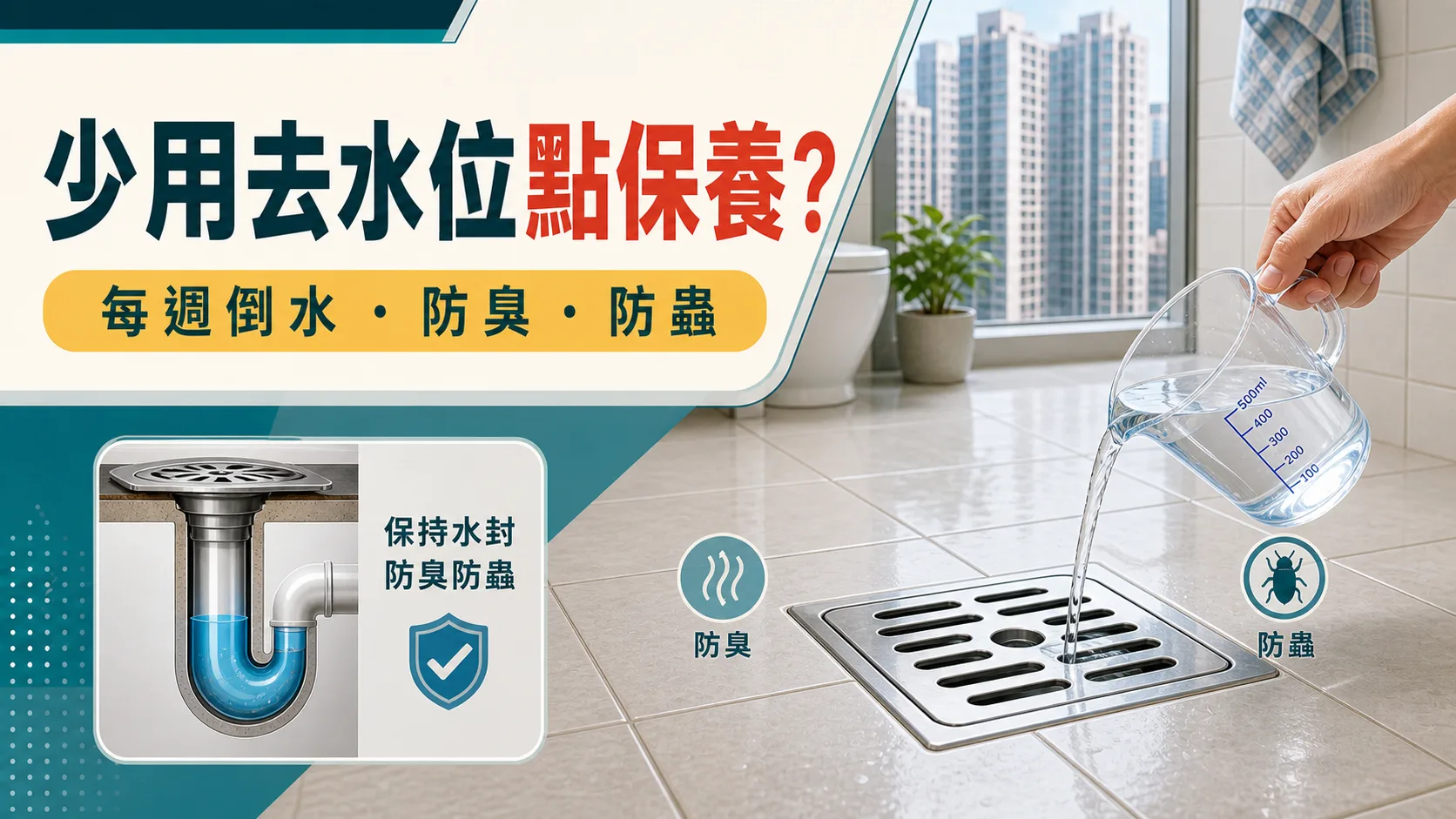
Guest bathrooms, helper bathrooms, balconies, storerooms and floor outlets beside washing machines may be used infrequently. They can look clean while water slowly evaporates from the trap, making odour and some insect routes easier to open.
For a rarely used floor drain, a weekly addition of about half a litre of clean water is a practical starting routine, alongside removal of hair, soap and visible dirt. If smell returns within days, flow slows, gurgling develops or water backs up, arrange odour investigation or drainage assessment rather than only topping up.
This guide focuses on day-to-day care, safe initial checks and signs requiring further pipe investigation.
Why do unused outlets smell?
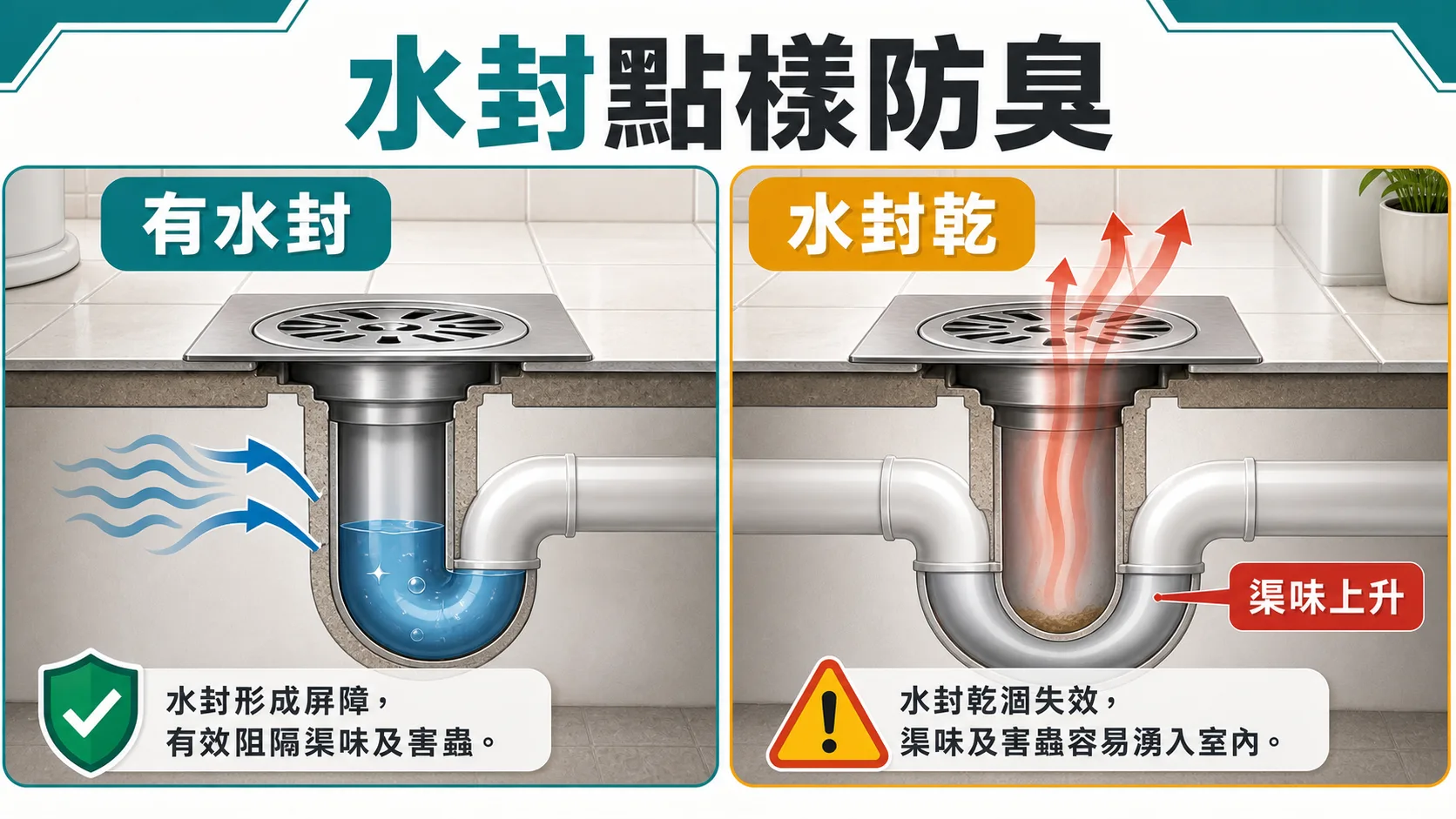
Like basin, sink and shower traps, floor drains commonly retain a small quantity of water. Its purpose is to separate drain air from the room. Lack of use, dry conditions, air movement and installation problems can contribute to loss of the seal.
The Chinese source refers to Buildings Department pipe-health guidance recommending about half a litre of clean water into each infrequently used floor drain at least weekly. It is a simple routine for guest bathrooms, little-used wet areas and suitable trapped balcony outlets; it does not correct a defective or missing trap.
Four weekly steps
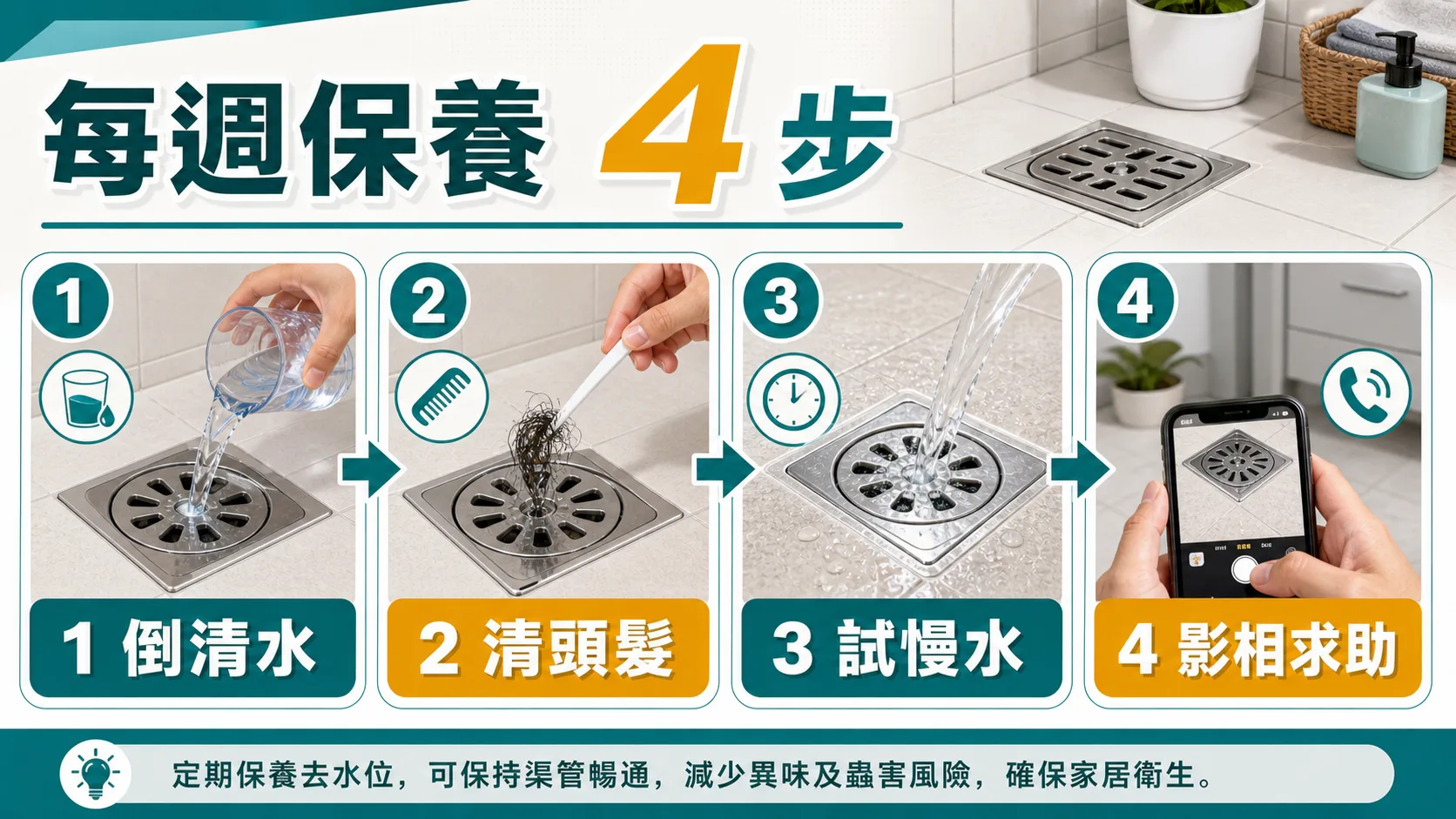
1. Add clean water
Slowly pour water into the little-used outlet so it reaches the trap. About half a litre is a general household starting amount. For an outlet unused for a long time, add it in two small portions after removing accessible dirt rather than washing a mass of debris downstream.
2. Remove hair and deposits
Lift a safely removable cover and collect visible hair, soap, dust, lint and strainer debris. Put it in the bin instead of flushing it in. Persistent hair and soap accumulation contributes to bathroom floor-drain blockages and smells.
3. Observe the flow
Check that the water drains freely. Slow recession, gurgling or a reaction at another outlet may indicate trap deposits, a local restriction or a deeper issue. Stop repeated water tests if drainage is impaired.
4. Record persistent symptoms
Photograph the outlet, cover and nearby wall base, and record existing flow and when the smell occurs. Recurring smell, insects or slow flow may involve a dry seal, deposits, gaps, trap defects or shared drainage.
Do odour and insect covers help?
A suitable cover can reduce direct insect access, retain hair and larger debris and help limit smells. It cannot repair a dry seal, thick internal deposits, cracked pipe or downstream restriction.
Do not permanently seal a floor drain with tape, cement or adhesive. It still has a drainage and warning function if a bathroom leaks, a washing machine overflows or shared drainage backs up.
What if weekly topping up does not stop the smell?
A simple dry seal usually improves after replenishment for a reasonable period. Rapid recurrence, or a relationship with flushing, bathing, upstairs discharge or extractor operation, suggests more than lack of use.
- Trap contamination: hair, soap, grease and dark biofilm can remain despite temporary dilution.
- Restriction: slow flow, backflow and gurgling may require unblocking.
- Seal loss through pressure: venting, anti-siphonage and layout may be involved; see the water-seal guide.
- Gaps or cracked pipes: smells at wall bases, toilet edges or pipe penetrations warrant review of crack warning signs.
- Insect routes: inspect seals, deposits and gaps; see drain flies and cockroaches near drains.
Can bleach, fragrance or drain cleaner replace water?
No. A water seal needs retained water. Fragrance masks smell, and bleach cannot repair a dry or defective seal, cracked pipe or pressure fault. Drain chemicals in standing water or mixed with earlier products increase irritation, burns and material risks.
Use clean water for routine replenishment. With slow flow, backflow or dark sludge, stop adding chemicals and arrange assessment. Disclose any product, approximate quantity and timing already used.
Which places need regular attention?
- Guest and helper bathrooms and rarely used shower rooms.
- Balconies, utility platforms, storerooms and floor drains beside washing machines.
- Rarely used showers and baths in older residents' homes.
- Floor outlets and basin traps before and after long absences.
- Office, clinic, tutorial-centre, shop and back-of-house washrooms.
- Restaurant, pantry, salon, pet-shop and other wet-area drains.
When to arrange an assessment
- Smell despite weekly replenishment.
- Slow flow, rising water, backflow or gurgling.
- Dark sludge, grease, hair masses or small flies.
- Several smelly outlets or similar neighbouring complaints.
- Symptoms starting after renovation, pipework, outlet or cupboard changes.
- Commercial odour affecting staff, customers or hygiene arrangements.
WhatsApp PipeButler on 5340 0748 with outlet photographs, existing drainage video, smell timing and slow-flow details. We will assess routine care, odour investigation, clearance, cleaning or the need for CCTV.
Frequently asked questions
Must I add water every week?
An outlet receiving water daily, such as a working shower drain, may not need separate topping up. Rarely used bathrooms, balconies, storerooms and outlets left during holidays benefit from regular replenishment.
How much water is needed?
About half a litre is a general starting point. It needs to reach the trap, not merely wet the cover. Immediate odour or abnormal water levels after adding water warrants assessment.
Do insects prove the seal is dry?
No. A dry seal is one possible route, but deposits, hair, grease, gaps and concealed drainage can also contribute. Clean accessible deposits and assess the seal.
Can an odour-resistant cover remain fitted?
A suitable removable, cleanable cover that permits drainage can be used. Do not seal the outlet permanently, and regularly remove trapped hair and soap.
Does continuing odour mean CCTV is necessary?
Not as the automatic first step. Check covers, traps, seals, flow, visible deposits and connections. Recurrence, uncertain concealed routes, suspected cracks or evidence requirements make CCTV more useful.