

Loading page…
Loading page…
Safe first checks for slow showers and baths, when to stop DIY, and how to distinguish outlet deposits from traps, fittings and branch drains.
WhatsApp with the problem and district, and we will confirm available timing.
Blocked showers and slow baths are common in Hong Kong homes. Ankle-deep shower water, a bath taking many minutes to empty, hair and black sludge at the outlet or odours suggest accumulated hair, soap, an object or downstream resistance rather than a trivial change in flow.
Remove accessible hair from the cover and outlet first, then test gradually with clear water where safe. If water is standing or drain cleaner has been added, do not mix in more chemicals. Record levels and drainage speed and assess clearance or pipe cleaning.
This guide focuses on showers and baths. See bathroom floor outlets or slow basins for other fixtures.
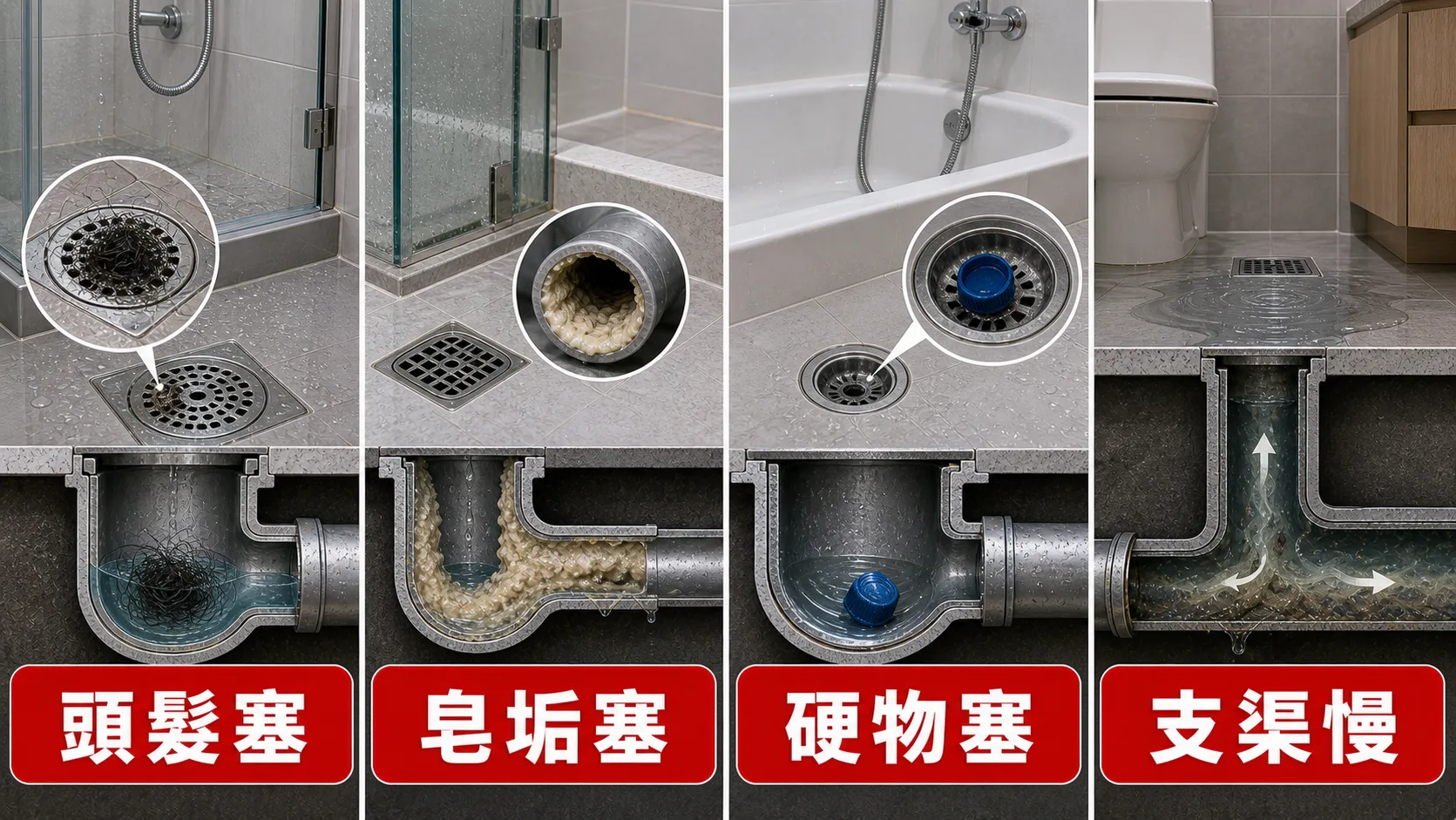
Hair catches on covers, baskets and bends after washing and conditioning. A few visible strands can connect to a mass of soap, skin debris and sludge. Early slowness may progress to pooling, bubbles and smells.
Daily shampoo, conditioner, shower gel, oils and skin debris coat pipe walls and narrow the opening. Slow flow after visible hair removal suggests internal soap and sludge deposits.
Small caps, clips, cotton buds, razor parts, plastic and toys may lodge without fully sealing the pipe, then trap hair and soap. Chemicals cannot dissolve these objects.
Noise, smells, slowness or backflow across the shower, bath, basin, floor outlet and toilet may indicate a branch, horizontal pipe or building-drain restriction. See multiple affected drains and recurring blockage causes.
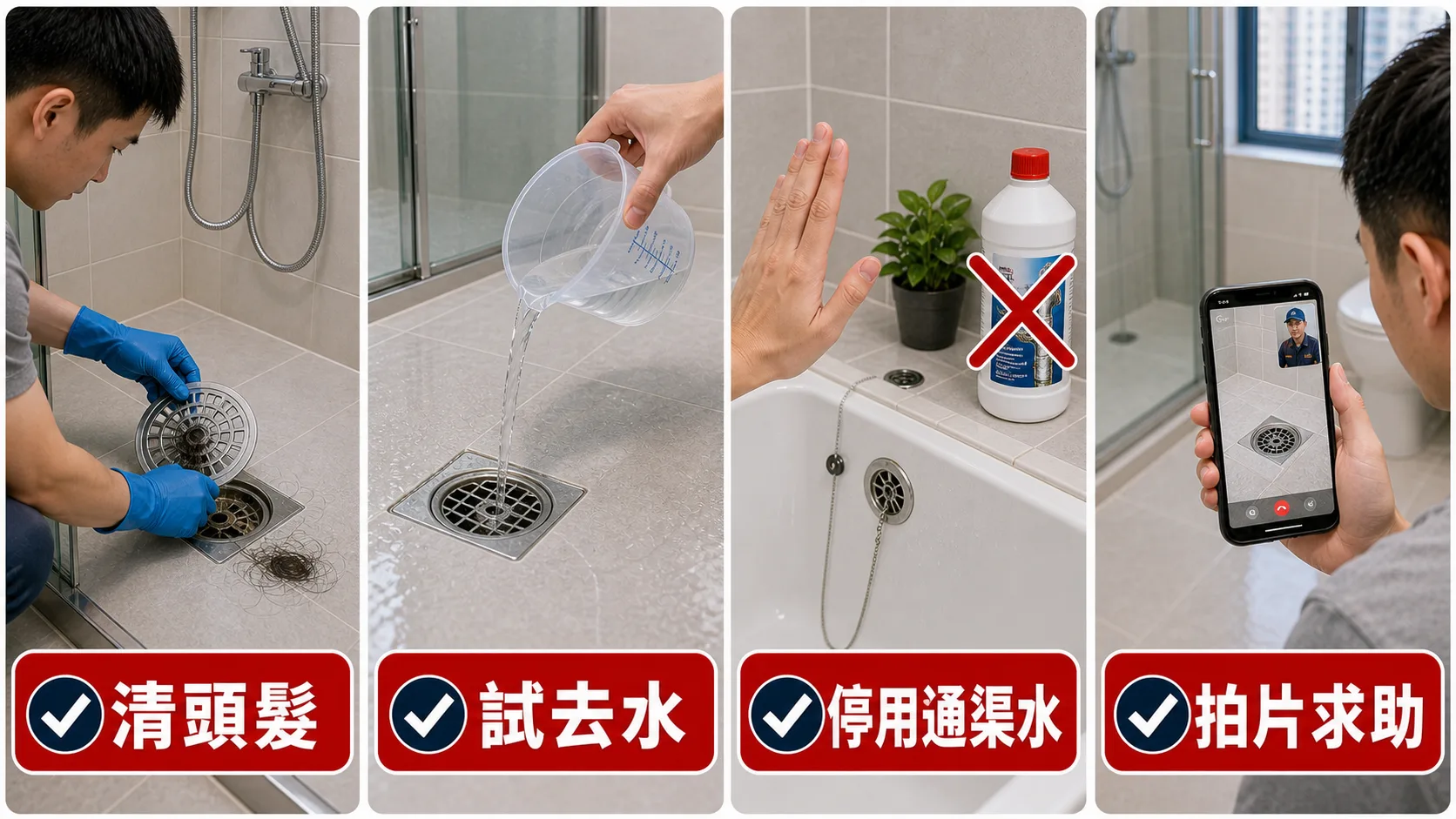
Wear gloves and remove an easily accessible cover or basket to retrieve visible hair and sludge. Do not rinse the mass inside. Do not force aged screws, waste fittings or pop-up plugs apart, as damage can create leaks.
Use a small amount of clear water or low shower flow. Watch drainage, bubbles, gurgling and smells after a few minutes, and record a short video showing the falling level and opening.
Do not add strong acidic, alkaline or mixed-brand products to standing water. Residue can contact skin and eyes during cover removal, clearance or pumping. See chemical safety.
Show the shower or bath type, outlet close-up, drainage time, chemical-use history, whether only one outlet is slow and reactions elsewhere in the bathroom. These help establish equipment and scope through an assessment enquiry.
Hair, soap and sludge can both obstruct water and produce odours. Little-used showers and baths can also lose their trap water seal. Replenish with clear water where drainage permits and observe; smells returning within days or accompanying slow flow warrant trap and branch checks.
See bathroom odour sources and water-seal maintenance. Persistent smells after clearance call for source investigation, not fragrance alone. Sewage or black sludge on floors may require cleaning and disinfection.
Recurrence, objects, unknown concealed routes and difficult renovation-related faults may warrant CCTV. Deeper or longer deposits may suit assessed jetting.
Bath faults can involve pop-up mechanisms, waste assemblies, overflow openings, connections beneath the bath and concealed pipes. Showers can involve grilles, baskets, floor fall, thresholds and waterproofing. Forcing fittings or using unsuitable tools can scratch the bath, break plastic or loosen connections.
For slow showers or baths, pooling, sludge, smells or recurrence, WhatsApp PipeButler on 5340 0748 with outlet photographs, test video, chemical history and other bathroom symptoms. We can assess clearance, cleaning, odour investigation, CCTV or fitting repairs.
Start with accessible hair and a small clear-water test if safe. Persistent slowness, no flow, bubbles or smells may indicate a trap or branch restriction requiring assessment.
No. Soap, conditioner, objects, waste fittings and downstream branches can produce similar symptoms.
It is not recommended as the first step, especially with standing water or suspected objects. It may not remove the obstruction and can leave hazardous residue.
Incomplete removal, thick wall deposits, inadequate fall, a trapped object or a restricted branch may remain. Record recurrence timing and assess cleaning or CCTV.
Not necessarily. Replenish the seal, remove accessible surface dirt and observe. Rapidly returning smells, sludge, slowness or several smelly outlets warrant checking seals, traps and connected drainage.