
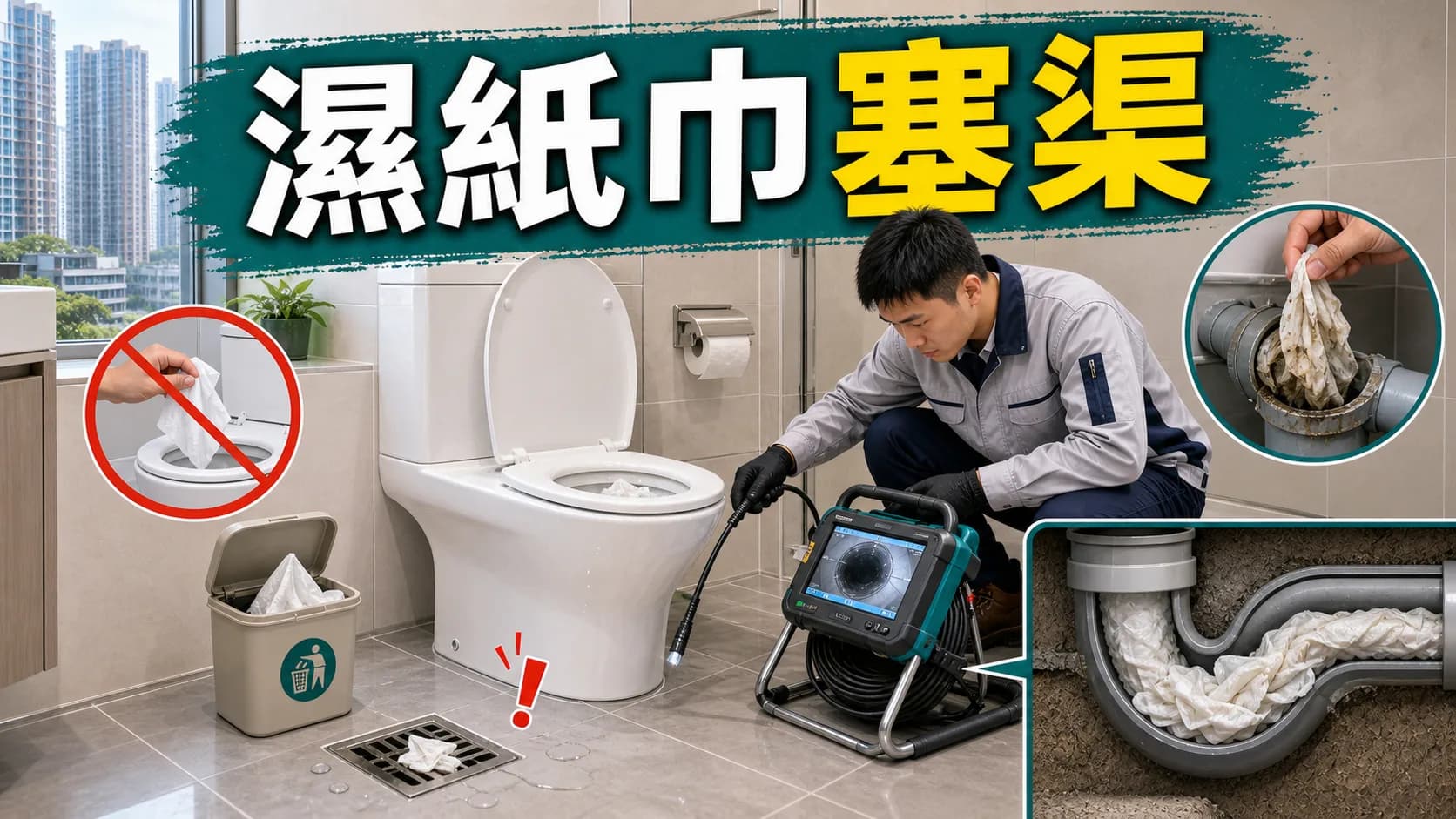
Wet wipes, baby wipes, disinfecting wipes, make-up pads and products labelled “flushable” are often much stronger than toilet paper. Disappearing from the bowl does not mean they have safely passed through the flat's or building's drainage. They can lodge in toilet bends, horizontal pipes, traps, shared drains and chambers, eventually causing recurrent blockage and backflow.
A practical rule is to flush only toilet paper and human waste. Put wipes, tissues, cotton buds, make-up pads and cleaning wipes in the bin. Even a flushable label does not remove the risks presented by older Hong Kong pipes, narrow sections, numerous bends and shared drainage.
This guide explains why wipes obstruct drains, what to do if the toilet blocks and how to help family members, tenants and visitors prevent recurrence.
Why do wipes block drains?
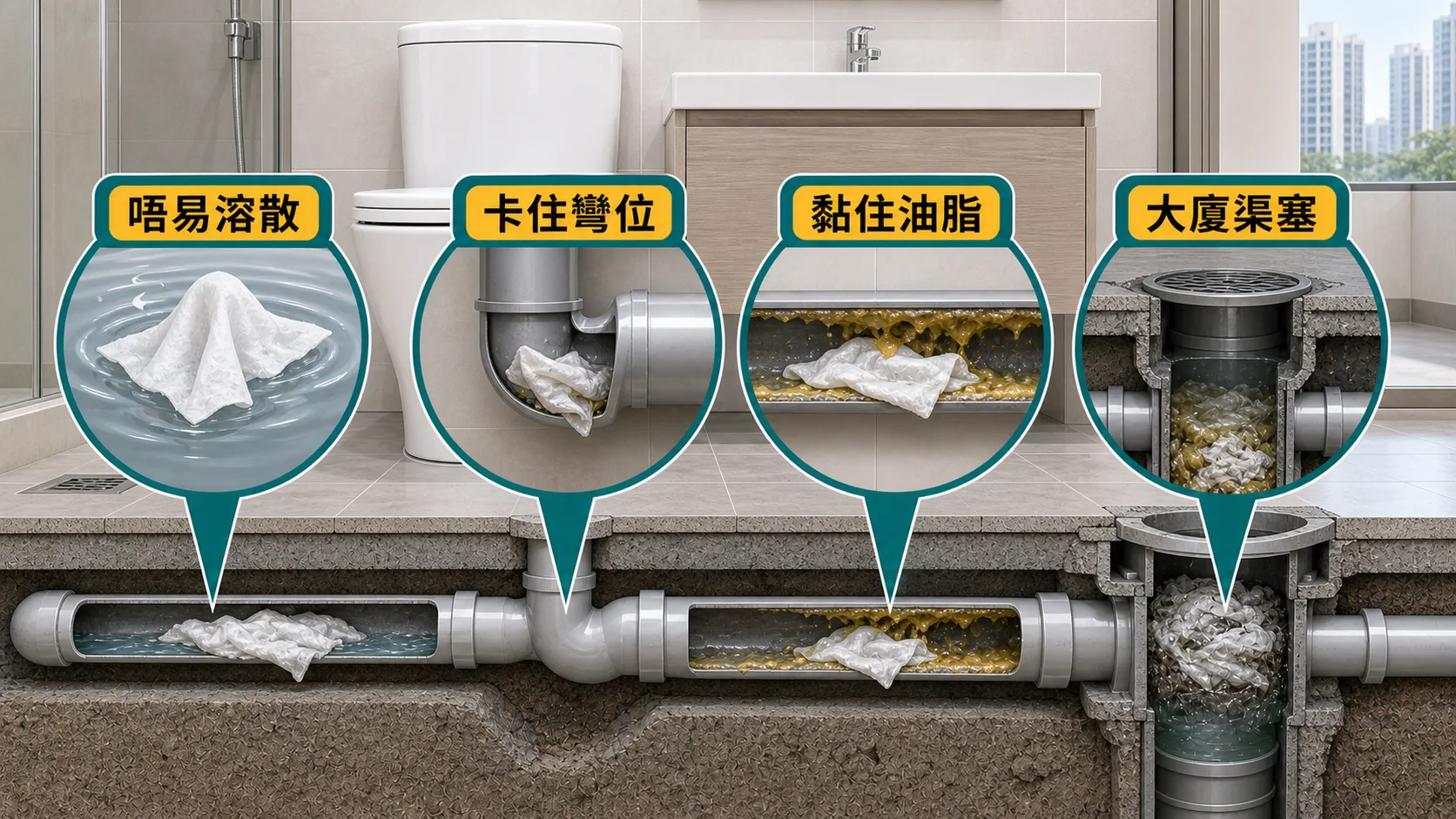
1. They do not readily break apart
Toilet paper is designed to disperse in water. Wipes need to remain strong while wet so they can clean surfaces. Even labelled products may catch where real pipework contains bends, joints, grease, hair and sediment.
2. They lodge at bends
A toilet's internal bend and the branch pipe's bends and joints can trap one wipe, which then catches more wipes, paper, hair and waste. Slow drainage may develop into a rising bowl level and overflow.
3. They bind to grease
Shared drainage carries more than toilet discharge. Wipes combined with kitchen grease, sludge and debris form harder-to-move masses. One household's disposal can therefore affect downstream shared pipes.
4. They obstruct building drains
A wipe may reach a building branch, main or chamber before stopping. Symptoms can emerge later. Backflow across several units or lower floors indicates a wider issue than one toilet.
What to do immediately
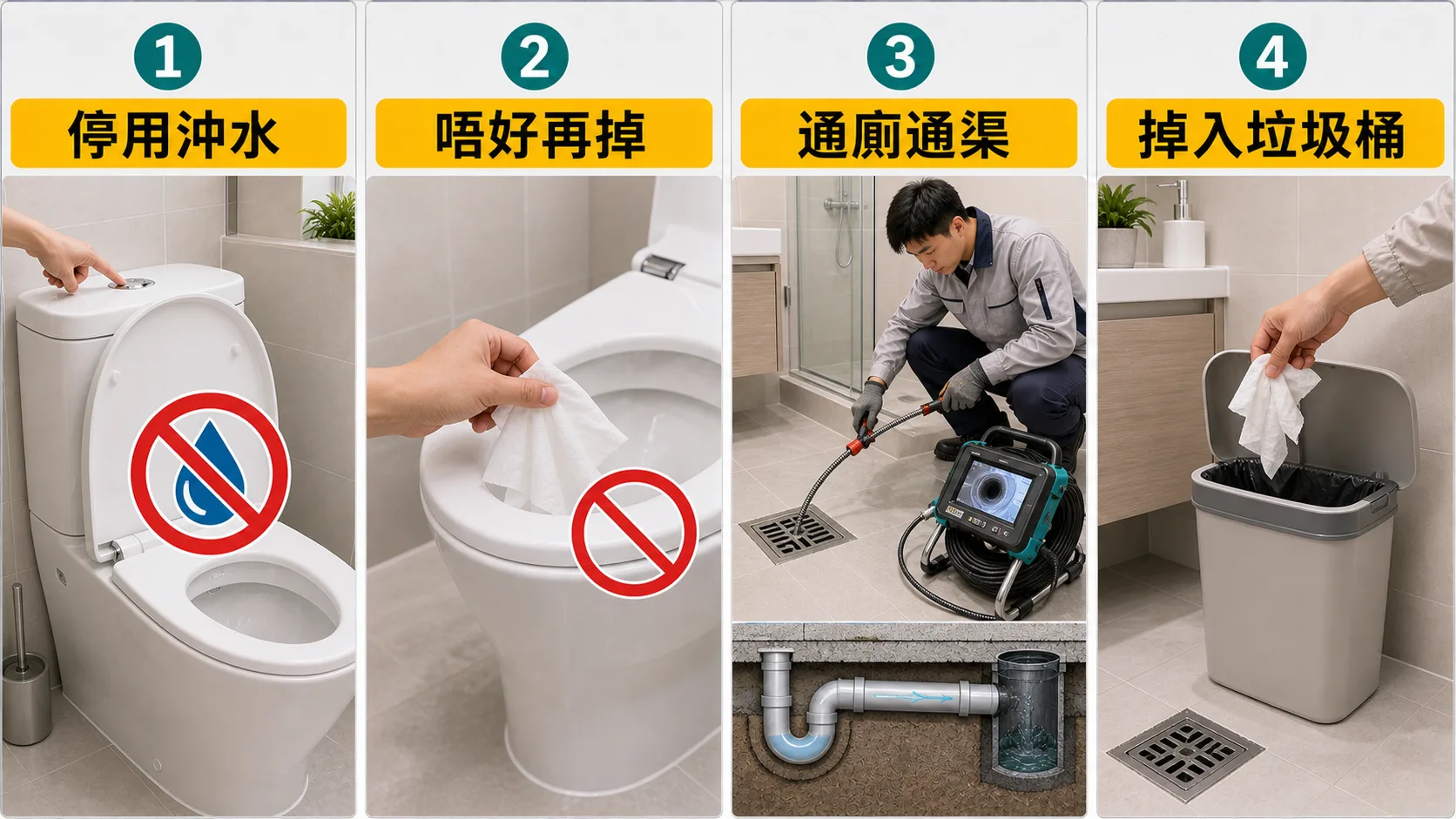
1. Stop flushing
If the bowl level rises, falls slowly or gurgles, do not flush again. Stop using the toilet and, where safe and accessible, close its cistern supply valve to prevent further filling. Record the existing water-level changes without another test flush.
2. Stop adding wipes
Keep wipes, tissues and cleaning cloths out. Place a convenient lidded bin beside the toilet and a simple reminder for children, older family members, tenants, cleaners and guests.
3. Arrange suitable clearance
A wipe in the toilet bend may be removable with an appropriate tool. Repeated flushing, recurrent blockages or slow basins and floor drains can indicate a downstream branch problem. Arrange unblocking or, where indicated, CCTV inspection.
4. Put wipes in the bin
Bin wipes, make-up pads, disinfecting wipes, cotton buds and sanitary products. Offices, clinics, care homes, beauty premises and rental accommodation particularly benefit from accessible bins and clear notices.
Can drain cleaner dissolve wipes?
Strong drain cleaner is not an appropriate first response. Tough fibres and physical snagging may remain. In a partly blocked toilet, corrosive liquid can sit in the trap or backflow, creating skin, eye and later maintenance hazards. See drain-cleaner safety.
Tell the technician if any chemical was used so they can avoid exposure during clearance or dismantling. Never mix bleach, acid or alkaline cleaners, or different drain products.
Will a few flushed wipes definitely cause a blockage?
Not necessarily immediately, but the risk accumulates. A wipe may remain at a bend, rough pipe surface, deposit or shared drain. A few symptom-free flushes do not establish long-term suitability. Subsequent rising toilet water, slow flow, gurgling, smell or repeated blockages should prompt consideration of wipes.
If wipes have been flushed for months and the toilet now repeatedly blocks, clearing the bowl alone may be insufficient. The branch may need examination, pipe cleaning or sediment removal according to findings. See recurrent blockage causes.
Prevention at home, work and rental properties
- Provide a lidded bin beside the toilet: disposal needs to be convenient.
- Use clear signs: explicitly list wipes, tissues, cotton buds and sanitary products as non-flushable.
- Use toilet paper for flushable paper needs: wipes are for cleaning and belong in the bin afterwards.
- Explain the rule at handover: tenants, short-stay guests and cleaners may not know the building's drainage history.
- Investigate recurrence downstream: repeatedly clearing only the toilet entrance can leave a mass inside the pipe.
For suspected wipe blockages, rising bowl levels, recurrence or building-drain backflow, WhatsApp PipeButler on 5340 0748 with existing video, wipe-disposal history, duration and any other slow outlets. We will assess toilet or pipe clearance, cleaning, odour investigation or post-backflow disinfection and agree the work before starting.
Frequently asked questions
Can a wipe labelled flushable really be flushed?
A label does not make a product suitable for every drainage system. Older pipes, tight bends, deposits and shared drains may still trap it. Bin disposal is the safer approach.
Can baby wipes block a toilet?
Yes. They are generally thicker and stronger than toilet paper and do not rapidly disperse. Even a few can catch in a bend or downstream pipe.
Can I use a plunger?
If the bowl is not near overflowing and no chemicals were used, a suitable toilet plunger may be tried carefully. Persistent rising water, recurrence or numerous flushed wipes calls for a technician rather than pushing the material deeper.
Should I act if the wipes have already disappeared?
With no symptoms, stop flushing wipes and monitor. Mention the history if slow drainage, rising levels, odour or repeated blockages develops.
Can other flats be affected?
Yes. An obstruction in a shared branch, main or chamber can cause slow flow, backflow and odours in several units. Notify management and arrange investigation.