
Loading page…
Loading page…
A school drainage response covering affected toilets, slippery floors, water seals, shared pipes, pests and repair scheduling outside pupil hours.
WhatsApp with the problem and district, and we will confirm available timing.
Drain odours and blockages in schools, kindergartens, tutorial centres and children's centres need more than a household response. Heavy washroom use means slow floor drains, backflow, flies and odours can affect classrooms, corridors, parents' impressions and campus hygiene. Protect pupils first, then distinguish cleaning, pipework, water-seal, shared-drain and pest-source issues.
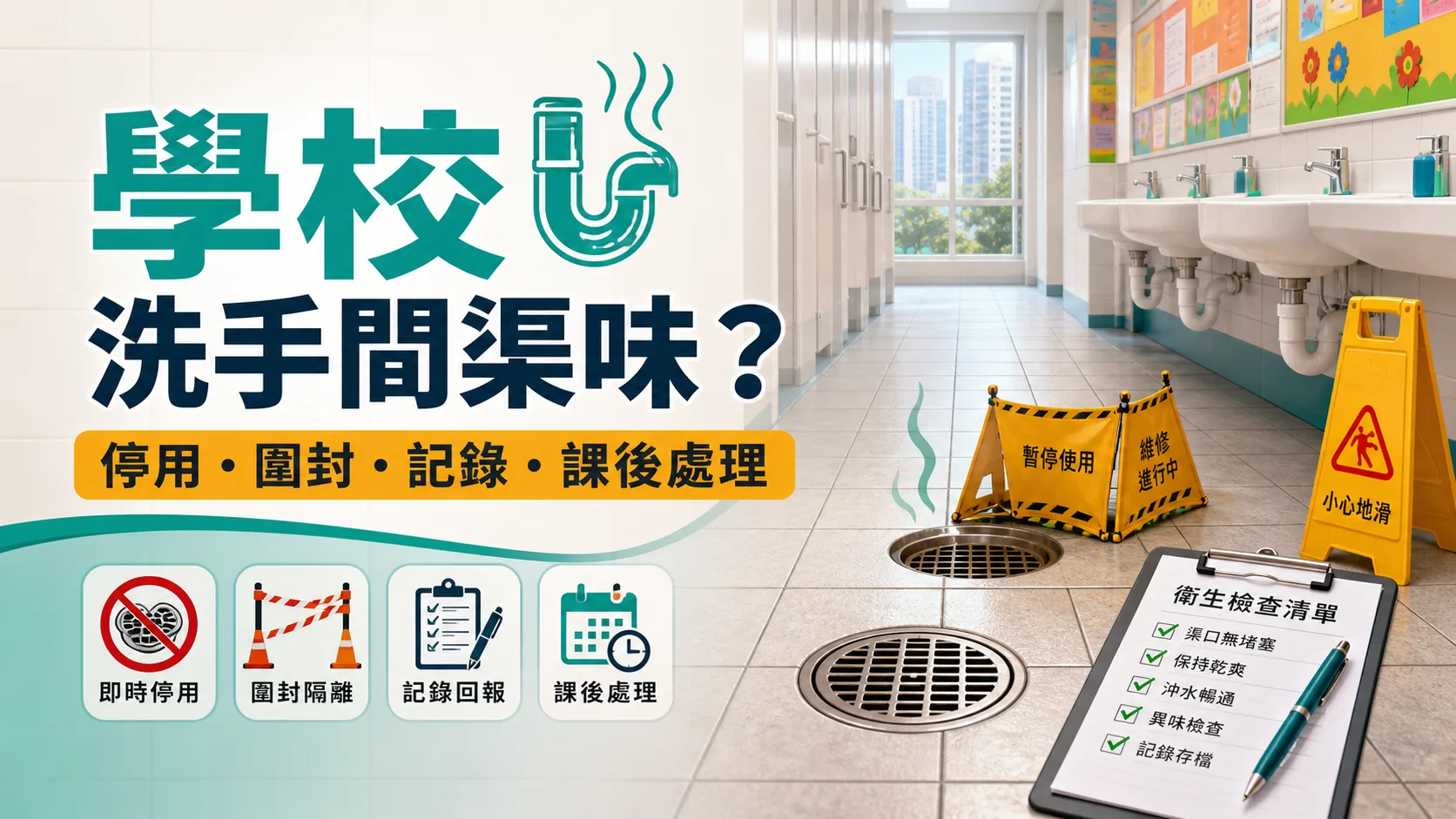
Close affected cubicles or sinks, isolate slippery floors and record water levels and odour locations. Notify the school office, cleaning contractor or building management. Do not use aggressive drain cleaner while pupils are present, or let staff open manholes or enter drainage channels themselves.
This guide covers typical Hong Kong school, kindergarten and education-centre situations. See also bathroom odour sources and water-seal maintenance for seldom-used outlets.
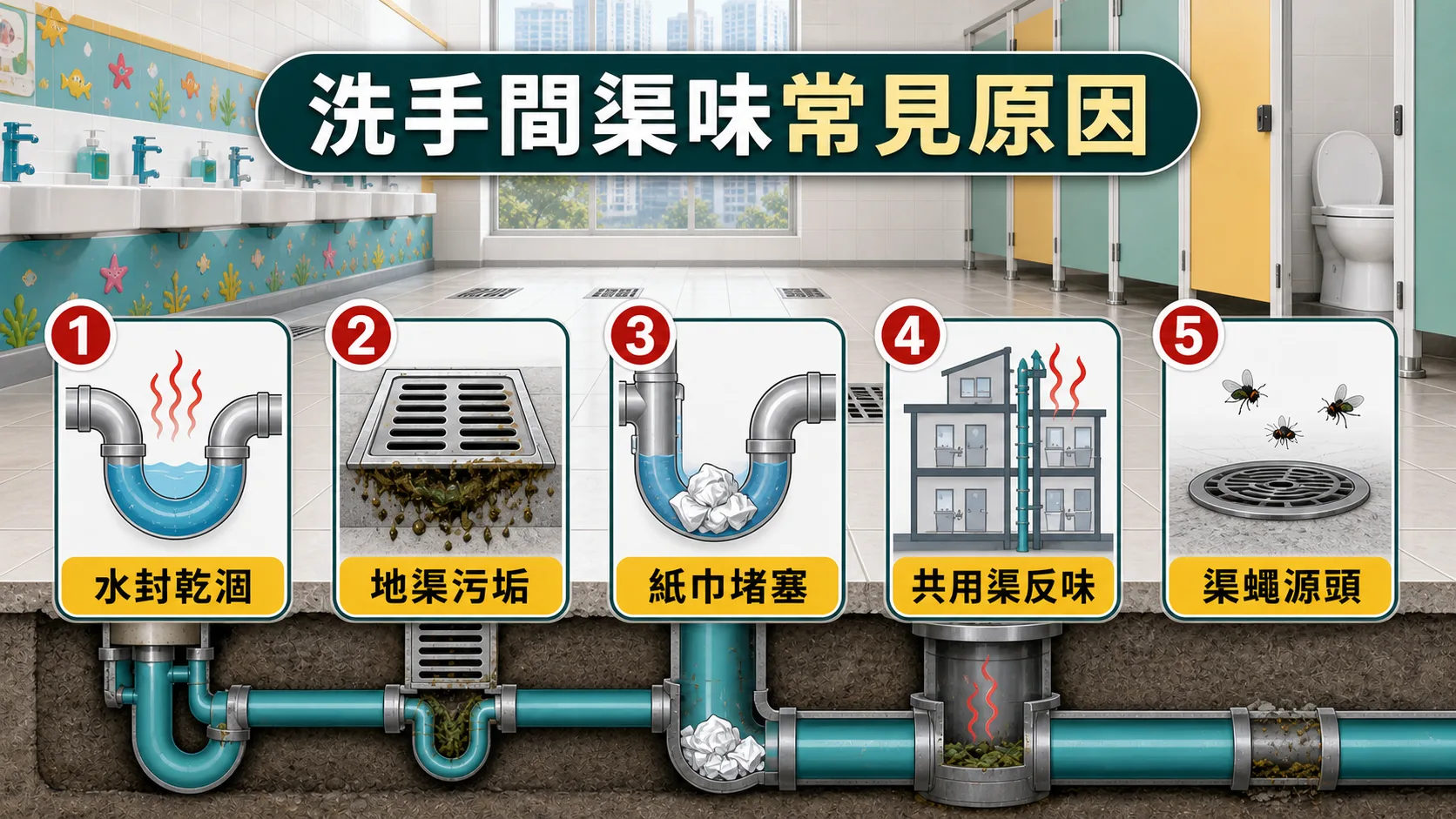
Unused cubicles, older wings, backstage toilets, specialist-room sinks and holiday-period floor outlets may dry out. Drain air can then enter indoors. Adding water may help briefly; recurrence within days warrants checking traps, ventilation and downstream pipes.
Water, soap, paper, hair, urine scale, dust and detergent residues accumulate inside floor outlets, traps and branches. Surface disinfection reduces contamination risk but does not remove these deposits. Slow drainage with odours may require pipe cleaning or local unblocking.
Large amounts of tissue, wipes, masks, stationery packaging and other objects can partially block toilets, floor drains or branches. One blocked cubicle suggests a local check; a row of cubicles or several slow drains and sinks suggests a downstream or shared restriction.
Schools in commercial buildings, housing estates, church or welfare premises and older buildings may share drainage with others. Similar odours in neighbouring tenants, corridors, rear-lane manholes or management areas warrant a shared-drain check rather than repeated school cleaning alone.
Pests are not necessarily an insecticide-only issue. Drain biofilm, grease-trap or manhole sludge and standing water in refuse or wet areas can sustain recurring insects and smells. See drain-fly sources and cockroaches near drains.
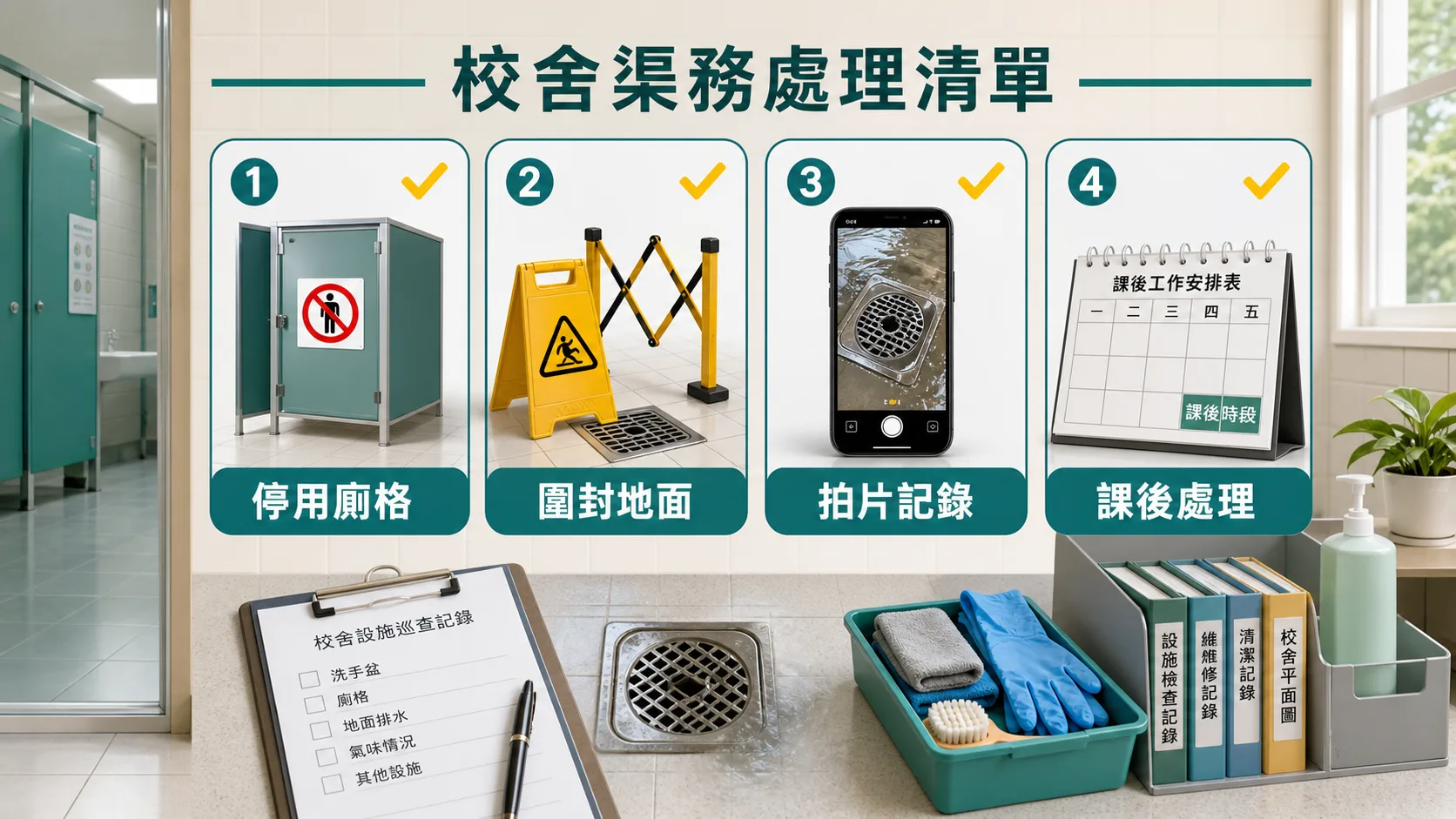
Use out-of-service signs for backflow, pooling, strong smells or blocked toilets, and direct pupils elsewhere. Isolate kindergarten and junior-primary areas promptly to prevent wastewater contact, slips and objects being dropped into outlets.
Use signs, tape or barriers and remove water without sweeping sewage into another outlet. Arrange cleaning and disinfection appropriate to sewage contamination, recording the time and area treated.
Record date, time, floor, cubicle, outlet, where water emerges, gurgling, flies, recurrence after cleaning and other affected points on the floor. This helps distinguish one outlet, an internal branch and shared building drainage.
Unblocking, jetting, CCTV and extensive pipe cleaning are best scheduled after school, at weekends, during holidays or while pupils are absent. Opening covers, machinery and strong odours particularly warrant avoiding teaching hours.
Cleaning: removes surface dirt, rubbish, urine deposits, paper and water as part of everyday school hygiene.
Disinfection: addresses sewage, vomit or excreta contamination, pest-related contamination and high-risk contact surfaces. It neither clears a blockage nor repairs a failed water seal.
Unblocking: addresses toilets, floor outlets, sinks, pantry sinks and branches. Several slow outlets require assessment of shared drainage first.
Pipe cleaning or jetting: may suit recurring slow flow, urine scale, soap, paper deposits, long horizontal pipes and holiday maintenance. High pressure is not always needed; see appropriate uses of drain jetting.
CCTV: may help with repeated blockages, unknown routes, hard objects, cracks, displacement or evidence needed by management, owners or the school board. See when CCTV helps.
Not necessarily. Immediately close the affected washroom or cubicle, isolate wet areas, ventilate and provide alternative facilities. Sewage backflow, severe odours, multiple affected areas or hygiene risks require escalation under school procedures.
Disinfection treats contaminated surfaces. Dry seals, dirty traps, partial blockages, manholes and shared-drain faults will recur unless their sources are addressed.
Both may be appropriate. Biofilm, drain deposits, manholes and grease traps can sustain recurrence after spraying. Clean the source and combine appropriate pest control with maintenance.
Provide the school address, floor, affected washrooms, photographs and video, onset, backflow, flies or smells, other affected points, available working periods and whether management-controlled areas are involved.
For school, kindergarten, tutorial-centre or education-centre odours, blocked toilets, floor-drain backflow, insects or sewage contamination, WhatsApp PipeButler on 5340 0748 with video, locations and suitable working times. We can assess odour investigation, unblocking, pipe cleaning, disinfection, pest control or CCTV, and agree the scope before work.