
Loading page…
Loading page…
Keep salon wash stations draining through daily checks, source diagnosis, suitable cleaning and maintenance planned around business use.
WhatsApp with the problem and district, and we will confirm available timing.
A blocked salon shampoo basin differs from an ordinary slow hand basin. Daily hair, shampoo, conditioner, colour products, styling products and towel fibres create a substantial load. At weekends and busy periods, slow drainage delays the next client, wets floors and can close a whole row of wash stations.
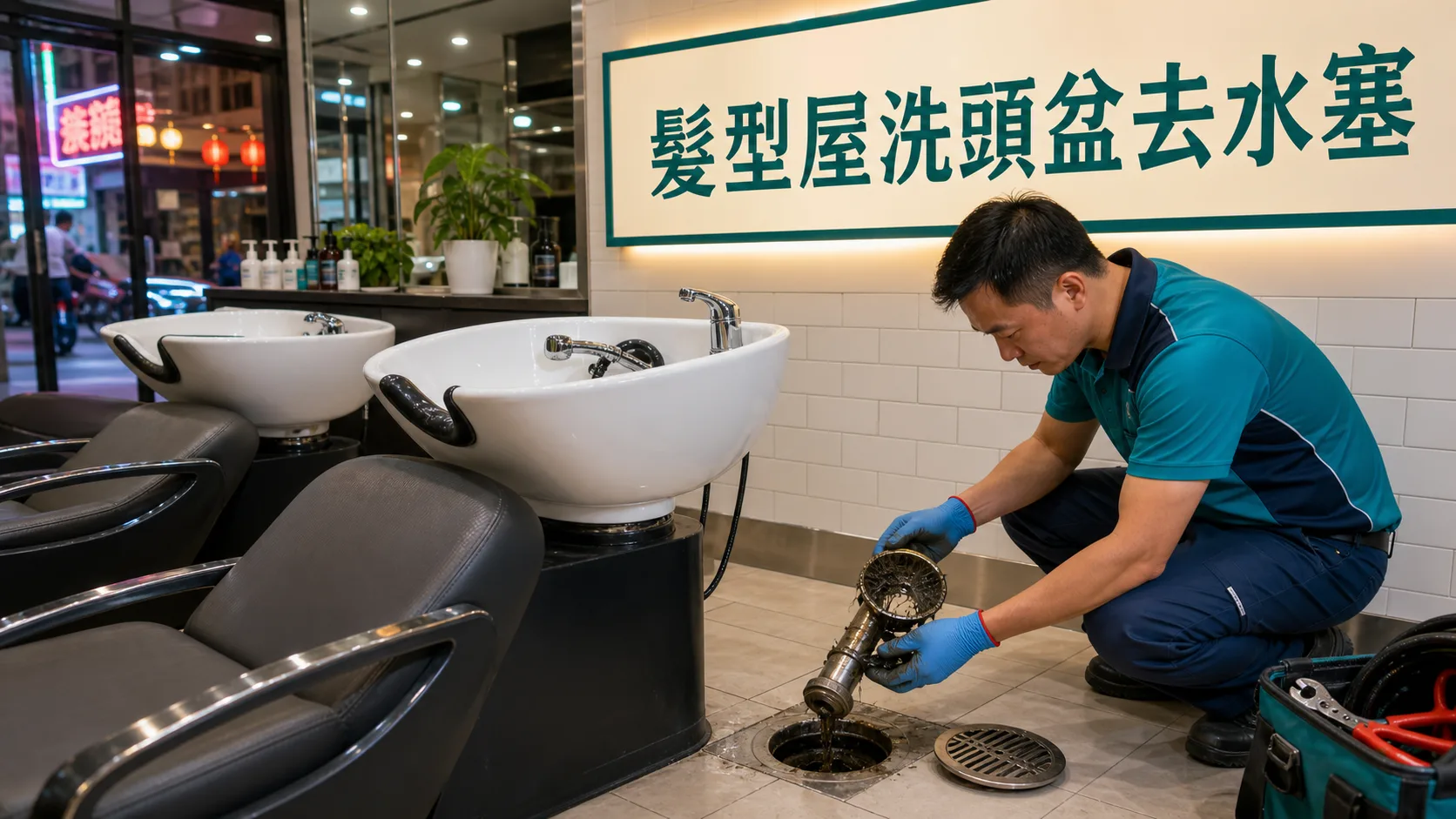
Stop using the affected basin. Wearing gloves, remove visible hair from the strainer and outlet, then test with a little clear water if no chemical hazard is present. If water remains or drain cleaner has been used, do not add other chemicals. Record drainage speed and assess unblocking or pipe cleaning.
This guide concerns salons and beauty premises with shampoo beds. For domestic fixtures see slow bathroom basins and shower and bath blockages.
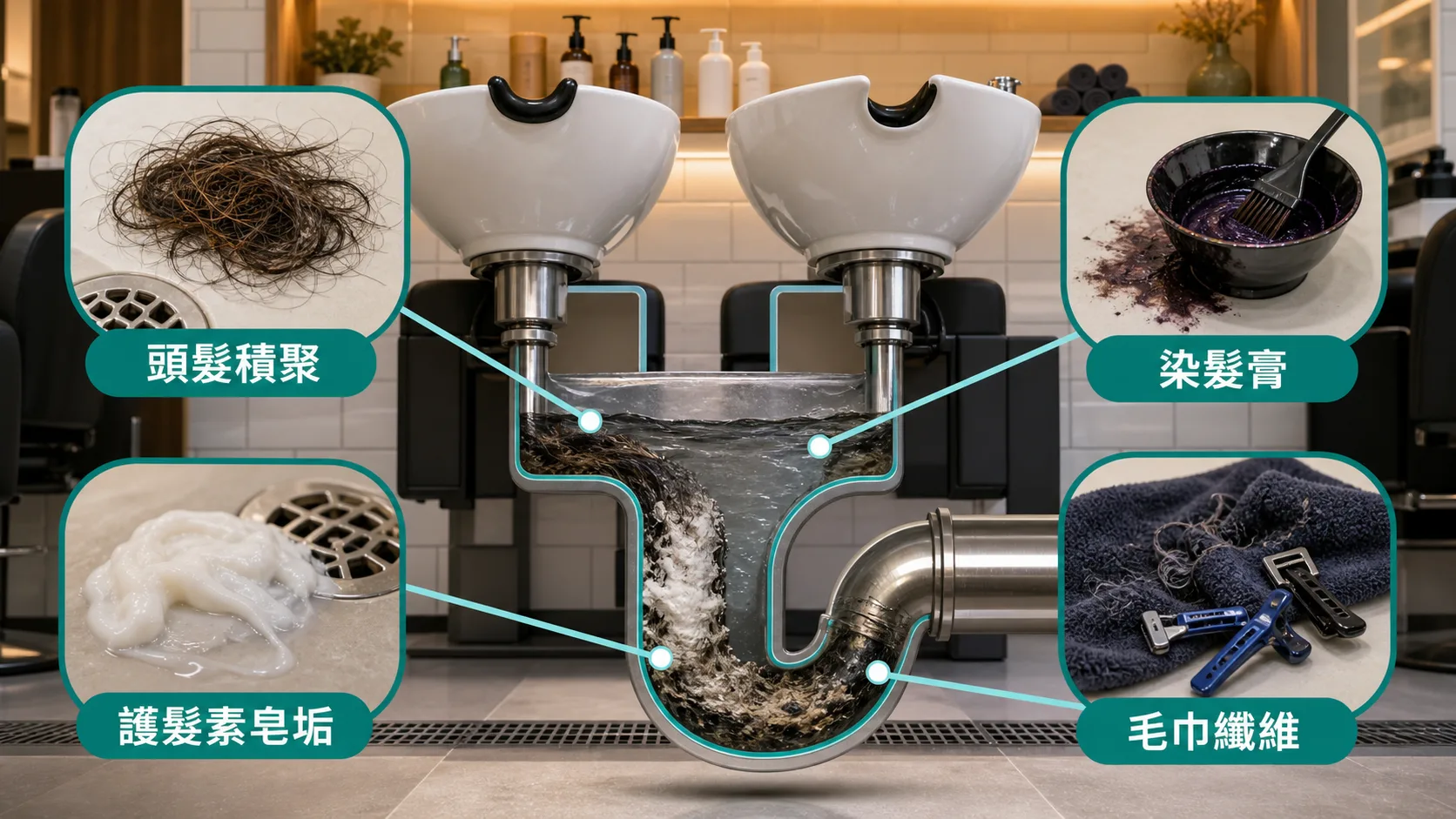
Unlike intermittent domestic hair disposal, salons repeatedly wash, trim, rinse and treat hair each day. Hair catches on strainers, outlets, bends and walls, collecting sludge and product residue. One slow basin can progress to several affected stations.
Colour cream, bleaching powder, masks, wax and styling or treatment products may not disperse fully. They bind to hair and walls, thickening deposits and contributing to outlet or trap smells. Hot water alone is not a reliable solution.
Shampoo, conditioner, skin oils and cleaning products form slippery deposits that retain hair and fibres. Daily strainer cleaning cannot remove an already narrowed downstream pipe.
Towel fibres, clips, caps, glove fragments, cotton and packaging can catch at bends or junctions. Hard objects do not dissolve in drain cleaner and continue collecting hair and soap.
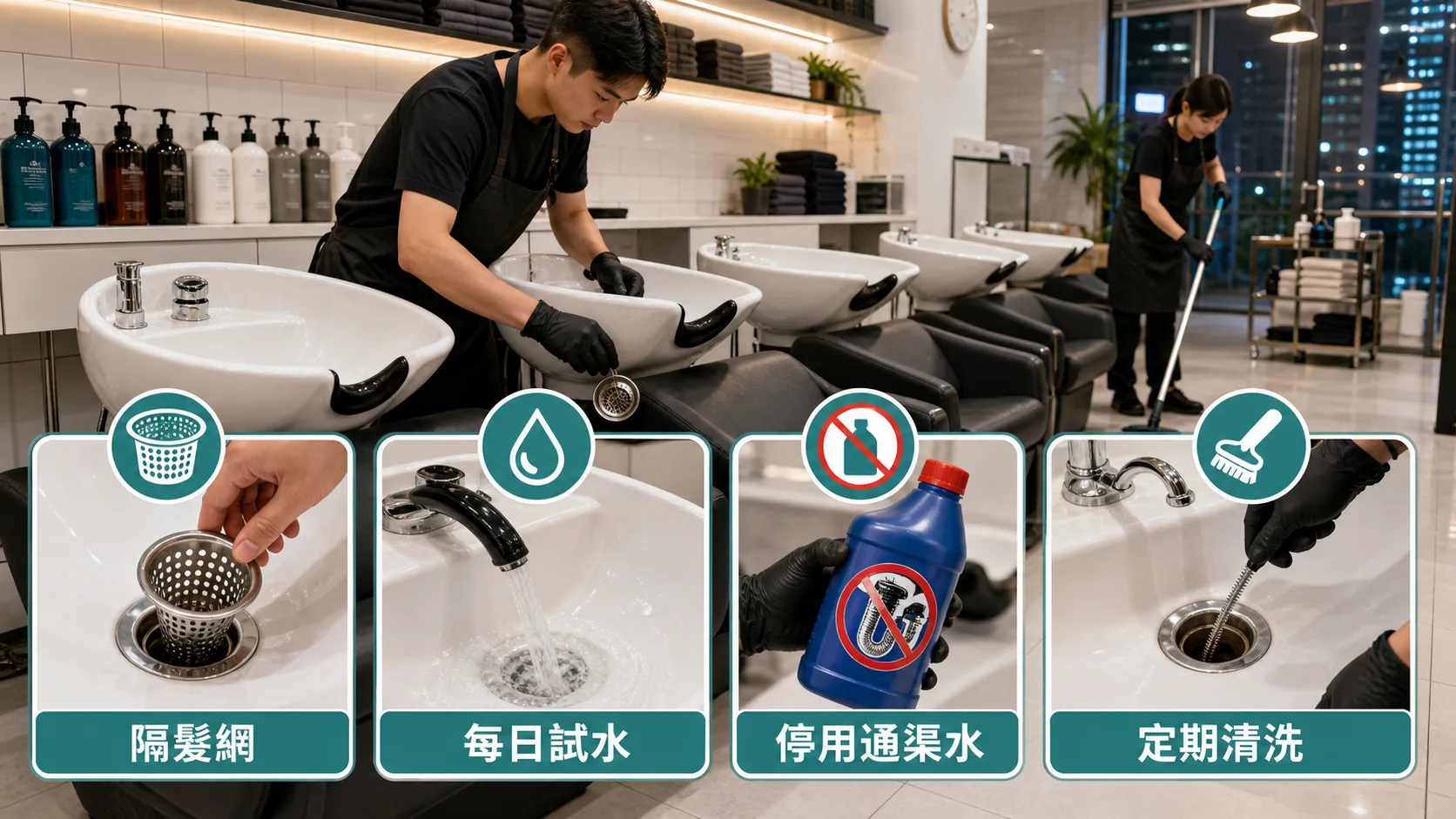
Fit a secure strainer or basket to every basin. Lift hair out for disposal instead of showering it into the pipe. Replace loose, distorted or overly coarse strainers that let hair pass downstream.
After clearing visible hair, compare each basin under normal use where safe. Watch for drainage speed, bubbles, gurgling, odours and rising levels. Several days of slower performance indicate developing deposits; do not wait for complete blockage.
Salons already use colouring, bleaching and cleaning products. Adding strong acid, alkali or different drain-cleaner brands increases burn and reaction risks. Residue may remain for staff or technicians to encounter during dismantling. See chemical safety.
For heavily used basins, include pipe cleaning in planned maintenance to address hair, soap and product deposits. Deeper sections, floor outlets and mall or building branches may require assessment of desilting or jetting.
One slow basin: inspect its strainer, waste fitting, trap, hose and connections first. Persistent slowness after surface clearance suggests a bend or short branch.
A whole row is slow: consider the shared branch or horizontal pipe. Clearing one basin may only help briefly.
Slow basins plus smelly floor drains: consider downstream restriction, floor-drain seals, sludge or shared pipes. Sewage or black sludge on floors may require disinfection after source control.
Recurrence within weeks: record timing, stations and whether peaks worsen it. See recurring blockages; repeated temporary clearance may leave the cause.
Problems after renovation: check connections, diameter, fall, trap position, crushed flexible hoses and building debris. Unknown concealed routes may warrant CCTV.
WhatsApp PipeButler on 5340 0748 with the salon district, affected basins, video, chemical history and whether neighbouring stations work normally. We can assess clearance, cleaning, jetting, desilting or CCTV and agree the scope before work.
A non-draining basin may first need a local hair mass, bend or junction obstruction removed so basic use can resume.
If flow returns then slows again, remove hair, soap, colour cream and conditioner from pipe walls rather than creating a small passage. This is a relevant maintenance approach for salons.
Several slow basins, floor outlets and a restricted branch may warrant jetting after assessment. Higher pressure is not automatically better: diameter, material, bends and risk matter. See jetting suitability.
Repeated incidents, suspected renovation debris, collapse, incorrect connections, inadequate fall or a need to explain the cause to an owner or management may justify internal images rather than guesswork.
Odours can involve dry seals, dirty traps, partial downstream blockage, ventilation or floor-drain sludge. Source investigation is more useful than fragrance alone.
Small flies, black sludge and damp mustiness indicate cleaning and drainage both need attention. Towels, client chairs and busy floors can be exposed during sewage or sludge backflow, requiring cleaning and appropriate disinfection after clearance.
Start with strainers and visible hair and a small safe water test. Persistent slowness, no flow, several affected stations or smells require source assessment rather than force.
Yes. They may not cause an immediate blockage alone, but bind hair and fibres to deposits, progressively reducing the opening.
No. Standing water and existing colouring or cleaning residues create mixing and exposure risks, including during later dismantling.
A shared branch or downstream restriction is more likely than hair in only one strainer. Record each basin's performance for assessment of cleaning or CCTV.
There is no universal interval. Client volume, basin count, colouring workload, blockage history and pipe condition matter. Slowness returning every few weeks warrants a planned cleaning review rather than waiting for complete failure.