
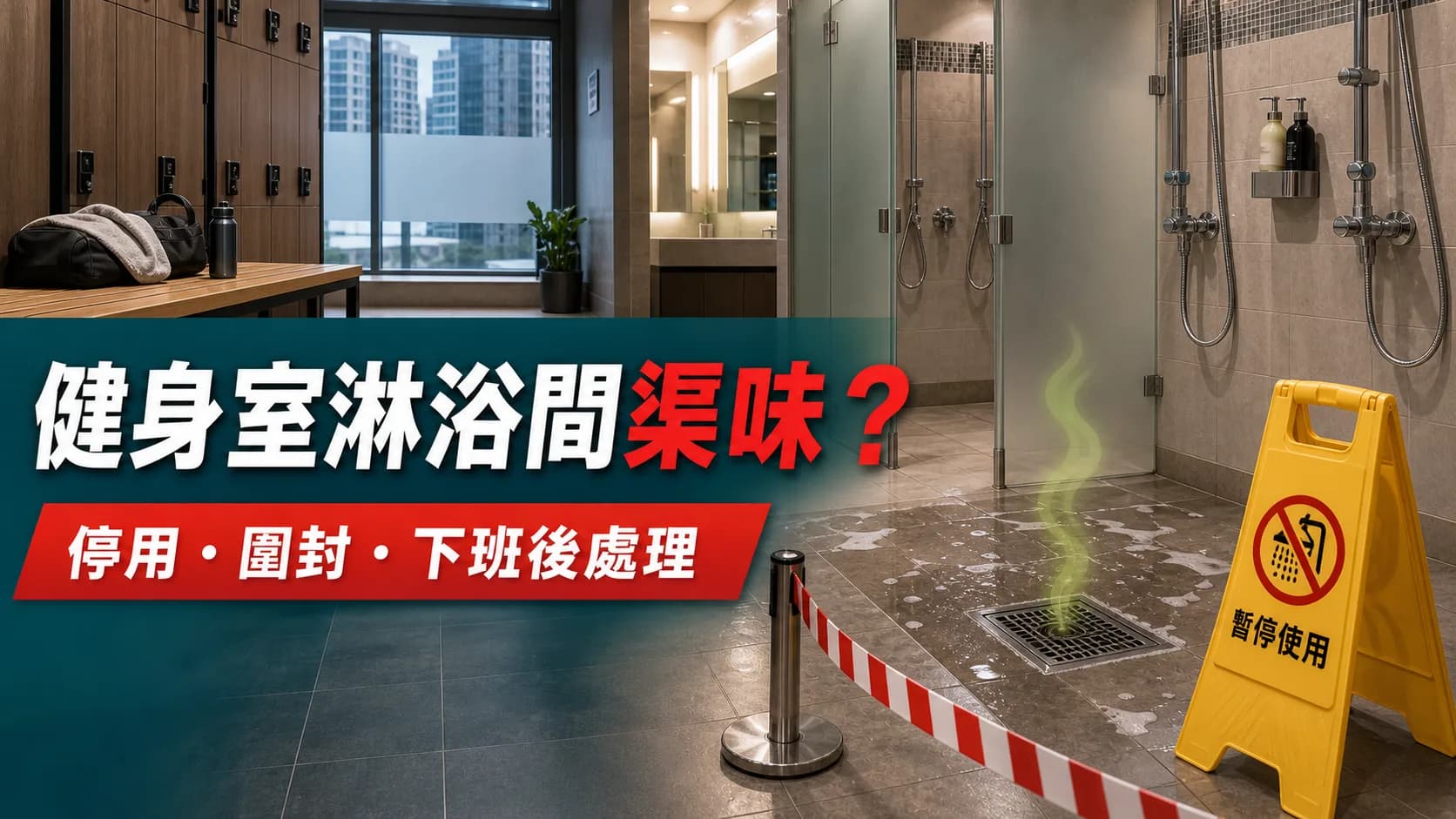
Smells, slow drains and standing water in gyms, yoga studios, boxing gyms, clubhouses and sports centres affect more than appearance. Members walk on wet floors, encounter odours and may queue for showers at busy times. Daily hair, shower gel, sweat, skin oils, towel fibres and floor dirt enter these drains, so restrictions can develop faster than in a domestic shower.
Close an affected shower cubicle when its drain smells, drains slowly or backs up. Place slip warnings, isolate standing water and film drainage speed, odour locations and drain flies. Do not add drain cleaner where members may still use the area. If several cubicles or changing-room outlets are affected, ask management to check shared drainage too.
For domestic facilities see blocked showers and baths or bathroom floor drains. This guide concerns commercial gyms and shared changing rooms.
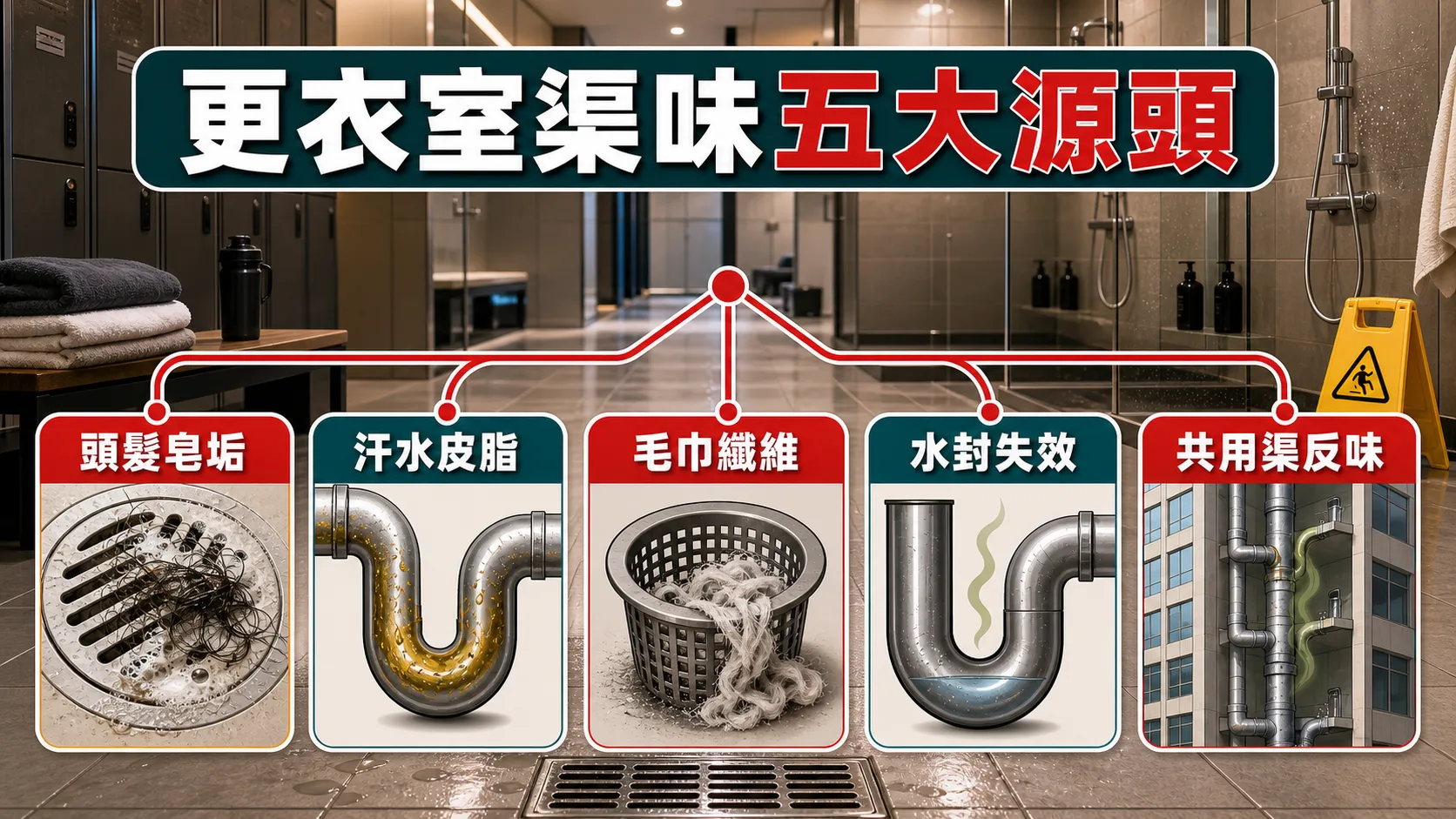
Five common causes of gym shower drain smells
1. Hair and soap collect at outlets, traps and bends
High shower use introduces more hair than a household drain receives. Hair catches on covers, strainers, floor outlets and pipe bends, collecting shower gel, shampoo, conditioner and soap scum. Slow drainage may progress to standing water and odours.
2. Sweat, oils and cleaning residues form a sticky coating
Post-exercise showers wash sweat, skin oils, sunscreen, massage oils, skincare products and detergent residues into pipes. These deposits trap hair and fibres, gradually reducing the internal opening. Daily mopping and rinsing may not remove material inside the pipe.
3. Towel fibres, plastic and small objects catch at outlets
Towel fibres, bag fragments, cotton buds, bottle caps, shaving accessories and hair clips can enter changing-room drains. Drain cleaner will not dissolve hard objects, which can become anchors for hair and soap and cause repeated restrictions at one outlet.
4. Insufficient water seals or dirty traps admit drain air
Some shower cubicles, accessible showers, store-room outlets and seldom-used changing rooms receive little water. Dry seals, trap deposits, poorly sealed covers or negative pressure during discharge can allow odours indoors. See maintaining seldom-used water seals.
5. Damp deposits support flies, mustiness and cockroaches
Persistent moisture, skin debris, hair and dirt can form biofilm and pest sources. Insects are not necessarily a pest-control-only issue: sources in drains, channels, cupboards or manholes can cause recurrence after one treatment. See drain-fly source control.
Four actions while the gym is open
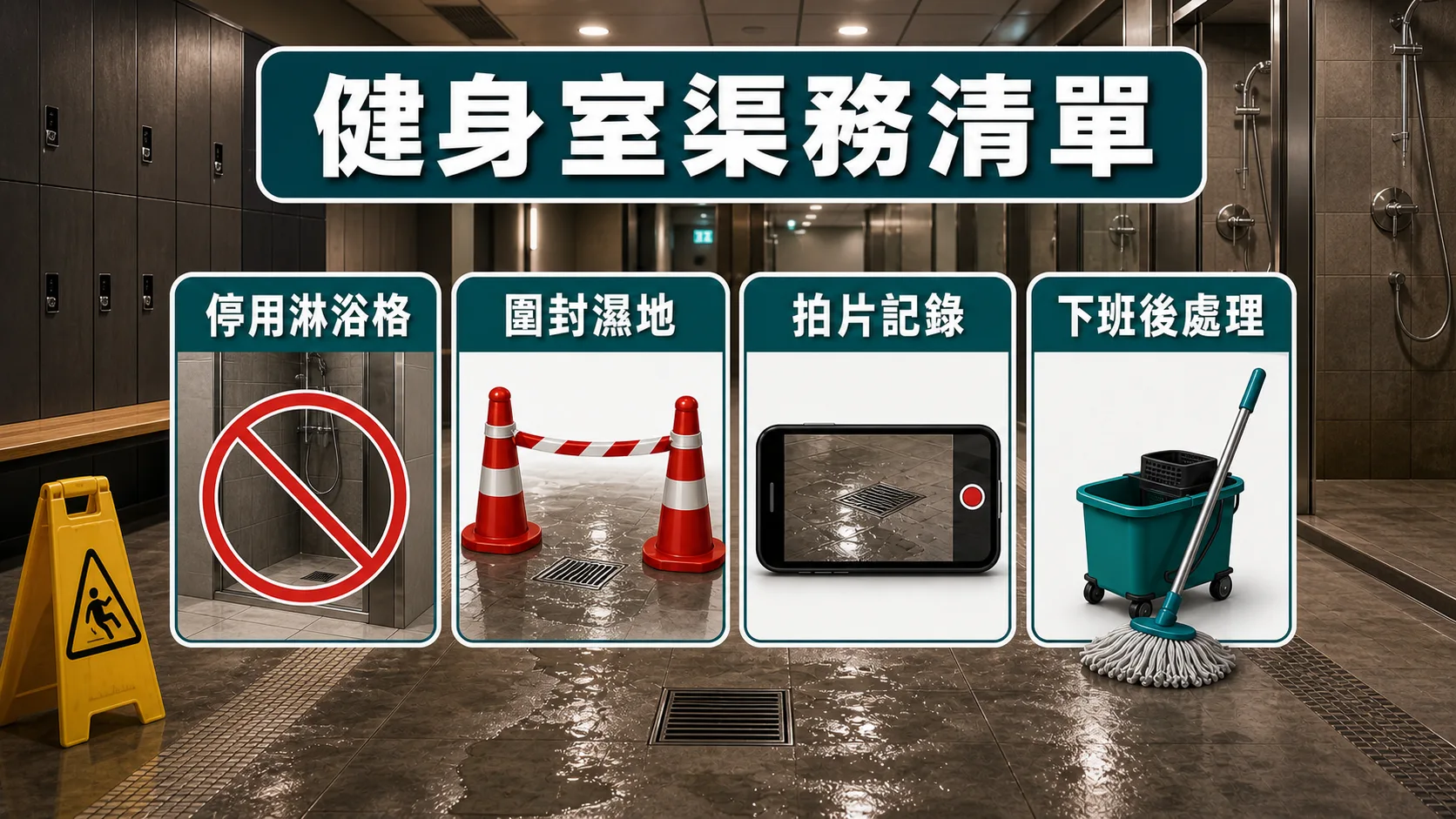
Close the affected cubicle or changing-room area
Suspend use when drainage is slow, smells appear, water collects or flies are present. Do not let members keep running showers to test them: water may spread beyond the shower area, increasing fall risks and complaints.
Use slip warnings and isolate standing water
Control wet-floor hazards first. Put up warnings, isolate pooling water, clear surface hair and debris and arrange regular staff checks. Suspected sewage backflow or contaminated floors require cleaning and disinfection, which does not itself unblock a drain.
Record drainage speed and patterns
Record the cubicle or channel affected, worst times, whether drainage slows after peaks, time to recurrence after cleaning, gurgling, insects and similar smells in same-floor toilets or neighbouring businesses. Video helps distinguish an outlet obstruction, branch restriction and shared-drain issue.
Arrange after-hours, closure-day or quieter work
Opening covers, unblocking and pipe cleaning may be impractical during evening peaks or before morning classes. If there is no immediate backflow, use after-hours, closure days, quieter lunchtime periods or planned maintenance windows, and brief reception and cleaners in advance.
Unblocking, odour investigation, cleaning, disinfection or CCTV?
Unblocking: suits one slow cubicle or outlet, surface hair, a blocked basket or a nearby bend. Disclose any chemical already used; see drain-cleaner safety.
Odour investigation: suits persistent smells after cleaning, unused outlets, unexplained changing-room odours, smells with flies and odours unrelated to water use.
Pipe cleaning: may suit recurrence, several slow cubicles, heavy use, long-standing hair and soap deposits or only brief improvement after unblocking. It removes pipe-wall sludge and biofilm rather than merely opening a small passage.
Cleaning and disinfection: address sewage contamination, floors, cleaning after pest treatment and restoration of hygiene. They cannot replace finding the blockage or odour source.
CCTV: may help with repeat blockages, problems after renovation, unknown concealed routes, suspected hard objects or structural faults, records for owners or management and recurrence after several interventions. See when CCTV is useful.
Gym maintenance checklist
- Remove hair from covers, channels and baskets several times daily.
- Ask cleaners to record which outlets pool most often, rather than simply drying the floor.
- After peaks, test clear-water drainage in stages when safe, noting gurgling or odours.
- Replenish water in seldom-used drains and accessible showers to maintain seals.
- Keep towel fibres, cotton buds, shaving accessories, plastic and cleaning wipes out of drains.
- Arrange source investigation or pipe cleaning if smells, flies or slow flow return within days.
- Record unblocking, cleaning, complaints, management responses and recurrence dates to determine an appropriate maintenance frequency.
When should building management be notified?
One slow shower usually warrants checking its outlet, trap and internal branch first. Several affected showers, changing-room drains, toilets, neighbouring businesses or communal areas suggest management should be involved. Shared drains, manholes and public areas in malls, offices, clubhouses and industrial buildings normally require coordination.
Provide the floor and location, photographs and video, timing, backflow, whether peaks worsen it, the number of affected points and cleaning or unblocking history. This establishes scope more effectively than reporting only a smelly changing room.
Frequently asked questions
Is a gym shower smell just inadequate cleaning?
No. Cleaning affects odours, but persistent smells can involve hair and soap, dirty traps, inadequate seals, insects, concealed blockages or shared drainage. More fragrance or mopping rarely resolves those sources.
Can staff use drain cleaner?
It is not recommended as the first response. Residue in shared showers or standing water can harm skin and eyes, and chemicals may not address hard objects, hair masses or downstream blockages. If already used, close the area and tell the technician.
Why does the smell return days after cleaning?
Surface cleaning may not reach traps, channel bottoms, pipe sludge or biofilm. Predictable recurrence calls for source investigation instead of more detergent or fragrance.
Do changing-room flies need only pest treatment?
Adults can be controlled, but larvae in drain deposits, channels, cupboard leaks or manholes can lead to recurrence. Address deposits, moisture and entry routes together.
What information is useful before assessment?
Provide the address, floor, affected cubicles or outlets, photographs and video, flow speed, odour timing, backflow, flies or cockroaches, multiple affected points, working times, management contact and any drain cleaner used.
For gym, studio, clubhouse, sports centre or changing-room odours, slow drainage, pooling, insects or repeat blockages, WhatsApp PipeButler on 5340 0748 with photographs, video and suitable times. We can assess unblocking, odour investigation, pipe cleaning, disinfection, pest control or CCTV, and agree the scope before work.