
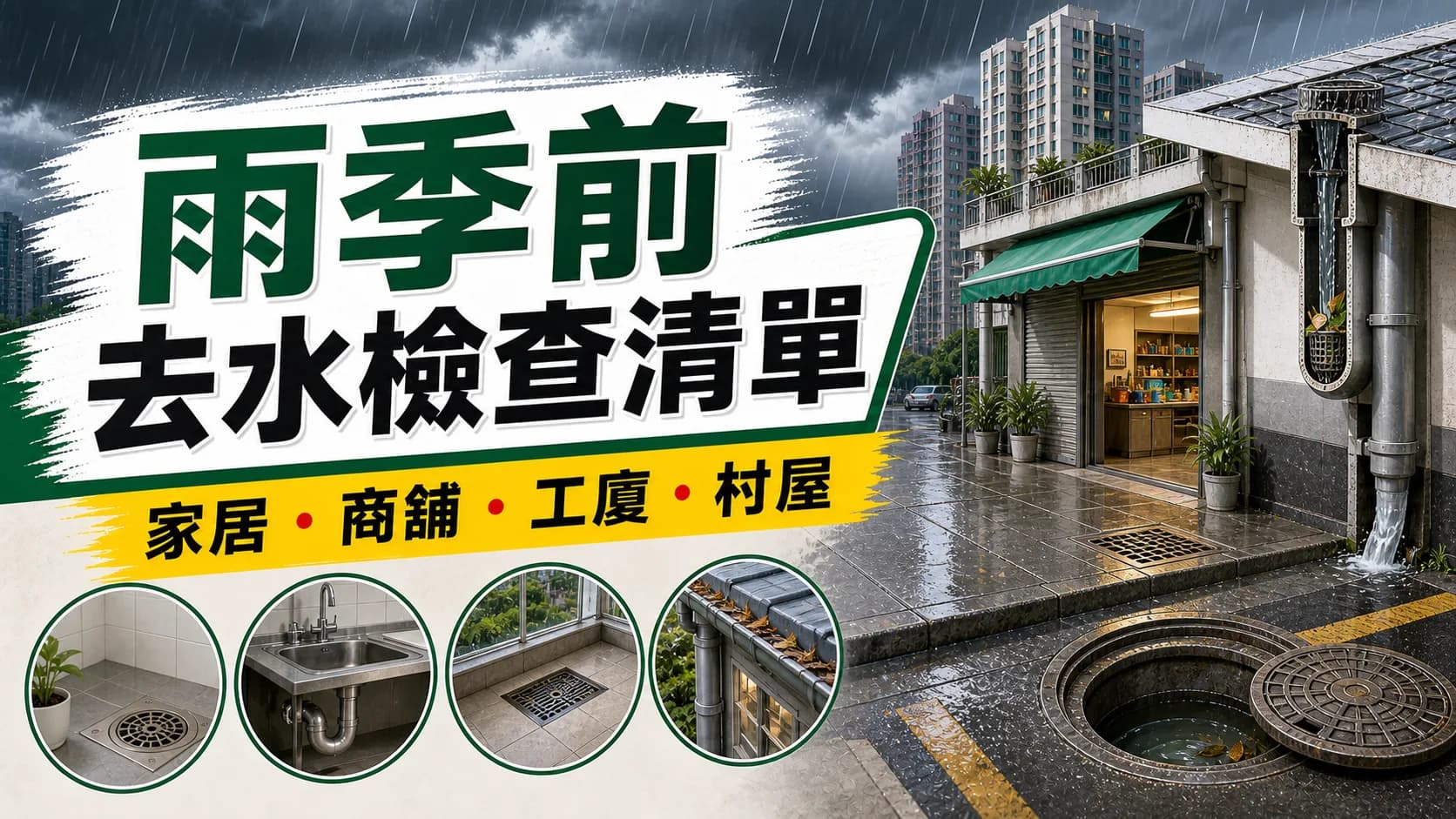
Hong Kong's rainy season generally falls between April and September. Heavy downpours can quickly expose drainage weaknesses: leaves on a roof outlet, sand in a balcony drain, a high chamber water level or grease in a shop floor drain may seem minor until a red or black rainstorm or typhoon brings backflow, flooding, odour and disruption.
Check inspection chambers, roof and balcony outlets, floor drains, grease traps and commercial drainage before the rainy season. Slow flow, full chambers, storm backflow, recurring odour or several slow outlets warrant desilting, unblocking or inspection before severe weather arrives.
The Drainage Services Department's flood-prevention information highlights inspection, desilting and repairs to keep systems working, especially before and during the rainy season. This checklist applies those maintenance principles to homes, shops, industrial premises and village houses.
Four drainage areas to check
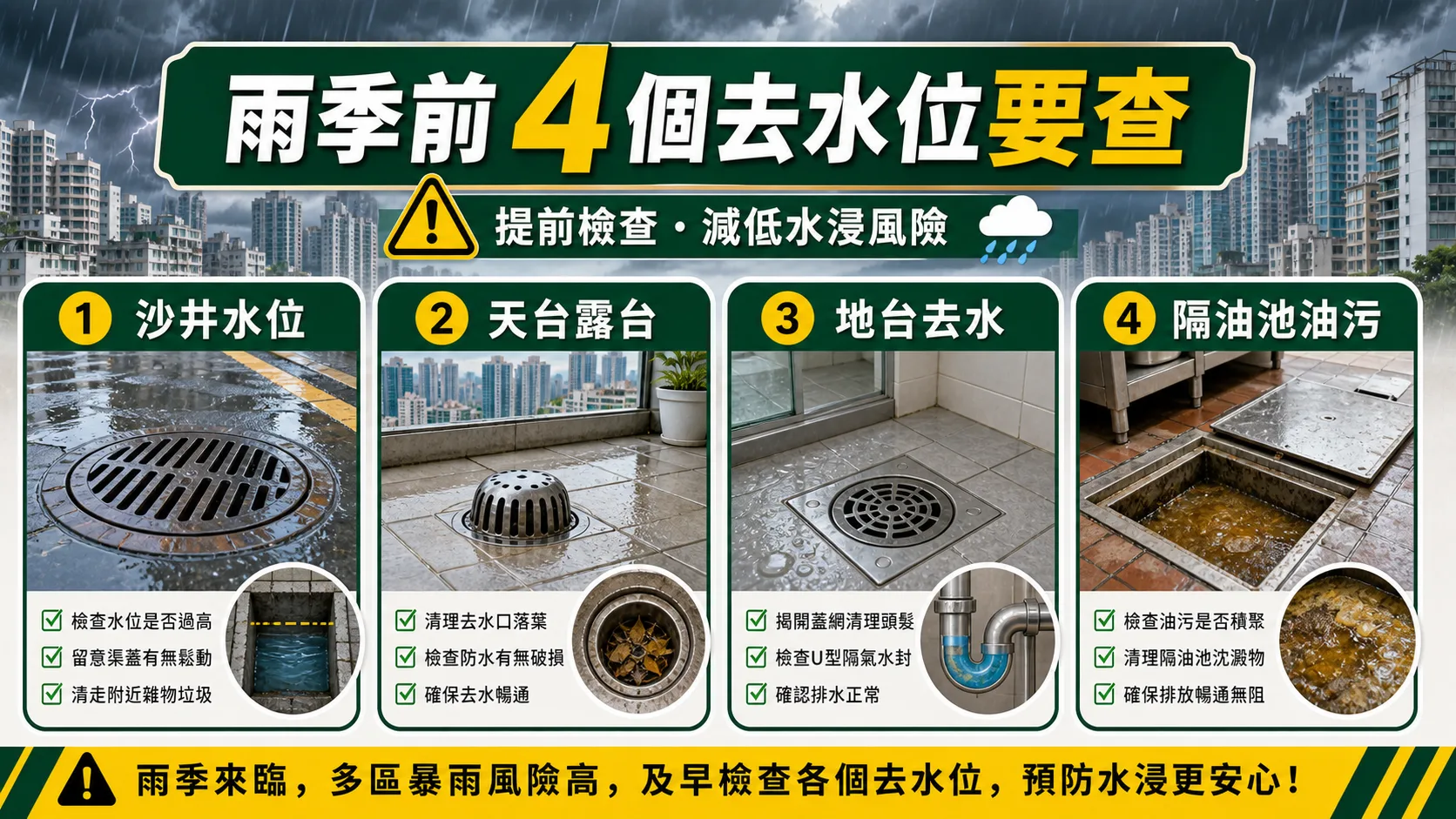
1. Chambers, rear-lane drains and external drainage
Mud, leaves, plastic bags, food and grease reduce drainage capacity. During rain, levels can rise until water backs up through low-level floor outlets, shop entrances or rear-lane drains. Look for persistently high levels, sediment and smells or wastewater marks around covers.
2. Roofs, platforms, balconies and gutters
Leaves, sand, cigarette ends, bags and other debris can block outlets. Light rain may reveal little, while prolonged rain causes ponding and water entering through doors, wall bases or pipe penetrations. Clear accessible grilles and gutters safely, then check flow.
3. Bathroom, kitchen and laundry floor drains
Floor drains can become backflow points when downstream pipes are under pressure. Maintain seals in little-used outlets and remove hair, soap and grease from regularly used ones. Gurgling, smells, black sludge and several slow outlets suggest a downstream issue.
4. Restaurant grease traps and commercial floor drains
Restaurants, cafés, food factories and industrial units should remove grease and sediment before the rainy season. EPD grease-trap information describes how grease can cause blockage, overflow, odour and unhygienic conditions. An overdue trap can worsen problems when drainage is under pressure.
Four preparation steps before heavy rain
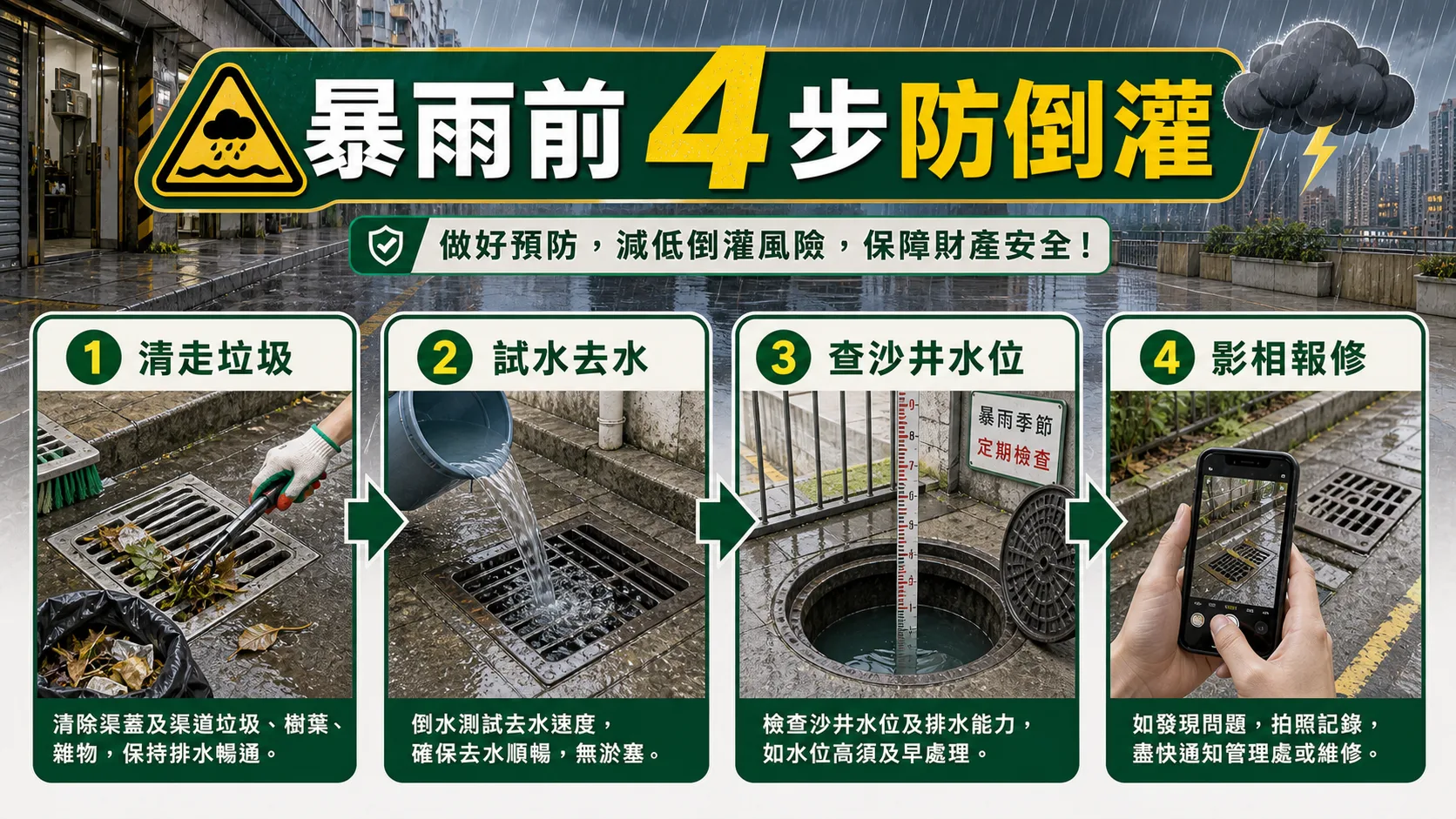
- Remove rubbish: clear accessible grilles, channels, roof and balcony outlets, gutters and the surroundings of chamber covers. Never sweep debris into drains.
- Test flow: use clean water and watch for backflow, gurgling, odour or rising levels.
- Check chamber levels safely: report high water, sediment or sewage escaping to management or arrange professional inspection. Never enter a chamber.
- Record and report: photograph water levels, debris and backflow; record the location and time for owners, management, contractors, 1823 or DSD.
Homes and lower floors: identify possible backflow routes
Lower-floor and podium units, tenement buildings, village houses and ground-floor shops may receive backflow at the lowest or weakest point when downstream drainage is restricted. Consider bathroom floors, washing-machine connections, kitchen sinks, balcony outlets and entrance channels together.
- Check floor drains for odour, gurgling and slow flow.
- Establish whether bathroom, kitchen, balcony and laundry outlets slow together.
- Record previous storm backflow, dark water, foam or sewage marks.
- Maintain water seals in rarely used outlets.
- Tell the technician about any drain chemicals used, so residues can be handled safely.
If sewage has already entered, priorities change to stopping water use, documenting the incident, notifying management, restoring drainage and appropriate disinfection. See sewage backflow after heavy rain.
Shops and restaurants: tackle grease and floor drainage
Commercial premises face both external rainwater around entrances, rear lanes and chambers, and internal grease in floor drains, sinks and traps. When external drainage is under pressure, existing deposits inside the premises can worsen odour, backflow and slow drainage.
- Check grease-trap cleaning records and deposit depth.
- Look for greasy smells and sludge in floor drains and sinks.
- Check rear-lane chambers for high water, smells, rubbish and grease.
- Identify ponding at entrance channels and changes in floor level.
- Consider pipe cleaning or desilting before the rainy season, with work planned around opening hours.
Industrial premises, property managers and village houses: establish responsibility
Separate private branches, shared building drains and public drainage. A slow outlet in one unit may involve its branch; several units or a shared rear-lane chamber may require the manager or owners' organisation to coordinate. Street flooding and public drain blockages should be reported through 1823 or DSD arrangements.
1823 reporting guidance calls for the precise location, nature of the incident, flooding depth and extent, and whether sewage is escaping. These details matter alongside photos and videos.
When are desilting, jetting and CCTV useful?
Desilting
Visible deposits in chambers, channels, external drains, grease traps and low points may need removal. Washing the surface alone may not restore capacity.
High-pressure jetting
Long runs affected by grease, sand, soap and repeated slow flow may benefit from jetting. Assess old, cracked, leaking or possibly collapsed pipes first. Read how high-pressure drain jetting works.
CCTV inspection
Consider CCTV for recurring problems, unknown concealed routes, suspected objects, cracks, displaced joints or chamber connections, or where recorded evidence is needed. It is not essential for every seasonal check.
Safety: stay out of chambers and avoid sewage
Do not enter deep chambers, enclosed drains or tanks before or after a storm. Oxygen deficiency, hydrogen sulphide, sewage, falls and entrapment can be life-threatening. If flooding or sewage backflow occurs, prioritise personal safety, stop using affected outlets, avoid contact and arrange clearing and any necessary disinfection.
Frequently asked questions
When should checks take place?
Inspect before the rainy season, then reassess risks ahead of severe rain and typhoon periods. Lower floors, village houses, restaurants, industrial units and previously flooded locations need earlier attention.
Does high chamber water always require desilting?
No, but persistent high levels, visible sediment or rubbish, storm backflow and nearby slow drains require investigation. Coordinate shared chambers through management or owners.
Is clearing roof leaves enough?
Not necessarily. Check that the downpipe carries water away afterwards. Slow flow, backflow, wall seepage or full gutters can indicate downstream blockage.
What should restaurants prioritise?
Grease traps, kitchen floor drains, sinks, rear-lane chambers and entrance channels. Grease reduces capacity and can worsen storm-related smells and backflow.
Should a drainage company handle public-road flooding?
Report public-road or public-drain flooding through 1823 or DSD. Private drainage contractors mainly work within private properties, shops, estates and buildings.
What should I prepare for a maintenance assessment?
Provide photos and videos, location, floor level, previous flooding dates, affected outlets, details of chambers or traps and any need for night or out-of-hours access. This helps determine whether desilting, unblocking, jetting or CCTV is appropriate.
WhatsApp PipeButler on 5340 0748 with your location and images to discuss pre-season checks of chambers, floor drains, roof and balcony outlets, grease traps or shop drainage, and agree an appropriate work scope.
Business-premises assets before the rainy season
List roofs, private access routes, loading areas and accessible chambers, including pooling history and areas requiring management coordination. Confirm stormwater and foul routes separately, with planned work, extra checks and call-outs separately priced.