
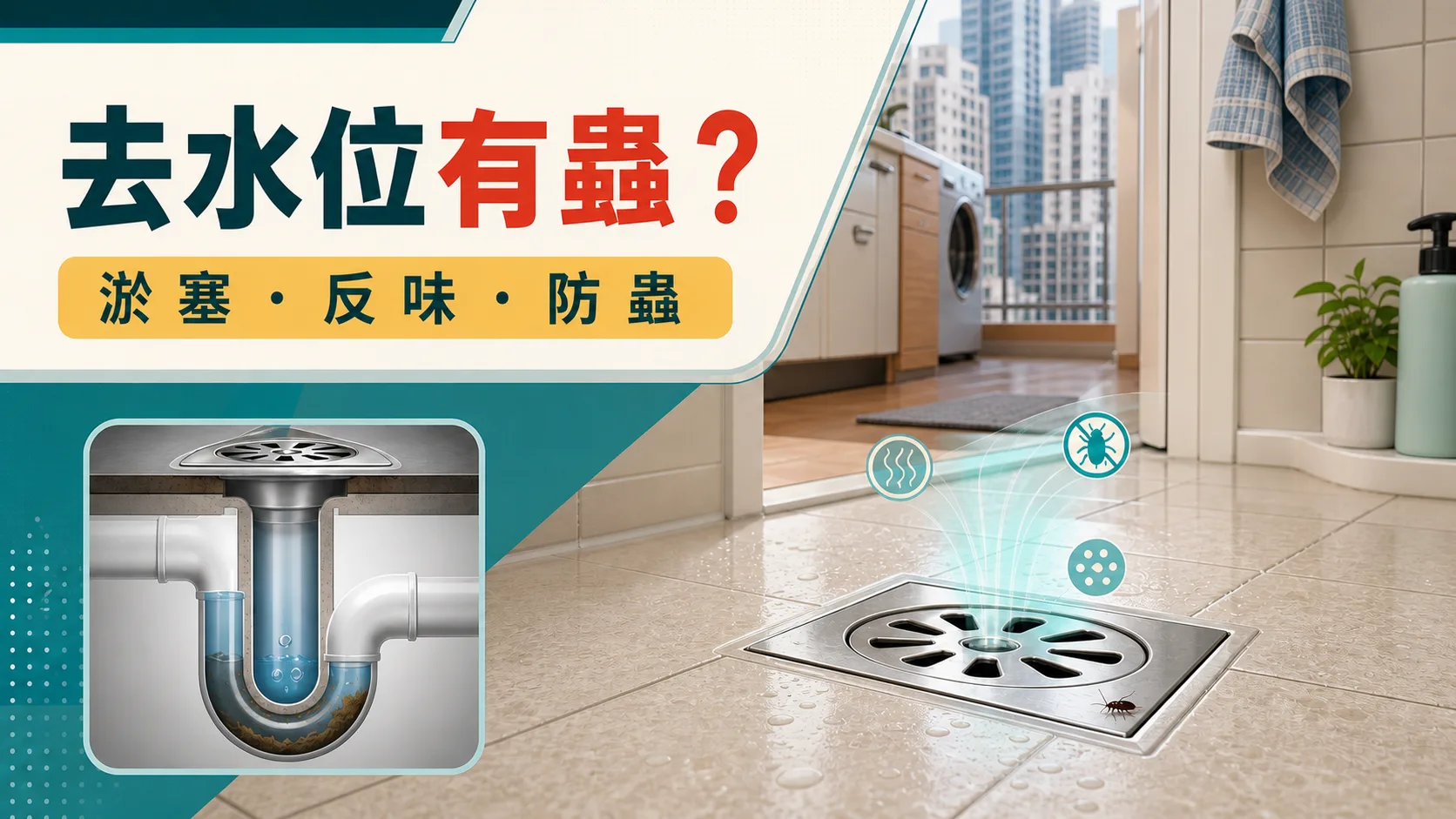
Seeing cockroaches near a bathroom floor drain, kitchen cupboard or outlet often prompts a spray or a new cover. These may help temporarily, but moisture, organic deposits, ineffective water seals, gaps and shared concealed routes can allow the problem to return.
A cockroach near an outlet does not prove that the sewer is directly open into the room. Drains can provide routes, hiding places and damp food sources. Identify the route, remove deposits, maintain seals and repair gaps. Recurrence with odour, slow flow or dark sludge may require drain-related pest assessment alongside cleaning or odour investigation.
This guide covers common residential and commercial routes, the limits of sprays and chemicals, and when further assessment is useful.
Can cockroaches emerge through drains?
They can use outlets, floor drains, gaps around sink traps, broken covers, dry seals, connections and shared concealed routes. Dark, damp places containing food residue and organic dirt are attractive, including kitchens, bathrooms, refuse areas, rear lanes, chambers and channels.
Investigate why they can reach the area: is there an effective seal, a loose cover, a cupboard gap, grease, hair, soap, dark sludge, food, rubbish or standing water? Their location alone does not identify the route.
Four common access points
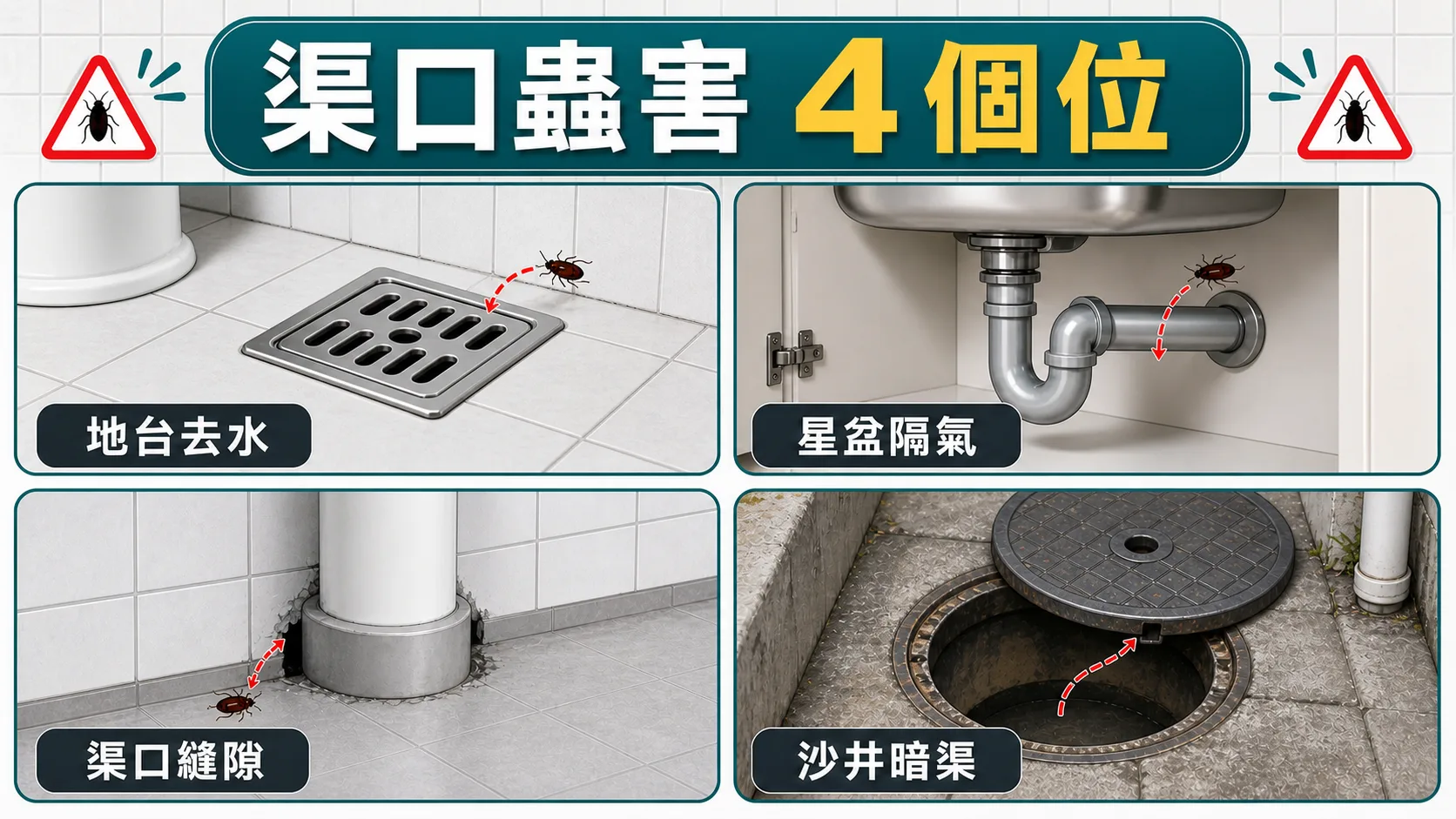
1. Floor drains
Loose or broken covers, large openings and dry seals weaken protection at bathroom, shower, washer and kitchen drains. Rarely used outlets need particular attention because their seals can evaporate.
2. Sink traps and cupboard bases
Food, grease, moisture and darkness make the area under a kitchen sink favourable. Leaks, loose joints, aged seals and rear-panel gaps can provide routes around the pipe without passage through the sink opening itself.
3. Gaps and connections
Poorly finished floor outlets, toilet bases, basin pipes, cupboard backs and wall bases can create access. Symptoms starting after renovation warrant checks around wall and floor penetrations, boxing and cupboards.
4. Chambers and shared concealed branches
Low-floor flats, rear-lane shops, restaurants, industrial drains and premises near refuse areas may be affected by chambers, grease traps and shared pipes. Several locations with odour, insects or backflow require more than one cover replacement.
Four steps to reduce recurrence
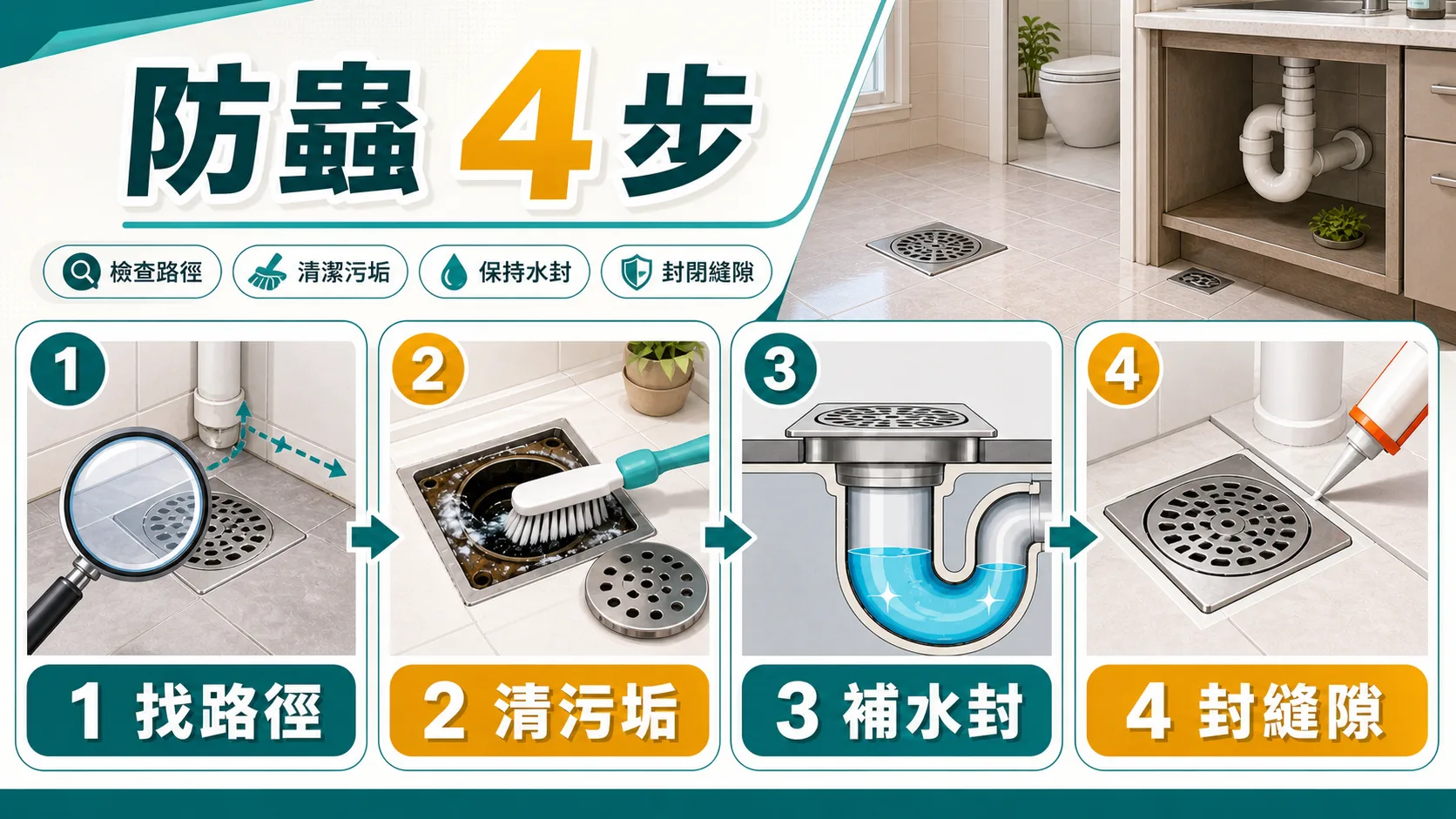
1. Locate the route
Record where activity concentrates: a floor drain, sink cupboard, basin, washer outlet, bathroom doorway, bin, rear-lane drain or one wall. Brief evening observations and photographs can help. Indiscriminate spraying can obscure the actual entry point.
2. Remove deposits
Collect accessible hair, soap, food, grease and dark slime from covers and strainers. Keep oil, rice, tea and stock residues out of kitchen drainage and remove bathroom hair regularly. Thick grease, dark sludge, smell or slow flow can require pipe cleaning or clearance beyond surface cleaning.
3. Maintain water seals
Replenish rarely used trapped floor drains with clean water. Rapid loss of the seal with gurgling or odour may involve the trap, venting or anti-siphonage. Read the U-trap and water-seal guide.
4. Repair gaps and use suitable covers
Check fit, damage and opening size. Suitable insect-resistant covers and strainers can reduce access while preserving drainage. Repair appropriate gaps at cupboards, wall bases, penetrations and toilet edges; do not merely cover a leak or loose pipe with silicone.
What can sprays, bleach and drain cleaner achieve?
A spray may kill visible insects without removing the route or food source. Grease, food residue, damp deposits and gaps allow recurrence. Bleach and drain cleaner are not universal pest remedies and can create chemical hazards in blocked outlets or standing water.
- Do not mix products: keep bleach, acidic cleaners, drain chemicals, bicarbonate mixtures and insecticides from being combined in an outlet.
- Do not add drain cleaner during backflow: it can remain in the work area and expose technicians.
- Do not permanently close a drain: this interferes with drainage and can hide obstruction, cracks or seal failure.
- Disclose previous products: tell the technician what was used, approximately how much and when.
Homes versus commercial premises
Homes commonly need attention to bathroom floor drains, sink cupboards, unused seals and renovation gaps. Start with accessible cleaning, replenishment, suitable gap repair and drainage observations.
Shops, restaurants, cha chaan tengs, salons, clinics and industrial premises need a broader maintenance plan. Grease traps, rear-lane chambers, refuse storage and wet areas containing grease, food, hair or standing water can produce odour, insects and blockage together. Coordinate drainage maintenance, pest assessment and appropriate cleaning rather than waiting for complaints.
When to arrange an assessment
- Activity repeatedly concentrates at one outlet, cupboard or floor drain.
- Insects return within days of spraying.
- Odour, dark sludge, slow flow, backflow or gurgling accompanies them.
- Several outlets, rear-lane chambers or shared areas are affected.
- Symptoms began after renovation, pipework, toilet or cupboard changes.
- Commercial wet areas present hygiene concerns.
- Concealed cracks, incorrect connections or a blockage is suspected, or management needs findings.
WhatsApp PipeButler on 5340 0748 with activity locations, outlet photographs, existing drainage video, odour details and chemical history. We will assess drain-related pest work, odour investigation, unblocking, cleaning or the need for CCTV.
What does the assessment involve?
First locate activity and check covers, traps, water seals, connections, flow, smell and visible deposits. Local contamination or a dry seal may call for cleaning, replenishment and prevention advice. Grease, dark sludge, slow flow or repeated activity may require pipe cleaning, clearance or pest work according to findings.
Suspected concealed pipework, chambers, shared routes, cracks or post-renovation misconnections may need further investigation. Commercial sites can incorporate these checks into planned maintenance.
Frequently asked questions
Does an insect-resistant drain cover help?
It can reduce direct access, but dry seals, internal deposits, adjacent gaps and shared drainage may leave other routes.
Does weekly water replenishment prevent cockroaches?
An effective seal limits drain air and some insect routes, especially at unused outlets. Water does not remove grease, food, hair or gaps. Odour, slow flow and sludge need further attention.
Why do they return after spraying?
A route, food source or damp hiding place may remain. Check outlets, cupboards, refuse areas, penetrations, seals and deposits instead of only repeating treatment.
Should pest work or unblocking come first when there is also odour?
Assess both. Restore a dry or faulty seal; clean deposits where flow is restricted; coordinate pest treatment and appropriate cleaning where an infestation is present.
Can I open a chamber or concealed drain myself?
No. Gases, sewage exposure, slippery surfaces and falls can make it unsafe. Notify management or arrange suitable personnel for suspected shared or rear-lane drainage issues.