
Loading page…
Loading page…
Tai Kok Tsui · Private estate · HOS / PSPS · Older buildings · Commercial & restaurants
Built 1974–2003 · older single-block buildings beside podium estates on reclaimed land
Tai Kok Tsui lies west of Mong Kok, separated from it by Tong Mi Road and Lai Chi Kok Road.
Last reviewed ·
Choose the problem you are seeing to read the likely cause and next step.
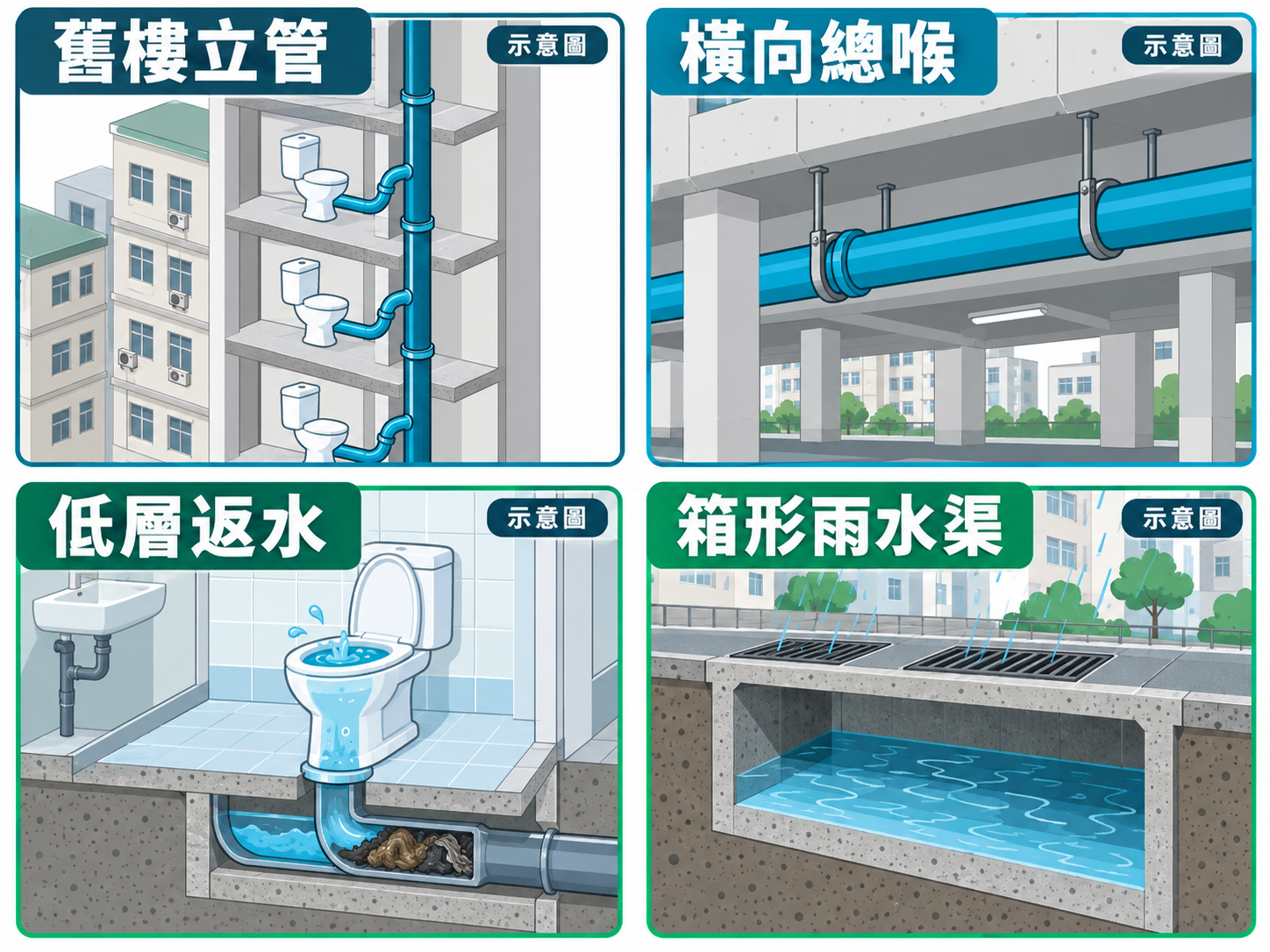
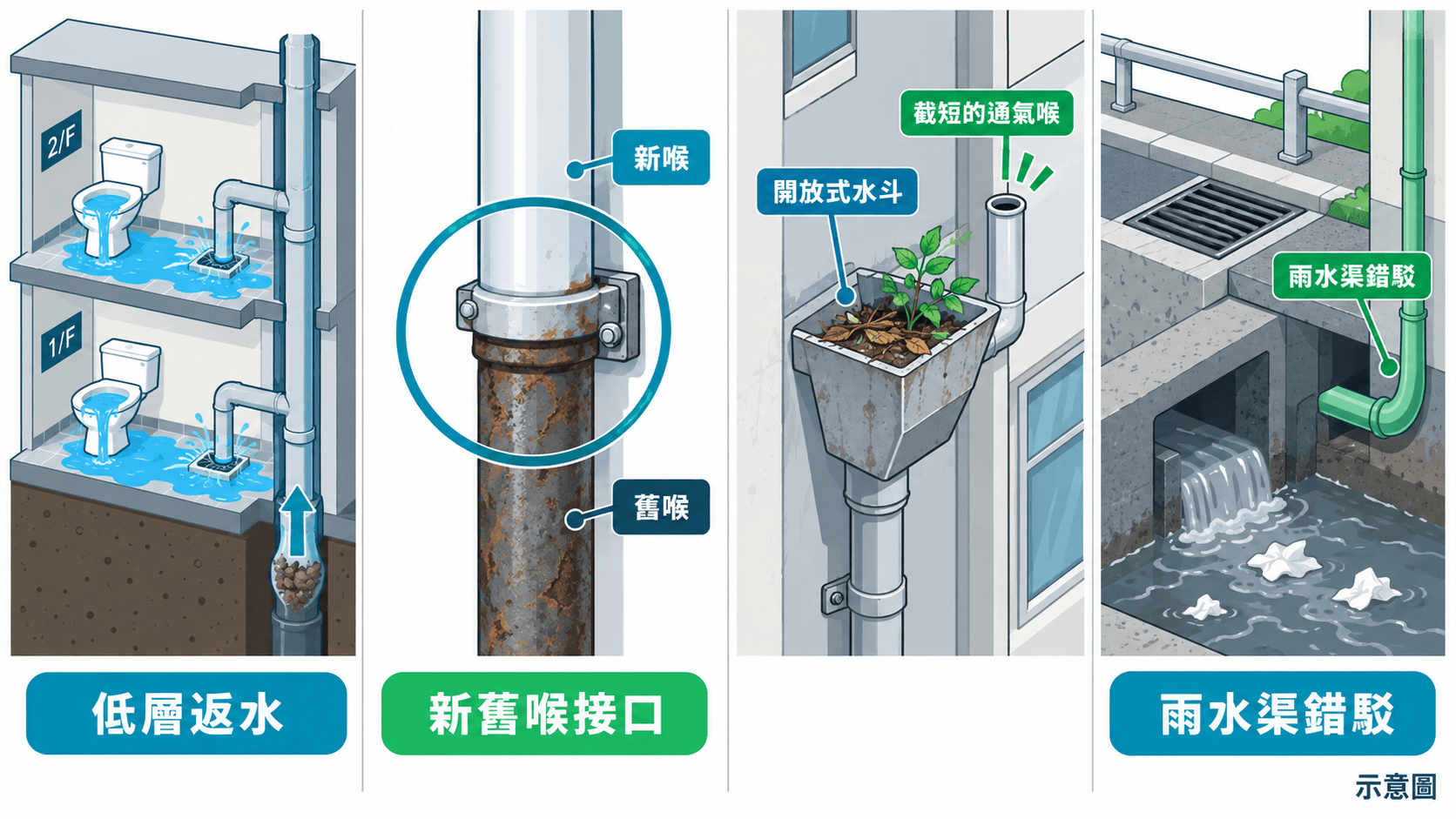
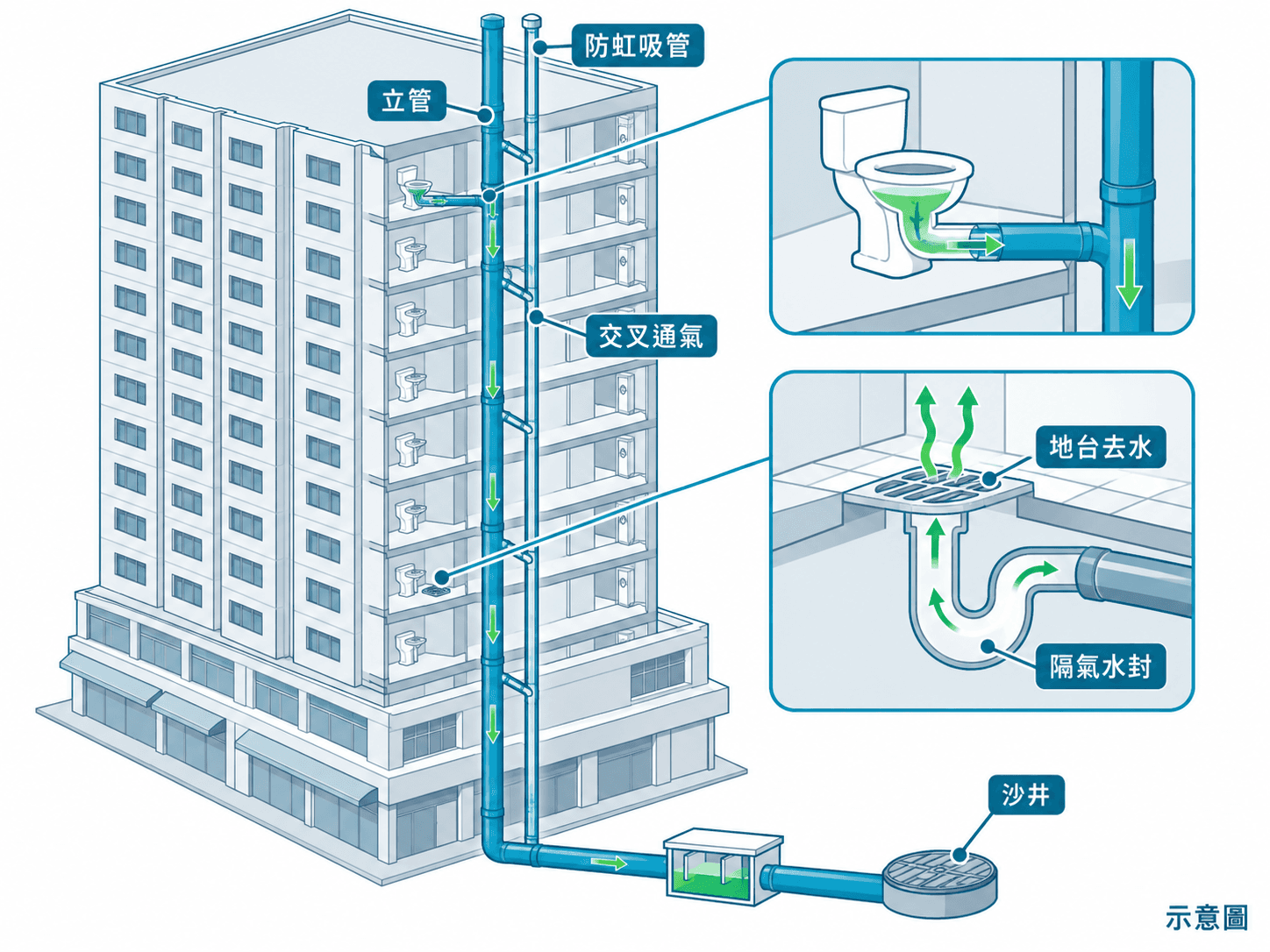
According to an HK01 report of 17 July 2017, during major repairs at Phase 2 of Fu Tor Loy Sun Chuen, built in the 1980s, the building "repeatedly suffered flooding, seepage and even sewage backflow", and the estate's management supervisor said complaints of backflow came regularly from owners on the second and third floors. That location is no accident: by inference from the design of the period, low-floor fitments may tee straight into the stack, so once the lower part of the stack narrows, the toilets and floor drains on the low floors are the first to rise when the floors above discharge. If several outlets on a low floor back up together, tell the management office or owners' corporation at once so the shared stack can be checked; if only one fitment is slow, it is more often the flat's own branch pipe, which you can arrange to have cleared directly.
The Buildings Department's Mandatory Building Inspection Scheme covers private buildings aged 30 or more, other than domestic buildings of not more than three storeys: once a statutory notice is served, the owners must appoint a registered inspector to carry out a prescribed inspection, and a registered contractor to complete any prescribed repair under that inspector's supervision. The drainage system is itself one of the items inspected — the Code of Practice for the scheme provides that the scope covers the drainage system at the external walls, the drainage system in the common parts, pipes laid within common pipe ducts, and the underground and above-ground common drainage system, with anti-syphonage and ventilating pipes included. The Code also requires the inspector to identify and report misconnections to the department, such as foul water discharging into the surface water drainage system. For common exposed pipes or pipe ducts that sit inside private premises, it allows access from a flat at least every three floors, or a CCTV survey instead, so not every door has to be knocked on. Several of Tai Kok Tsui's older blocks are long past the threshold: Cosmopolitan Estates was built in 1974–76 and Fu Tor Loy Sun Chuen in 1980–81, while Charming Garden, completed in 1998, does not reach 30 years until 2028. The practical point for owners is this: a statutory notice means scaffolding on the external wall in any case, so having the external pipes, hopper heads and joints dealt with in that same contract costs far less than scaffolding again later for a few lengths of pipe.
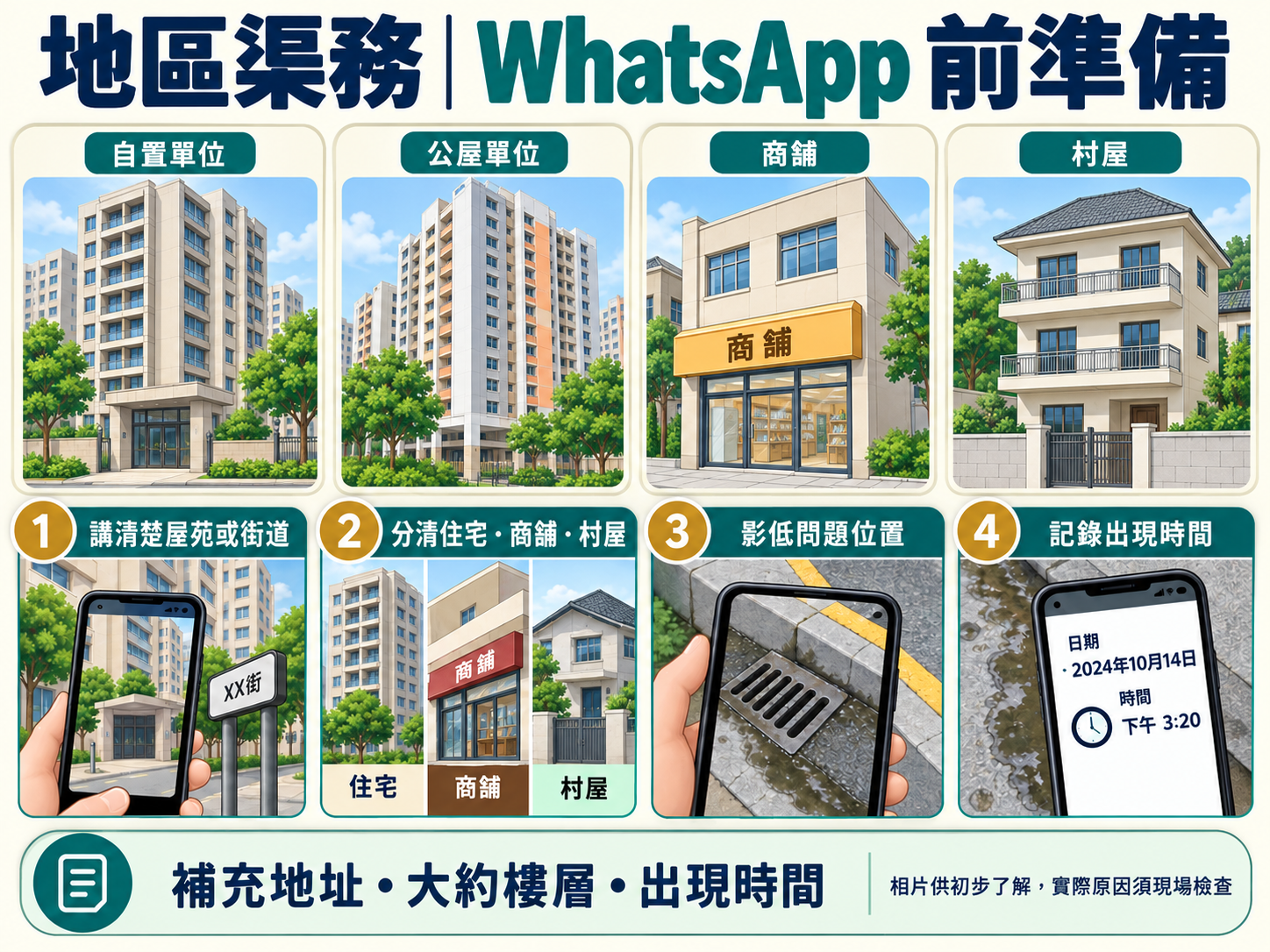
According to an HK01 report of 26 January 2021, the Democratic Party inspected ten districts between 22 and 24 January that month, including the Yau Tsim Mong restricted zones, looked at the drainage systems of about 200 buildings and "found that about 70 per cent had various problems with their external pipes", among them old pipes weeping and dripping, vent pipes altered or cut off, soil and waste pipes wrongly cross-connected, and the use of open hopper heads; the report also quoted a district councillor as saying that a building in Tai Kok Tsui had pipework that had come apart. What these have in common is that the fault is in the shared external pipework, not inside your flat. From a safe position, photograph the external and back-lane pipes — hoppers, rust stains, cracks, loose brackets, anything still dripping in dry weather — and pass it to the owners' corporation or owners' group. Altering a trap or an anti-syphonage pipe is minor works under the Buildings Department's control system and must be done by a registered minor works contractor.
A government press release of 18 March 2024 stated that, to implement the "single site, multiple use" initiative, the Drainage Services Department "has enhanced the rooftop of the dry weather flow interceptor at the Cherry Street box culvert in Tai Kok Tsui as a public open area", and that an approximately 85-metre-long extension of the Hoi Fai Road Promenade opened in December 2023. In other words, a box culvert runs beneath Cherry Street to the waterfront, and a dry-weather flow interceptor near the Hoi Fai Road end catches polluted flow in dry weather. Both of these spots are on the department's list of locations prone to blockage: Cherry Street (westbound) near Sham Mong Road, and the Cherry Street Underpass (westbound) near Lin Cheung Road. Two points matter for residents: whether the street is ponding and whether your flat is backing up are two independent clues — note the times separately and they can be matched up afterwards; and if a stormwater outlet still runs with sewage, or shows toilet paper, in dry weather, suspect a soil pipe wrongly connected into the stormwater system. That is shared pipework, for the owners' corporation or the department to take up.
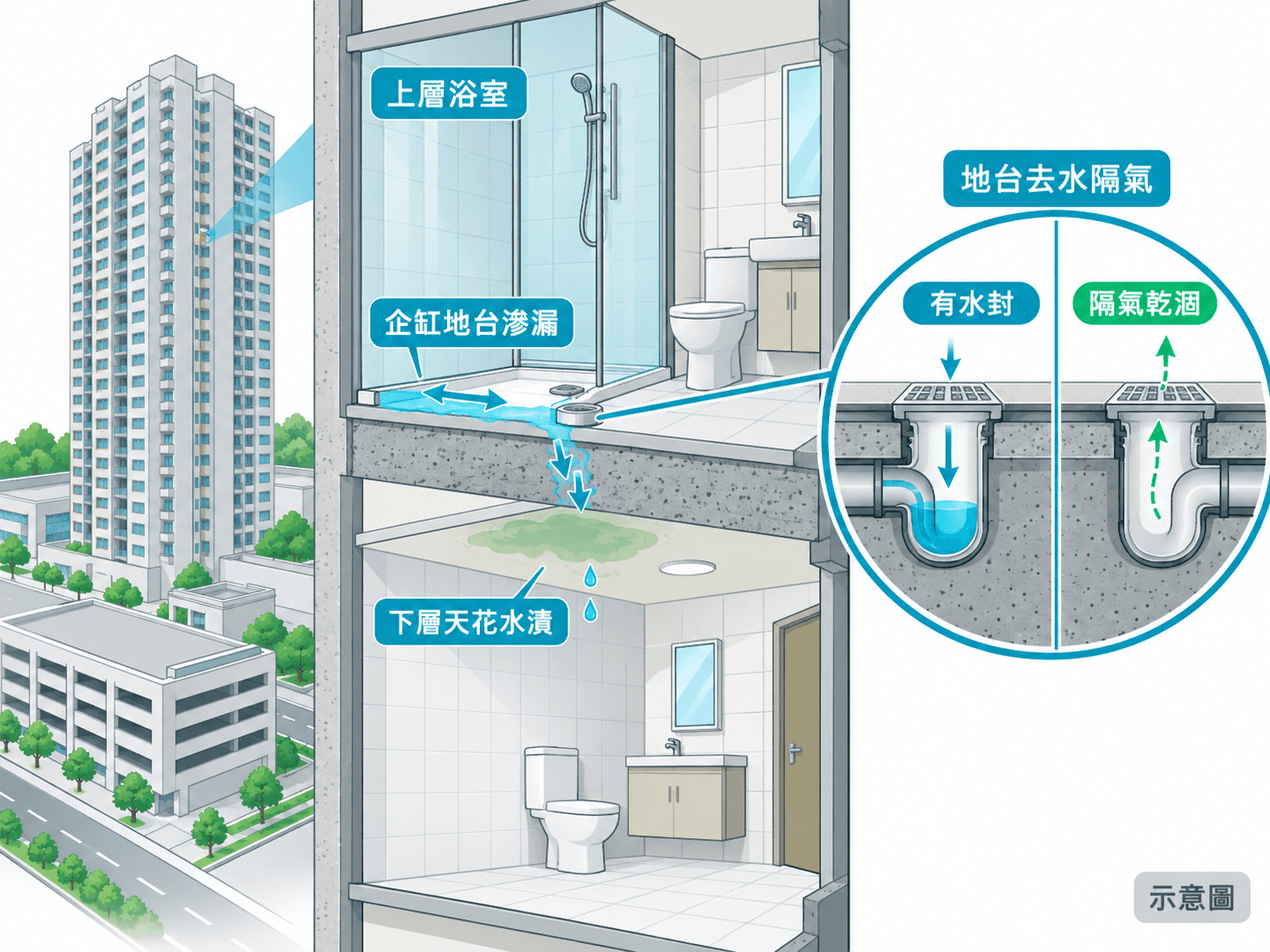
One misunderstanding is common in both the older and the newer blocks here: water dripping from above, or a damp ceiling, is assumed to mean a blocked drain. A burst or leaking flushing-water (salt water) pipe to a cistern, or a fresh-water pipe, is a supply problem for a plumber and a closed stopcock, not drain work; odour, slow draining and water welling up at an outlet are drain problems. On the other side, when flushing water is cut off, or a bathroom goes unused for a long stretch, the trap seal evaporates and sewer air comes back through the floor drain — the Buildings Department advises pouring about half a litre of water into every floor drain at home at least once a week. Moving in, letting a flat out, or a water shut-off in the estate are all good moments to pour water into each outlet and test it.
Photos or a short video on WhatsApp help us tell a single-fixture blockage from a shared-stack problem.
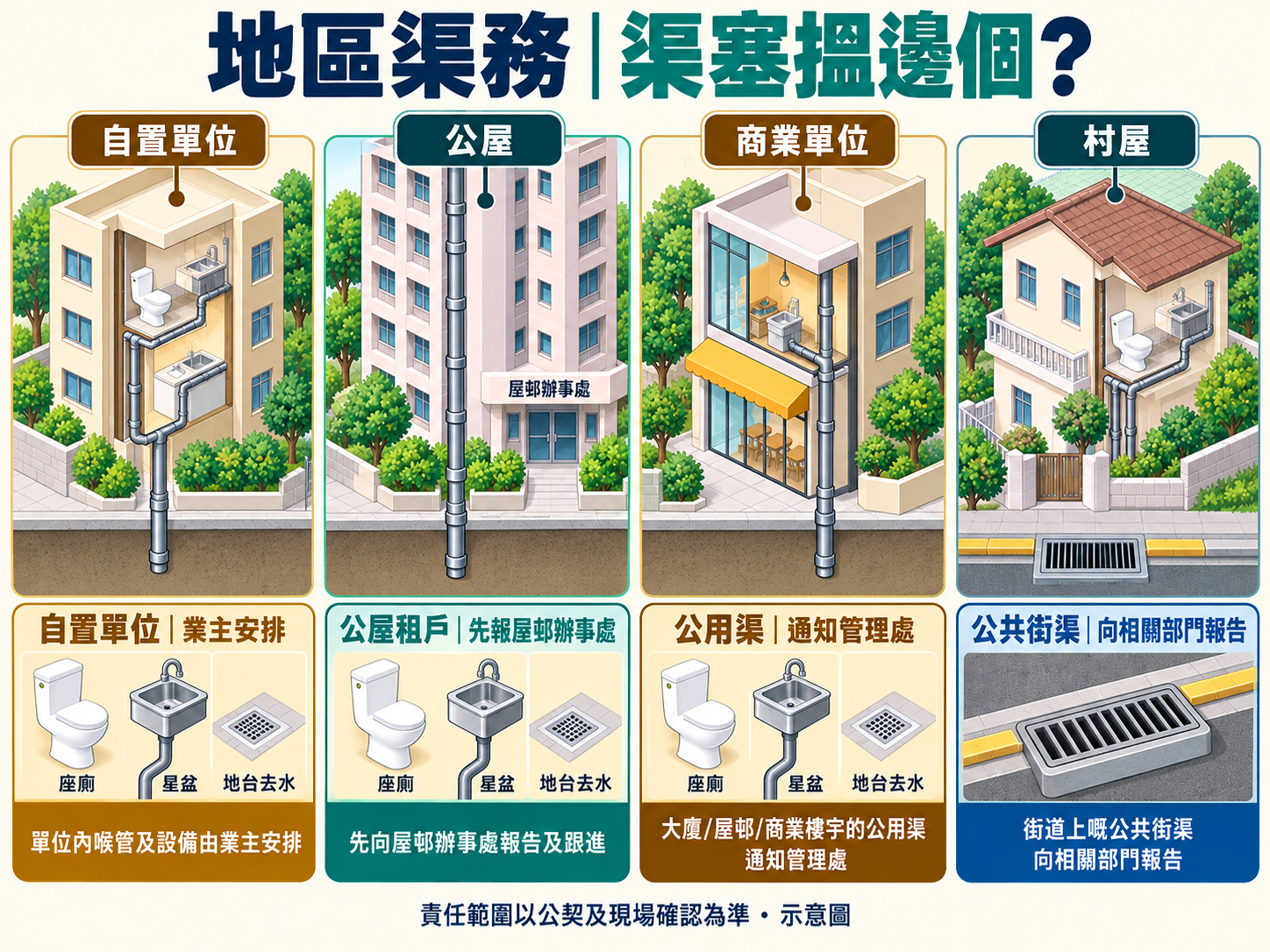
Tai Kok Tsui lies west of Mong Kok, separated from it by Tong Mi Road and Lai Chi Kok Road. Its housing falls into two halves. On the older side are Cosmopolitan Estates and Fu Tor Loy Sun Chuen, completed in the 1970s and 80s, together with the single-block buildings around Tai Kok Tsui Road, Beech Street and Cherry Street. On the reclaimed side are the large podium estates completed from 1998 onwards, such as Charming Garden and Metro Harbour View. The two halves differ in the age and design of their pipes and in how they are managed, so with low-floor backflow, drain odour or a leaking external pipe the first step is to work out which kind of building and which section of pipe is involved, then decide whether it is for the owner, the management office or the owners' corporation.
Tai Kok Tsui was originally a headland on the western side of the Kowloon peninsula. After the government opened it up for development in 1928 it filled with shipyards and metalworking shops. The Cosmopolitan Dock closed in 1972 and Tai Cheung Group built Cosmopolitan Estates on the site; in the early 1980s Fu Tor Loy Sun Chuen went up on the inner streets nearby, when the waterfront still ran along that estate's southern edge. The West Kowloon reclamation of the 1990s turned sea into land, adding a broad new tract beside Olympic station where large estates such as Charming Garden and Metro Harbour View were completed, while the Urban Renewal Authority finished several redevelopments in the area. Walk the streets today and blocks of 45 to 50-plus years stand one street away from podium estates in their twenties.
On the older side, two things about the pipes matter most. The first is age: as a general inference from building age, original stacks from the 1970s and 80s were commonly cast iron or cement soil pipes, the sections buried in walls cannot be judged by eye, and corroded, weeping joints are common. The second is design: Buildings Department practice note APP-164, first issued in 2021, requires that on the floor where a stack discharges to a manhole (and the floor above, in buildings over 20 storeys) the fitments must not be connected to the stack but must have separate pipework running straight to the manhole. That requirement did not exist when these blocks were designed, so by inference low-floor fitments may still tee straight into the stack, which is why the second and third floors tend to rise first. Also, by inference from their age and type, some single-block buildings around Tai Kok Tsui Road and Beech Street have no resident management office and may still use open hopper heads on the external wall; APP-164 advises against hopper heads in new designs and suggests replacing an open system with a closed one fitted with proper traps when an older building is repaired.
The reclaimed side is structurally different. Metro Harbour View (2002–03) is a classic podium development: ten towers above a four-storey mall, a residents' clubhouse and a 9,800 m² podium garden. Charming Garden (1998) is a different shape — 18 blocks with 88 shops and two car parks (nine storeys and 513 spaces in Phase 1, two storeys and 168 in Phase 2) — but its flats too sit on a large base. By inference from that design, the residential stacks in both have to transfer into horizontal collector pipes at podium level, with more bends and horizontal runs than an older single-block building, so grease and debris settle more easily in those runs; and when a pipe fails, the first drip may appear in a podium, shop corridor or car-park ceiling rather than in a flat. The area also has Hoi Fu Court, a Housing Authority estate where tenants of the rental blocks go to the estate office first, though the flats in one block were sold under the Buy or Rent Option Scheme and are the owners' responsibility, along with a group of other 2000s private estates; both are mentioned here only as background. Charming Garden, Metro Harbour View, Fu Tor Loy Sun Chuen and Cosmopolitan Estates each have their own page, linked below.
Note: statements based on building age and type are general inferences, not findings for any particular flat.
 HOS / PSPSCharming GardenHOS estate completed 1998 · 18 blocks, 3,908 flats · ceiling seepage and floor drains
 Private estate · Commercial & restaurantsCosmopolitan EstatesBuilt 1974–1976 · 15 blocks of 13 storeys · compact 200–400-odd sq ft flats
 Private estateFu Tor Loy Sun ChuenCompleted 1980–81 · 7 blocks of about 14 storeys · two-storey mall podium
 Private estateMetro Harbour ViewOccupied 2002–03 in two phases · 10 towers of 45 storeys · built over a mall podium
Choose an enquiry route for your premises and work scope.
Pantry, washroom and shared-drain enquiries, with scope agreed before work
Scope and booking detailsUnit outlets, shared pipes and chamber enquiries assessed with site access
Scope and booking detailsDiscuss a defined maintenance scope using assets, usage and incident records
Scope and booking detailsA clear process from enquiry and assessment to an agreed scope of work
Tell us the drain problem and district and ask about available timing.
Confirm timing based on the district and schedule, then inspect the blockage or odour issue.
Explain the proposed approach, scope and price before agreed work begins.
Use suitable tools for the site conditions and agreed scope of work.
After the agreed work, test drainage and explain the observed result and any next steps.
PipeButler is an independent drain-service provider with no affiliation to the developer, owners' corporation, management company or Housing Department of the places above. Facts come from public sources checked on the dates shown; work on common drains or common parts follows the management office's and deed of mutual covenant's arrangements.
WhatsApp with the problem and district, and we will confirm available timing.