
Loading page…
Loading page…
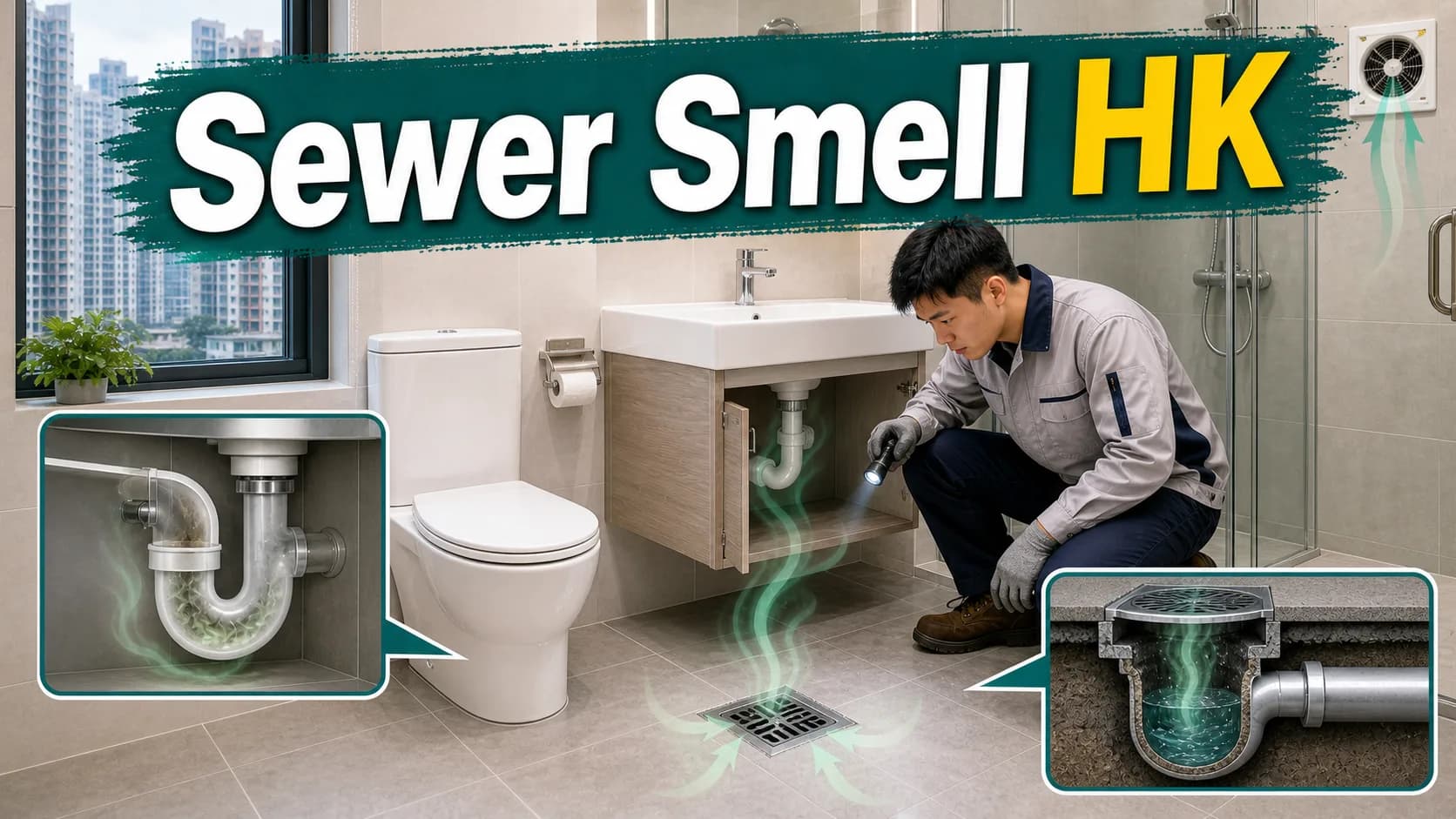
Sewer smell in a Hong Kong bathroom is usually a source-tracing problem: dry traps, floor drains, toilet seals, vent issues or renovation changes.
WhatsApp with the problem and district, and we will confirm available timing.
If your Hong Kong bathroom smells like sewage, the problem is usually not the tiles, air freshener or general cleaning. Sewer smell normally means a drainage barrier is missing, dry, leaking or being pulled by air pressure. In Hong Kong flats, the most common starting points are the bathroom floor drain, basin trap, toilet seal, anti-syphonage / venting arrangement, or a renovation change.
Quick first step: pour clean water into rarely used floor drains and basin traps, then record when the smell returns. If the smell is strong, persistent, appears from several drains, or comes with backflow, contact PipeButler odour source tracing instead of only masking it with fragrance.
This guide explains how to narrow down the source before calling, what to record, and when the issue may need drain unblocking, pipe cleaning or renovation-related repair.
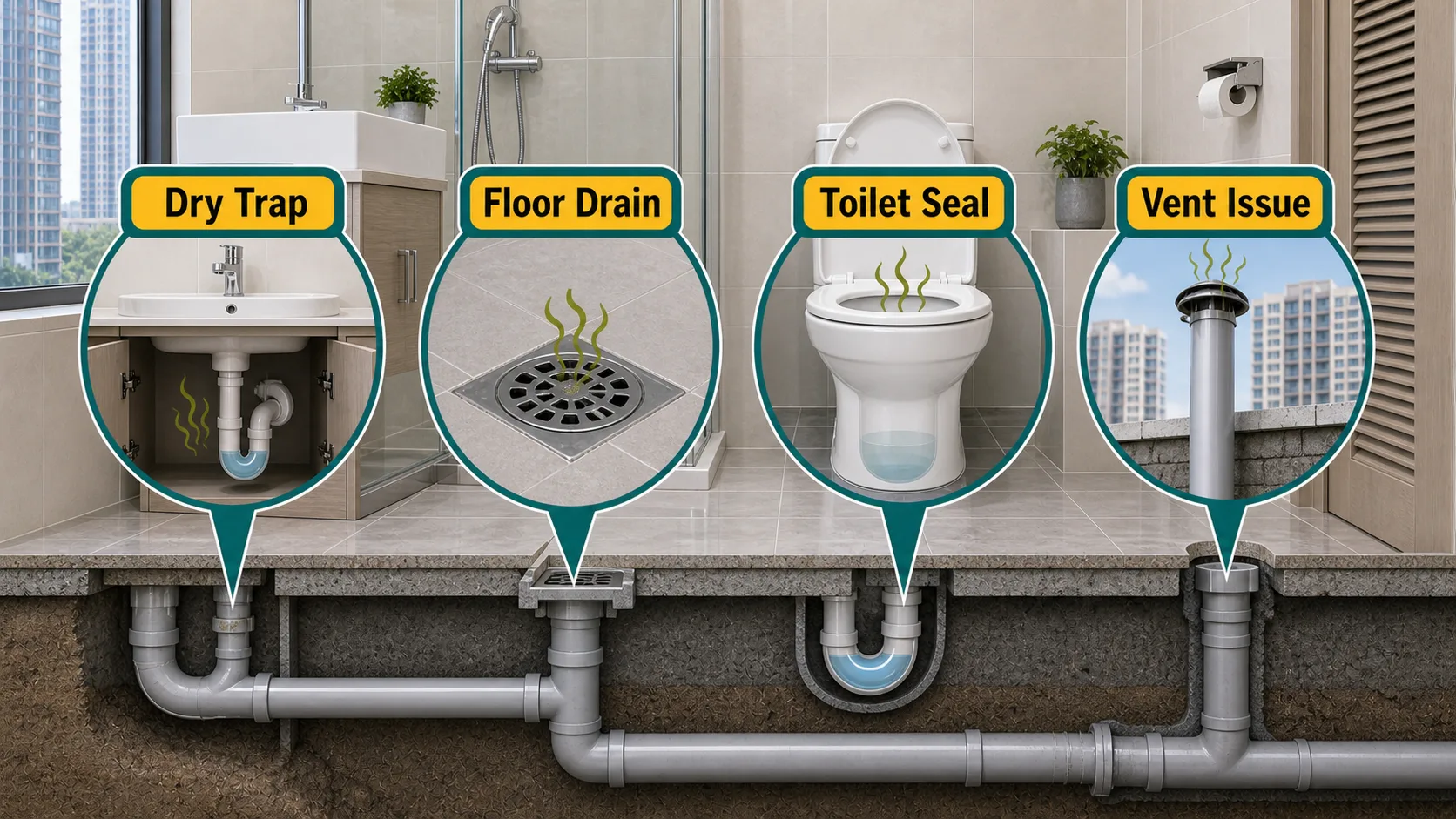
Traps and water seals hold water to block drain air from entering the room. If a floor drain, shower drain or basin is rarely used, the water seal can dry out. This often happens after travel, in a spare bathroom, or in a newly handed-over flat that has been empty for weeks.
Hong Kong bathrooms often have floor drains. If the floor drain has a weak water seal, trapped debris, wrong fitting, poor cleaning access or downstream odour, the smell can come from the floor even when the toilet and basin look clean.
A toilet can smell if the base seal, drain connection or installation is poor. If the smell is strongest near the toilet base, gets worse after flushing, or appears after toilet replacement / renovation, do not assume it is only a cleaning issue.
Drainage systems need air-pressure control. If flushing, exhaust fans or nearby drains pull water out of a trap, the water seal may be lost and sewer smell can enter. This is why some bathrooms smell worse when the exhaust fan is on or after another fixture is used.
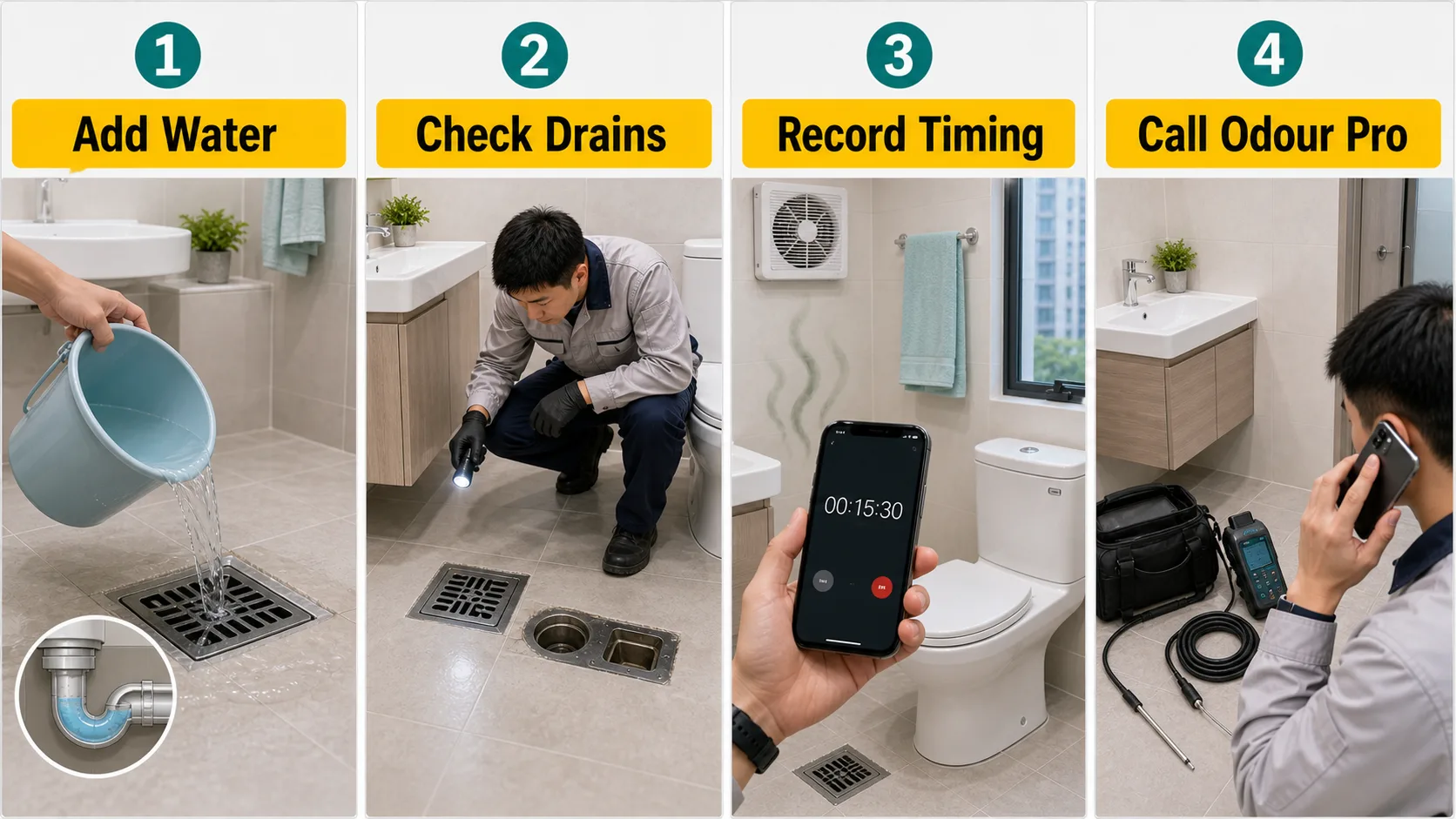
Pour clean water slowly into every floor drain, shower drain and basin trap. If the smell improves immediately but comes back later, a dry or weak water seal is likely involved.
Smell each nearby drain separately: floor drain, shower, basin, toilet base, kitchen drain and washing-machine drain if close by. Do not use bleach or strong drain cleaner as a first step; it can hide evidence and create safety risks.
Record when the smell appears: morning, after shower, after flushing, when the exhaust fan is on, after heavy rain, after travel, or after renovation. These timing clues help identify trap, blockage, pressure or common-drain causes.
If the smell returns, affects several drains, or cannot be isolated, call an odour specialist. PipeButler can check whether the right service is drain unblocking, pipe cleaning, odour source tracing or fixture / drain repair.
If the smell started after renovation, toilet replacement, basin replacement, floor-drain relocation or concealed pipe work, the cause may be an installation detail rather than dirt. Common problems include missing or weak traps, wrong pipe fall, poorly sealed toilet base, altered drainage, or pressure problems after pipe changes. In those cases, the fix may involve fixture / drain repair or re-installation, not only cleaning.
Usually not by itself. If the smell comes from a dry trap, vent issue, toilet seal or wrong connection, drain cleaner will not solve the source. Strong chemical products also create handling risks, especially if a technician later has to open the trap or pipe. If there is a true blockage plus odour, clear the blockage properly first and then confirm whether the smell is gone.
We start with the symptom pattern: which drain smells, when it smells, whether water backs up, whether the flat was recently renovated, and whether other drains are affected. Depending on the case, we may recommend water-seal checks, drain unblocking, pipe cleaning, fixture re-sealing, or follow-up inspection. If dirty water has overflowed, disinfection may also be needed.
You can check PipeButler pricing before booking. For faster triage, send a short video and note the smell timing on WhatsApp.
If your bathroom, toilet, basin or floor drain smells like sewage, WhatsApp PipeButler at 5340 0748. Send your district, building type, affected drain, whether the smell changes after adding water, and whether the bathroom was recently renovated. We quote before starting and focus on finding the source, not just covering the smell.
A rarely used floor drain or trap may dry out while you are away. Add water to all floor drains and traps. If the smell returns quickly, the water seal may be weak or there may be another source.
Yes. A floor drain with a dry or weak water seal is one of the most common Hong Kong bathroom odour sources.
The fan can change room pressure and pull air through weak drains or seals. If the water seal is low or the venting is poor, smell can become more obvious.
Bleach may temporarily reduce surface smell, but it does not fix dry traps, vent pressure, poor seals or wrong pipe connections. Avoid mixing chemicals or using strong products before inspection.
Record the timing and affected drains, then notify the landlord or property manager. If the source is unclear, an odour tracing visit can help separate cleaning, fixture, private drain and building-drain causes.