Loading page…
Loading page…
Jordan · Older buildings · Private estate · Commercial & restaurants
Older blocks around Kwun Chung · reclaimed Ferry Point · open external waste hoppers
Jordan — originally called Kwun Chung — centres on Jordan Road and took its present name from the MTR station opened in 1979.
Last reviewed ·
Choose the problem you are seeing to read the likely cause and next step.
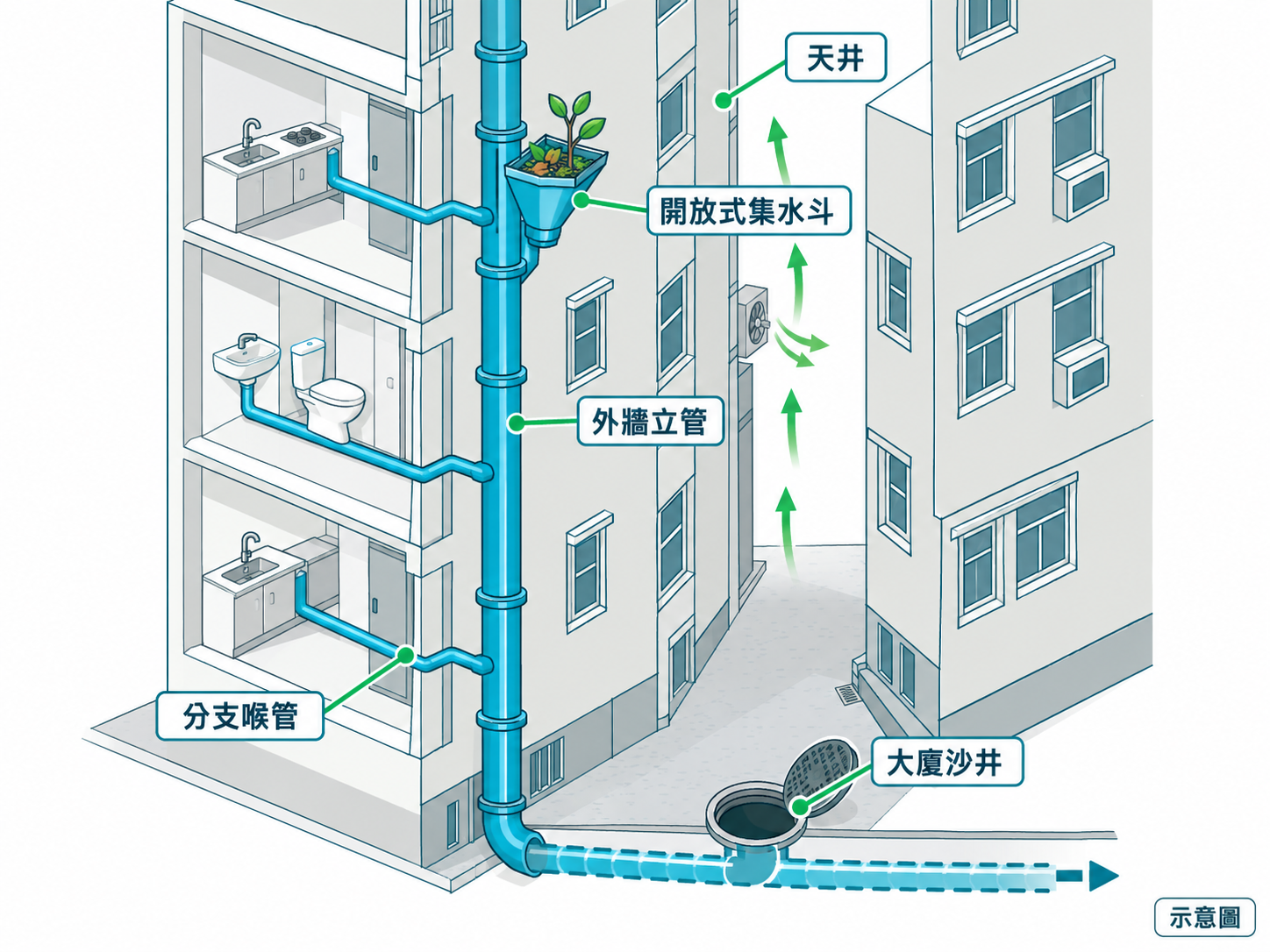
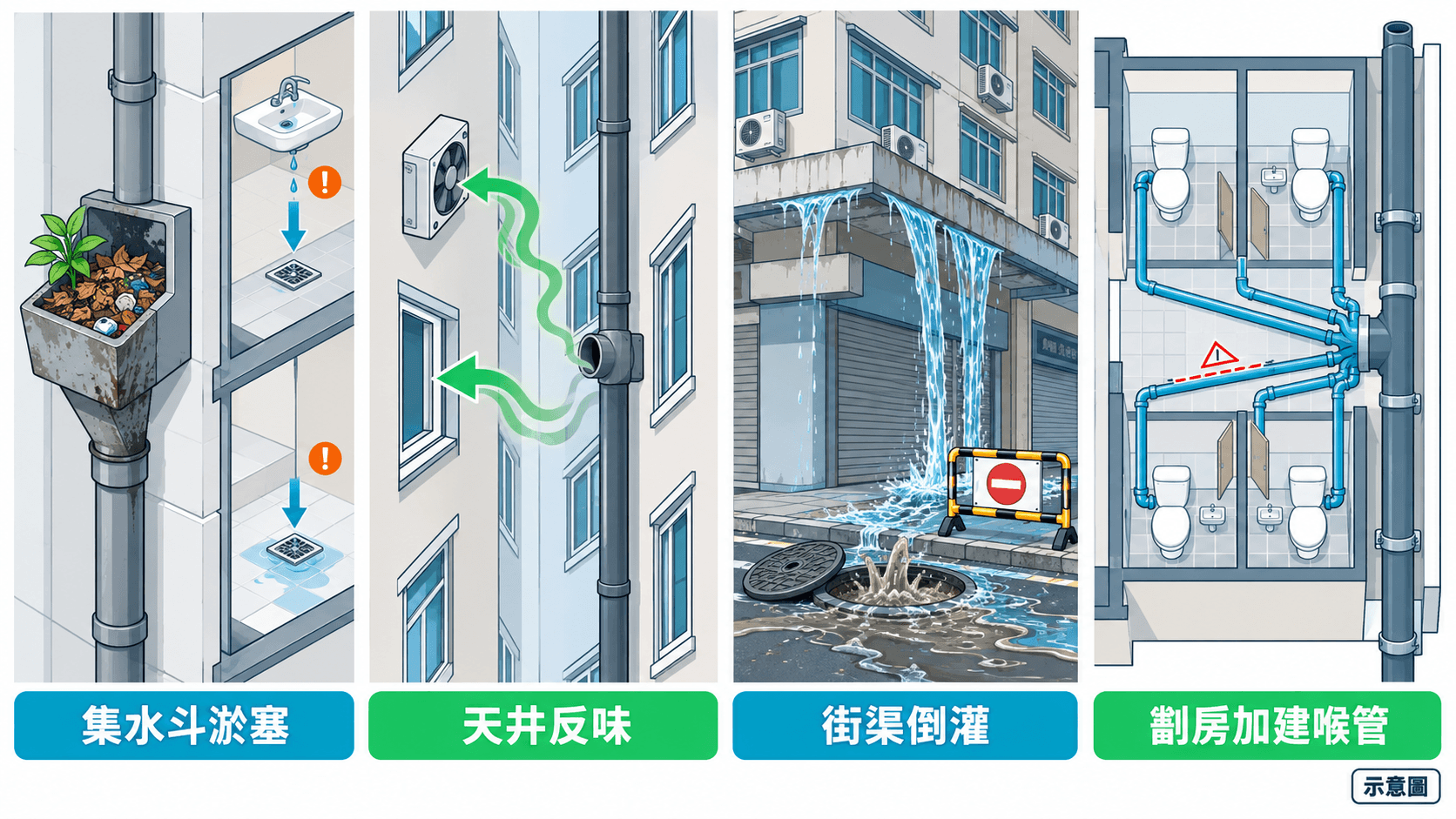
A survey of a 57-year-old block in Kowloon City, recorded in the URA's May 2021 blog, found that the external hopper collecting flats' waste water was "blocked by accumulated rubbish and plant growth", and recommended replacing it with a sealed fitting. Inferring from design, most older blocks in Jordan still use this kind of open collector: once grease, cloths, hair or plant roots narrow it, the sinks and bathroom outlets of several flats in the same vertical line all slow down together, and sewer air escapes straight into the light well. The hopper is part of the shared external pipework, so clearing and inspecting it is for the owners' corporation or the owners as a whole — clearing one flat cannot fix the whole stack.
HK01 reported on 22 January 2021 that government staff inspected flats at 98 Parkes Street in Jordan; the Environmental Protection Department representative said at the time that the pipes were "intact, with no cracks or gaps" and that the pipe connections and any leakage invisible to the eye needed further investigation. Professor Yuen Kwok-yung of HKU explained that vertical spread can happen inside pipework and in light wells, that where a flat's pipework has a crack invisible to the eye, virus particles are more likely to enter when the exhaust fan runs, and that a fan can also push air into the light well and create a chimney effect; he also noted a lot of rubbish in the light well at the foot of the building. That was an infection investigation, not evidence of a drainage defect, but it maps the commonest odour route in Jordan's older blocks: the light well, the vent pipe and the exhaust fan. If the smell appears when you switch on the fan or open a window, check the water seal at every outlet in your flat first, then raise light-well cleaning with the management office or owners' corporation.
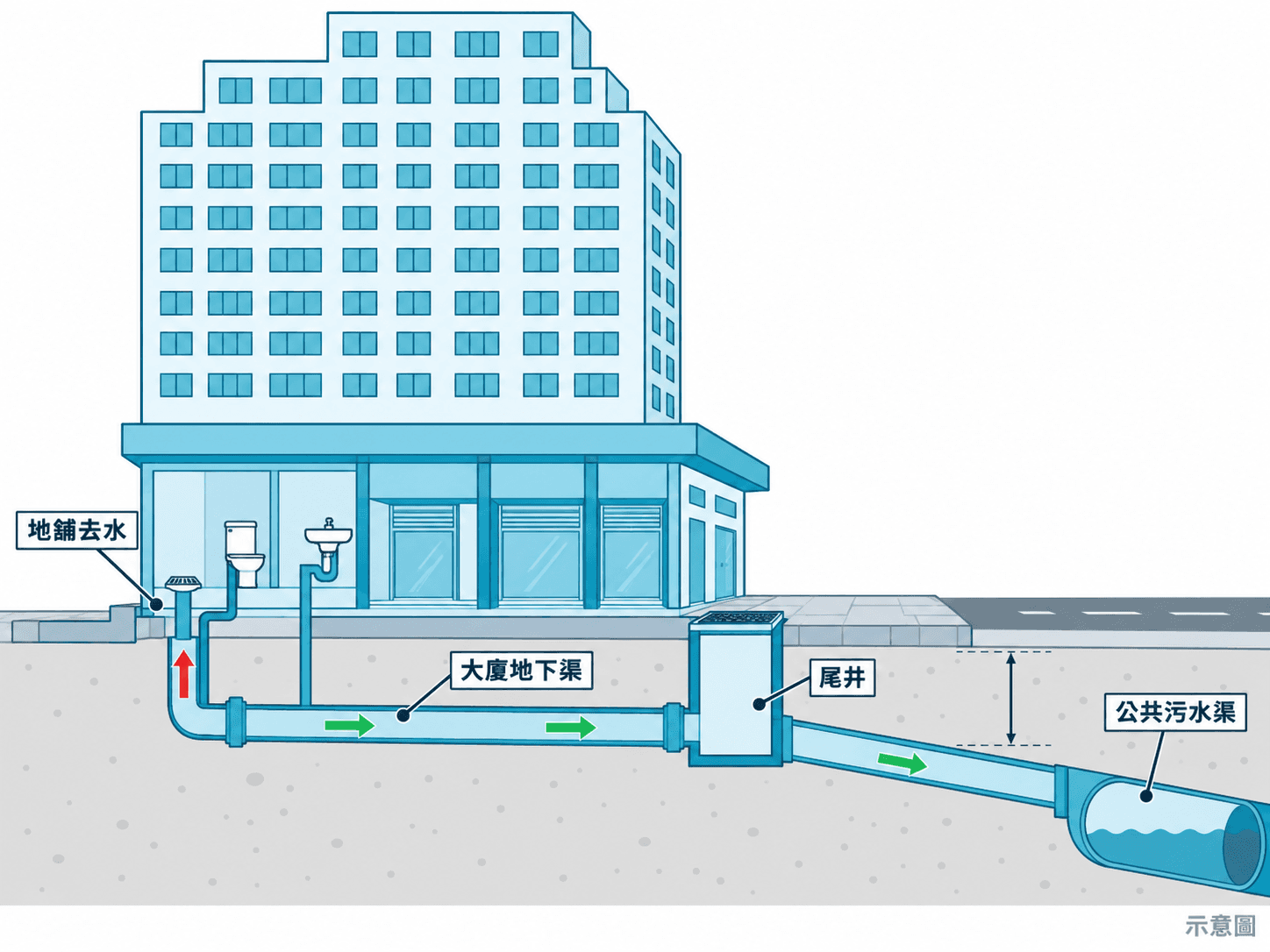
Wen Wei Po reported on 19 January 2025 that a suspected blockage in the public sewer in Ferry Street made the soil stack of nearby Man Ying Building back up, sending sewage off the first-floor canopy; the overflow began at about 10am and the Drainage Services Department and the Food and Environmental Hygiene Department attended about two hours later to clear and clean it, and the report said the area had seen one or two soil-pipe overflows almost every month over the previous half year. The Highways Department replied that the Central Kowloon Route works required a section of public sewer inside the Kansu Street site to be diverted temporarily in stages from early 2021, completed in 2023; Man Wah Sun Chuen sits about 220 metres outside the site, and the department understood that inappropriate discharge into the manholes and sewers of the buildings around it was causing blockages. Inferring from the geography, Ferry Point and the ground west of Ferry Street is low land formed by reclamation and by the levelling of the Kwun Chung hill, so the surface drains and public sewers here differ in age and run in complicated lines. If sewage appears in the street or off a canopy, first tell the Drainage Services Department (1823) and the management office and photograph it with the time; manholes and external pipes inside the building are for the owners' corporation to clear and make good.
The URA's May 2021 blog notes that many flats in older buildings have been sub-divided for letting, and that owners often add toilets and soil branch pipes without the owners' corporation's agreement and connect them to the communal vertical stack, so the number of branch pipes far exceeds the two or three that a normal flat runs into the hopper on the communal stack. Inferring from design, the more pipes there are, the longer they run and the flatter their fall, the more readily tissue and grease settle — and one room blocking can affect the others on the same floor. Altering or adding drainage pipes falls under the Buildings Department's minor works control and must be carried out by a registered minor works contractor. Tenants who meet slow drainage or odour should tell the owner or head tenant first and keep photos and dates.
The first Yau Tsim Mong entry on the Drainage Services Department's list of locations prone to blockage is "Nathan Road (between Kansu Street and Saigon Street)" — the stretch immediately north of Jordan, on the Yau Ma Tei boundary. Inferring from the setting, restaurants and ground-floor shops line this part of Nathan Road, so its road gullies are readily narrowed by food waste, leaves and silt, and the carriageway and basement or ground-floor shops are the first to hold water in amber or black rainstorms. Ground-floor shops and back-lane doorways can keep flood boards or sandbags ready and clear their floor drains and grease fittings before the wet season. Road gullies and street manholes belong to the Drainage Services Department, so report any overflow promptly.
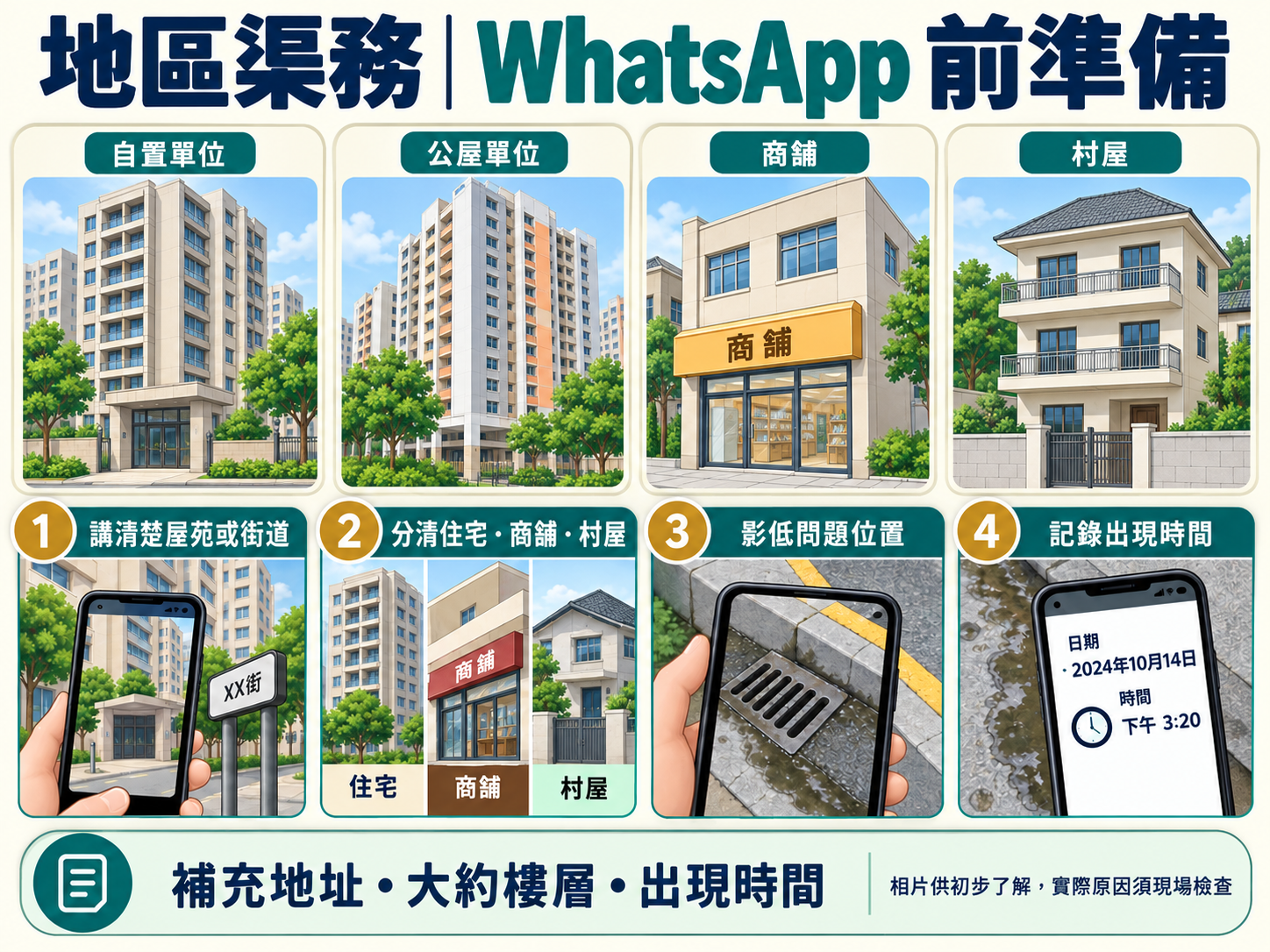
Photos or a short video on WhatsApp help us tell a single-fixture blockage from a shared-stack problem.
Jordan — originally called Kwun Chung — centres on Jordan Road and took its present name from the MTR station opened in 1979. Its buildings differ enormously: inferring from building age, mostly post-war tenements and 1960s–70s composite blocks around Woosung, Battery, Parkes and Nanking Streets; Man Wah Sun Chuen (the "eight Man blocks") at Ferry Point, completed between 1964 and 1970; and newer private estates towards Austin in the west. So drainage here has no single answer. The first job is to tell apart the flat's own branch pipes and traps, the shared external stack and waste hopper, and the public sewer in the street, and only then decide whether to call a contractor, the owners' corporation or the Drainage Services Department.
Jordan's building stock falls into roughly three layers. The oldest, inferring from building age, is the post-war tenements and 1960s–70s composite blocks south of Kansu Street between Woosung and Battery Streets, with shops or restaurants at street level and many flats above now sub-divided; a 2021 government paper described the buildings inside the "restricted area" of that year as "relatively old and lack of maintenance", many of them "three-nil buildings", with sub-divided units common. The second layer is Man Wah Sun Chuen at Ferry Point, built in two phases between 1964 and 1970: eight composite blocks stepped back at the upper levels to satisfy the old street-shadow rule, once open to the sea on three sides until the West Kowloon reclamation of the mid-1990s enclosed them. The third layer is the newer private estates around Austin station. Walk one street and the pipework can be fifty years apart in age.
Inferring from design, the older blocks here vent and drain their bathrooms and kitchens into light wells and back lanes: branch pipes from the kitchen and bathroom pass through the external wall into a shared vertical stack, usually by way of an open waste hopper. That open collection depends heavily on daily use and cleaning: an HK01/Varsity report of 5 May 2021 recorded used masks dropped into the open collectors on the pipes of the Reclamation Street tenements inside the 2021 restricted area, and an elderly resident of a tenement on Battery Street in Yau Ma Tei describing the stench of excrement rising from the light well (the same belt of older blocks — Battery Street was the western edge of the 2021 restricted area). The URA's May 2021 blog adds that once flats are sub-divided, owners often add toilets and soil branch pipes connected to the communal stack, far more than the two or three a normal flat has, so a single hopper takes several times the flow it was designed for.
Ferry Point is a different story. Wen Wei Po reported on 19 January 2025 that a suspected blockage in the public sewer in Ferry Street caused the soil stack of nearby Man Ying Building to back up, with sewage pouring off the first-floor canopy; the overflow began at about 10am and the Drainage Services Department and the Food and Environmental Hygiene Department attended about two hours later to clear and clean it, and the report said the area had suffered one or two soil-pipe overflows almost every month over the preceding half year. In the same report the Highways Department said it understood that inappropriate discharge into the manholes and sewers of the buildings around Man Wah Sun Chuen was causing blockages, and set out the timeline of the sewer diversion for the Central Kowloon Route works (see the Ferry Point issue below). At Ferry Point, in other words, the street sewer, the building's manholes and the flat's own branch pipes all have to be checked separately. Man Wah Sun Chuen has its own page, listed below.
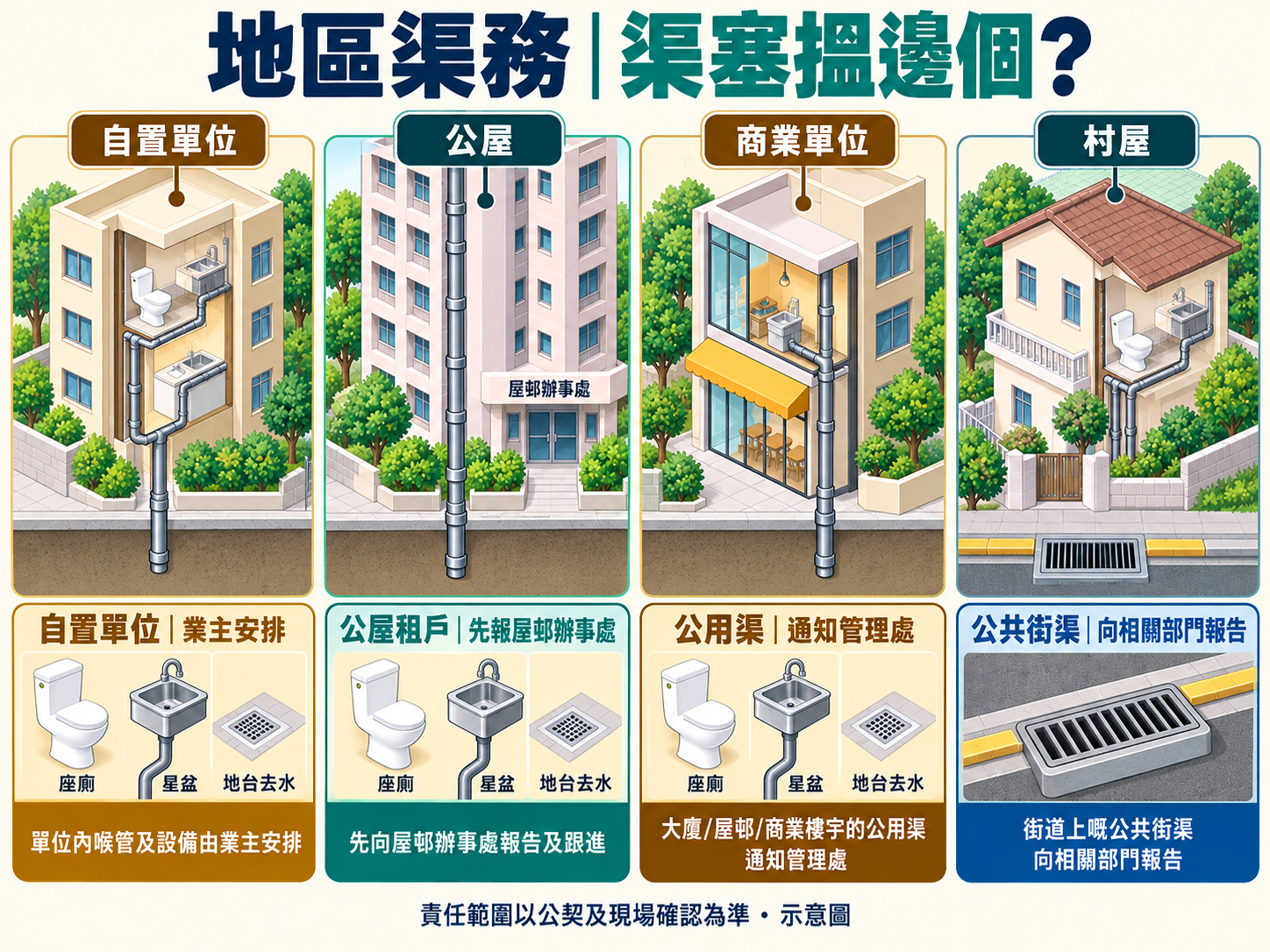
Who is responsible also depends on the type of housing. Almost everything in Jordan is private, and there is no public rental estate in the area, so owners arrange work on their own fixtures and external branch pipes while the shared stack, hopper and building manholes rest with the owners' corporation or the owners as a whole — and in the older blocks, ownership is fragmented and there is often no corporation at all. That is the sharpest contrast with public and subsidised housing: in Housing Authority rental blocks the Housing Department maintains the communal drainage system and has run a Drainage Inspection Programme since October 2020, while the external communal drains of Housing Authority subsidised sale flats fall to the Housing Bureau's Independent Checking Unit, which exercises delegated Building Authority powers and issues advisory letters or drainage repair orders (the 2021 reply cited here named its then parent, the Transport and Housing Bureau).
Note: statements based on building age and type are general inferences, not findings for any particular flat.
Choose an enquiry route for your premises and work scope.
Pantry, washroom and shared-drain enquiries, with scope agreed before work
Scope and booking detailsUnit outlets, shared pipes and chamber enquiries assessed with site access
Scope and booking detailsDiscuss a defined maintenance scope using assets, usage and incident records
Scope and booking detailsA clear process from enquiry and assessment to an agreed scope of work
Tell us the drain problem and district and ask about available timing.
Confirm timing based on the district and schedule, then inspect the blockage or odour issue.
Explain the proposed approach, scope and price before agreed work begins.
Use suitable tools for the site conditions and agreed scope of work.
After the agreed work, test drainage and explain the observed result and any next steps.
PipeButler is an independent drain-service provider with no affiliation to the developer, owners' corporation, management company or Housing Department of the places above. Facts come from public sources checked on the dates shown; work on common drains or common parts follows the management office's and deed of mutual covenant's arrangements.
WhatsApp with the problem and district, and we will confirm available timing.