
Loading page…
Loading page…
A practical response to market stall drainage problems, covering solid waste, sludge, shared channels, cleaning, management coordination and maintenance.
WhatsApp with the problem and district, and we will confirm available timing.
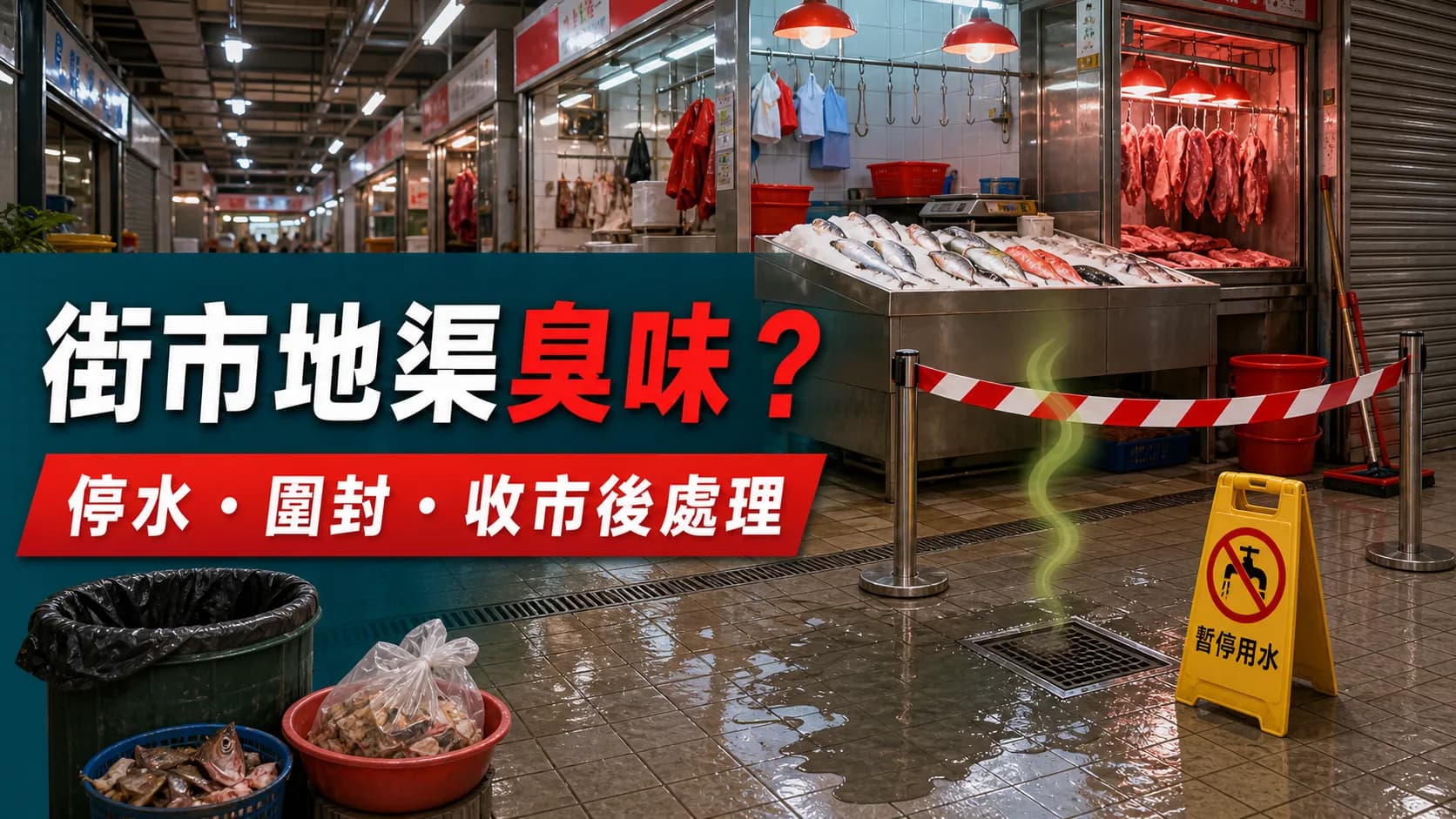
Smells, slow drainage, standing water or backflow at fish, seafood, meat and wet-goods stalls are often more than dirty floors. Scales, meat scraps, blood, melting ice, grease, grit, packaging and cleaning water enter the same drainage system. Material apparently washed away may settle in channels, strainer baskets, floor outlets, horizontal pipes or manholes, gradually creating organic blockages and odours.
Stop heavy rinsing and floor washing when a stall drain smells, drains slowly or backs up. Isolate slippery areas, collect scales, meat scraps, plastic and other solids, and record water levels, drainage speed, odour locations and affected stalls. Do not pour drain cleaner into standing water. If several stalls in a row or a public channel are affected, also notify the market office or management.
For restaurant kitchens, grease traps or rear-lane manholes, see commercial kitchen drainage maintenance and blocked and overflowing manholes. This guide focuses on fish, meat, seafood and wet-goods stalls.
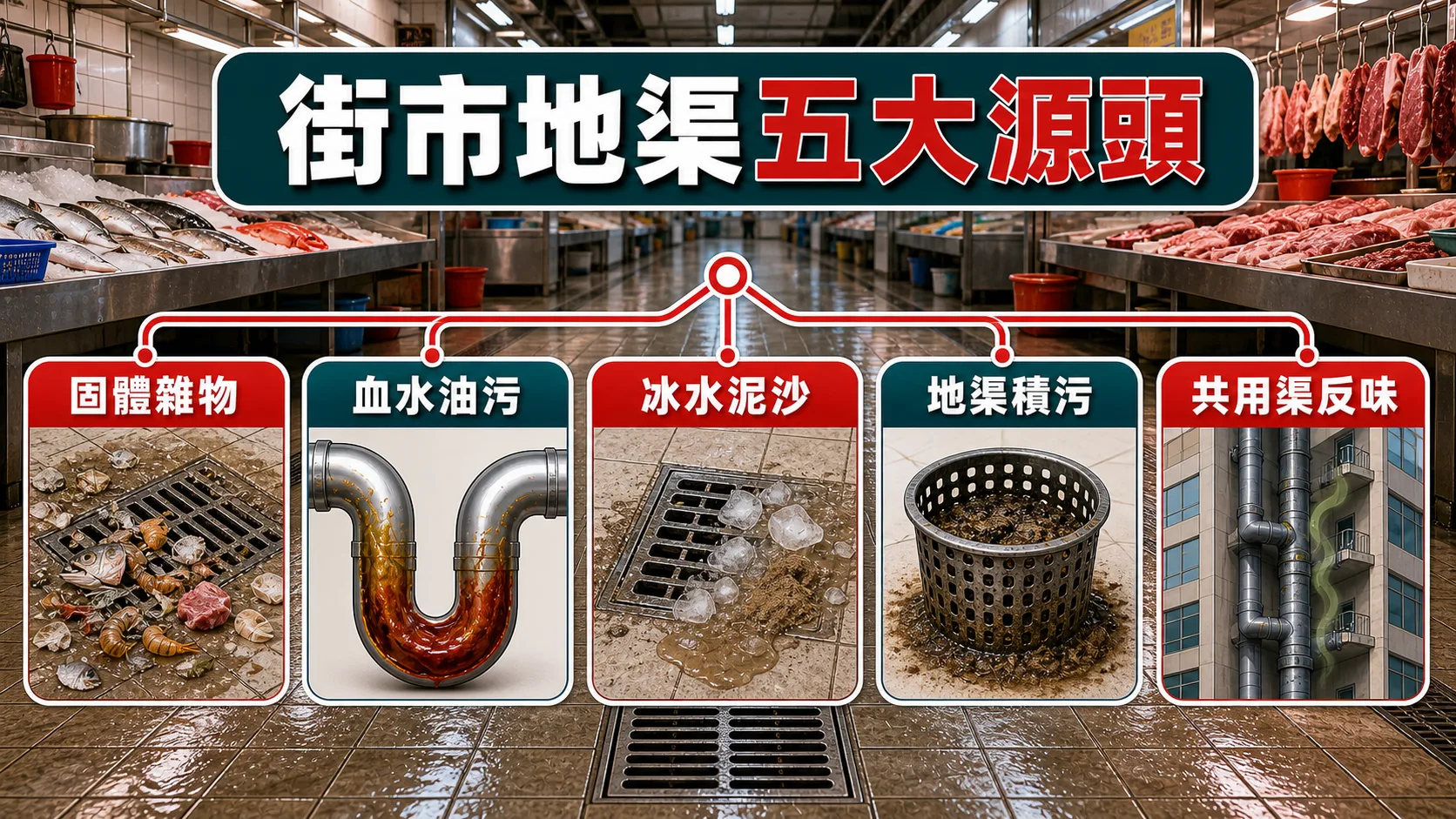
Scales, bone fragments, meat scraps, shell fragments, plastic bag corners and polystyrene pieces do not dissolve in water. They catch on grilles, strainers, floor outlets and bends, then trap more organic material. Washing only the surface pushes solids deeper and encourages repeated slow drainage.
Meat and fish stalls and neighbouring cooked-food areas produce blood, fat, stock, sauces and cleaning residues. These coat channel walls and manhole bottoms, mixing with grit to form strong-smelling sludge. Surface disinfection improves hygiene but cannot remove sludge inside pipes.
Fish and seafood stalls use substantial ice; melting water carries fragments and fish residues. A partially blocked drain may rise or overflow when this flow increases. If the downstream manhole already contains sludge, further rinsing can move obstructions to less accessible positions.
Floor outlets and traps need effective water seals to exclude drain air. Seldom-used outlets, dirty traps, poorly sealed covers or negative pressure and odours in shared drains can cause smells. If several stalls in a row smell, shared channels, manholes and management-controlled areas also need inspection.
Wet drains rich in organic deposits can provide breeding sites. One spray treatment or fragrance may not help because larvae and deposits can remain in drains, channel bottoms, manholes or under cupboards. See finding drain-fly sources.
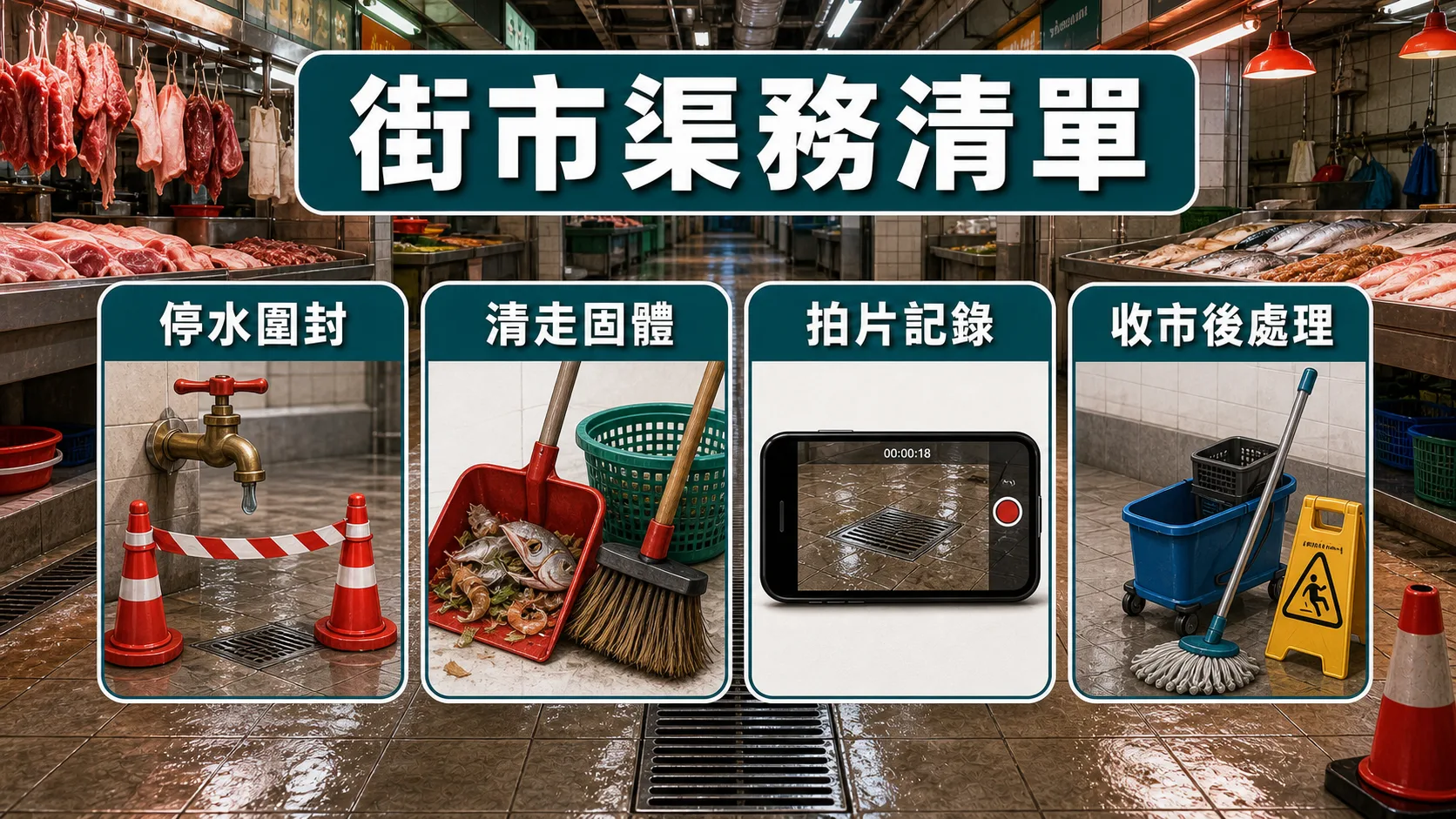
Continued rinsing into a restricted downstream drain spreads water into aisles, neighbouring stalls and public areas. Stop using the affected drain and do not wash more solids into it.
Wet market floors present a fall risk to workers and shoppers. Put up warnings, remove standing water and use tools to collect scales, meat, plastic, shells and rubbish. Never reach into a drain by hand or allow unprotected people to contact wastewater.
Film the outlet where water rises, how quickly it recedes, odour locations, insects, whether symptoms worsen after closing, whether several stalls are affected and channel or manhole levels. This helps distinguish one stall's outlet from a shared channel or manhole problem.
Public and private markets, fresh-food sections in shopping centres and cooked-food markets involve shared channels, aisles, manholes and management arrangements. Where several stalls are affected, coordinate with management instead of repeatedly unblocking just one stall.
Unblocking: suits an individual floor outlet, nearby bend or identifiable solid obstruction. Tell the technician about any drain cleaner already used; see drain-cleaner safety.
Desilting or manhole cleaning: addresses scales, sludge, greasy sediment, grit and high levels in channel bottoms, manholes, strainers and shared drains. Work may need to follow market closing. See desilting versus unblocking.
Pipe cleaning: may suit recurring slow drainage, organic deposits on pipe walls, reduced capacity along a row of stalls or only brief improvement after unblocking. The aim is to remove deposits rather than open a narrow passage through them.
Odour investigation: suits smells persisting after cleaning, unused outlets, shared-drain odours, smells with drain flies or odours not clearly linked to water use.
Cleaning and disinfection: address sewage backflow, contaminated floors, cleaning after pest treatment and hygiene before reopening. They cannot replace desilting or unblocking.
CCTV inspection: may help with recurrence, unknown concealed routes, suspected solid objects, problems after renovation, records for management and repeated failures after unblocking. See when CCTV inspection helps.
For one slow stall outlet, start with its grille, strainer and short branch. If several stalls, an aisle, cooked-food area, refuse room or manhole smell, drain slowly or back up together, notify the market office or management. Shared channels, manholes and public areas normally require coordination, potentially outside opening hours.
Provide the stall location, photographs and video, onset, backflow, the number of affected stalls, whether it worsens after closing, drain flies or cockroaches and previous cleaning or unblocking records. Specific evidence helps establish responsibility and arrange inspection.
Not necessarily. Poor surface cleaning can worsen smells, but persistent odours may involve trap deposits, inadequate seals, solid waste, manhole sludge, breeding sites or shared drainage. Extra detergent or fragrance rarely addresses all these causes.
Yes. They, shells and plastic fragments do not dissolve and can catch on covers, strainers and bends, collecting grease and grit. Small daily amounts can build into recurring restrictions and odours.
It is not recommended as the first step, particularly with standing water and people passing. Strong chemicals can remain in water, splash or mix with cleaning agents, while failing to address scales, hard objects, grit or manhole sludge.
Deposits may remain on pipe walls, in channels, manholes or downstream, or solids may still enter continuously. Review straining, closing-time cleaning, shared channels and the need for desilting or pipe cleaning.
Provide the market name and stall location, outlet or manhole photographs, backflow video, drainage speed, odour timing, whether other stalls are affected, insects, available working times and whether management has been informed.
For smells, slow drainage, standing water, drain flies or recurrent blockages at wet market stalls or shared channels, WhatsApp PipeButler on 5340 0748 with photographs, video and working times. We can assess unblocking, desilting, odour investigation, pipe cleaning, disinfection, pest control or CCTV, and agree the scope before work.