
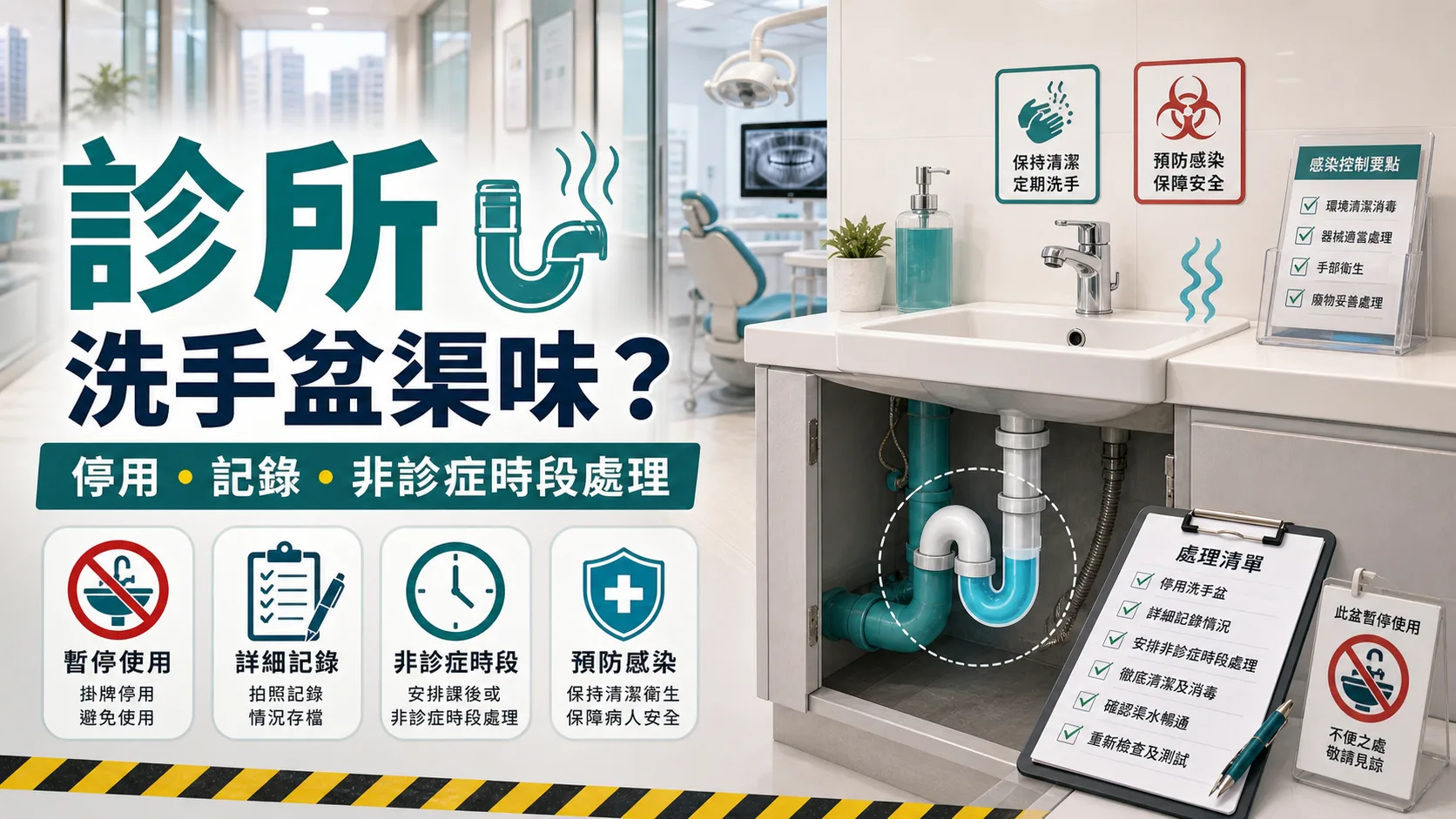
A drain smell in a clinic, dental practice, physiotherapy room, treatment room or medical centre is more than a minor nuisance. Patients notice smells around sinks, toilets and treatment rooms, while staff work to demanding hygiene standards. Slow sinks, floor-drain odours, drain flies or smells returning a few days after cleaning require a distinction between cleaning and disinfection issues and problems with water seals, traps, branch drains or shared building drainage.
If a clinic sink smells, backs up or attracts drain flies during opening hours, stop using the affected sink or cubicle, keep patients away from standing water, and record drainage speed and the location of the smell. Arrange inspection outside consultation hours in accordance with the clinic's infection-control policy. Do not pour aggressive drain cleaner into a sink while patients remain nearby. The Centre for Health Protection treats dental unit waterlines as a separate infection-control matter: dental chair waterlines, suction systems and specialist equipment must be referred to the clinic's infection-control lead and equipment supplier, rather than treated as an ordinary blocked sink.
This guide considers clinic sink odours, slow drainage, drain flies and smells recurring after cleaning in Hong Kong. For an ordinary slow sink, see bathroom sink drainage problems; for odours throughout a washroom, see bathroom drain smells.
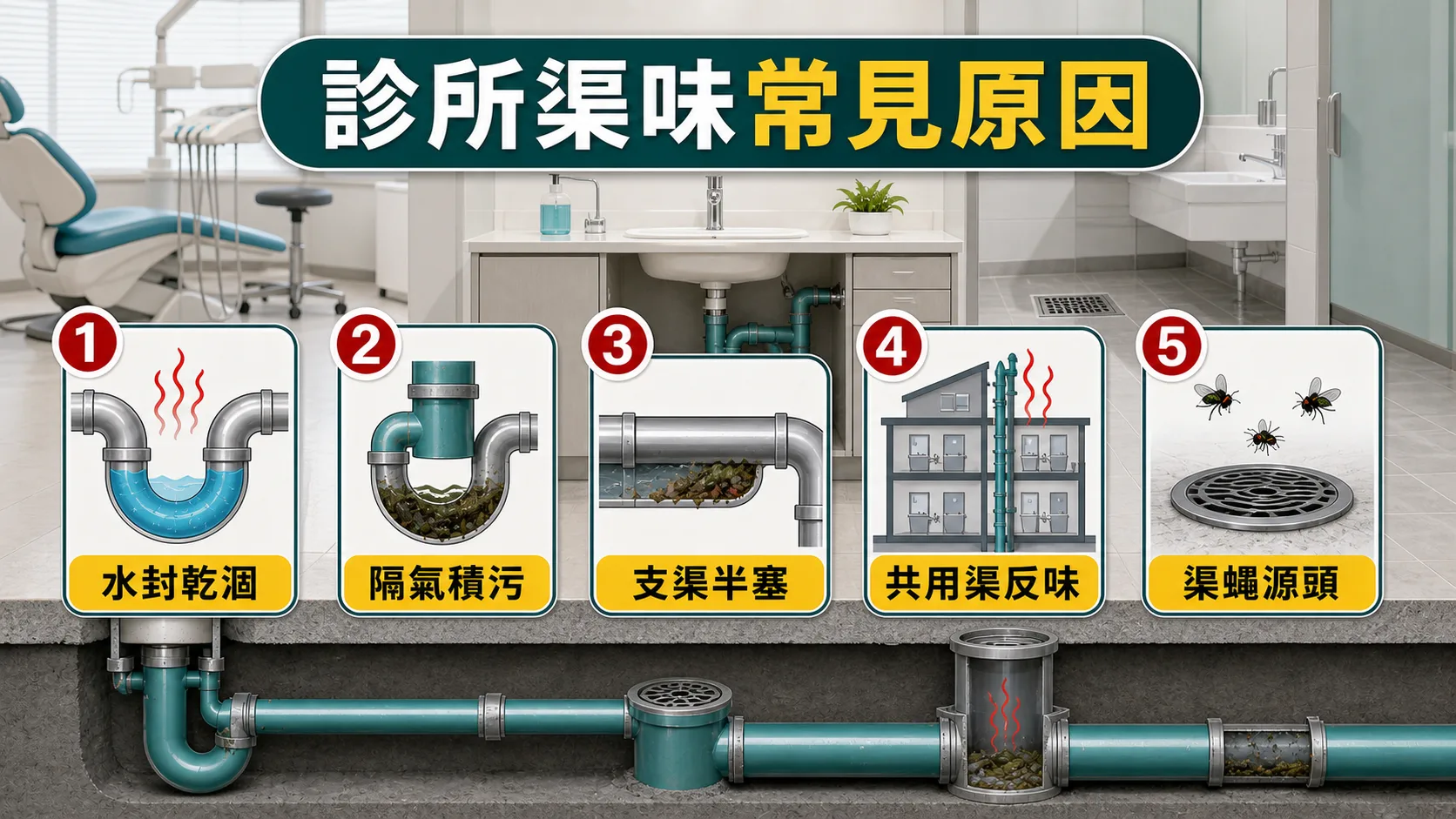
Five common causes of clinic sink smells
1. Dry water seals in seldom-used sinks or floor drains
Some consultation rooms, treatment rooms, back rooms, staff sinks and patient toilets receive little daily water. If a trap's water seal dries out, drain air may enter the room through the trap or floor outlet. If adding water helps only briefly and the smell returns several days later, investigate the seal, trap and ventilation. See floor-drain water-seal maintenance.
2. Soap, mouthwash, hair and deposits
Frequent handwashing allows soap, paper scraps, hair and everyday dirt to accumulate in traps, bottle traps and horizontal pipework. A dental practice's ordinary sink can also drain slowly if powders, solid fragments or materials unsuitable for drainage disposal have been tipped into it. Smell alone cannot identify the blockage: inspect the trap and drainage performance first. Medical or chemical waste must not be poured into a sink.
3. A partially blocked branch or shared building drain
If one sink is slow, start with that sink and its trap. If several sinks, toilets, floor drains or the pantry smell at the same time, consider the branch drain or shared building system. Clinics in office buildings, medical centres and older buildings should also ask management to check communal drains and manholes.
4. Cleaning and disinfection without addressing the source
Infection control and environmental cleaning remain essential, but surface disinfection cannot restore a missing water seal, remove trap deposits or clear a downstream branch. When a smell returns within days of cleaning, investigate the drainage source instead of relying on stronger fragrance or more frequent disinfection.
5. Drain flies or cockroaches around drains, cupboards or manholes
Drain flies, cockroaches and musty smells may relate to drain deposits, cupboard leaks, dampness or other entry routes. Seeing insects does not prove that they originate inside the pipe. Locate the actual breeding or entry point and moisture source; treating adult insects alone can allow recurrence if confirmed damp or drainage sources remain. See finding drain-fly sources and drainage-related pest control.
Four first actions during clinic opening hours
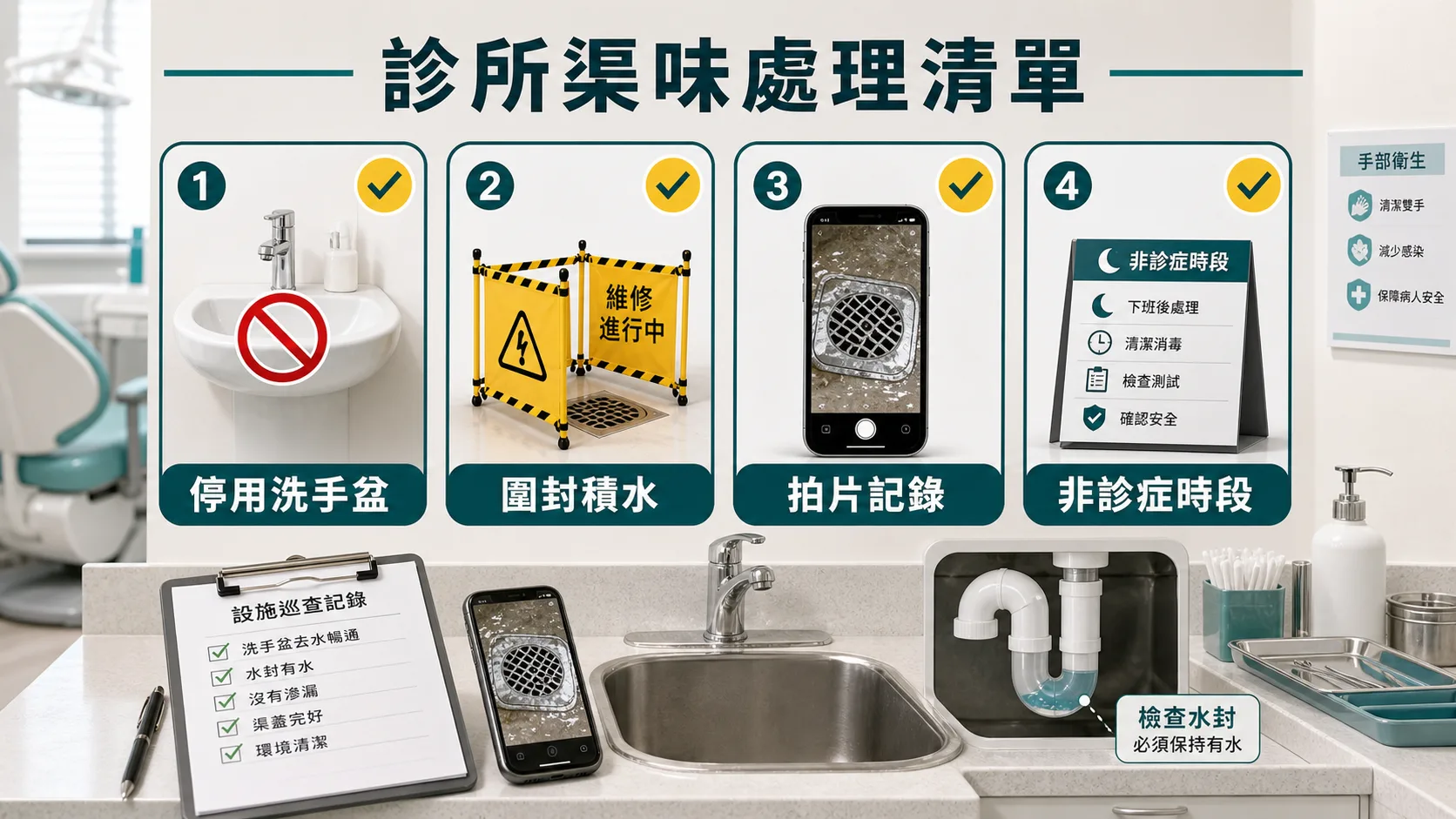
Close the affected sink or cubicle
If there is backflow, a strong smell, slow drainage or drain flies, suspend use and direct staff and patients to another sink or toilet. Avoid dismantling traps, adding chemicals or opening drain covers during busy consultation periods.
Isolate standing water and ventilate
Place a slip warning, remove standing water and record its extent. Sewage or unidentified wastewater backflow may require cleaning and disinfection, alongside investigation of the drainage cause.
Distinguish ordinary sinks from medical equipment water systems
The Centre for Health Protection notes that dental unit waterlines, like other water systems, can develop biofilm and that clinics should minimise microbial levels. Suspected dental chair waterline, suction-system, medical equipment drain or specialist equipment faults require the infection-control lead and relevant supplier to follow equipment instructions. PipeButler's drainage scope concerns ordinary sinks, floor drains, toilets, pantries and building drainage. It does not replace dental waterline infection control or water-quality management.
Record symptoms and arrange an appropriate working period
Film drainage speed and record the odour location, gurgling, drain flies, the worst times, how soon smells return after cleaning and whether neighbouring units on the floor have similar problems. Lunch breaks, after consultations, closure days or weekends may be suitable for clinic work.
Cleaning, odour investigation, unblocking or CCTV?
Cleaning and disinfection: address contact surfaces, sewage contamination, cleaning after pest treatment and environmental hygiene records. They are not drain-unblocking methods.
Odour-source investigation: suits smells persisting after cleaning, seldom-used outlets, smelly sink traps and unexplained consultation-room or toilet odours. The objective is to identify the source, not mask it.
Drain unblocking: suits a slow sink, blocked trap, a single backing-up outlet or deposits of paper, hair and dirt. Tell the technician if drain cleaner has already been used; see drain-cleaner safety.
Pipe cleaning: may suit recurring slow drainage, accumulated soap, pantry grease, floor-drain deposits or several slow sinks.
CCTV inspection: may help with repeated blockages, unknown concealed pipe routes, suspected solid objects, problems after alterations, records for management or the owner, and recurrence after ordinary unblocking. See when CCTV inspection is useful.
Routine maintenance for clinics
- Replenish water in seldom-used sinks and floor drains to prevent water seals drying out.
- Retain maintenance access to traps; do not seal the entire cupboard base around them.
- Keep tissues, wet wipes, dental floss, plaster powder, hard objects and other solids out of sinks. Medical or chemical waste must follow the clinic's EPD classification and disposal procedures, rather than ordinary sink disposal.
- Treat grease at staff pantry or cup-washing points as a commercial drainage issue.
- Investigate leaks, floor-drain deposits and pest sources together when insects, mustiness or damp cupboards appear.
- Before fitting out or relocating a clinic, inspect sinks and floor drains and establish responsibility for shared drains to avoid discovering odours after opening.
Frequently asked questions
Does a clinic sink smell automatically mean infection control is inadequate?
No. Dry seals, dirty traps, partially blocked branches, cupboard leaks and shared drains can all cause smells. Infection-control cleaning is still important, but the drainage source also needs attention.
Can a dental practice use drain cleaner in a blocked sink?
It is not recommended as the first response, particularly during consultations or when the obstruction is unknown. Strong acidic or alkaline products can leave chemical hazards and may not address hard objects, incorrect trap connections or downstream restrictions.
Should drain flies be treated with pest control first?
Adult insects can be controlled initially, but a single spray treatment can be followed by recurrence if the source is floor-drain biofilm, trap deposits, a cupboard leak or a manhole. The drainage and moisture source usually needs cleaning or correction.
What should the clinic prepare before an assessment?
Provide the address, floor, affected locations, photographs and video, onset, backflow, insects or mustiness, whether several outlets smell, available working hours, whether management has been informed and whether the issue involves a dental chair or an ordinary sink.
Official references
- Centre for Health Protection: Guide to Infection Control in Clinic Setting — environmental cleaning, disinfection and dental unit waterlines.
- Department of Health Dental Services: regulatory and infection-control references.
- Buildings Department: healthy drainage systems — water seals, traps and floor-drain maintenance.
- Environmental Protection Department: Clinical Waste Control Scheme.
The Chinese source reviewed these references on 18 August 2026. This article covers initial assessment of ordinary building drainage only. Clinic infection control, dental equipment waterlines and medical or chemical waste disposal must follow clinic policy, manufacturer instructions and the relevant authorities' current requirements.
For sink smells, slow drainage, floor-drain odours, drain flies or backflow in a clinic, dental practice, treatment room or medical centre, WhatsApp PipeButler on 5340 0748 with photographs, video and suitable working times. We can assess whether odour investigation, unblocking, pipe cleaning, disinfection, pest control or CCTV is appropriate. Confirm the agreed scope and limitations before work starts.