
Loading page…
Loading page…
Distinguish opening a blockage from removing accumulated sediment, and understand when pipe cleaning or CCTV may also be needed.
WhatsApp with the problem and district, and we will confirm available timing.
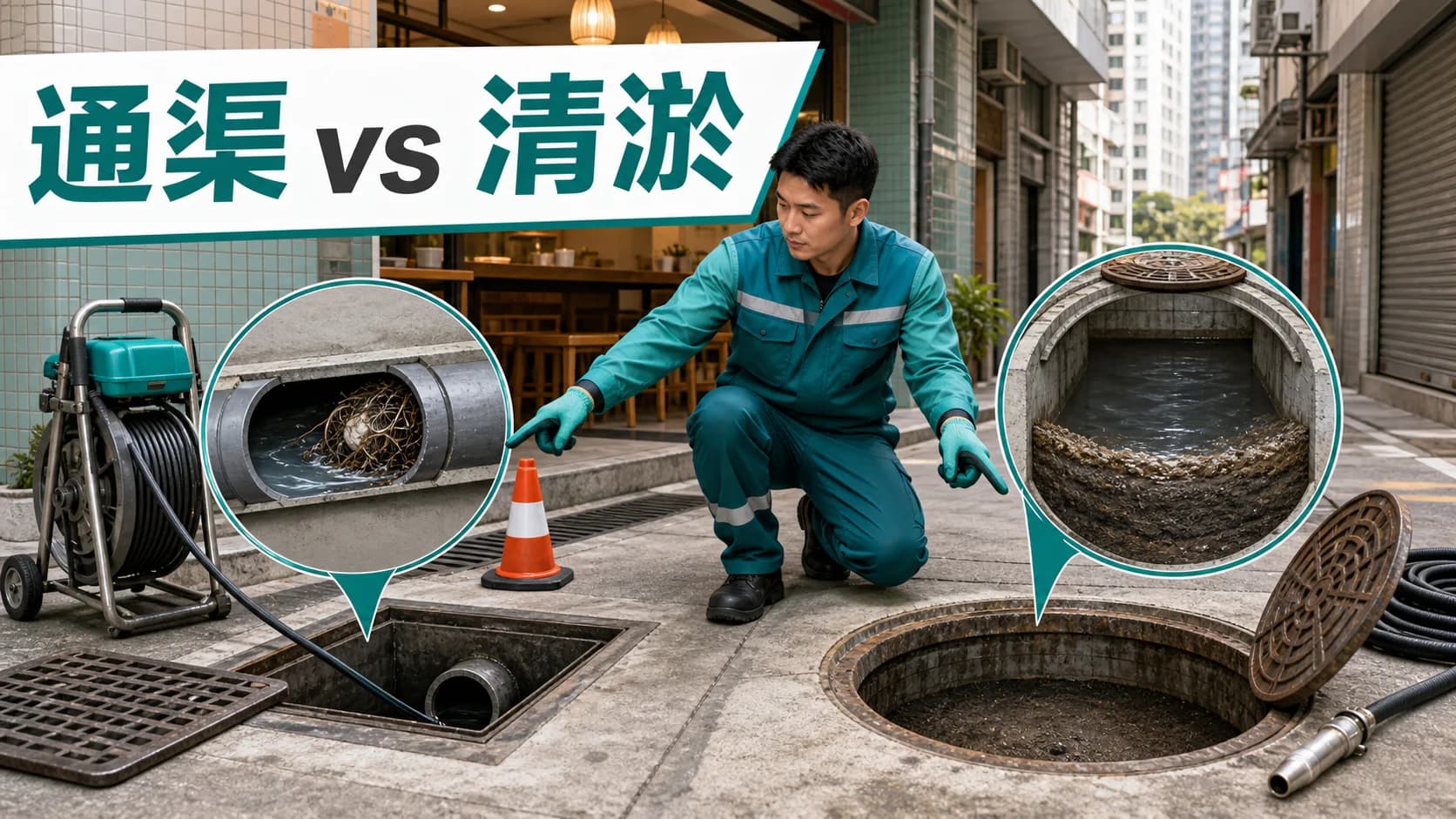
Slow drainage, backflow or a full chamber often prompts a request for unblocking, but unblocking and desilting address different things. Unblocking opens an obstruction to restore flow. Desilting removes accumulated sand, sludge, grease and debris from chambers, channels, grease traps or main drains to restore capacity.
One suddenly blocked basin, sink or toilet usually starts with local clearance. Chamber sediment, several backing-up outlets, rapid recurrence or long-standing deposits may require desilting, pipe cleaning or CCTV assessment.
This guide compares the methods for homes, restaurants, shops, industrial units, village houses and shared building drainage.
Unblocking addresses a flow obstruction such as hair, paper, food, hardened grease, an object or trap deposits. Suitable tools may include a plunger, cable, powered machine or water jet, with the immediate aim of restoring flow.
Desilting addresses capacity occupied by settled material: chamber sand, rear-lane sludge, grease-trap deposits, industrial sediment, leaves and litter in rainwater drains or main-drain solids. Material is removed or extracted rather than simply pierced.
Unblocking often serves as an immediate response; desilting also supports maintenance and recurrence control. Both may be needed, but the work should be described clearly.
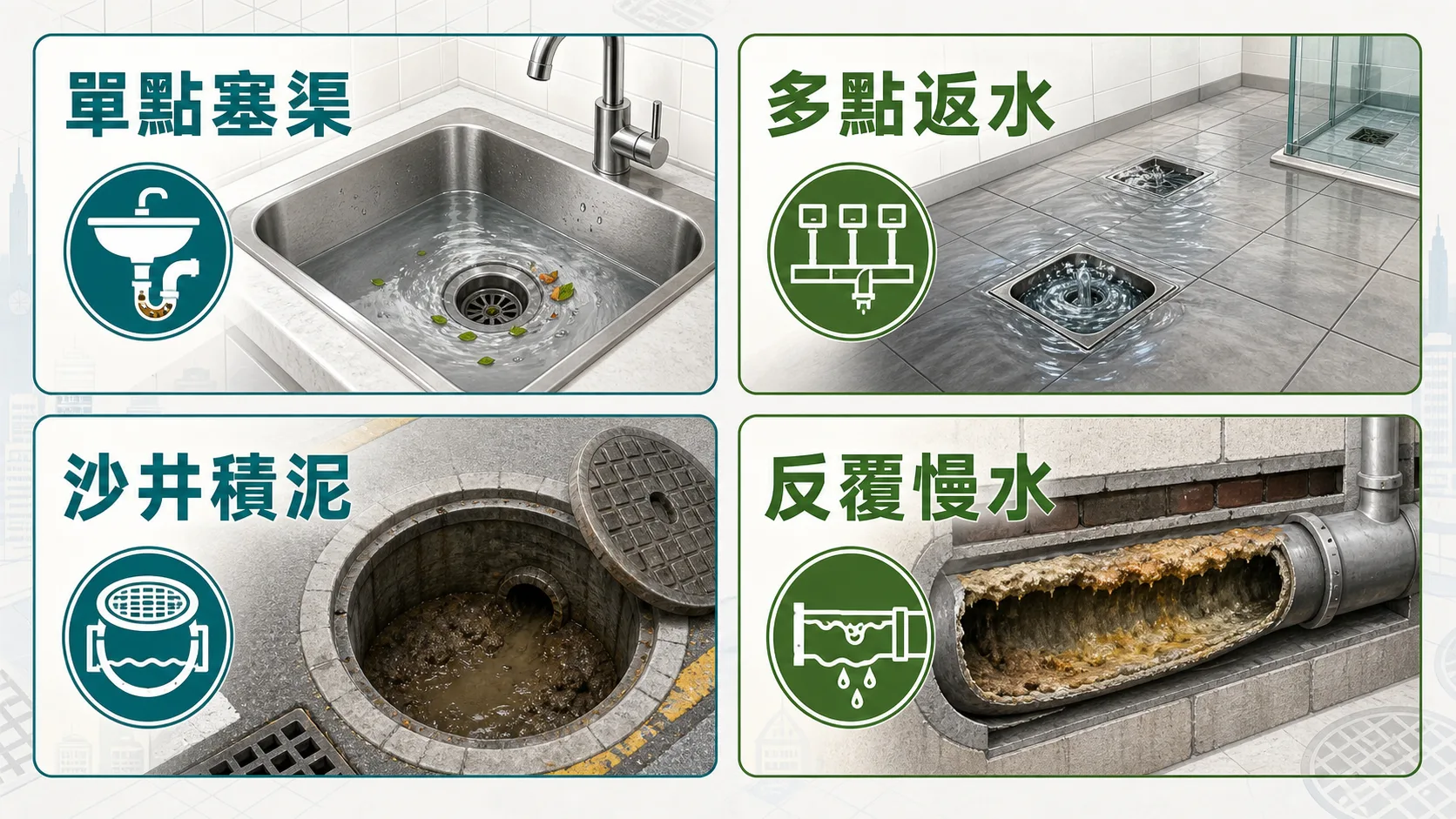
If one basin, bathroom outlet, sink or toilet blocks while the others work, first assess its trap, outlet and branch for local unblocking.
Several slow points, water rising through a floor drain, a sink making noise during toilet flushing or multiple affected low-floor premises may involve branches, a main, chambers or public drainage. See multiple blocked drains.
If a professional chamber inspection finds thick silt, grease, stones, litter or leaves, or persistently high levels, opening one pipe may leave substantial material behind. Peak discharge, heavy rain or a busy restaurant period can trigger another overflow. Chamber desilting or extraction may be needed.
Recurrence within days or weeks can indicate pipe-wall grease, settled sand, inadequate fall, an unremoved object, cracked or displaced pipework or downstream capacity problems. Read recurrent blockage causes before choosing another identical clearance.
No. Jetting is a method; desilting is the removal objective. Water jets can clean grease and sediment from pipe walls and longer runs, but may merely disperse a large chamber deposit without extracting it.
Pipe deposits may suit jetting; thick chamber, trap or channel sludge may require collection or suction as well. Access, diameter, quantity, water level, pipe condition and a suitable onward drainage route all matter.
CCTV is a diagnostic tool, not a requirement for every blockage. A simple local obstruction may need clearance first. Recurrence, an unknown position, suspected cracking, displacement, concrete or hard objects, and evidence for management, owners, insurers or renovation contractors can justify inspection.
A fully flooded or impassable pipe may need initial clearance or removal of water before useful images are possible. CCTV provides images and location evidence; it does not replace clearance or desilting.
These premises often have longer horizontal runs, outdoor channels, chambers, traps or rear-lane drainage than a flat. Grease, sand, food, leaves and industrial dust can accumulate along the route.
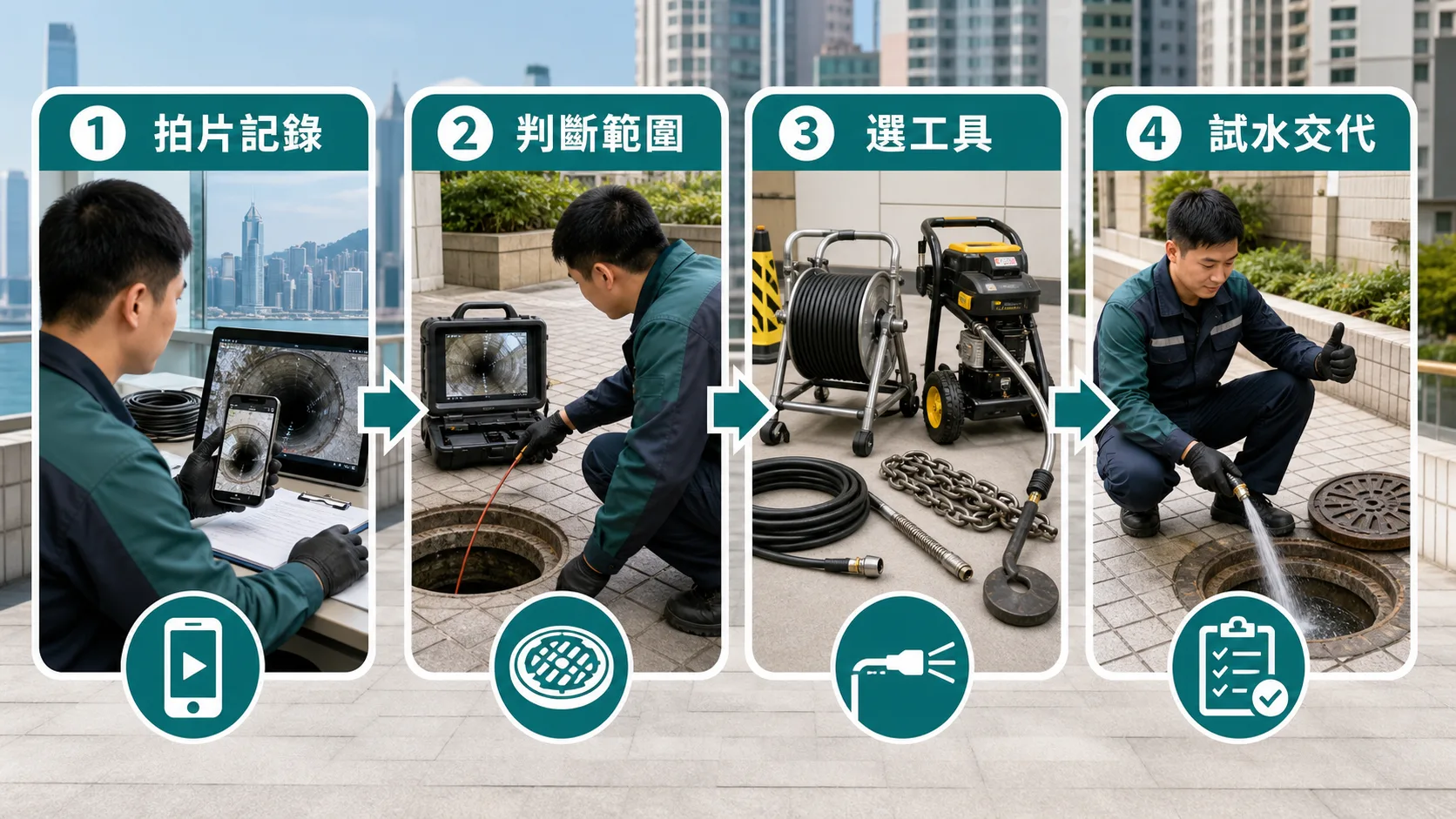
Capture existing drainage speed, backflow, levels and gurgling, and describe odour locations. Note whether water emerges from floor drains, toilets, sinks or chambers. Do not add more water to create a test when overflow is occurring.
State whether one outlet, several outlets, an entire unit, neighbouring units, lower-floor shops or outdoor chambers are affected. This influences tools and coordination.
Give the last clearance and trap-cleaning dates, any chemicals used, rain-related timing, busy-period symptoms and management repair history.
After work, confirm restored drainage with an appropriate water test. Ask what was removed, the likely location, any remaining deposits and whether desilting or CCTV follow-up is advised.
That depends on access, depth, deposit quantity, chamber opening, suction, jetting and overflow risk. Coordinate work outside busy periods, after closing or when management can provide access where practical.
Shared passages, lanes, vehicle routes and drainage serving several units need advance coordination, barriers and warning signs. Do not enter or independently open deep chambers to carry out the work yourself.
Clarify location, diameter, depth, run length, access, scheduling, and whether jetting equipment, water supply, suction, CCTV, additional personnel, waste handling or cleaning and disinfection are needed. Use photographs and video to agree the appropriate scope through our contact page.
WhatsApp PipeButler on 5340 0748 with drainage video, safe chamber or outlet photographs, symptom duration, recurrence and chemical-use history. We will assess unblocking, desilting, cleaning or CCTV and agree the work before starting.
Unblocking restores a restricted flow route. Desilting removes accumulated sand, grease, sludge and debris to recover chamber, channel or pipe capacity and reduce recurrence.
No. One slow outlet may involve hair or a trap. Multiple slow points, high chamber levels, rain-related backflow or rapid recurrence make broader cleaning or inspection more relevant.
Only where the material and onward route are suitable. Thick sludge and grease commonly need physical removal or suction; dispersing it can leave it behind or transfer the restriction downstream.
No. Obvious accessible sediment may be assessed and removed directly. Unclear causes, recurrence, suspected damage or hard obstructions, or a need for evidence make CCTV more useful.
It may, but first tell the technician the product, approximate quantity and timing. Residues in standing water require suitable precautions. Do not add another cleaner.