
Loading page…
Loading page…
How offices can respond to pantry sink smells, recurring slow drainage and pests, with maintenance guidance and building-management coordination.
WhatsApp with the problem and district, and we will confirm available timing.
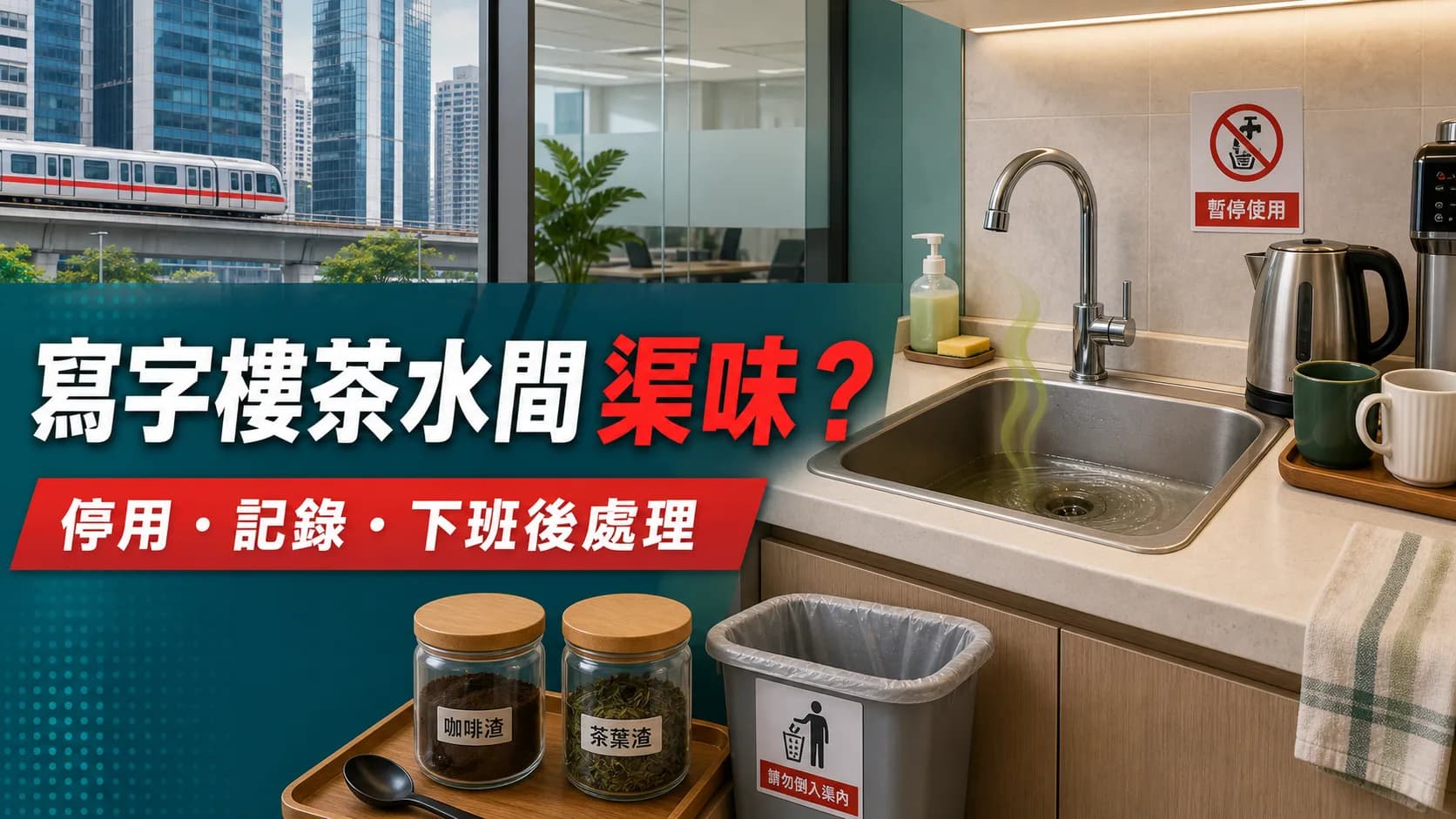
A smelly, slow or intermittently backing-up office pantry sink is often more than a surface-cleaning problem. Daily washing of coffee cups, tea cups, lunchboxes, cutlery and coffee equipment leaves grounds, leaves, milk, soup grease, sauces and food in traps and downstream branches. An initial smell may develop into pooling, cupboard leaks, drain flies or odours from shared drainage.
Stop using the affected sink and stop adding grounds, tea leaves, soup or drain cleaner. Film drainage speed and record the smell, cupboard leaks and drain flies. Notify the office coordinator and building management, and arrange inspection during lunch, after work or at a weekend.
For a domestic kitchen see grease-blocked kitchen sinks; for a handwashing basin see slow bathroom sinks. This guide covers offices, coworking spaces, business centres and offices in industrial buildings.
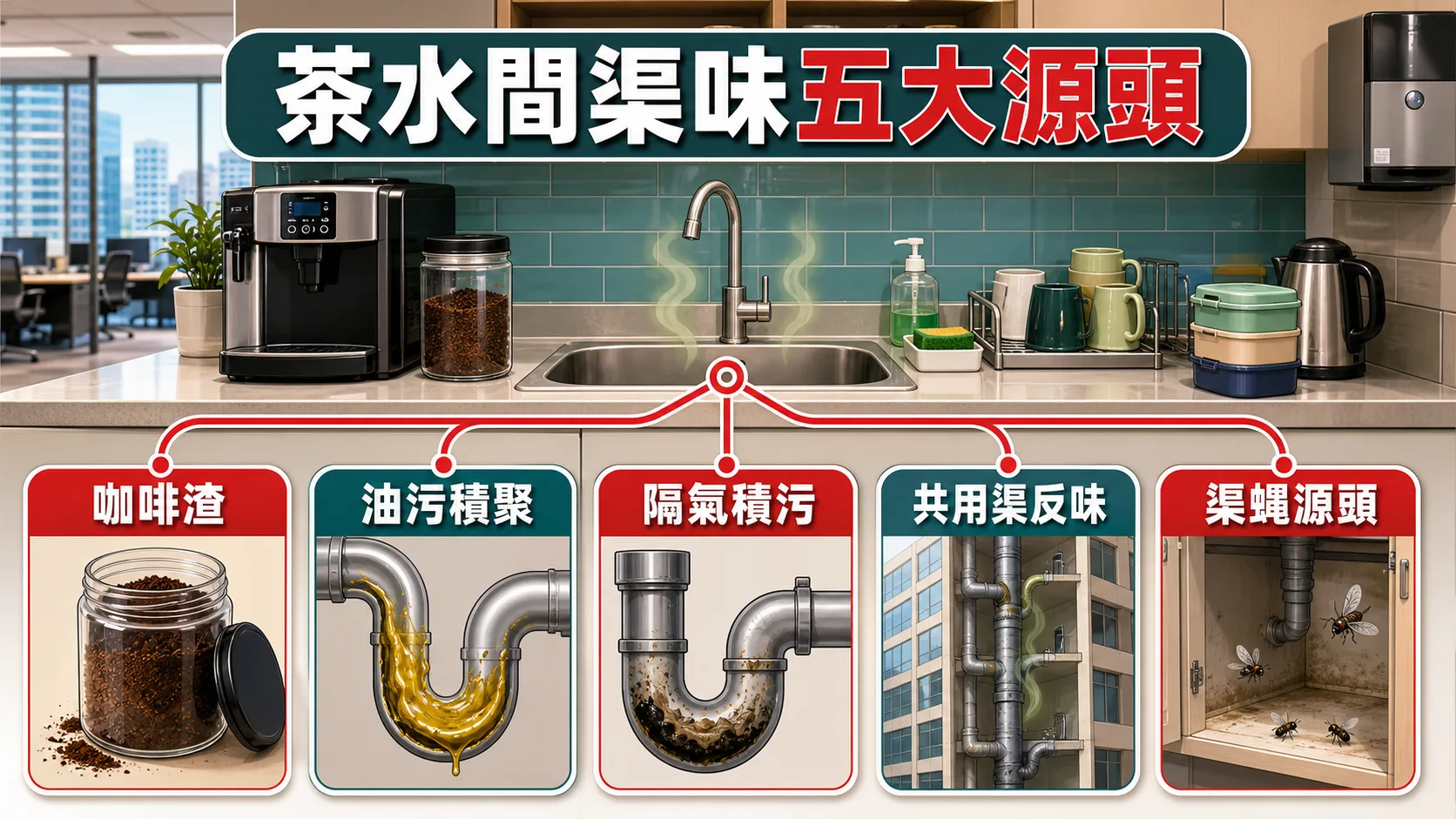
Coffee grounds and tea leaves may be small, but they are solids. They settle in traps, bottle traps and low horizontal sections, collecting rice, vegetables, paper and cup sediment. Daily surface rinsing may leave these deposits in place, allowing an odour-producing layer to develop.
An ordinary pantry is not necessarily a commercial kitchen, yet lunches, milk, soup, instant noodles, dressing and takeaway sauces introduce fat. Cooled grease coats pipes and collects grounds and food, narrowing the drain. Pantries operating as cafés, staff canteens or food-preparation areas should also consider commercial kitchen drainage maintenance and suitable grease-trap arrangements.
The trap beneath a sink normally retains water to exclude drain air. Long-standing deposits, loose fittings, little use, leaks or downstream suction can compromise it. If other seldom-used outlets smell, see water-seal maintenance.
One slow sink suggests checking that sink and its internal branch first. Smells in several companies, toilets, corridor outlets or neighbouring units suggest shared branches, manholes or building drainage. Notify management and record timing, floors and affected points rather than repeatedly working only inside your unit.
Dark, damp cupboards with food residues and organic deposits attract pests. Spraying without addressing outlets, leaks and trap deposits allows recurrence. See drain-fly source control and drainage-related pest control.
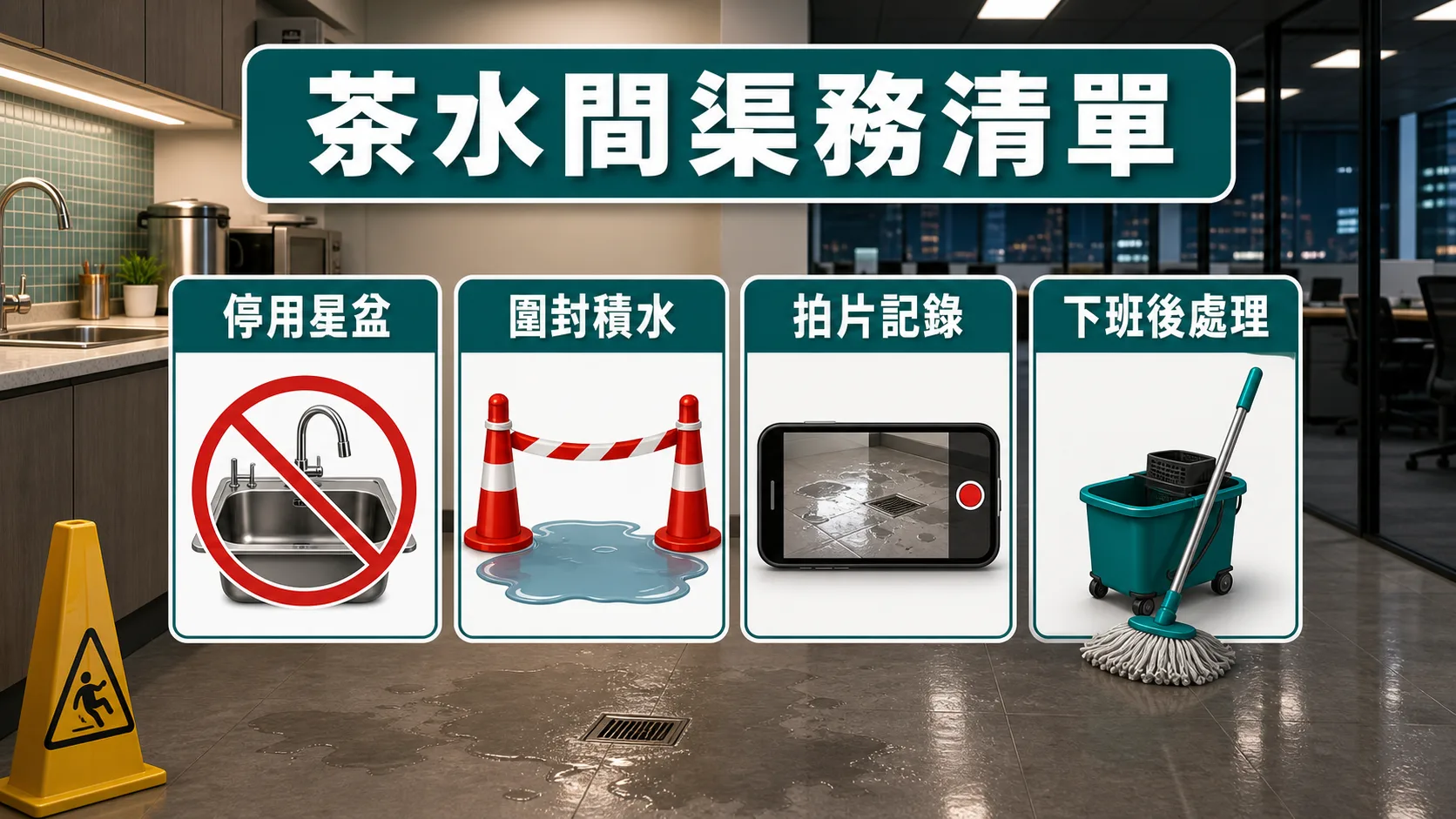
Do not keep testing with large amounts of water or add grounds, leaves, noodle soup or sauces. Put up a notice and direct staff to another suitable pantry or sink.
Place slip warnings and remove standing water. Open the cupboard and use a torch to look for drips, mustiness or insects at the trap, plastic pipes, wall connection and base. Staff should not dismantle traps, especially after chemical use or while water remains backed up.
Film drainage speed and note the strongest odour point, timing, gurgling, flies, recurrence after cleaning and problems in neighbouring units or toilets. This helps determine whether the sink or internal branch needs work or management must coordinate a shared drain.
Busy coworking spaces, business centres, reception areas and offices are unsuitable for disruptive pipe dismantling or strong-smelling work. Unless backflow is immediate, lunch breaks, evenings, weekends or holidays may reduce disruption to staff and visitors.
Ordinary unblocking: suits one slow pantry sink, a blocked trap, visible food debris or a nearby branch restriction. Disclose any chemical used; see drain-cleaner safety.
Odour investigation: suits persistent smells after cleaning, cupboard odours, unused outlets, flies and smells not linked clearly to water use.
Pipe cleaning or jetting: may suit recurrence, accumulated grounds and grease, brief improvement after ordinary unblocking, several slow outlets on one branch and heavily used pantries.
Desilting or manhole work: addresses grease sludge, sediment and high water levels in shared branches, manholes and communal industrial or office-building areas, with owner or management coordination.
CCTV: may help with recurrent blockages, unknown concealed routes, hard objects, renovation-related problems and records for the owner or management. See when CCTV is useful.
One affected sink can usually be investigated within the unit first. Several affected units, toilets, corridor outlets, shared pantries or manholes warrant notifying management. Communal drainage in commercial and industrial buildings normally needs management arrangements or authorisation.
Provide the floor, location, photographs and video, timing, backflow, odours or pests and the number of affected units. These details help determine responsibilities and inspection needs.
No. Cleaning can worsen or improve symptoms, but persistent smells may involve deposits, inadequate seals, grounds and grease, leaks, flies or shared drainage. Fragrance or bleach alone normally cannot resolve the source.
It is not recommended as the first response. Shared pantries present exposure risks, and strong chemicals may not address grounds, hard objects, downstream sludge or shared drains. If used already, close the sink and inform the technician.
Yes. They do not dissolve, settle in traps and horizontal pipes and combine with milk, grease, leaves and food. Many cups washed daily can produce substantial accumulation.
Many users, shared responsibility and heavy use allow small individual deposits to become a significant problem. Use clear notices, daily straining, symptom records and planned shared-pantry maintenance periods.
Provide the office address and floor, pantry location, photographs and video, drainage speed, odour timing, backflow, flies or cockroaches, multiple affected points, management contact, working times and chemical-use history.
For office, coworking or business-centre pantry odours, slow drains, grounds, flies or repeated backflow, WhatsApp PipeButler on 5340 0748 with photographs, video and suitable times. We can assess unblocking, odour investigation, pipe cleaning, desilting, pest control or CCTV, and agree the scope before starting.
List affected sinks, cupboard water marks and work times. If washrooms or other units back up too, coordinate locations and access with management before agreeing inspection scope.