
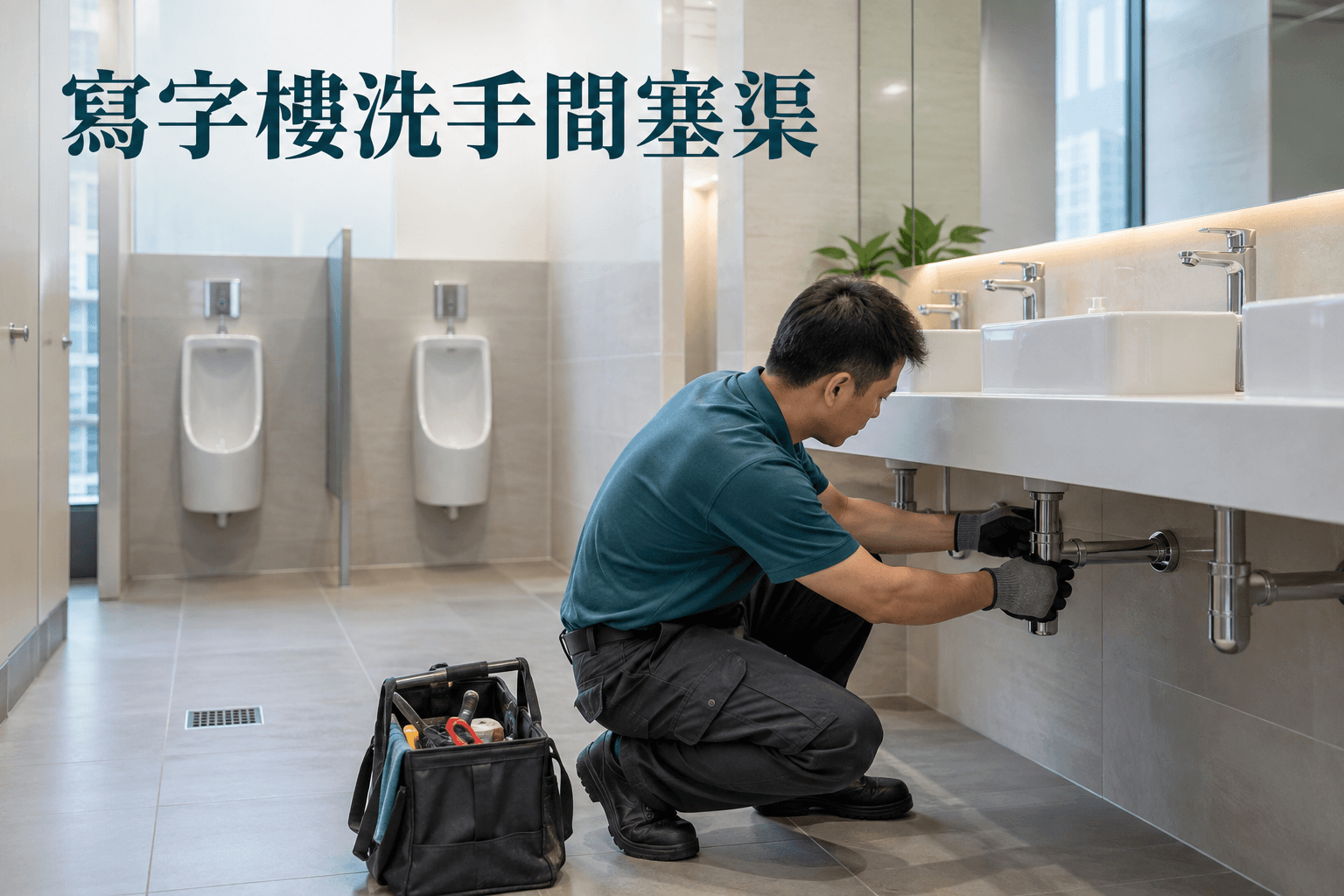
AI-generated scenario image, not a customer-site photograph.
Loading page…
For recurring toilet, urinal or floor-drain problems, stop affected use, record locations and timings, and coordinate pipe scope, access, quotation and completion checks with management.
AI-generated scenario image, not a customer-site photograph.
WhatsApp with the problem and district, and we will confirm available timing.
If an office washroom blocks repeatedly or toilets, urinals, basins and floor outlets back up together, stop using the affected fixtures and notify the office administrator or building management. Do not simply ask cleaners to flush repeatedly or pour in different drain products. If sewage spills, restrict use and avoid contact while the responsible person arranges suitable treatment.
Photograph the affected fixtures and record the time from a safe position. Do not open shared manholes, dismantle hidden pipes or lean into a chamber. If a drain product was used, retain its details and tell the attending provider. This information affects work arrangements; do not mix cleaning products.
A rising water level in one toilet provides different clues from several outlets draining slowly together. List each affected fixture: one urinal, a row of urinals, basins or floor outlets too. Unaffected fixtures also offer useful information, but do not introduce large amounts of water solely to test them.
For several affected points on one floor, discuss whether they share a branch. Symptoms across units or common areas call for coordination with management to check potentially shared routes. These are investigation directions, not proof of a blocked main, and do not establish that another tenant caused the problem.
An office administrator can prepare a short list: building, floor, washroom location, affected fixtures, onset, whether it is intermittent and similar symptoms in other units. Include dates and methods of earlier unblocking and how long it helped; this is more useful than saying it is blocked again.
Note whether symptoms coincide with lunch breaks, busy periods or rain, but a timing correlation is not a diagnosis. Supply existing drawings for reference or identify accessible points if none are available. Routes on drawings still require site verification, particularly after refurbishment or changes of use.
Slow drainage after surface cleaning may require checks of traps, accessible branches or downstream points. If unblocking helps only briefly, review the previous scope, deposits and other factors requiring investigation. Recurrence does not establish that jetting will resolve the issue.
Odour with normal flow should not automatically be treated as blockage. Trap water seals, connections, ventilation and other sources may need different checks. Buildings Department maintenance information covers drainpipes, ventilation pipes and sanitary fittings, encouraging consideration of the wider system rather than one outlet. The cause still needs site assessment.
Accessible outlet obstruction, deposits inside a pipe, unknown routes and suspected defects involve different procedures. After assessment, clarify observations, proposed work, inaccessible sections and unresolved questions. CCTV inspection, dismantling or access elsewhere requires agreed authorisation, charges and reinstatement.
Shared washrooms, ceilings and other units may not be immediately accessible. Management can help with keys, drawings and work routes; repair and payment arrangements between tenant and owner depend on the lease, building documents and authorisation. The outlet location alone cannot settle every responsibility.
To reduce disruption, request a lunch break, after-hours or weekend slot. Check registration, noise, lift and unloading rules with management before agreeing an actual time with the provider. A requested slot is neither building approval nor confirmed attendance.
Clarify assessment charges, unblocking or cleaning prices, inspection, dismantling and reinstatement. If your company needs a quotation name, receipt, images or a specified form, ask when enquiring and confirm what is available. Unknown pipes and additional work are not automatically included in the original price.
At completion, record drainage at testable points, methods and uninspected locations. One satisfactory test establishes only what was observed then; it does not prove all concealed pipes are sound or guarantee no recurrence. If other fixtures remain affected, identify unresolved issues and the next step rather than treating the whole washroom as fixed.
Retain incident and work records, then discuss cleaning or maintenance frequency using usage, deposits and pipe condition. Shared washrooms and lightly used pantries may need different schedules; structural or connection defects require repair assessment rather than regular unblocking as a substitute. Contract scope, documents and call-outs must be agreed separately.
Notify the office administrator and arrange checks according to the location and lease. Management access or approval depends on the actual unit, shared-washroom and pipe scope.
No. Fixtures and potentially shared routes need site verification. Record affected urinals, basins and floor outlets without introducing large amounts of water.
Review the earlier scope and pipe condition before discussing cleaning, inspection or other work. Jetting suitability depends on material, access and findings.
Yes. Send preferred times, fixtures and access conditions to confirm assessment charges and availability. Shared-area work or inspection needs a quotation for the actual scope.
No permanent no-blockage guarantee follows from maintenance alone. Use, pipe condition and shared routes can affect results; assess the agreed scope and completion records.
For drainage-system maintenance context, see Buildings Department drainage-repair information and the drainage and sanitary-fittings maintenance guidelines。