
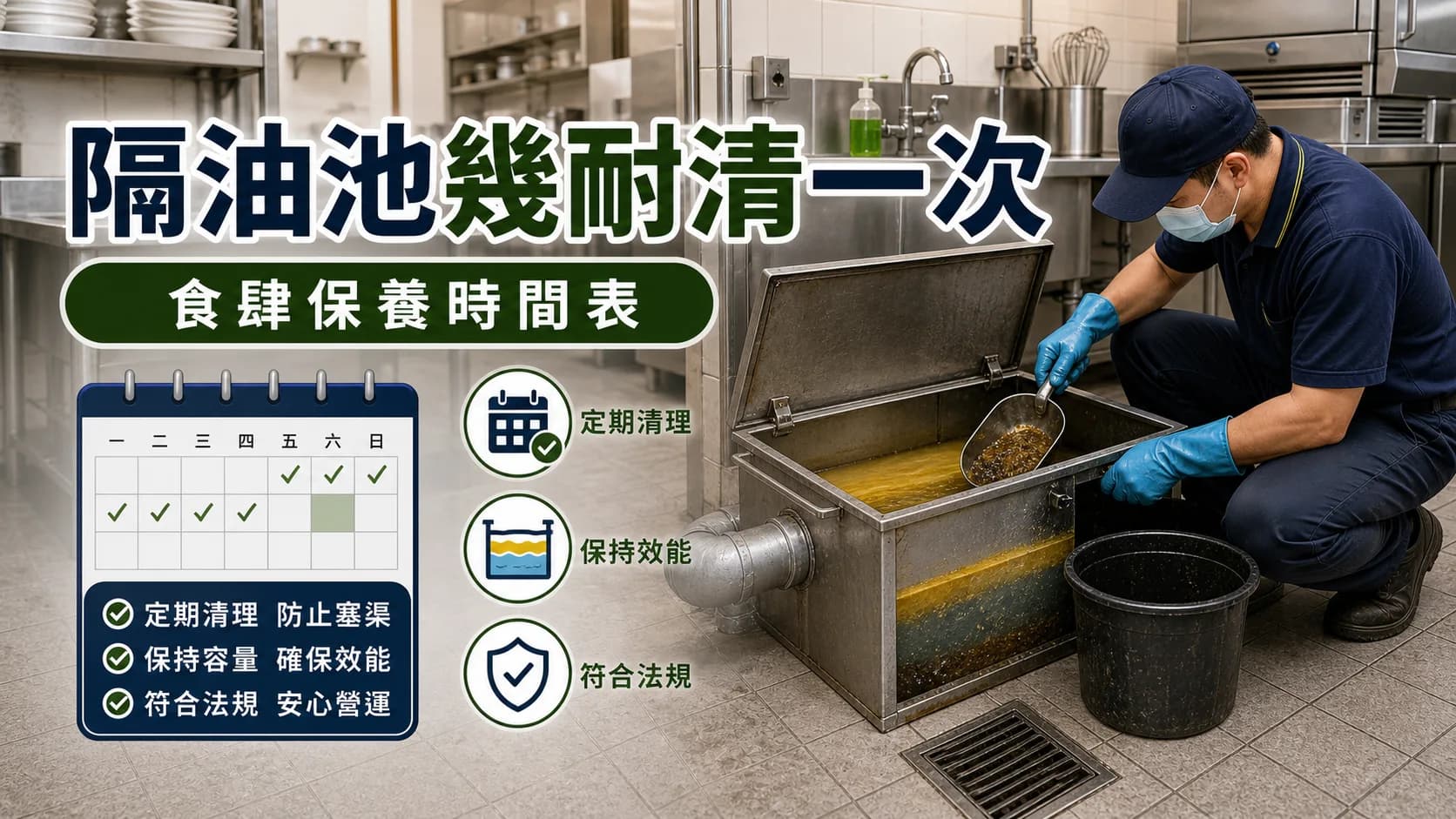
There is no cleaning interval suitable for every restaurant. A cha chaan teng, hotpot restaurant, fried-food outlet, bakery, central kitchen and small café produce different grease loads. Even the same trap needs review when a kitchen moves between busy service and quieter periods.
Start with a cautious planned schedule and adjust it using the quantity removed, photographs, odour and slow-flow observations. Rapid filling, persistent smells, slow floor drains or chamber grease may require desilting, pipe cleaning or unblocking as well. WhatsApp PipeButler on 5340 0748 with trap and outlet photographs for initial assessment.
This guide explains scheduling, records and signs that grease has already reached downstream drainage.
Five factors governing the interval
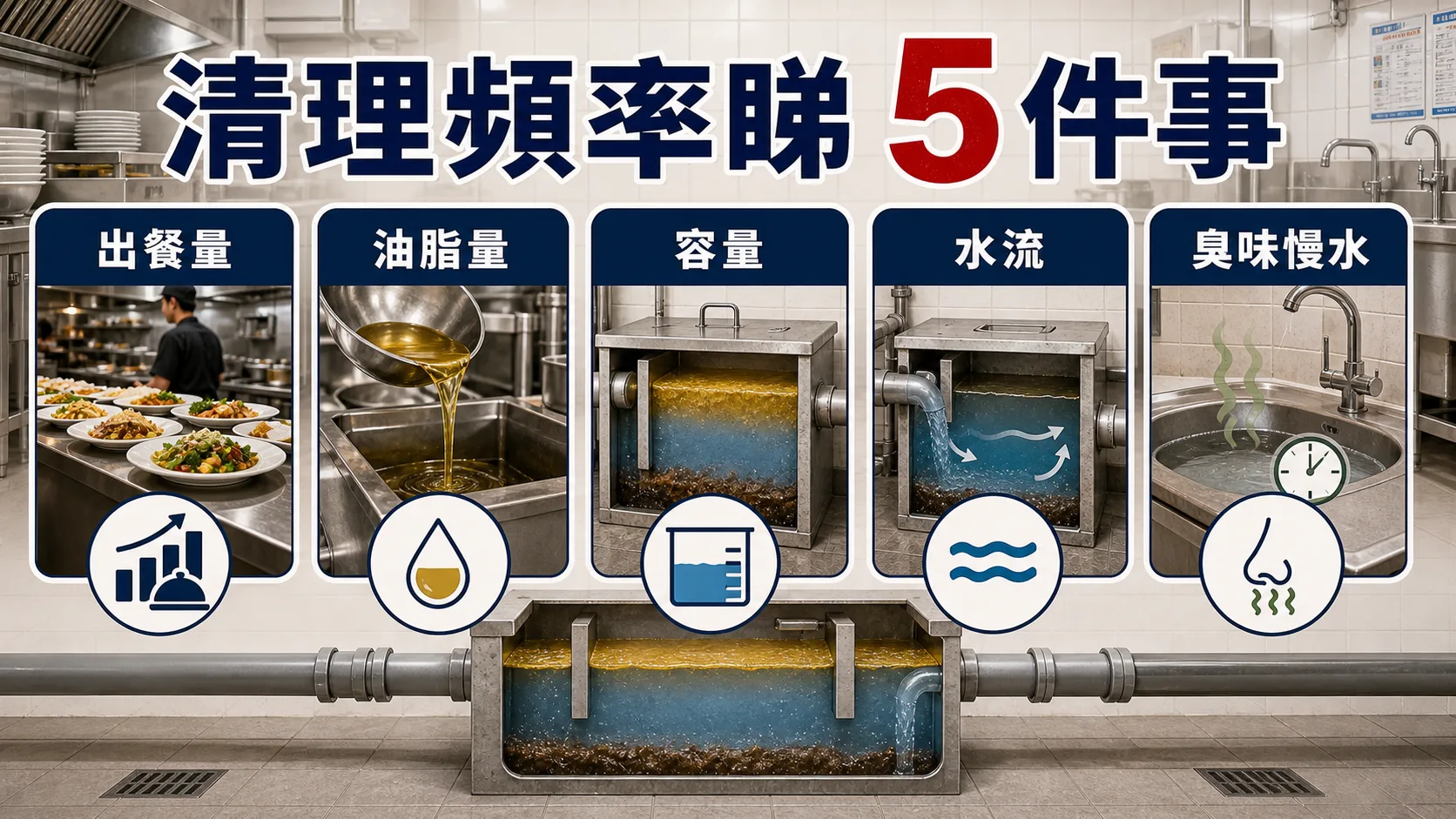
1. Meal output
A fully occupied restaurant and a low-volume takeaway operation can send very different amounts of wastewater through the same kitchen. More wok washing, dishwashing, floor cleaning and food preparation use available trap capacity faster.
2. Grease loading
Frying, roast meats, hotpot, stocks, sauces, meat preparation and intensive wok cooking generally produce more grease than coffee or light, low-oil food. A high-grease operation should not copy a low-grease outlet's schedule.
3. Trap capacity
Smaller traps lose effective space more quickly as floating grease and settled solids accumulate. Reduced space leaves less time for separation, allowing grease downstream. Read how grease traps work.
4. Flow and working practices
Large simultaneous discharges of hot water, wash-down water, stock or dishwashing water disturb retained grease and solids. Even an apparently adequate trap can be overwhelmed by fast flow. Match maintenance to actual work patterns, not dimensions alone.
5. Odour and slow drainage
Trap smells, slow sinks, gurgling floor drains and grease in chambers suggest an inadequate schedule or existing downstream deposits. Do not wait for overflow.
Record every cleaning
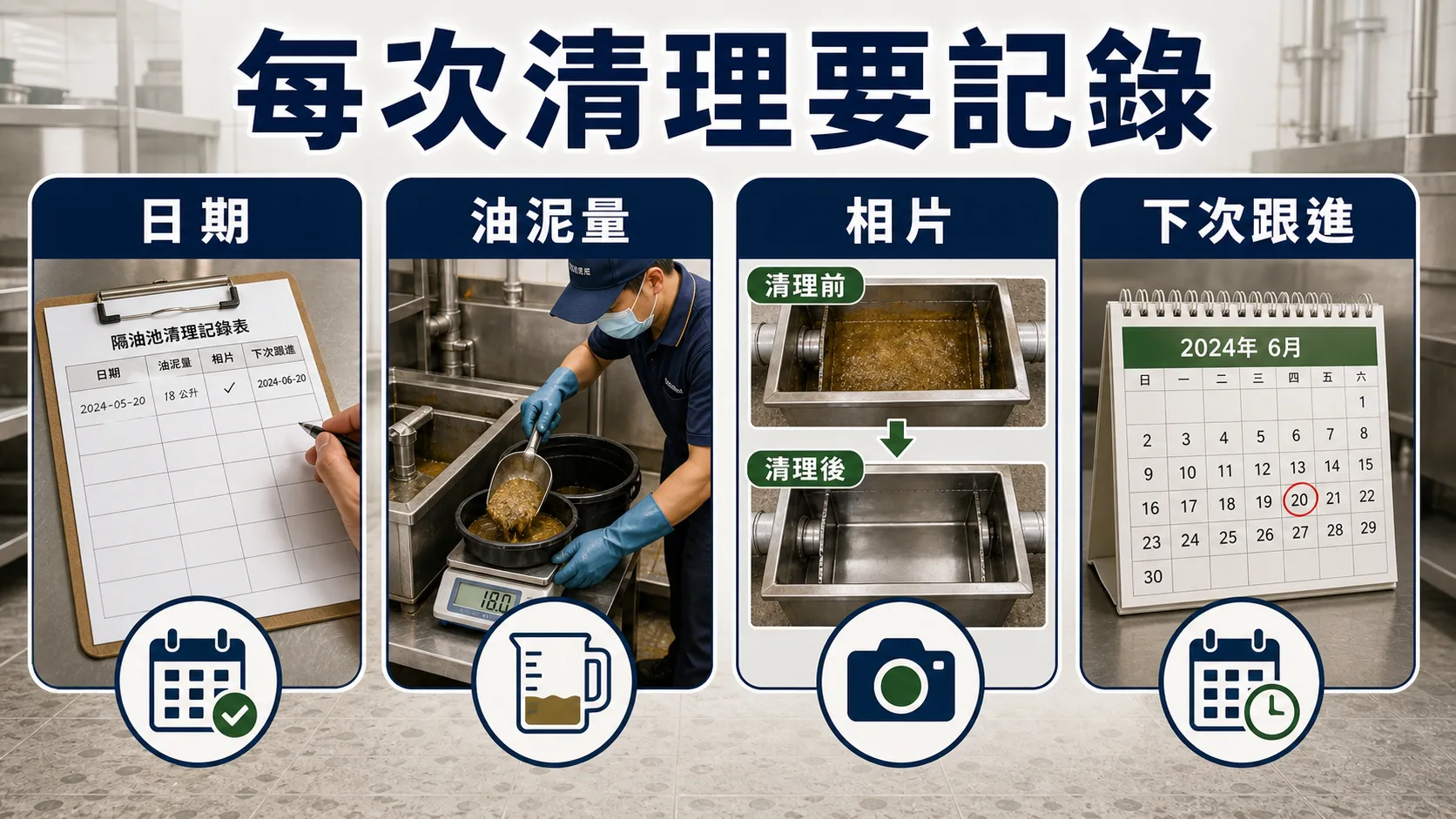
Date
Record the date and operating conditions, such as peak season, holidays, recent renovation, a menu change or added evening service. A dated history makes interval review possible.
Amount removed
Estimate floating grease, sludge and settled solids. Heavy deposits every time may indicate overly long intervals or excessive grease discharge. A sudden increase may follow operational changes.
Photographs
Keep before-and-after images of the trap, outlet and nearby drains, plus safely obtained chamber observations where relevant. Images help establish whether grease is passing downstream.
Next follow-up
Set a review date after each service. Symptoms before that date justify a shorter interval. Consider extending only after repeated observations show little accumulation and satisfactory performance.
What if the trap is clean but smells or flow problems remain?
The issue may extend to downstream pipes, chambers, a building main or the drainage arrangement:
- Pipe-wall grease: cleaning the trap does not remove old deposits inside pipes.
- Thick chamber grease: desilting or appropriate cleaning may be needed.
- Capacity or connection problems: some outlets may bypass the trap, or flow may be too fast.
- Traps and ventilation: odour may involve water seals and pressure rather than only grease.
- Alterations: changed connections, falls, bends or outlet positions can encourage accumulation.
Can degreaser replace physical cleaning?
No. Degreaser, detergent and hot water can move or disperse grease temporarily without removing it from the system. It may settle farther along a pipe, chamber or main after cooling. When flow is slow or smells persist, assess capacity and downstream conditions rather than repeatedly adding chemicals.
Reduce grease entering drains each day
- Collect frying oil and stock fat rather than pouring them into sinks or floor drains.
- Scrape grease and food from dishes before washing.
- Provide clearly identified collection containers and strainers beside high-grease workstations.
- Do not use hot water to push oil away; it can cool downstream.
- Include the trap in closing checks and planned servicing.
- For several slow outlets, follow the commercial kitchen maintenance checklist along the drainage route.
PipeButler can assess trap maintenance, desilting, pipe cleaning or CCTV according to the food operation, grease loading and drainage conditions. WhatsApp 5340 0748 with photographs and operating details or contact us about the scope.
Frequently asked questions
How often should the trap be cleaned?
Use meal output, grease load, capacity, flow and symptoms. High-grease operations generally require closer attention, but low-grease premises still need maintenance. Start with a planned schedule and adjust from actual deposits and performance.
What should the cleaning record contain?
Date, amount removed, before-and-after photographs, odour or slow-flow observations, next review and the responsible person or contractor. Include downstream or chamber issues where relevant.
What if blockage remains after cleaning?
Inspect downstream horizontal pipes, chambers and mains for grease. Cleaning, desilting, jetting or CCTV may be needed; shortening trap-cleaning intervals alone will not remove existing deposits.
Does odour always mean cleaning is too infrequent?
No. Excess grease and food can smell, but water seals, traps, ventilation, chambers and connections may also be responsible. Rapid recurrence calls for assessment of the whole route.
Can staff clean the trap themselves?
Accessible surface maintenance of small devices may be carried out under suitable site procedures. Larger commercial traps, outdoor chambers and substantial sludge require appropriate equipment and handling arrangements. Never return removed material to a drain.