
Loading page…
Loading page…
Separate cooking oil, grease-trap sludge and food solids, and keep records so cleaning does not transfer the blockage downstream.
WhatsApp with the problem and district, and we will confirm available timing.
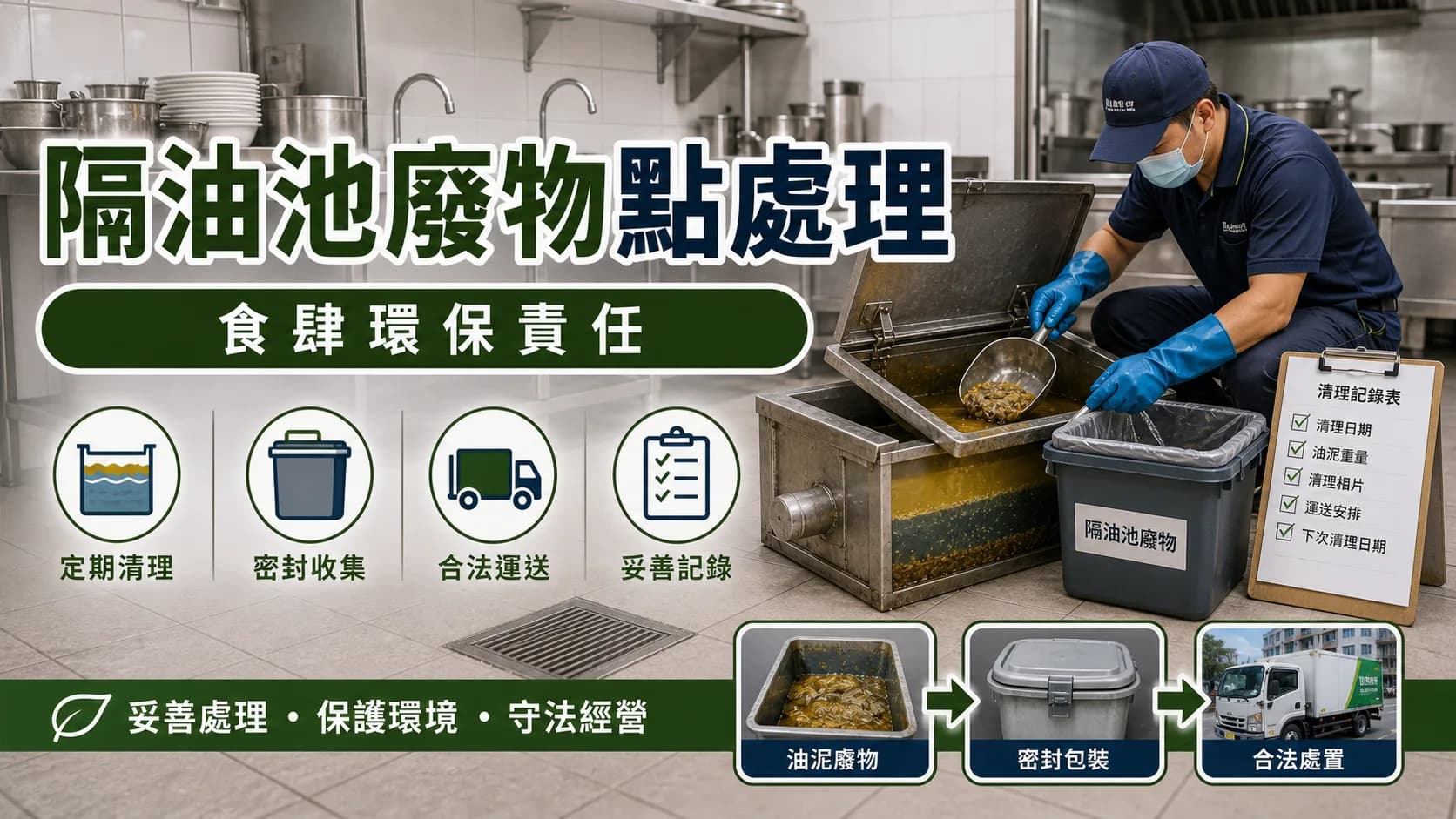
One easily overlooked part of grease-trap cleaning is where the removed material goes. Mixing grease, sludge and food waste, returning it to a drain or keeping no records can simply move the problem into downstream pipes, chambers and main drains.
Separate, contain, document and appropriately handle trap waste. Never return it to sinks, floor drains, chambers or public drains. Slow flow, odour or chamber grease remaining after trap cleaning may need desilting, pipe cleaning or unblocking, rather than another trap-only clean.
This practical checklist for restaurants, cafés, central kitchens and food factories explains waste categories, useful records and downstream warning signs. It is not a determination of a site's legal disposal obligations; confirm the applicable arrangements for the premises and waste.
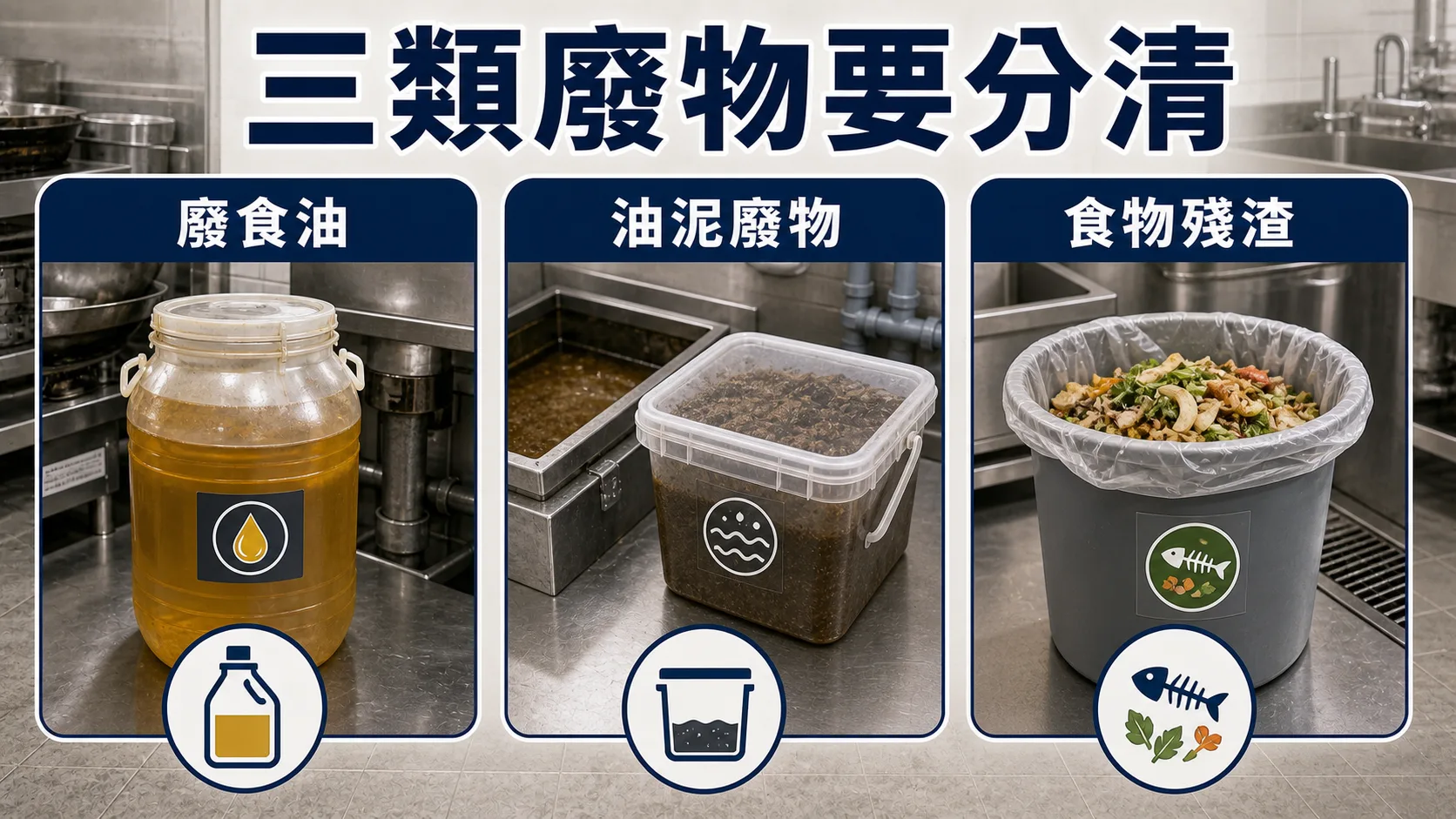
This includes oil collected from frying, cooking, stock and kitchen surfaces. Separate it at source rather than pouring it into a sink, floor drain or trap. Warm oil may flow initially but later solidify in cooler pipes.
Removed trap material includes floating grease, scum, sludge, sediment and water. It is generally more contaminated than separately collected cooking oil and may contain odorous food residues. Collect it in suitable closed containers, preventing leaks and discharge back into drains or rear lanes.
Rice, vegetables, bone fragments, flour paste, tea leaves and other solids reduce effective trap capacity. Remove them before dishwashing or rinsing rather than relying on the trap to consume them. Source control reduces loading on the trap and downstream drainage.
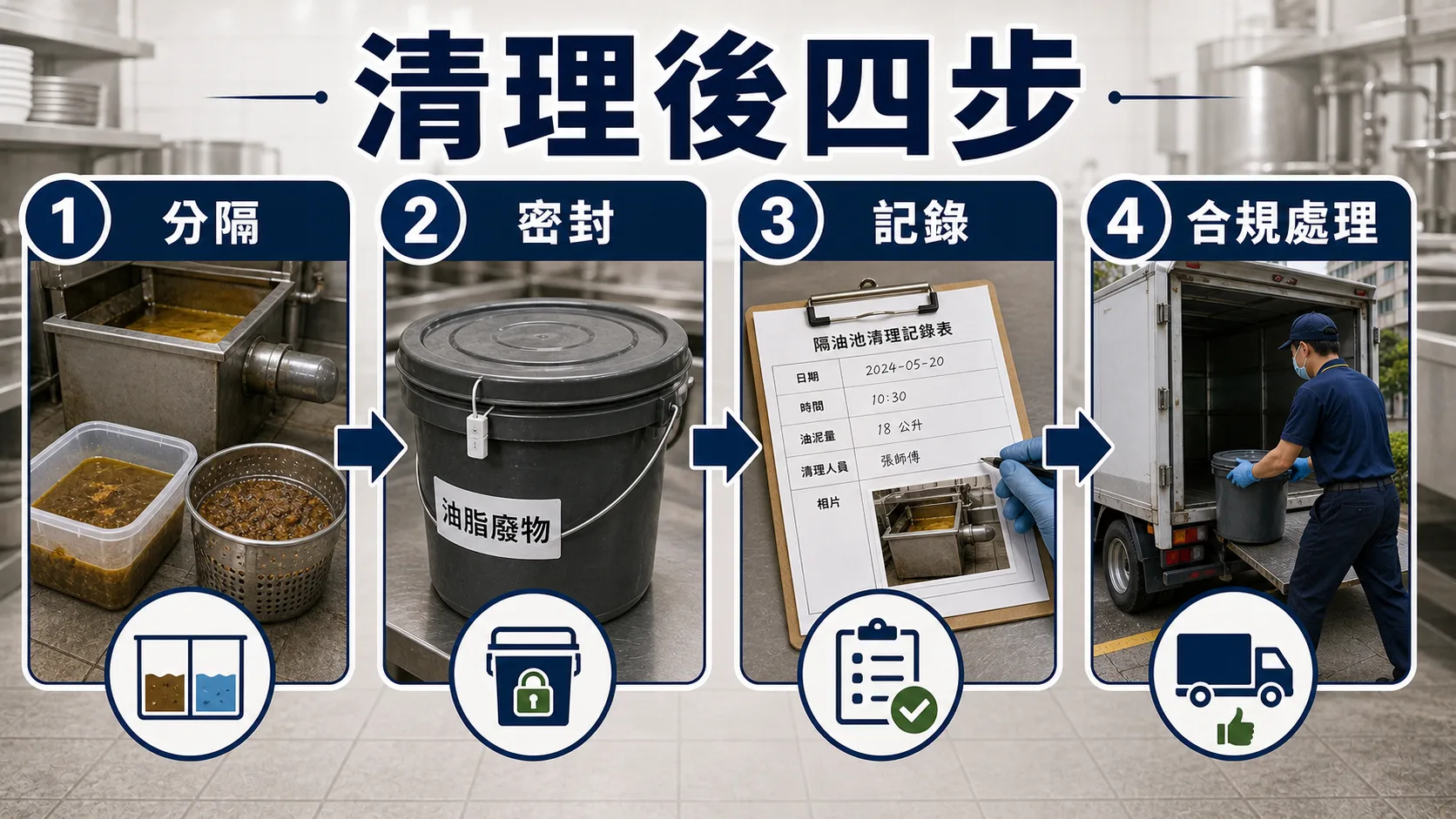
Do not mix used oil, trap sludge, food solids and general rubbish indiscriminately. Their origins, water content and handling requirements differ. Mixing can worsen odour and obscure what the trap was retaining.
Use suitable containers for temporary storage of sludge and oily water. Prevent drips, overflow and entry into floor drains or lanes. Secure containment also reduces smells, insects and complaints.
Record the date, approximate amount, before-and-after photographs, responsible person or contractor, slow-flow or odour symptoms and follow-up date. This helps adjust cleaning frequency and supports discussions with owners, management and contractors.
Follow applicable Environmental Protection Department guidance and site requirements. Collected grease and sludge must not be poured back into wastewater pipes, chambers, street drains or public drainage. Ask the contractor to explain collection arrangements, quantities removed and available records or photographs.
The trap intercepts grease and solids before they reach downstream drainage. Returning removed material to a drain sends it farther into horizontal pipes, channels, chambers, building mains or the wider sewer system.
Cooled grease binds paper, food, sand and other debris into thick deposits. These can require pipe cleaning, chamber desilting, jetting or CCTV localisation rather than a simple plunger.
Hot water, degreasers and strong cleaners may disperse grease temporarily without removing it from the drainage system. Transferring it downstream can contribute to recurrent slow flow, chamber odours and main-drain restrictions.
Disclose any drain cleaner or degreaser already used, including the product, approximate quantity and timing. See drain-cleaner safety.
PipeButler can assess drainage problems remaining after trap cleaning, including desilting, pipe cleaning, clearance and odour investigation. WhatsApp 5340 0748 with trap, chamber and outlet photographs and cleaning records, or contact us to discuss whether the issue concerns handling, frequency or downstream deposits.
No. It transfers grease, blockage risk and odour downstream and creates drainage and environmental problems.
Used cooking oil is collected from cooking or frying. Trap sludge is a mixture of floating grease, settled solids, wastewater and food residue. Neither should enter a drain; their handling and records may differ.
Dates, photographs, amounts removed, smell or slow-flow observations, the responsible person or contractor and the next review date. Include safely obtained chamber-level and deposit information where relevant.
Ask what was removed, approximately how much, how it was collected and handled, whether photographs are available, whether downstream grease was observed, and when to review cleaning or arrange additional drainage work.
Poor handling allows grease back into downstream pipes, producing recurrent blockage and chamber or main-drain problems. Appropriate waste handling is a basic part of prevention.