

Hong Kong's rainy season can expose problems at balcony, utility-platform, rooftop and washing-machine outlets. Leaves, grit and lint that seem minor in dry weather can restrict the sudden flow during rainstorm warnings or typhoon rainbands, causing ponding, backflow and indoor water ingress.
Where access and weather are safe, remove visible leaves and rubbish from the grille. Do not force sediment into the pipe. Test gradually with clear water and record evidence to distinguish one balcony from estate rainwater pipes, shared drainage or manholes. Assess clearance, desilting or management coordination.
This guide concerns balconies and utility platforms rather than bathroom floor drains. See the rainy-season checklist and storm sewage-backflow guidance where relevant.
Four common causes
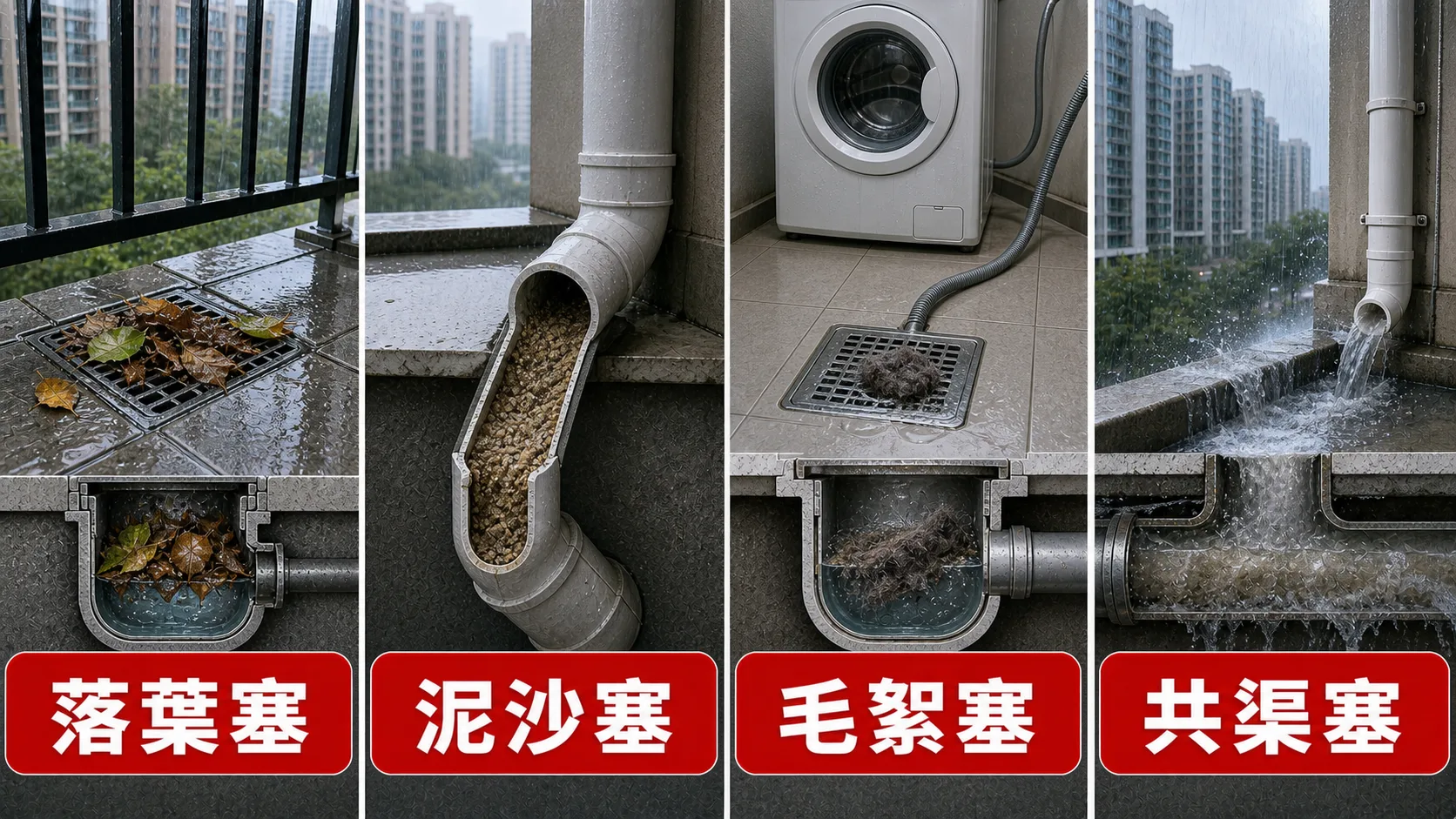
1. Leaves around pots, grilles and corners
Pots, drying racks and stored items collect leaves, soil, bags, tissue and dust around grilles. Rain presses debris against the inlet. Wear gloves to collect it rather than rinsing fragments and soil inside.
2. Soil, grit and renovation residues
Potting soil, stones, dust and building debris settle at pipe bottoms and bends. Some water may pass slowly until heavy rain exceeds the remaining capacity. Recurrence suggests branch or downstream deposits requiring cleaning or desilting, not just grille clearance.
3. Lint around laundry areas
Washing machines near balconies or on utility platforms discharge lint, hair, fabric fibres, detergent residue and small fragments. These can collect on grilles, baskets and bends. If laundry discharge causes bubbling, gurgling or backflow, see washing-machine backflow.
4. Shared drainage
Simultaneous problems at neighbours' balconies, other floors, communal podiums, corridor manholes or estate boundaries may involve shared rainwater pipes, manholes or public drains. Notify management and retain images and rainfall timing. See high or overflowing manholes.
Four steps during and after rain
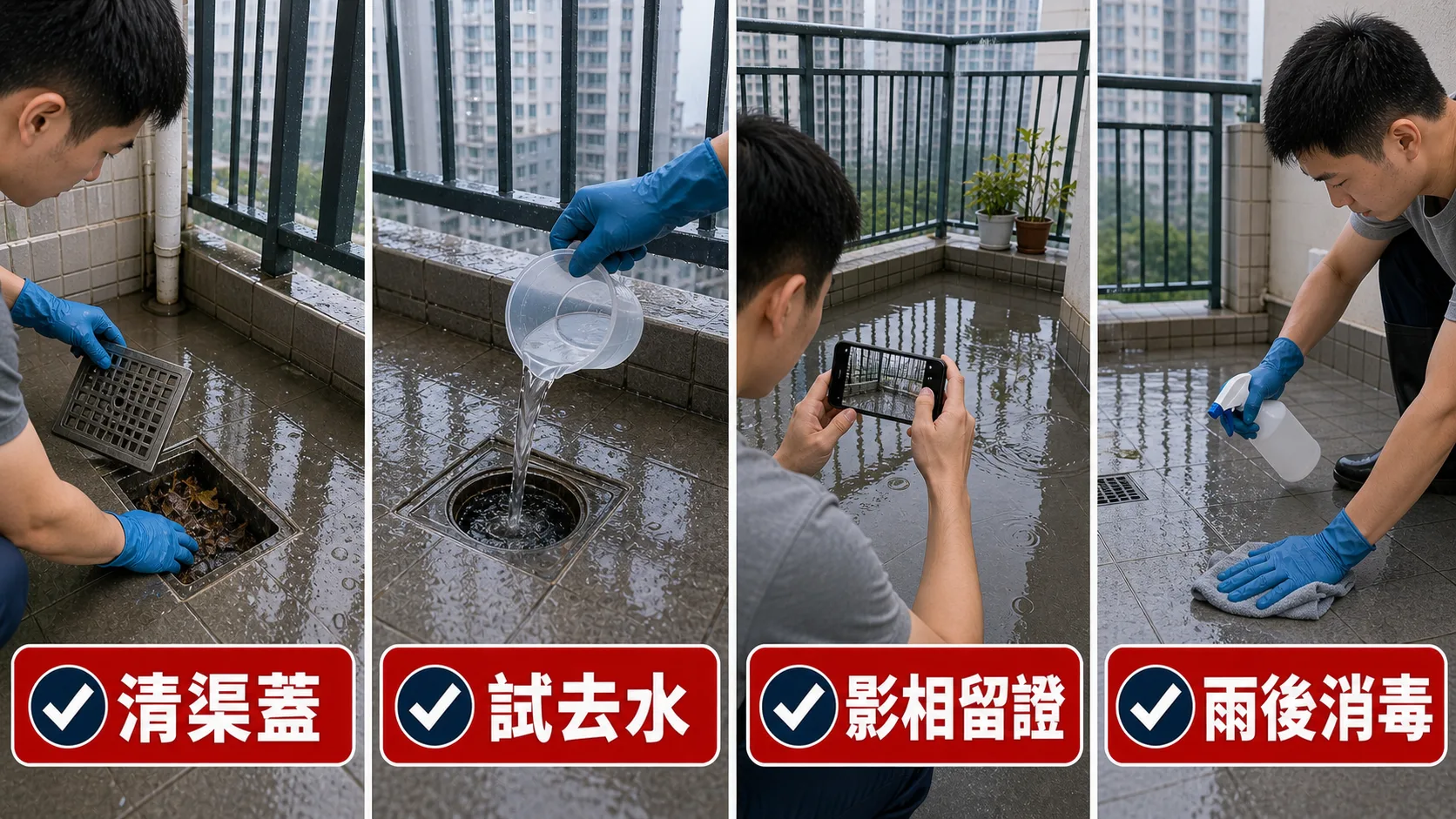
1. Clear accessible surface waste
Remove visible leaves, bags, soil and debris only when safe. Move carefully around standing water. Do not use a rod to push grit inside and turn a surface restriction into a deeper one.
2. Test once rain stops or levels fall
Use a small amount of clear water and observe speed, gurgling, backflow and any relationship to laundry discharge. Very slow drainage or delayed sudden emptying may indicate a partial branch restriction or downstream resistance.
3. Record evidence
Photograph levels, grilles, corners, wall bases, thresholds, laundry discharge points, communal areas and weather conditions. Video helps management, owners, renovation contractors and technicians assess the issue and whether CCTV may be useful.
4. Clean after rain according to contamination
Clean rainwater mainly requires drying and ventilation. Odours, black sludge, sewage traces or contaminated indoor floors need more than natural drying. After clearance or desilting, assess cleaning and disinfection according to exposure.
Management or a drainage technician?
- Leaves on one grille: remove surface debris, test safely and maintain regularly.
- Still slow after clearance: lint, sediment or a branch restriction may need unblocking or cleaning.
- Several balconies, podiums or manholes: notify management about shared rainwater pipes or drainage.
- Smelly water or black sludge: it may not be clean rainwater; assess source investigation and disinfection.
- Recurring storm backflow: inspect capacity, deposits and downstream manholes rather than surface-cleaning each time.
Standing water, insects and odours
Persistent ponding increases slip, leakage, mosquito, drain-fly and odour risks. Empty pot saucers and clear grille deposits and corner waste after rain. Insects near outlets warrant checking seals, deposits and gaps; see drain-fly sources, cockroaches near drains and pest control.
Seldom-used outlets may also develop dry seals and smells; see water-seal maintenance. Rain-related backflow and ponding should not be dismissed as a dry-seal issue.
Avoid chemicals and blind high-pressure flushing
Balcony restrictions commonly involve leaves, soil, lint and objects rather than grease. Strong chemicals may not help and can remain in standing water, creating skin, eye and dismantling risks. Do not blindly jet old, cracked or shared pipes.
Preserve evidence, clear accessible surfaces and test safely before choosing clearance, desilting, cleaning or management coordination. See chemical safety and arrange an assessment.
For balcony, utility-platform, rooftop or laundry-area slowness, pooling, backflow or smells in rain, WhatsApp PipeButler on 5340 0748 with grille photographs, video, rainfall timing, laundry-discharge details and other affected points. We can assess appropriate work or the need for management to check shared rainwater drainage first.
Frequently asked questions
Can I clear a balcony drain while it rains?
Only remove accessible surface waste where conditions are safe; do not push soil inside. Stop if levels rise, backflow continues or drainage remains slow, record from a safe position and arrange work when safe.
Is management responsible for balcony ponding?
It depends on location and extent. Soil and leaves on one private grille usually start with occupier cleaning; several units, communal podiums, manholes or rainwater pipes warrant management investigation.
Can laundry discharge affect the balcony drain?
Yes. Lint, hair and detergent deposits can accumulate nearby. Bubbling or backflow during each laundry cycle warrants checking the washing-machine discharge route too.
Should I use drain cleaner?
Not as the first response. Leaves, grit and objects may not respond, and residue in standing water complicates subsequent work.
What about smells and small flies after rain?
Remove standing water, deposits and pot-saucer water and ventilate. Persistent odours, sludge, flies or cockroaches may require combined seal checks, source investigation, pipe cleaning and pest control.