
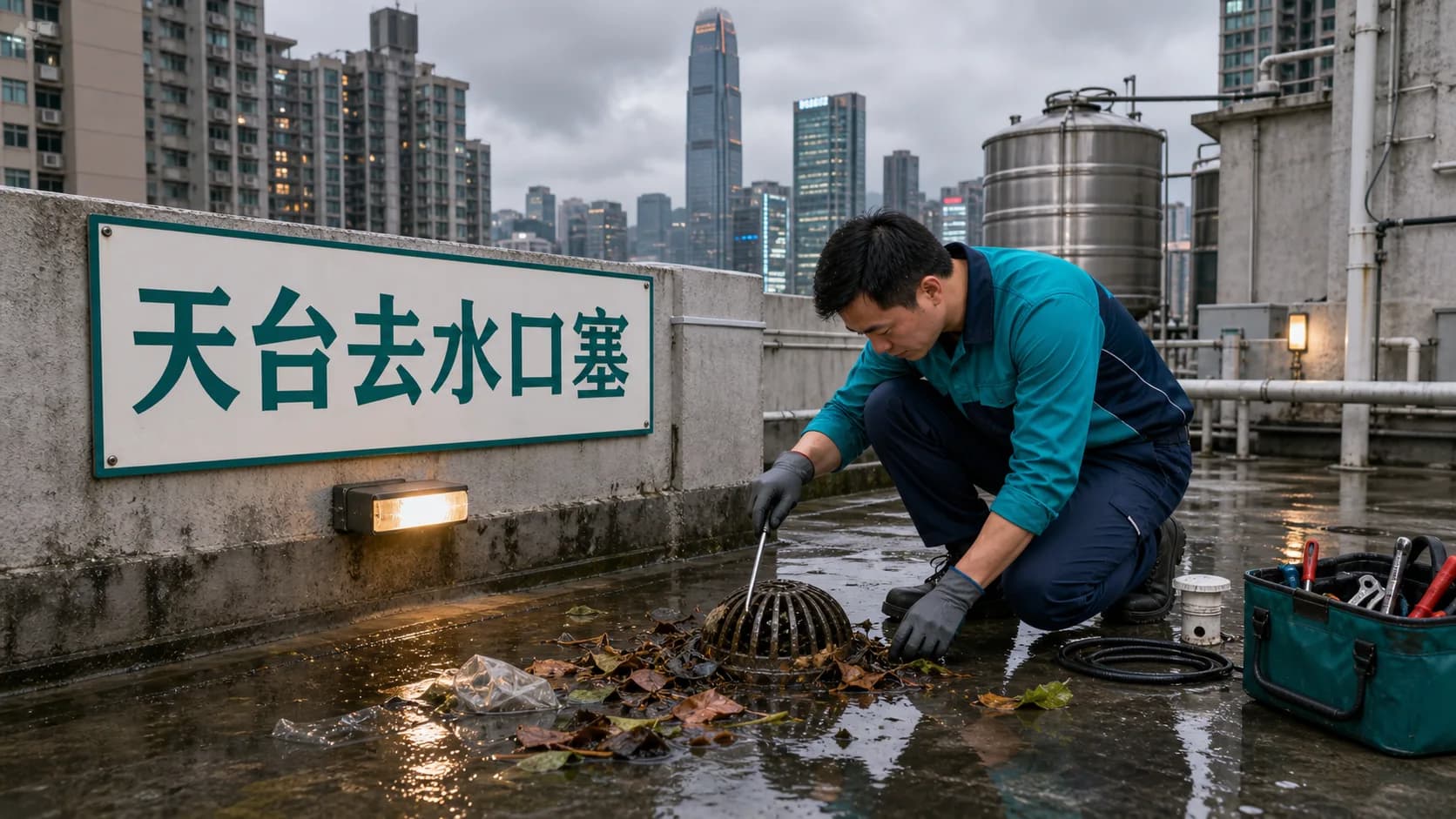
A small puddle around a rooftop outlet can become podium flooding, stairwell water ingress, ceiling leaks and mould during heavy rain or typhoons. Electrical rooms, lift machinery and top-floor homes may be affected. Assessment must include leaves, sediment, rainwater pipes and downstream manholes, not just the visible grille.
Only when roof access and weather are safe, remove surface leaves, bags and rubbish. Do not push sediment into the drain. Test clear-water flow gradually and record depth, drainage time and extent. Several high rooftop outlets, podiums or manholes warrant management involvement and assessment of clearance, desilting or pipe cleaning.
This guide concerns roofs, podiums and rooftop rainwater outlets. For private balconies or utility platforms see balcony drainage; for broader prevention see the rainy-season checklist.
Four common causes
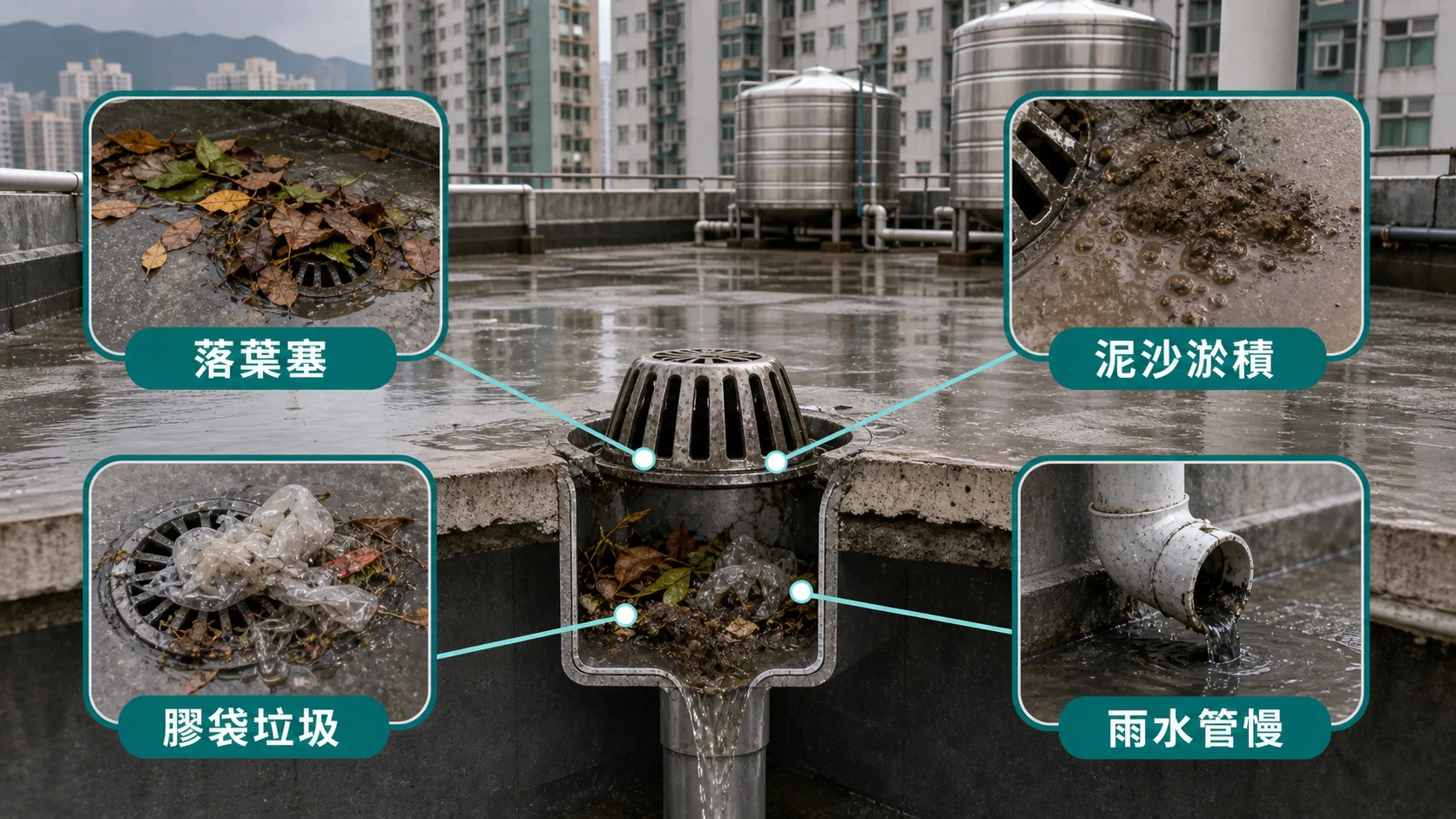
1. Leaves cover the inlet
Planters, nearby trees, windy corners and material blown from surrounding buildings allow leaves and twigs to accumulate. Light rain may pass slowly, but a covered inlet can cause rapid ponding during a storm.
2. Sediment remains beneath a clear surface
Dust, potting soil, construction grit, cigarette ends and fragments settle in outlets and pipe bottoms. If an apparently clear outlet drains slowly or water rises again after minutes, internal deposits or downstream manholes need checking.
3. Plastic and rubbish catch on grilles and bends
Bags, film, polystyrene, cups, tissues and debris collect in roof corners. A partial obstruction can trap more leaves and grit until it thickens.
4. Rainwater pipes are restricted downstream
Several rooftop outlets, podiums, corridor drains or lower manholes with high levels may indicate shared rainwater pipes, downstream chambers or public-drainage pressure. One outlet clearance may only provide temporary improvement.
Four checks before heavy rain

1. Clear grille surfaces
Wear gloves to collect leaves, bags, cigarette ends, soil clumps and pot fragments around grilles, corners and flow paths. Remove waste rather than sweep it inside. Photograph rusty, distorted, loose or obstructed covers and arrange repair or replacement.
2. Test gradually
Use a little clear water at a time. Observe entry, bubbling, gurgling and whether the level rises again after several minutes. Persistent slowness suggests more than leaves on the surface.
3. Inspect ponding locations
Check low points, thresholds, wall bases, pipe penetrations, planters, plant-room entrances and waterproofing edges. Repeated ponding at one spot may relate to fall, outlet position, pipe capacity or downstream resistance.
4. Notify management
For communal roofs or several affected podiums, corridors or manholes, contact management or the owners' corporation. Send images, rainfall timing, ponding locations and drainage time to support follow-up.
Is removing surface leaves enough?
Not always. Sediment inside the outlet, deposits at pipe bottoms, high manholes or insufficient fall can still restrict drainage. Long-term accumulation is particularly relevant in older buildings, village houses, industrial buildings, mall podiums and roofs with planters.
Rapid recurrence after grille cleaning warrants understanding desilting versus unblocking. Desilting removes accumulated material; unblocking clears a restriction; pipe cleaning addresses wall deposits and longer sections.
When to assess desilting, jetting or CCTV
- Thick soil and leaves inside an outlet: remove them rather than force them down the rainwater pipe.
- Several slow roof outlets: inspect the connected shared route and downstream manholes.
- Early recurrence: consider jetting or cleaning for deeper deposits.
- Suspected collapse, cracks, incorrect connections or renovation debris: assess CCTV.
- Full manholes or communal flooding: inform management, and report public-road or public-drain issues through 1823 where appropriate.
Leaks, odours and hygiene after ponding
Prolonged water can enter through thresholds, wall bases, penetrations, weak waterproofing and cracks. New ceiling marks, bubbling walls, mustiness or peeling paint in a top-floor home should be recorded alongside rainfall timing and rooftop ponding to investigate a connection.
Black sludge, smells, pests or backflow traces should not simply be left to dry after clearance. Assess odour investigation and cleaning and disinfection according to contamination. Lower-floor backflow, full manholes and sewage traces also warrant the guidance on storm backflow and manhole overflow.
Should rooftop rainwater drains receive chemical cleaner?
Generally no. Leaves, grit, plastic, stones and hard objects may not respond, while residue in standing water creates skin, eye and later-work hazards. Tell the technician the product, amount and time if already used. See chemical safety.
Who coordinates the work?
Private roofs or village houses: owners or occupiers generally arrange cleaning and maintenance, with further coordination for public drains, neighbouring drainage or structural matters.
Communal roofs, podiums or light wells: contact management, the owners' corporation or owner representatives. Keep photographs, video, timing, rainfall and affected-area records.
Several units, lower floors, rear lanes or street drains: shared pipes, manholes or public systems may be involved. Notify management rather than treating just one visible grille, and contact 1823 or the relevant department when appropriate.
For blocked rooftop outlets, ponding, slow rainwater pipes or leak risks after rain, WhatsApp PipeButler on 5340 0748 with outlet photographs, video, rainfall timing, other affected points and management requirements. We can assess suitable work or the need for management-led shared-rainwater-pipe investigation.
Frequently asked questions
Can I clear an outlet myself?
In safe conditions, collect surface leaves, bags and rubbish and test gradually. Never push sediment inside. Persistent slowness, multiple pools or high manholes need management or technical follow-up.
Can rooftop ponding cause leaks?
Yes. Prolonged water can find thresholds, wall bases, penetrations, weak waterproofing or cracks. Record roof ponding and indoor marks together.
What does recurrence mean?
It may reflect incomplete surface clearance, internal sediment or litter, or downstream manhole and shared-pipe resistance. Assess desilting, cleaning or CCTV.
Should I go onto the roof during a black rainstorm?
No. Wind, lightning, slippery surfaces and poor visibility increase risk. Inspect beforehand; during severe weather manage indoor ingress safely and document what you can, then arrange roof work when conditions are safe.
What determines the work required?
Access, building type, communal ownership and the need for desilting, cleaning, jetting or CCTV determine scope. Send photographs and video through the contact page.