
Loading page…
Loading page…
Identify whether water comes from the appliance, hose connection or drain. Stop the machine safely and investigate recurring overflow before further use.
WhatsApp with the problem and district, and we will confirm available timing.
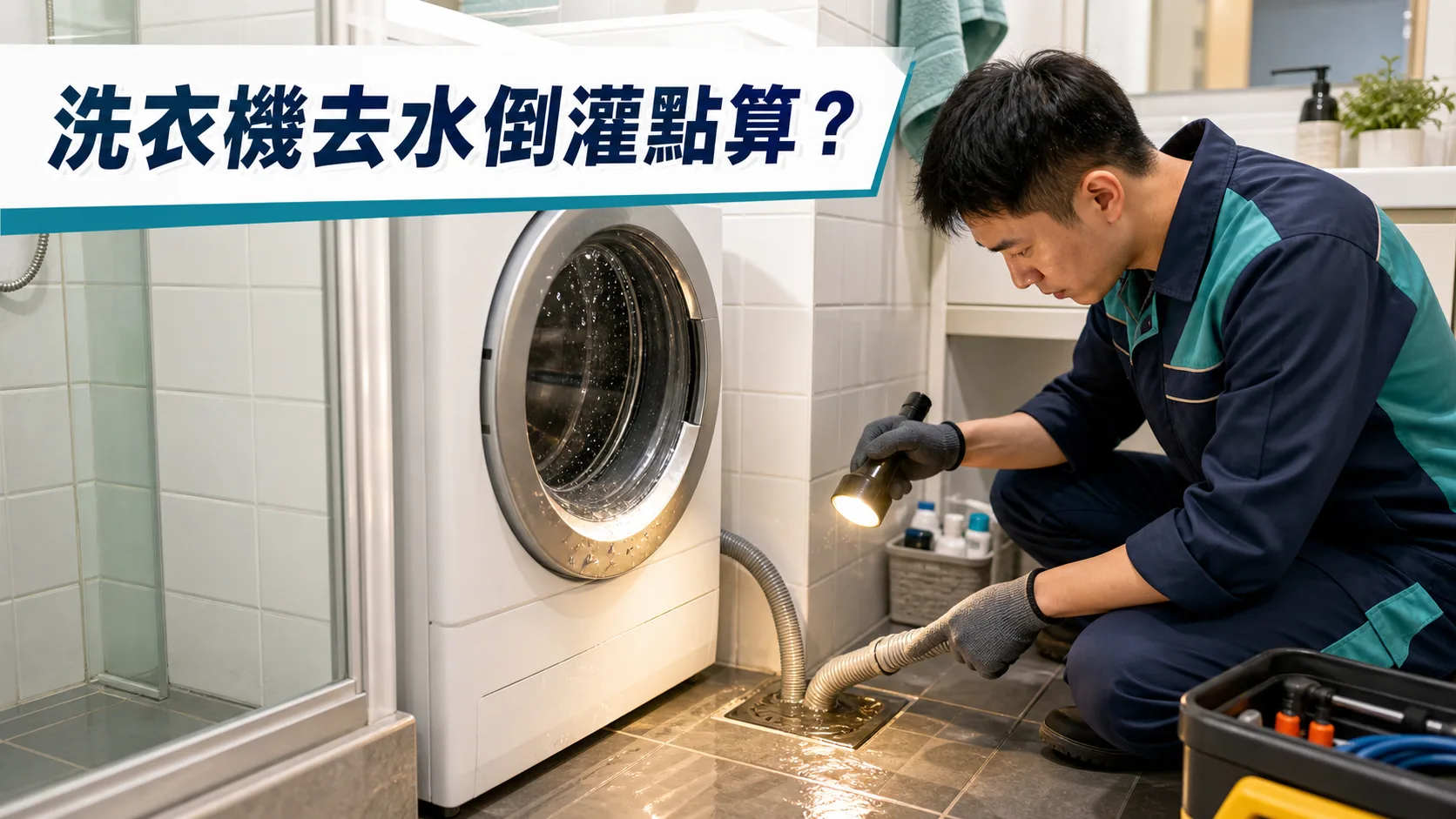
Water or foam rising from a floor drain when a washing machine empties is more than a mopping problem. The cause may be the filter, pump, hose connection, outlet, trap or downstream branch. Water that cannot escape can return through the nearest opening.
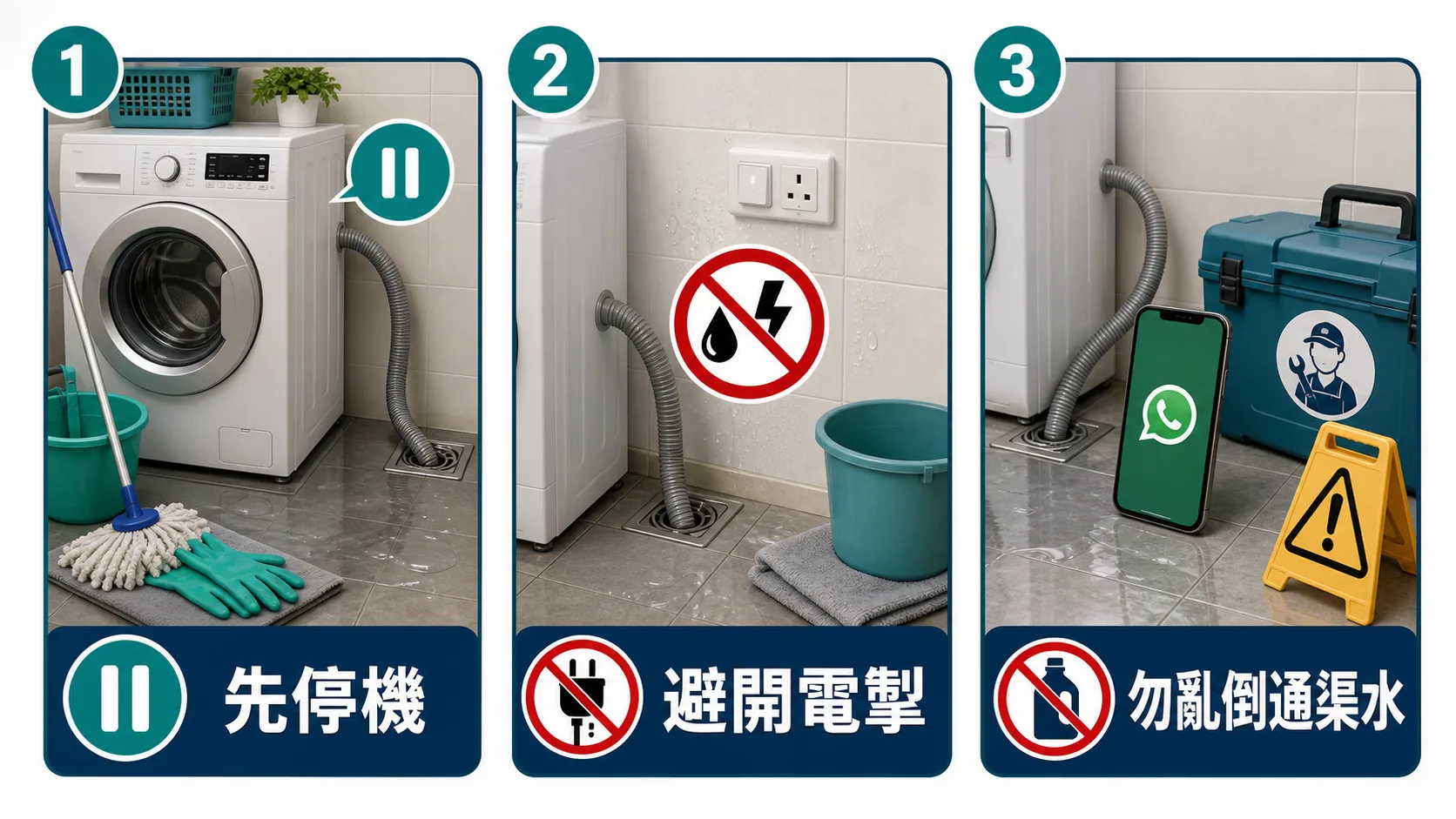
Stop the machine and do not walk barefoot in standing water. If sockets, switches or extension leads are wet, do not unplug them with wet hands. Leave the wet area and isolate power only from a safe dry position, or seek management or electrical assistance. Do not add drain cleaner to standing water.
Hong Kong machines often stand in bathrooms, kitchens or small utility balconies, with drainage connected to nearby floor outlets, sinks or building branches. First identify whether water leaks from the appliance or rises from the drain.
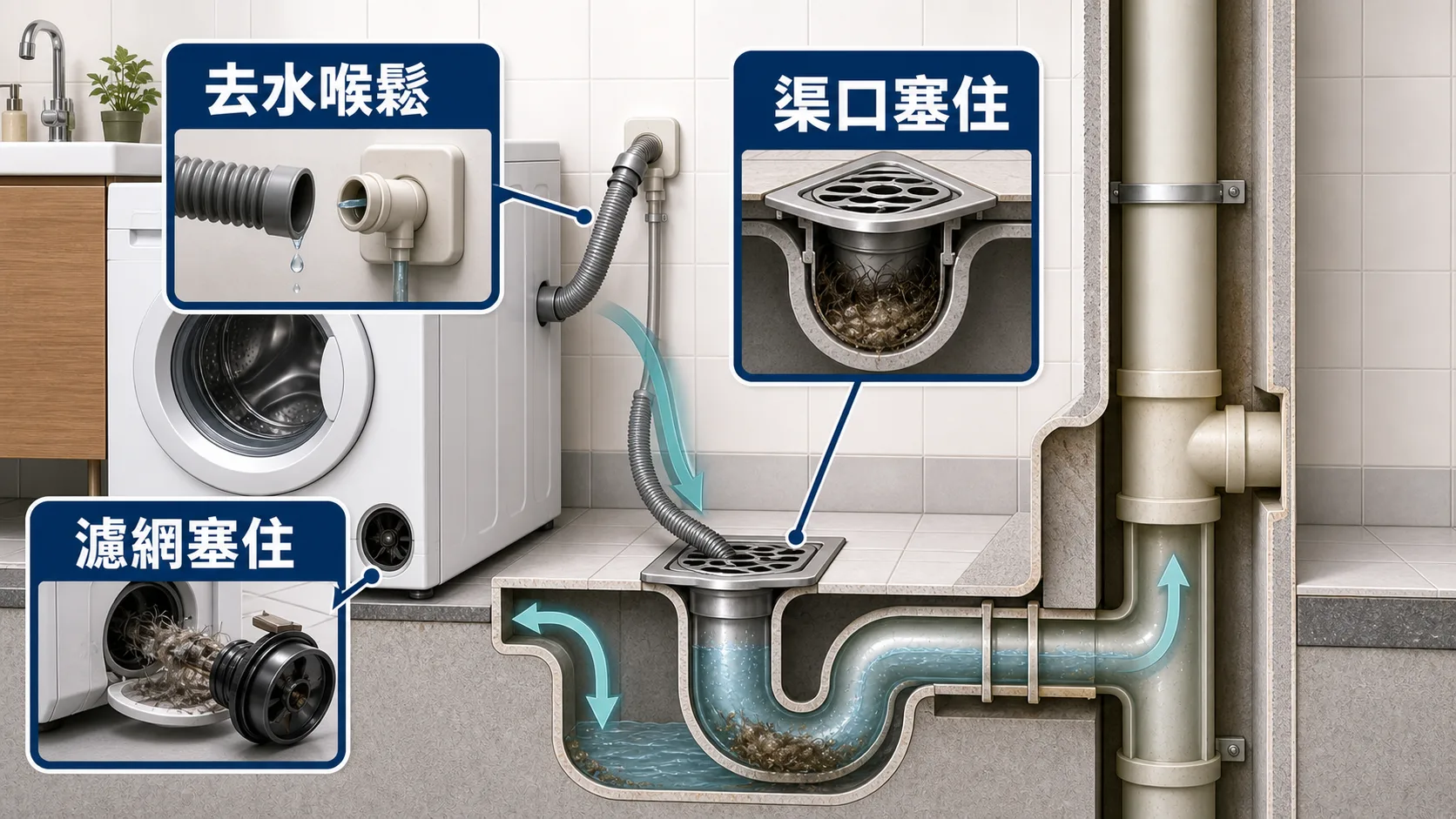
A poorly secured, crushed or incorrectly positioned hose can spray at its connection when the pump runs. Water near the hose opening differs from seepage beneath the machine. Check the installation against the appliance instructions.
Hair, lint, detergent residue, dust and kitchen grease can narrow the branch. A machine's rapid discharge then exceeds the remaining capacity, forcing water or foam from an outlet or floor drain.
Coins, hair clips, tissue, elastic bands and lint can obstruct a front-loading machine's accessible filter. This may leave water inside, extend draining or trigger an error. It does not necessarily cause drain backflow, but can cause leaks at appliance components.
If sinks, floor drains or other outlets gurgle, bubble or back up during discharge, the problem may be downstream. Drainage assessment, rather than simply replacing the machine hose, may be needed.
Excess detergent produces foam. It may not be the main fault, but can make an already restricted outlet or branch overflow more visibly.
Drain-related symptoms may require unblocking. Repeated odour, slow flow or backflow can also justify cleaning to remove lint, grease and soap deposits.
If no visible debris explains the fault, water retreats slowly or filter cleaning does not help, stop chemical attempts. A suitable cable, jetting, water removal or CCTV assessment may be required.
Send a wide photo of the machine location, a video of the backflow and details of nearby affected outlets. These help distinguish installation, local drain and shared-branch faults.
This is not recommended, especially in standing water. Strong products can burn, leave hazardous residues and affect hoses or fittings. Tell the technician if any have already been used.
No. Filters and pumps can be responsible, but so can the outlet, trap or branch. Water retained in the machine points towards the appliance; water emerging from the outlet points towards drainage, subject to inspection.
A faster pump can expose an existing restricted drain. Incorrect hose height, insertion or fixing during installation can also cause leakage or backflow.
If the hose is unobstructed but the outlet still backs up, investigate the outlet, trap and branch. Send a video so the appropriate service can be selected.
Yes. Water can spread through doorways or seep through floors, wall bases and penetrations. Stop the machine, contain water safely, record the incident and notify management or affected neighbours where necessary.
For outlet backflow or several slow drains during machine discharge, contact PipeButler for drainage assessment. Photos and videos help select tools that address the actual restriction.