
Loading page…
Loading page…
Investigate water seals, trap connections, anti-siphonage and concealed joints when a newly renovated room smells of drains.
WhatsApp with the problem and district, and we will confirm available timing.
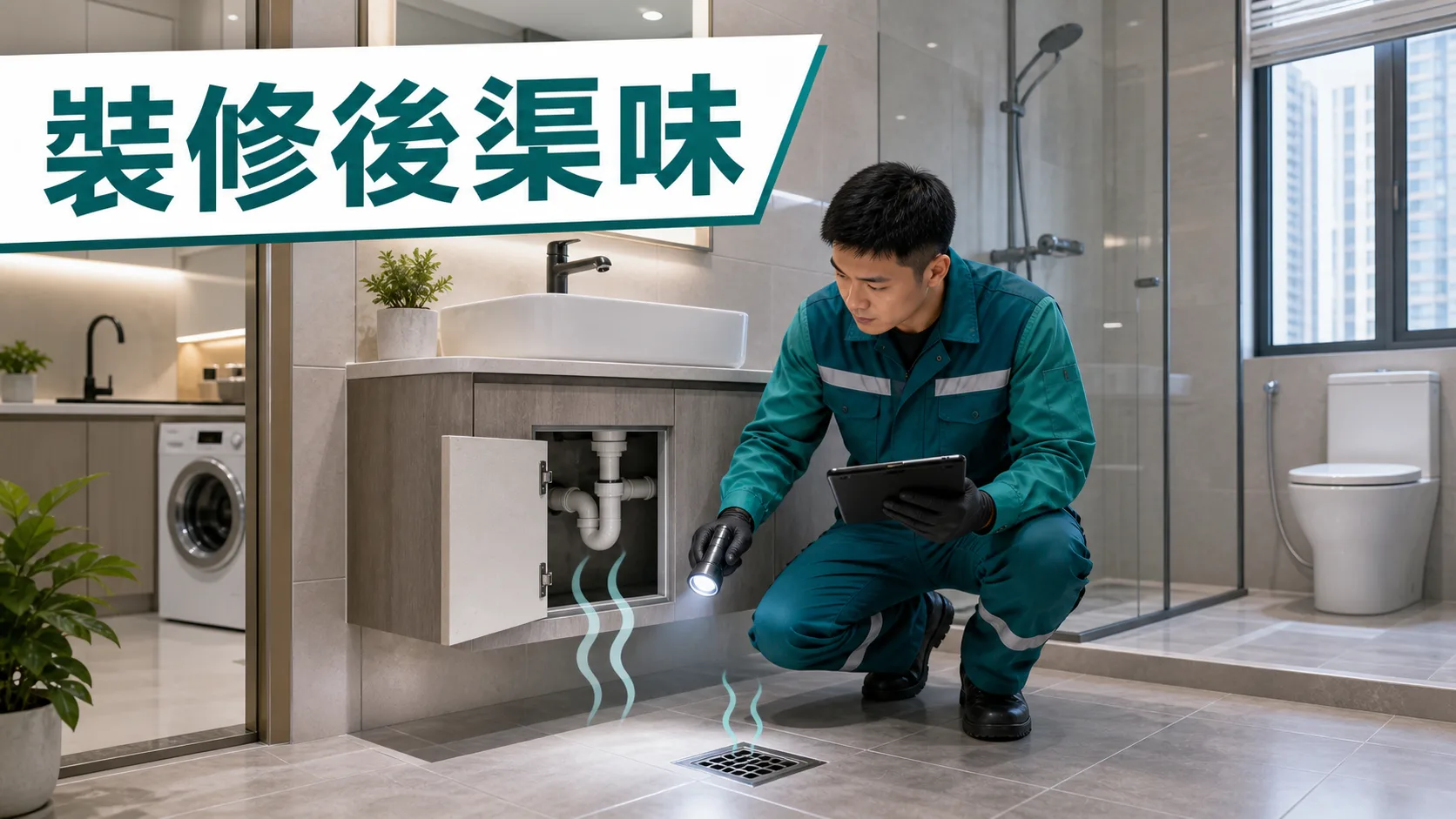
A sewage smell in a newly renovated bathroom or kitchen is not necessarily a new-material smell or inadequate cleaning. Drain connections, water seals, traps, anti-siphonage, concealed gaps and changed pipe falls may be involved. New finishes do not establish that drain air is properly contained.
Locate the smell around floor drains, basins, sinks, toilets, showers, cupboard bases and concealed pipes. Replenish accessible water seals where the drain is clear and inspect visible traps. Persistent odour, gurgling, several affected outlets or altered drainage warrants source investigation, drainage assessment or appropriately selected CCTV.
The following checks help you discuss seals, traps, venting and concealed pipework with the renovation contractor, management or a drainage specialist.
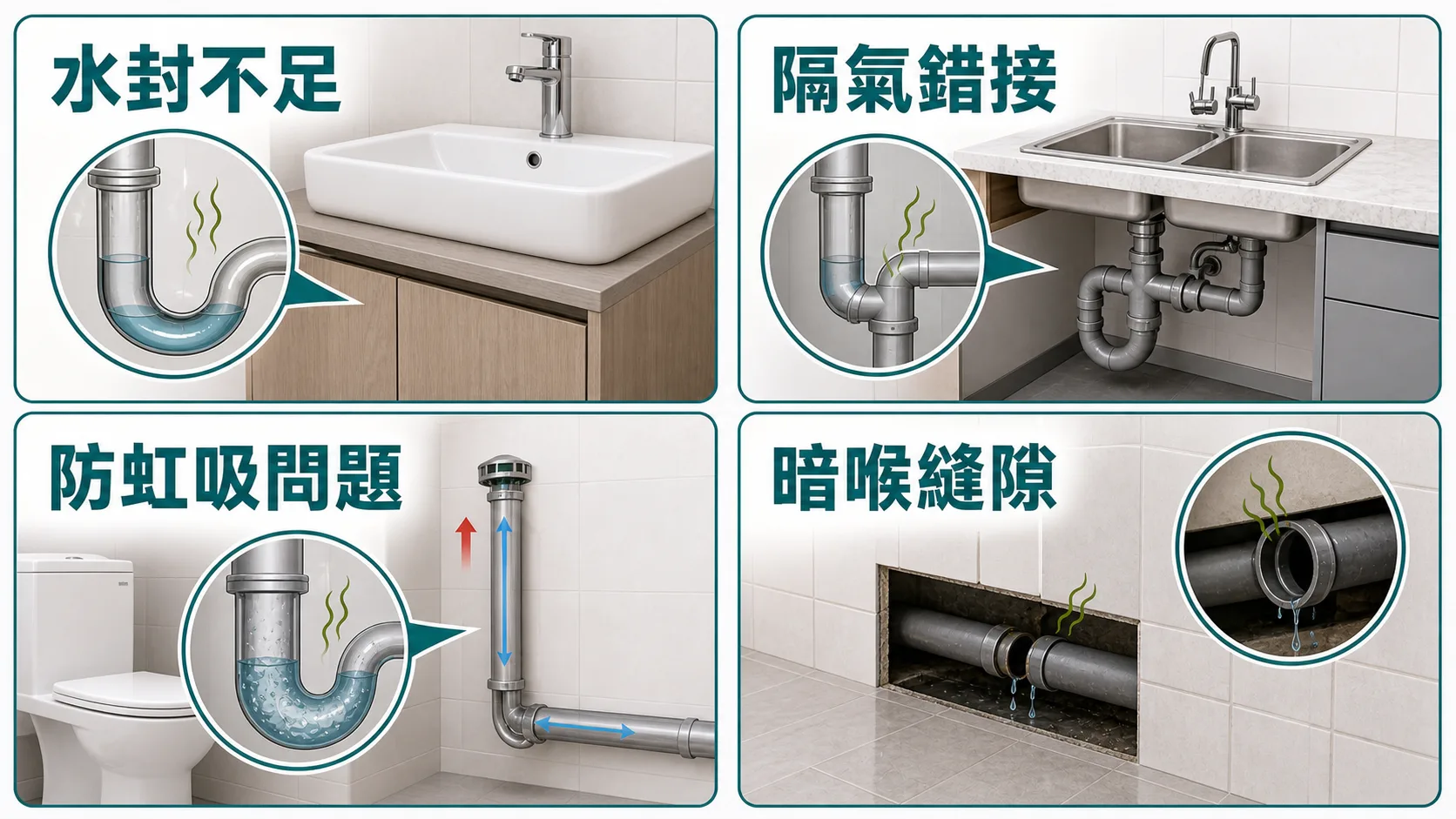
Floor drains, basin and sink traps, baths and showers need effective seals against drain air. A shallow, incorrectly installed, little-used or pressure-depleted seal allows odour indoors. Read U-traps and water seals.
After replacing cupboards, sinks, toilets or outlets, a trap may be wrongly positioned, have unsuitable short connections, be compressed by cabinetry or use inappropriate flexible pipe. Incorrect shared connections can allow drainage while failing to contain odour.
Pressure changes during discharge can draw water from traps. Vent and anti-siphonage arrangements protect the seal. Removing, capping or rerouting them incorrectly can cause gurgling after flushing, an outlet losing its seal or several smelly points. See anti-siphonage principles.
Odour may emerge beneath cupboards, at wall bases, access panels, false ceilings or pipe boxes rather than the outlet itself. Dampness, mustiness, swollen cabinetry, discolouration or insects can accompany concealed leakage or an inadequately closed opening.
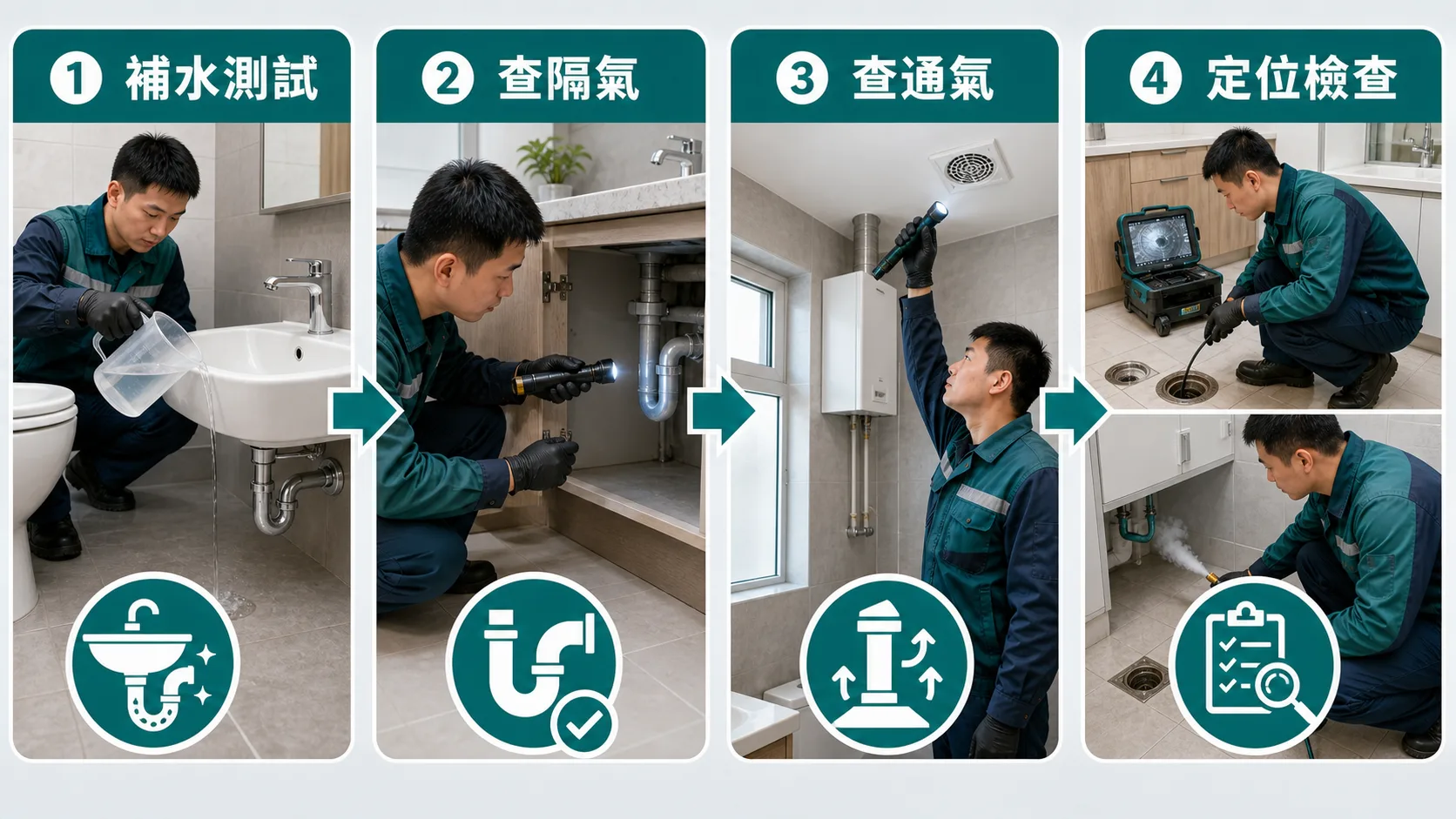
Slowly add clean water to rarely used floor, shower, basin and sink outlets where unobstructed. Observe improvement over the next hours or day or two. Improvement suggests a dry or shallow seal; rapid recurrence calls for investigation of why it does not remain.
Open accessible cupboards or access panels and look for an appropriate U-trap, P-trap or other trap arrangement. Note kinked or loose flexible pipes, gaps at joints, moisture, mustiness and staining. Do not dismantle unfamiliar pipework merely to check its appearance.
Gurgling, bubbles or increased smell at other outlets during flushing, discharge or extractor operation can indicate venting or shared-pipe pressure problems. More water or surface cleaning may not solve them.
For an uncertain source or suspected concealed joint, crack, misalignment or building debris, an appropriate specialist may select CCTV, smoke or odour tracing, accessible-panel inspection or sectional clearance. Locate the problem before deciding whether tiles need opening or connections need remaking.
They cannot correct a weak seal, wrong trap, venting fault or concealed gap. Strong acids or alkalis in standing water, plastic or metal pipework, construction debris or unidentified residues introduce burn, corrosion and maintenance hazards.
Tell the technician the product, approximate quantity and time of any chemical use. Read drain-cleaner safety guidance.
For recent renovation, keep photographs, video, location plans and work records and ask the contractor to check new connections. If several households on the same or lower floors have odour, backflow or chamber issues, notify management. A drainage company can assess outlets, traps, deposits and the suitability of CCTV or other tracing.
Coordination may be needed: the renovation contractor addresses new installation, management coordinates shared pipes and chambers, and drainage specialists assess clearance, cleaning, desilting, CCTV and odour sources.
Clarify whether the work involves water-seal care, trap removal, unblocking, CCTV, tracing, pipe cleaning, chamber work or reconnection. Where cupboards, access panels, ceilings or tiles need opening, agree who handles investigation, drainage repair, reinstatement and management coordination. Discuss the scope through our contact page and read when CCTV is useful.
WhatsApp PipeButler on 5340 0748 with odour locations, before-and-after photographs, drainage video, visible trap photographs, gurgling details and alterations made. We will assess water-seal maintenance, odour investigation, unblocking, cleaning or further tracing.
No. Paint, adhesive or timber odours differ from smells at drains, cupboard bases and pipes. Investigate seals, traps, ventilation and concealed connections.
A rarely used dry trap may need only routine replenishment and cleaning. Rapid recurrence, gurgling or several affected outlets means the reason for seal loss needs checking.
Water flow and odour protection are separate functions. Incorrect traps, insufficient seals, pressure problems and concealed gaps can pass drain air even while water drains.
Not always. Start with seals, visible traps and symptom patterns. Recurrence, an unknown source, concealed faults or evidence needed for contractor or management discussions can make tracing more useful.
Covering a rarely used outlet does not resolve the cause and can interfere with drainage or conceal seal problems. If a permanent cover seems necessary, investigate the trap, water seal, venting and connections.