

A clean-looking bathroom or kitchen in a new flat does not prove the pipes are clear. Owners sometimes discover slow floor drains, toilet odours, gurgling basins, leaking cupboard connections or partial blockages only after handover or renovation. The difficulty is distinguishing a handover defect, renovation damage, a shared building issue and a private branch obstruction.
Test and film every drainage point before renovation and again before moving in. If flow is slow, there is odour or a leak, preserve evidence rather than masking it with fragrance or drain cleaner. Arrange a drainage assessment or raise it with the relevant party.
This guide covers outlet testing, investigating smells and deciding whether to approach management, the developer, the renovation contractor or a drainage technician.
Four common problems in new flats
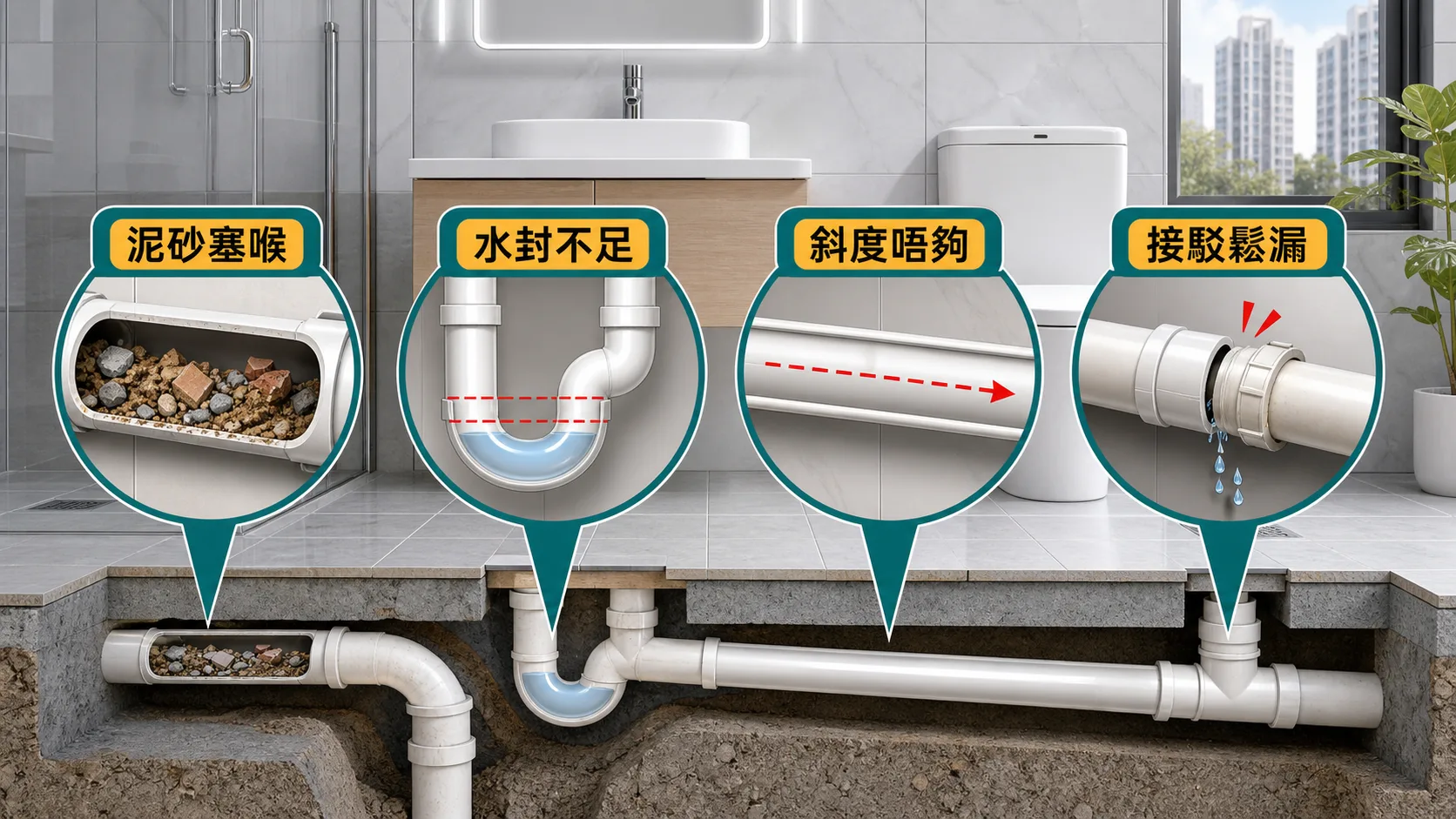
1. Construction sediment
Sand, mortar, stones, tape, protective-film fragments, hair and building debris may remain in new or renovated drainage. A partial restriction may become apparent only with a larger discharge. Strong drain cleaner may affect some surface contamination without removing stones or cement fragments.
2. Inadequate or dry water seals
Floor-drain, basin and toilet seals separate the room from drain air. A flat left vacant may have dry traps; installation or connection defects can cause recurrent smells. Replenish accessible seals with clean water where drainage is clear, then note whether the smell returns quickly.
3. Insufficient gradient
Drainage needs a suitable fall. Poor falls at floor drains, showers, air-conditioning or washing-machine drains encourage standing water, deposits and odour. Symptoms beginning after renovation warrant checks of altered pipe routes and floor gradients.
4. Loose or leaking connections
New sinks, cupboards, toilets and floor outlets all have joints. Drips below a cupboard or basin, odour at a toilet base, and wall or ceiling stains can indicate loose joints, poor seals, mismatched fittings or insufficient installation testing.
Four handover checks
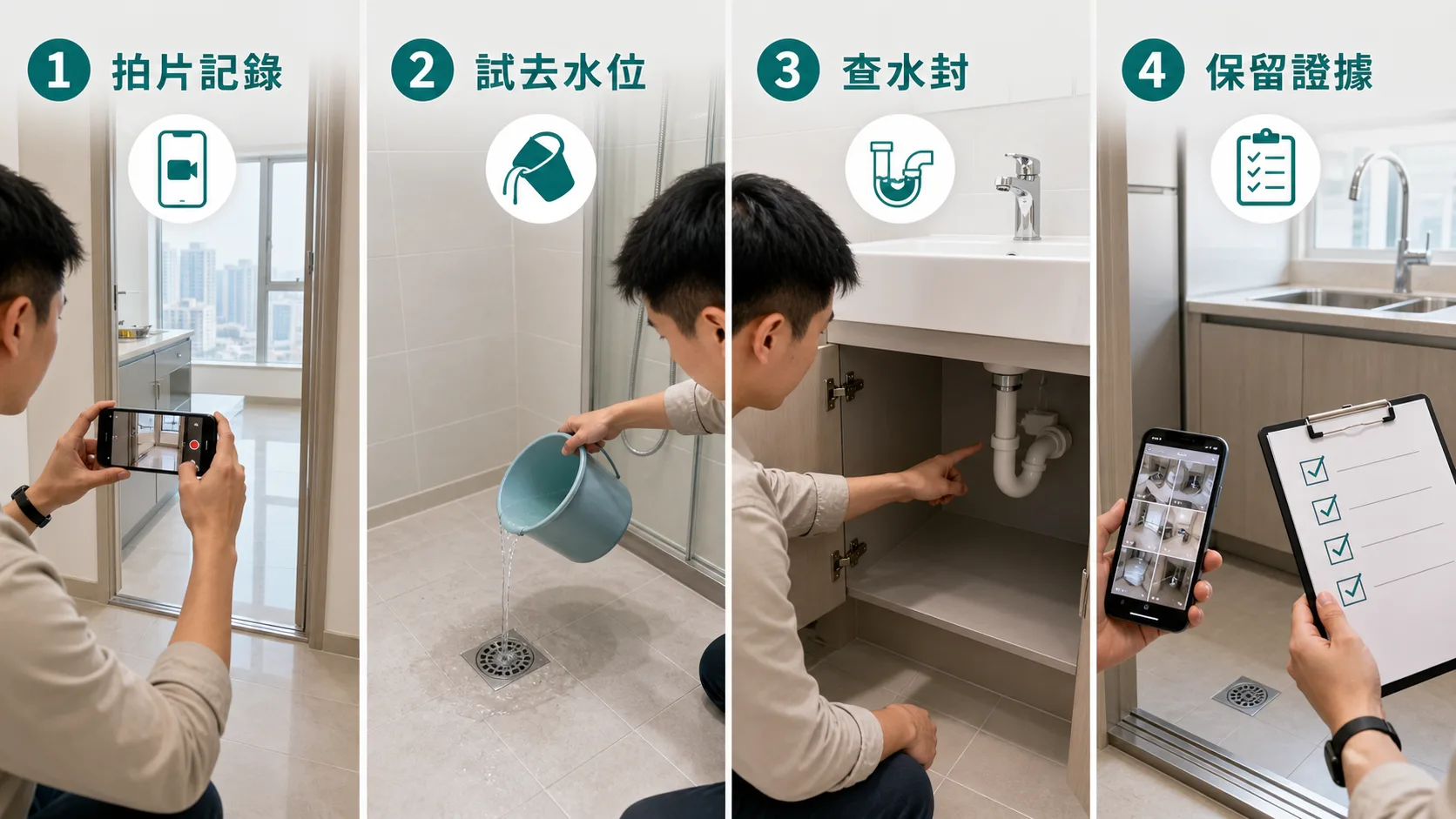
1. Record video
Film the bathroom floor, shower, basin, kitchen sink, washer outlet, balcony drain and toilet. State the date, location and test method so management, contractors and technicians can interpret the record.
2. Test outlets individually
Use clean water at each point separately. Testing the whole flat at once makes localisation difficult. Observe drainage speed, standing water, gurgling, backflow and any smell developing a few minutes later. Stop if backflow or leakage occurs.
3. Check the seals
Top up accessible dry traps and observe. A smell that disappears but quickly returns may involve insufficient seal depth, pressure loss, ventilation or downstream odour. See water-seal maintenance.
4. Keep the evidence
Retain photographs, video, handover records, renovation drawings, agreed work documents, repair records, management replies and inspection findings. Establish whether the issue existed at handover, appeared after renovation or began only after occupation.
Responsibility and next steps
- Present at handover: include it in the defects list and promptly raise it with the developer or management.
- Beginning after renovation: examine new drains, cupboard joints, floor falls, washer and air-conditioning connections and areas around waterproofing.
- Several flats or shared areas affected: notify management about possible common drains or chambers.
- One slow outlet: start with its branch, trap and connections; unblocking or pipe cleaning may be appropriate.
- Odour despite normal flow: assess seals, traps, ventilation and the source through odour investigation.
Is odour normal in a new flat?
An unused outlet can develop a smell as its seal dries. Persistent odour after replenishment, a smell intensified by flushing or extractor use, or odour in both kitchen and bathroom should not be dismissed. Consider seals, traps, connections, partial downstream blockage and shared drains.
Fragrance, disinfectant spray or covering a drain can conceal evidence and delay follow-up during a defects or workmanship period. See bathroom odour sources and post-renovation odour checks.
When is professional inspection appropriate?
Slow drainage, backflow or pronounced gurgling during handover tests, or repeated blockage soon after moving in, warrants assessment. Sand, stones, mortar and plastic debris require tools selected for the pipe diameter, location and material; household chemicals are unreliable. CCTV may help with hidden or underfloor pipes, uncertain altered routes and recurrence.
If a toilet, basin, floor outlet or kitchen sink needs reconfiguration, assess fixture and drainage alteration work. Where sewage contaminates floors or belongings, clean and dry appropriately and consider disinfection.
Do not rush to use drain chemicals
New-flat problems often concern construction debris, connections, gradients or seals rather than grease. Strong chemicals present risks to metals, plastics, seals, cupboards, finishes and people, and can remain for the technician to encounter. They may also alter useful evidence before the cause is established.
Stop using the affected outlet and record levels and leak locations before assessment. Read drain-cleaner safety or contact us about the work.
WhatsApp PipeButler on 5340 0748 with the location, outlet photographs, existing test video, handover and renovation timeline, and whether several points are affected. We will assess unblocking, cleaning, odour investigation, CCTV recommendations or fixture work and agree the scope before starting.
Frequently asked questions
Should floor drains be tested at handover?
Yes. Test and film bathroom, kitchen, balcony, washer and toilet drainage separately. Slow flow, standing water and odour may not be visible before a controlled water test.
Is the developer always responsible for a new-flat smell?
Not necessarily. Establish when it began, whether renovation intervened, whether other flats are affected, and whether seals and connections are sound. Evidence and the timeline guide follow-up.
Can I handle slow drainage myself?
A dry seal can be replenished. Pronounced slow flow, backflow, gurgling or recurrence should not be treated with strong chemicals; construction debris may require inspection or suitable clearance.
Who should investigate odour after renovation?
Review changed outlets, floor falls, basin traps, washer and air-conditioning drains and cupboard connections with the renovation contractor. Preserve evidence; notify management too if shared pipes or other flats are involved.
Is CCTV always necessary?
No. A minor isolated restriction may respond to basic assessment, clearance and testing. Recurrence, suspected hard debris or mortar, uncertain concealed routes and difficult post-renovation localisation make CCTV more useful.