
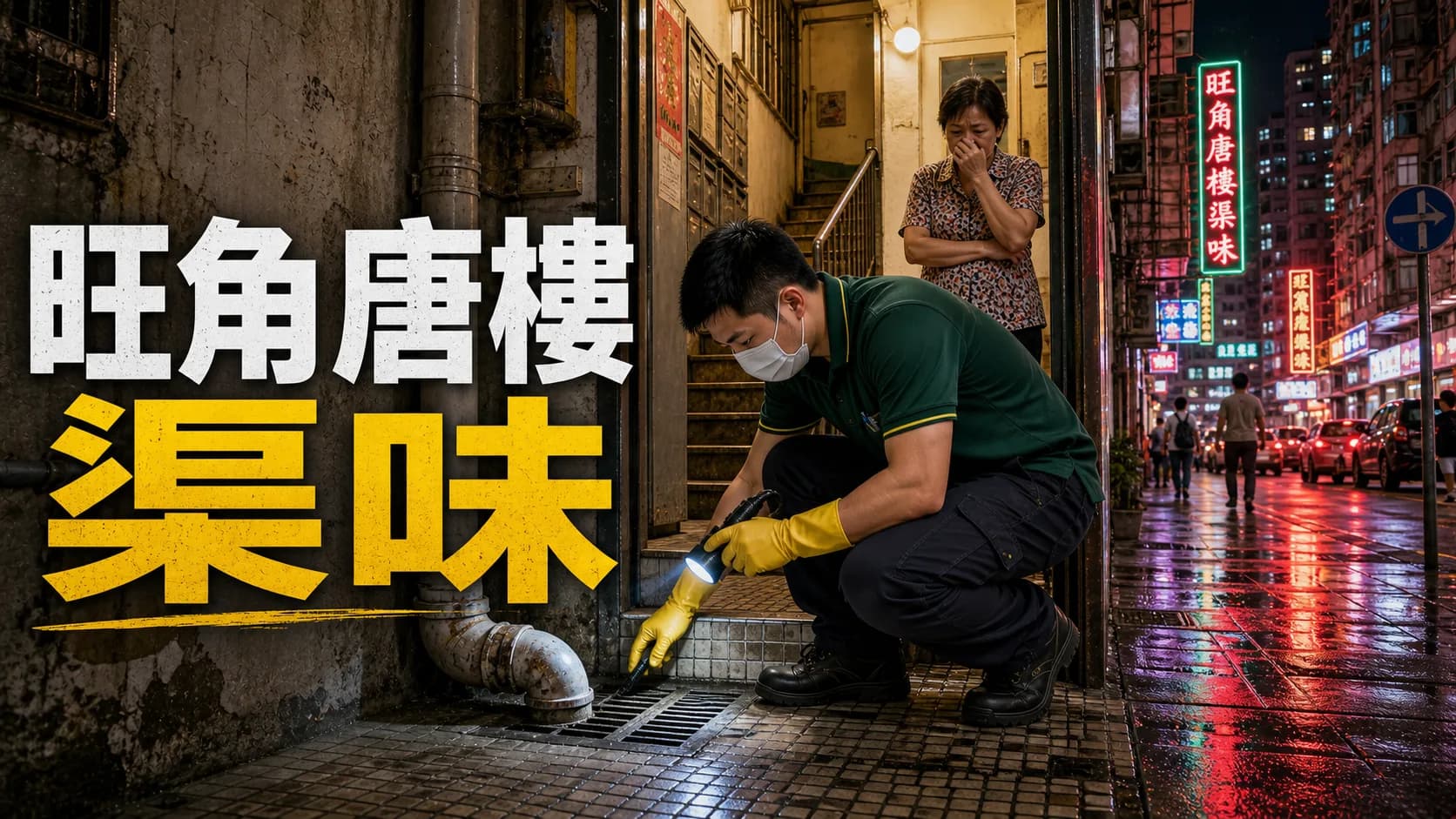
Mong Kok, Yau Ma Tei and Prince Edward have many older buildings where flats, subdivided units, upstairs shops, restaurants and street-level premises share complicated drainage. A sudden bathroom, kitchen or corridor smell does not necessarily mean poor cleaning. Dry water seals, defective traps, ageing pipes, anti-siphonage issues, commercial grease and shared-main odours may combine.
Where drainage is not backing up, slowly add clean water to floor drains, basins and rarely used outlets, and observe whether the smell improves. Record when it occurs, which outlets are affected and whether neighbours or lower floors have the same issue. A smell returning within days, several affected outlets, backflow or leakage warrants odour-source investigation rather than fragrance or bleach.
See Mong Kok and Yau Tsim Mong coverage for Mong Kok, Yau Ma Tei, Prince Edward, Jordan and Tai Kok Tsui. This guide distinguishes private outlets, shared pipes, main drains and alterations.
Four common sources in older buildings
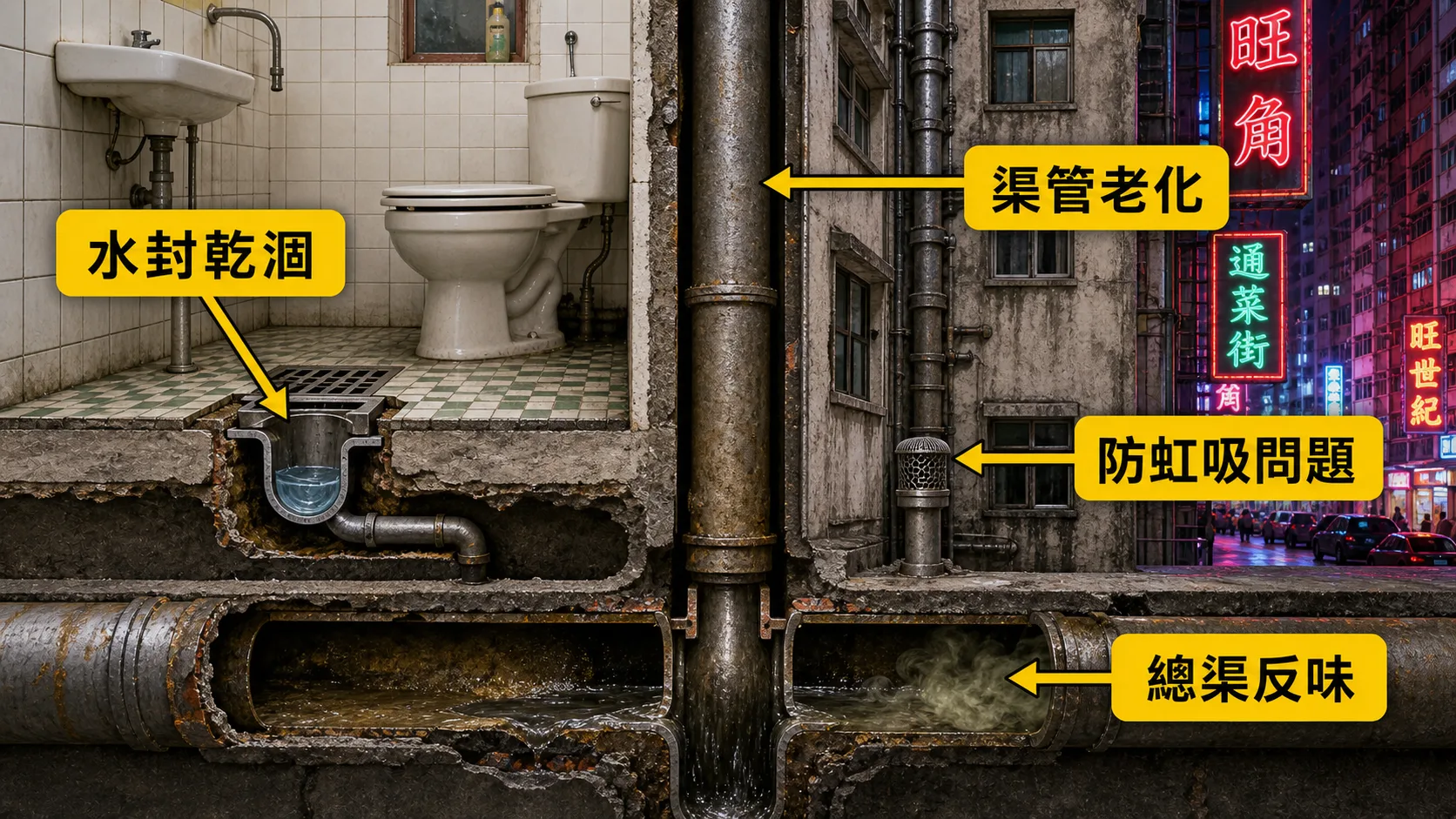
1. Dry water seals
Water retained in a floor-drain, basin or bath trap prevents drain air entering the room. Rarely used bathrooms, vacant flats, small subdivided-unit bathrooms and prolonged extractor use can be associated with weakened seals. Immediate improvement after topping up suggests the seal is involved.
2. Ageing pipework
Old metal pipes, external stacks, concealed drains and historic connections can crack, loosen or leak. A large visible leak is not required for musty or sewage smells, damp walls, peeling paint or repeated blockages to develop.
3. Anti-siphonage problems
Vent arrangements or appropriate air-admittance devices balance pressure and help prevent water seals being drawn out. Gurgling after flushing or upstairs water use, smells with extractor operation, or rapid recurrence after topping up may indicate pressure effects. Read how anti-siphonage protection works.
4. Shared-main odours
Several affected outlets, together with smells in lower floors, corridors, rear lanes, shops or neighbouring flats, can point to a building main, chamber or shared section. Cleaning one bathroom alone is unlikely to resolve it.
Four safe initial checks
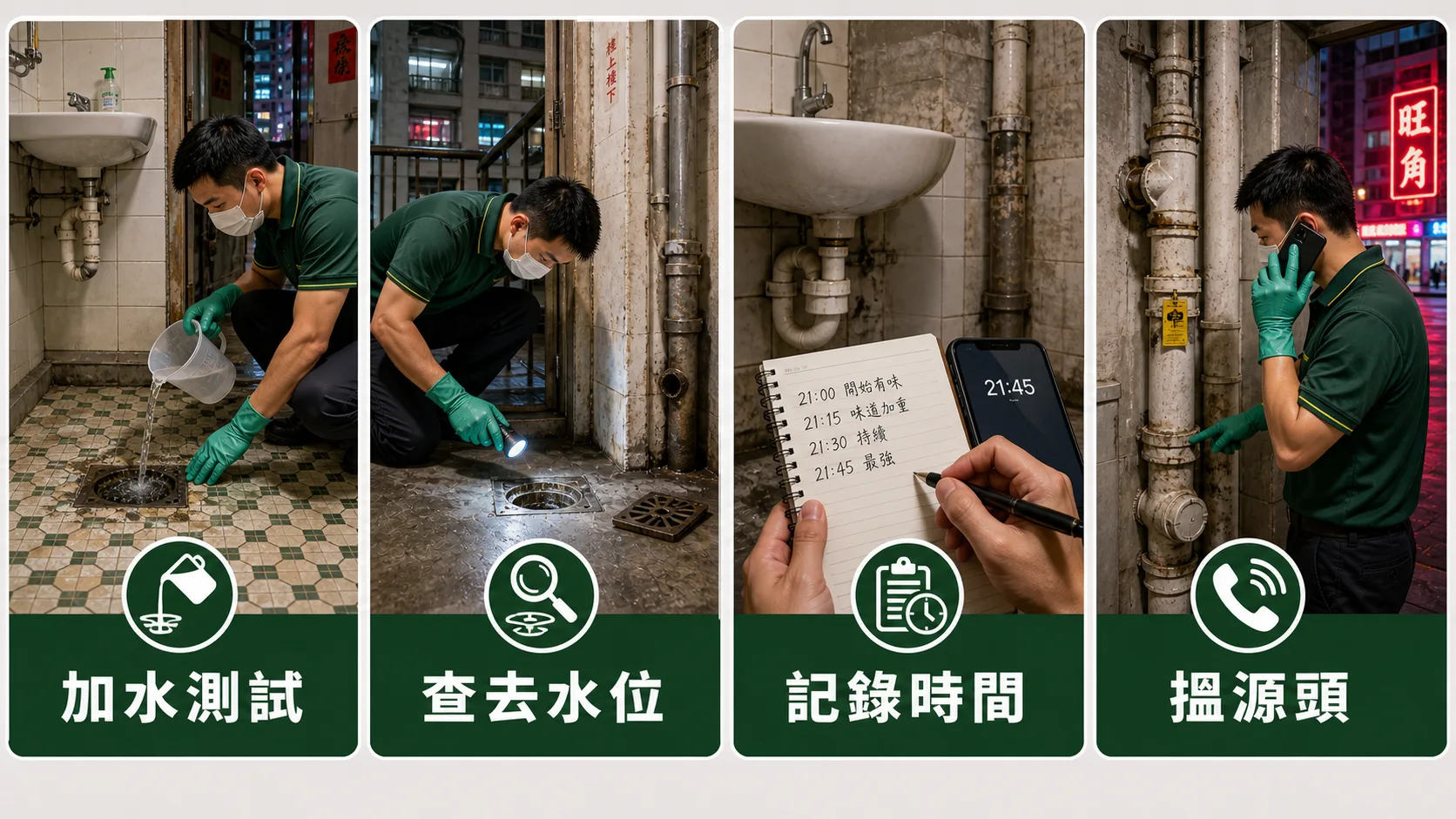
1. Top up the water seals
Slowly add clean water at rarely used floor, shower, basin, bath, kitchen and washing-machine drainage points where safe and unobstructed. If the smell fades, observe whether it returns over the following days.
2. Identify the outlet
Note where the smell is strongest without placing your face over a drain: floor drain, basin trap, toilet base, kitchen sink, washer outlet or corridor drain. One location suggests a local trap, seal or restriction; several require a wider investigation.
3. Record the timing
Does it happen at night, after cooking or flushing, when the extractor runs, after rain, during upstairs water use or after shops close? Pressure changes, shared drains and commercial discharge can follow patterns.
4. Trace the cause
A smell returning a few days after topping up, persisting after unblocking or affecting several households needs investigation. Symptoms determine whether unblocking, pipe cleaning, trap and seal checks, alteration checks or work on the shared main or chamber is appropriate.
Inside the flat or in the shared main?
One smelly outlet: examine that outlet, its seal, trap, hair and deposits, and nearby connections.
Several outlets in one flat: consider the main private branch, pressure, alterations or common connections.
Neighbours, the same floor or lower floors affected: notify management to examine shared pipes, chambers, main drains and external stacks.
Rear lanes, shops and common areas affected: commercial grease, rear-lane chambers or public drains may be involved. Establish the private and public drainage boundaries.
With low-floor backflow, sewage ingress or overflowing chambers, avoid contact and notify management. Desilting may be appropriate. Do not open or enter chambers yourself or try to wash the problem away with large discharges.
Pay attention to smells beginning after renovation
If symptoms began after replacing a toilet, moving a basin or floor drain, changing a kitchen, removing walls or laying a new floor, investigate traps, seal depth, gradient, venting, connection seals and concealed pipe layout. Drainage connection and alteration checks may be needed; drain cleaner cannot correct the installation.
When might CCTV or jetting help?
A dry water seal may need only replenishment and routine care. Further assessment is warranted for:
- Repeated blockage or odour at the same outlet.
- Slow drainage or smell returning soon after clearance.
- Suspected cracks, leaks, collapse or incorrect connections.
- Several flats, lower floors or shared drains affected together.
- Evidence needed by management, an owner or a tenant to clarify responsibility.
Select inspection, cleaning or desilting according to findings. Do not apply high pressure blindly to old pipework: assess its condition, the material causing the blockage and the relevant drainage boundary.
Do not disguise the problem
- Do not permanently seal a floor drain: this can prevent necessary drainage and delay diagnosis.
- Do not mix bleach, drain cleaner or cleaning products: chemical residues also endanger people opening the pipe later.
- Do not rely on fragrance: it cannot repair a dry seal, cracked pipe, main-drain problem or faulty venting.
- Do not enter chambers: confined drainage spaces may lack oxygen or contain harmful gases.
Send photographs and video through our contact page. If the older-building drainage guide and U-trap and water-seal guide do not explain the symptoms, arrange an on-site investigation.
WhatsApp PipeButler on 5340 0748 with the address, affected outlets, timing, whether topping up helped, whether renovation preceded the smell, and any neighbouring or lower-floor symptoms. We will assess water seals, traps, pipes, mains and alterations and agree the scope before work.
FAQ
Is adding water a useful first test?
Yes, where the outlet is not backing up. A dry seal often improves after replenishment. Recurrence within days calls for checks of pressure loss, trap deposits, ageing pipes and shared drains.
Must an older-building smell come from the main drain?
No. Start locally for one outlet. Several outlets, neighbours or lower floors affected together make shared pipework more relevant.
Will unblocking solve smells after renovation?
Not necessarily. It can remove an obstruction but cannot correct altered traps, venting, gradients or defective connection seals.
Can drain cleaner remove the smell?
It is not a suitable general odour remedy. Water seals, pressure, cracks and shared-main faults may remain, while strong chemicals introduce additional risks.
Which information helps the technician?
Record the location, visible water levels and any backflow, timing, response to topping up, renovation history, and whether neighbours or lower floors are affected.