
Loading page…
Loading page…
A management guide to car park drain blockages, safe isolation, sediment removal, downstream investigation and rainy-season maintenance.
WhatsApp with the problem and district, and we will confirm available timing.
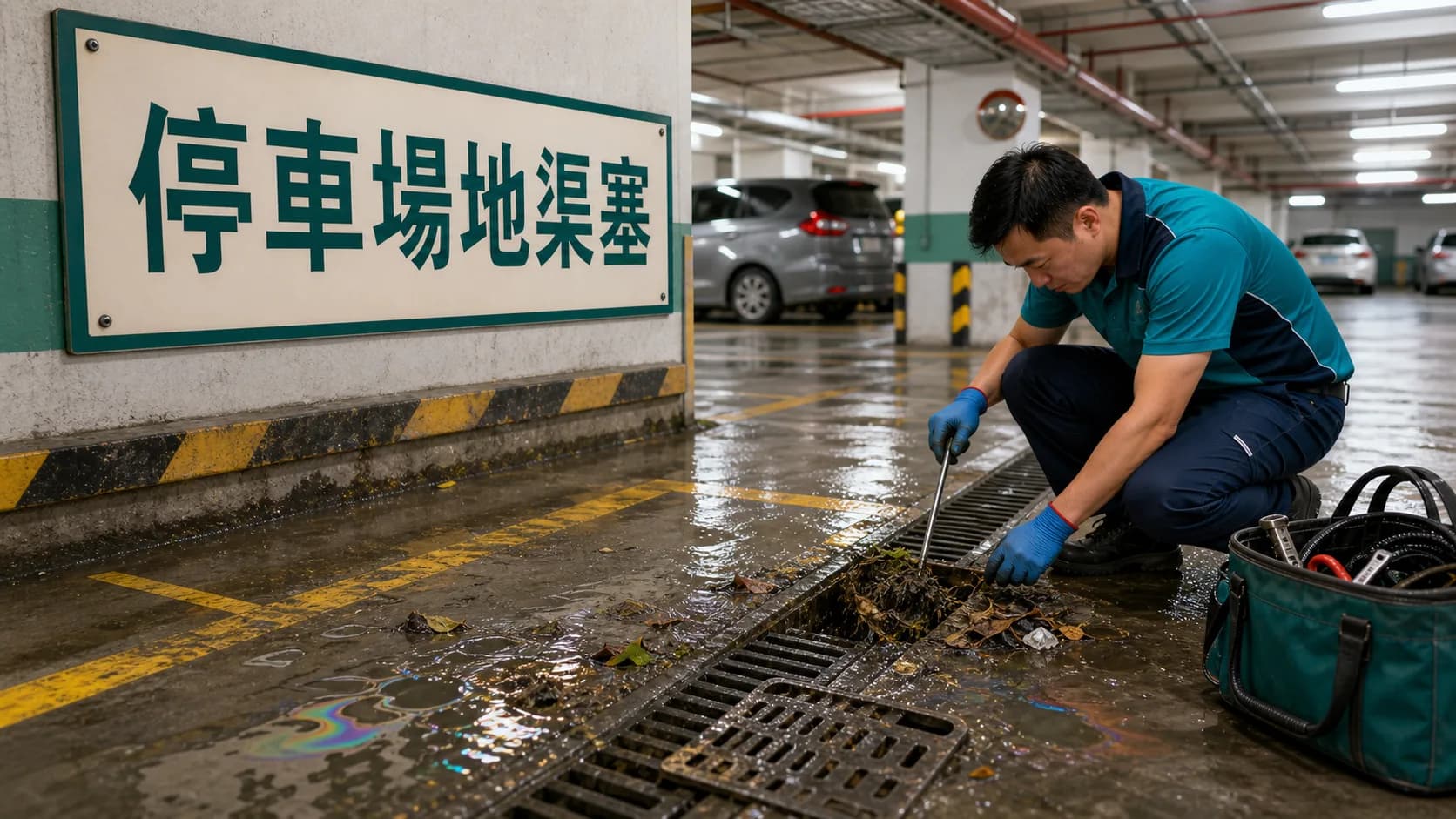
A blocked car park drain is more than a small puddle. In estates, shopping centres, industrial buildings and basements it can flood bays, make ramps slippery, send water into lift lobbies, spread odours and threaten electrical or pump rooms. Assessment must include grilles, linear channels, manhole levels, oily sludge and downstream pipes, not simply a few surface leaves.
Isolate waterlogged areas and ramps to protect drivers and pedestrians. Do not open or enter manholes, sumps or pump-room pits. Where safe, remove surface leaves, bags and rubbish and record depth, drainage speed, affected bays and visible water levels. Then assess desilting, unblocking, pipe cleaning or CCTV.
This guide covers car park floor drains, basement drainage, flooding and high manholes. See also the rainy-season checklist, overflowing manholes and storm-related sewage backflow.
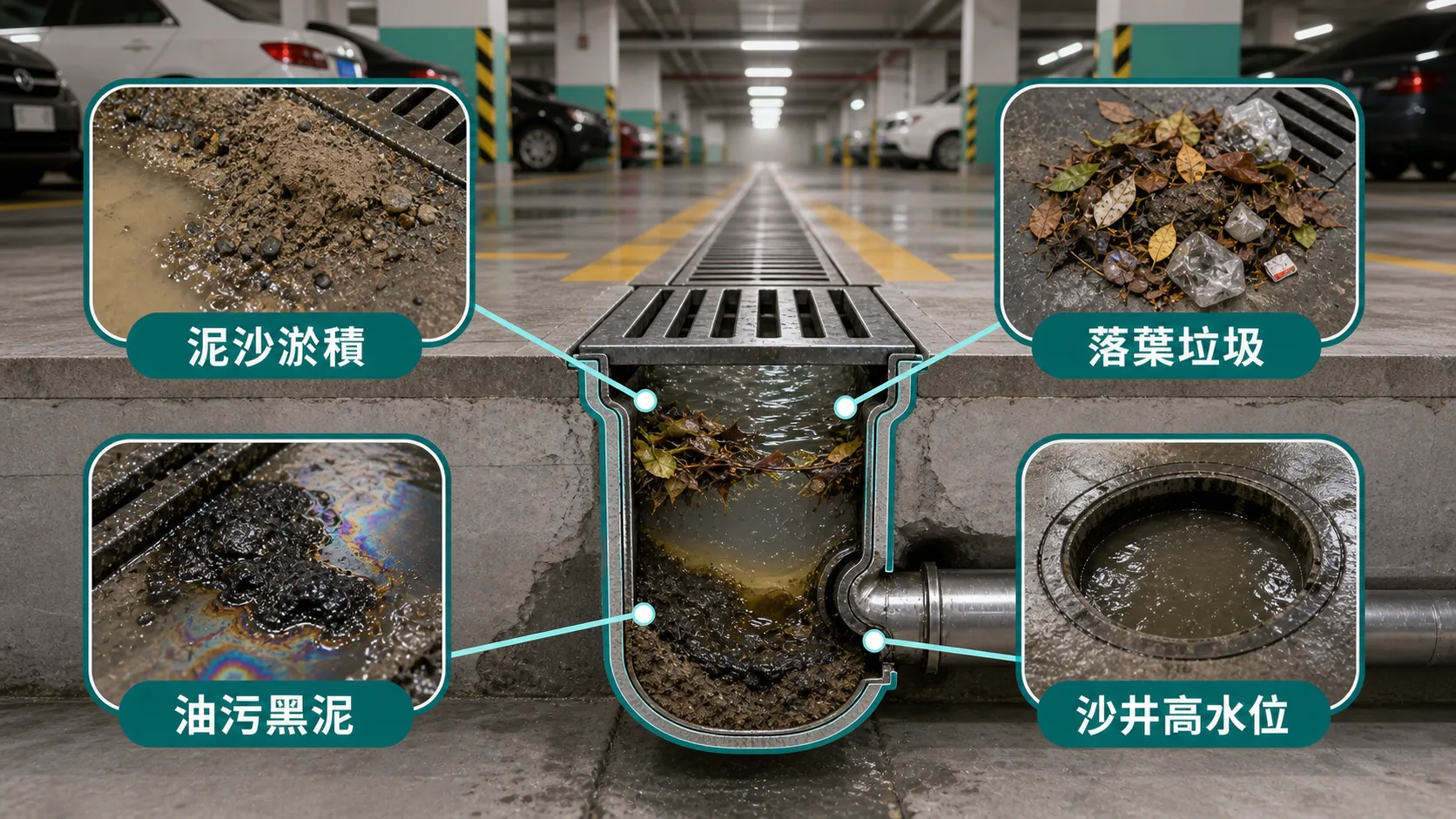
Entrances, ramps, outdoor bays, loading areas and construction-vehicle routes carry grit, stones, road dust and cement powder into channels. Light rain may pass over deposits, while heavy rain or ramp runoff exceeds the reduced channel capacity and spreads across bays and traffic lanes.
Entrances, vents, planters, trees and refuse rooms introduce leaves, cigarette ends, tissues, bags, bottles and packaging. Sweeping this material inside merely transfers an accessible blockage deeper into the drainage system.
Oil, tyre dust and road dirt form black sludge, iridescent films and slippery deposits. They bind grit and litter, narrow channels and cause odours and slip risks. Remove deposits first rather than flushing hard with water, then assess pipe cleaning.
Several channels, bays, areas or levels draining slowly may indicate shared pipes, manholes, sumps, pumps or downstream public-drainage pressure. Opening one outlet can provide only temporary relief before the next storm.
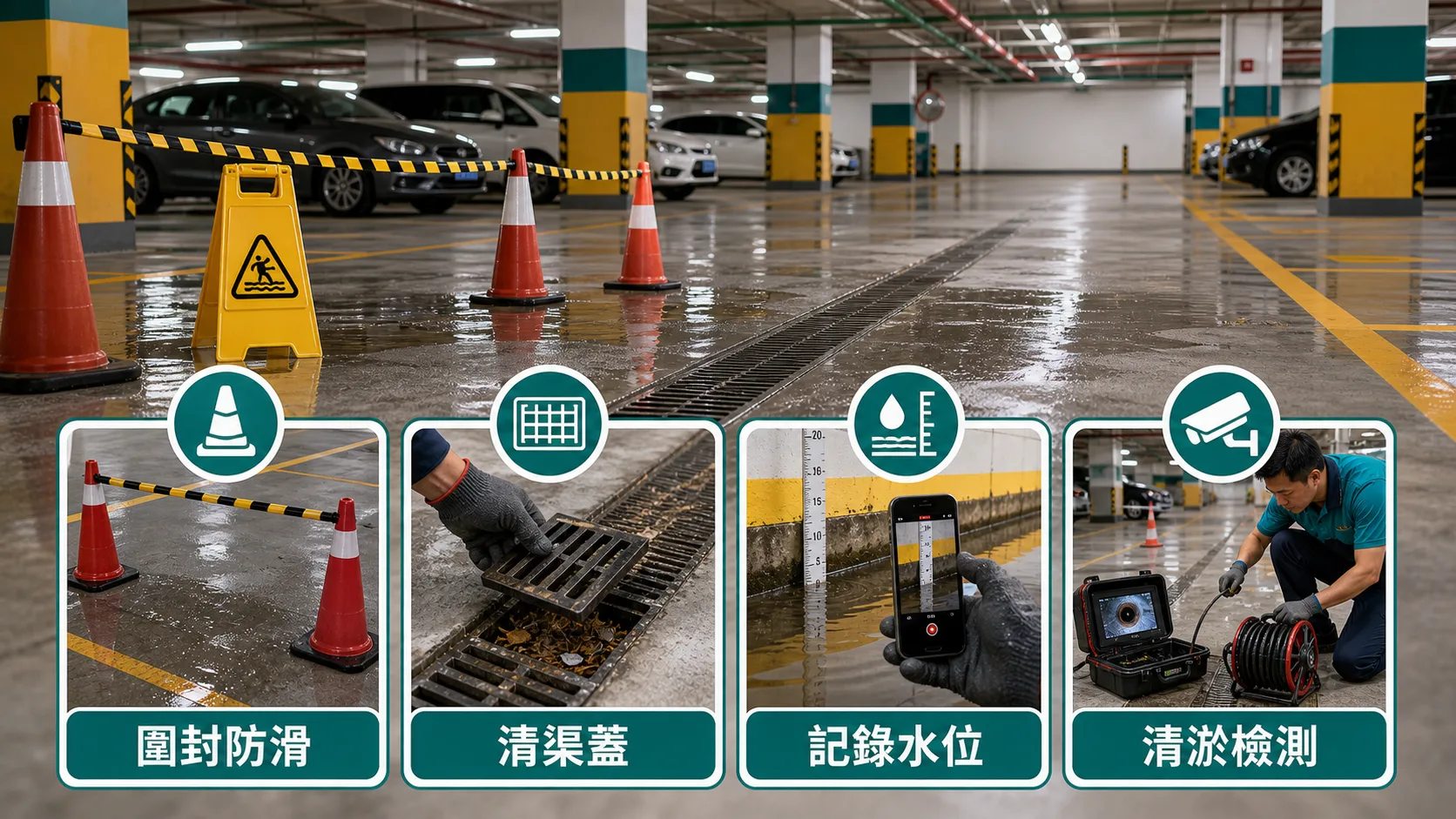
Use cones, barriers, warning signs or temporary diversions, particularly on ramps, bends, lift-lobby entrances, plant-room doorways and poorly lit areas. Wet floors combined with oily sludge are an immediate hazard to vehicles and pedestrians.
Wearing gloves, collect accessible leaves, bags, cigarette ends, bottles, stones and large debris. Remove them from site rather than sweeping them inside. Photograph and arrange repair of distorted, rusty, loose or vehicle-damaged covers; uneven grilles trap more debris.
Film depth, bay numbers, drainage time, rainfall timing, slow channels, visible high manholes, smells and dark water. Use fixed references such as wall bases, columns, bay numbers or level markers. These help management, owners, the owners' corporation and contractors define scope and responsibility.
Thick sediment or oily sludge generally needs removal rather than continued flushing. Persistent slow drainage, recurrence or several affected areas after desilting warrants assessing jetting, cleaning or CCTV.
One puddle beside a grille with other channels working normally suggests that grille, channel or nearby pipe. Clear accessible surface waste and assess local clearance or desilting.
Several slow sections of one long channel may reflect bottom deposits, sediment in its connecting horizontal pipe or insufficient fall. High levels across one floor, lift lobbies, entrance ramps and manholes require assessment of shared drainage, sumps and downstream chambers.
Classify the extent as one outlet, one channel, several areas on one floor, or multiple floors and shared manholes. Wider symptoms should not be reduced to a request to clear one opening.
See desilting versus unblocking. Car park restrictions often require sediment removal because the material is grit, oil and rubbish rather than hair or tissue.
After basement flooding, smells, black deposits, sewage traces, insects or water passing through refuse or sewage areas should not simply be left to dry. Following clearance, assess odour investigation and cleaning and disinfection according to contamination, while checking dry seals, manhole odours and backflow.
For affected communal routes, lift lobbies, shop entrances, residential access or plant rooms, retain before-and-after photographs, contractor records and a water-level timeline. These assist maintenance, insurance, occupier enquiries and prevention planning.
Generally no. Grit, leaves, plastic, stones, sludge and hard objects may not respond, while chemical residue in standing water or channels creates skin, eye and subsequent-work risks. Tell the technician the product, quantity and time if chemicals have already been used. See drain-cleaner safety.
Inspect basement entrance ramps, outdoor bays, channels, manholes, sumps, pump-room surroundings, refuse-room entrances, loading areas and mall entrances before heavy-rain and typhoon periods. Check cover condition, sediment thickness, oil films, visible abnormal levels, time to drain after rain and recurrent puddles.
Include previously flooded locations in a maintenance schedule for grille clearance, desilting, cleaning and appropriate pre-rain testing. Planned work is more manageable than emergency intervention during a black rainstorm warning and supports clear communication with owners, drivers and tenants.
For blocked car park drains, basement flooding, oily sludge, high manholes or recurrence, WhatsApp PipeButler on 5340 0748 with photographs, video, affected bays and levels, rainfall timing and visible water levels. We can assess suitable work and whether management must also investigate shared or public drainage.
Isolate waterlogged and slippery areas, clear accessible grille waste and record levels, drainage time and extent. Do not open or enter manholes, sumps or pump pits.
No. One outlet may have a local obstruction; widespread flooding may involve manholes, shared pipes, sump or pump problems and downstream public drainage.
Remove sludge and sediment first, then assess deposits inside pipes. Flushing alone can push material deeper.
Repeated restrictions, slow flow after desilting, multiple affected areas or suspected collapse, cracks, incorrect connections or renovation sediment justify considering image-based diagnosis.
Location, affected area, channel length, basement access, sediment removal, jetting or CCTV needs and shared-pipe or manhole involvement all matter. Send photographs and video through the contact page for an initial assessment.
For loading-area pooling, provide weather, location, grilles and nearby drainage details, distinguishing private areas from public-road facilities. Confirm vehicle routes, management arrangements and accessible pipes before work.