
Loading page…
Loading page…
Recognise renovation-related drainage restrictions, avoid pushing sediment deeper, and assess clearance, desilting, CCTV or pipe repair.
WhatsApp with the problem and district, and we will confirm available timing.
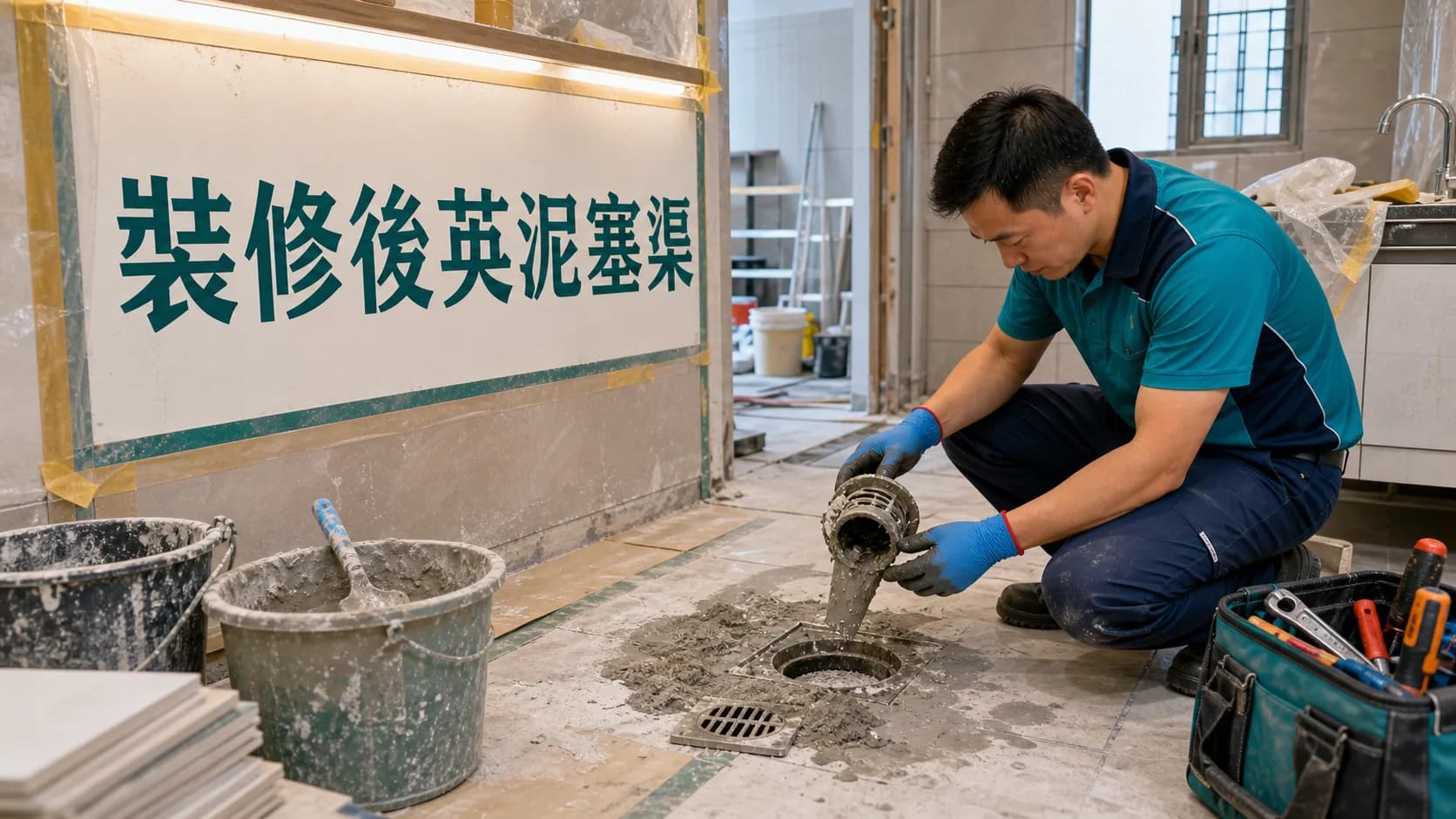
When drainage becomes slow after renovation, especially across floor outlets, basins, showers or sinks, consider cement slurry, grout, grit, stone dust, tile adhesive, plastic and building debris as well as ordinary hair or grease. Once materials harden, chemical cleaner or a plunger may not resolve the obstruction.
Stop using affected outlets. Do not add drain cleaner or flush sediment deeper with large volumes of water. Record levels, drainage speed, grey or white deposits, renovation dates and affected points. Assess clearance, desilting, cleaning or CCTV.
This guide concerns cement, grout and sediment blockages. For smells, gurgling or water-seal problems after alterations, see post-renovation drain odours.
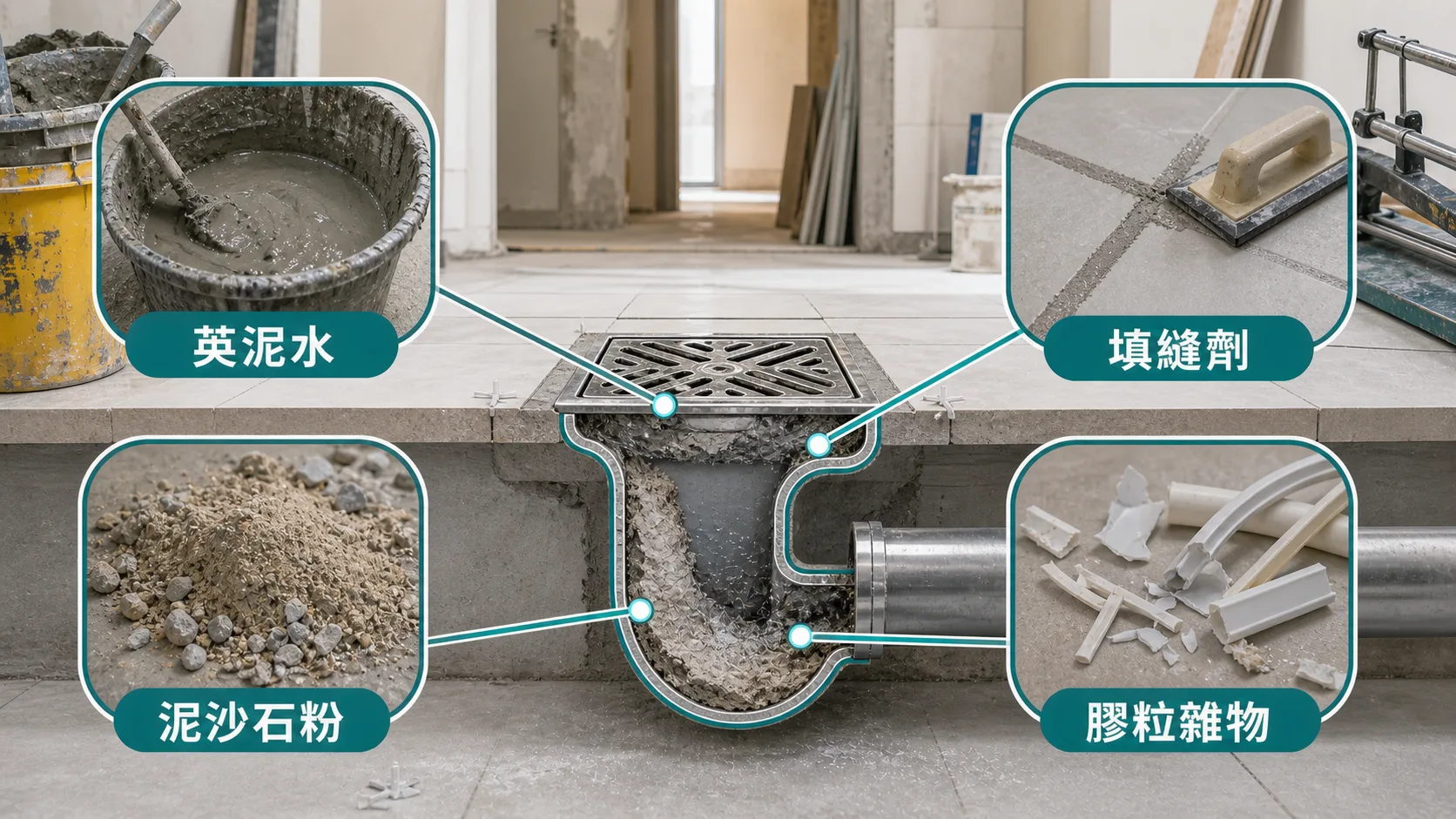
Plastering, tiling and floor repairs can send grey slurry into outlets or basins. It initially looks like cloudy water, but settles in bends, traps and low sections and can harden, reducing flow space. More flushing may push deposits deeper.
Grout, adhesive and waterproofing products can stick to outlets, traps, flexible hoses and pipe walls. Rather than blocking everything immediately, rough deposits may collect hair, tissue and sludge and cause recurring slow flow weeks or months later.
Drilling, cutting tiles, grinding, removing old finishes and site cleaning produce mineral particles that do not dissolve like detergent. They settle in bends, horizontal runs, manholes and low points. Several slow outlets can indicate downstream sediment.
Sealant fragments, plastic, pipe cuttings, screws, plugs, protective film, bags and packaging can catch at openings or bends. Chemicals do not dissolve these objects; sediment and cement may collect around them into a larger mass.
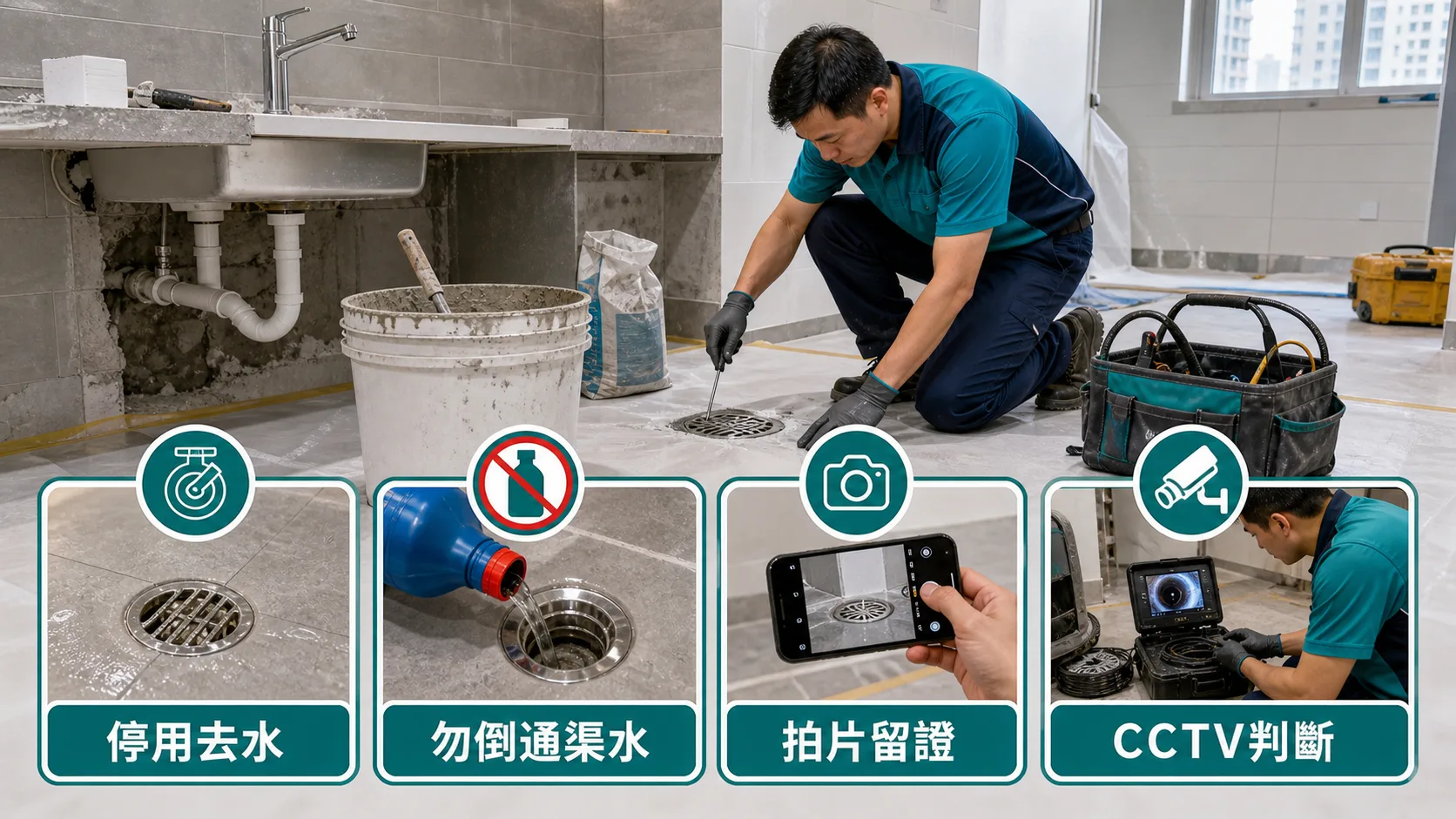
Pause affected floor drains, basins, showers, baths, sinks and laundry discharge. Continuing to run water can push slurry farther inside or cause backflow onto floors and into cupboards.
Strong acidic or alkaline products are generally not the appropriate treatment for cement, grout, stone dust or plastic. In standing water they remain available to splash during dismantling, pumping or clearance. See chemical safety.
Photograph or film flow speed, water levels, outlet close-ups, grey or white material, renovation locations, affected points and dates. These help discussions with contractors, owners, management and insurers.
Suspected hardened material, unknown concealed routes, multiple slow outlets, recurrence or a need for evidence may justify internal inspection to distinguish cement, sediment, objects, cracks, displacement or fall-related problems.
Unblocking: may restore basic flow where loose material or small objects obstruct an accessible short section. Hardened deposits may require more than one ordinary clearance.
Desilting: removes grit, dust and renovation sediment from pipes, manholes and low points. See desilting versus unblocking: removal matters more than creating a narrow passage.
Cleaning or jetting: may suit longer runs, wall deposits or several slow outlets, subject to diameter, material, bends and hardness. Do not blindly jet old, cracked or poorly understood connections. See jetting suitability.
CCTV: supports diagnosis and evidence where hard cement, objects, cracks, displacement or inadequate fall are suspected, or owners, management, contractors or insurers need images. It is an inspection tool, not clearance by itself.
Pipe removal or reconnection: may be needed if material cannot be safely removed or pipes are cracked, displaced or incorrectly laid. Consider pipe repair and alteration instead of repeated unblocking.
See also multiple blocked drains and recurring restrictions.
Responsibility can be as difficult as the technical repair. Keep the renovation schedule, work locations, outlets used during work, cleaning photographs, first symptom date, videos and inspection findings. CCTV evidence of hardened cement, sediment or objects can make discussions more specific.
For one internal outlet, start with its short branch. Similar same-floor, lower-floor or communal problems require management to investigate shared pipes and manholes. Public-drain restrictions may be reported through 1823 channels.
For suspected renovation cement, grout or grit, WhatsApp PipeButler on 5340 0748 with flow video, outlet close-ups, work dates, affected points and chemical-use history. We can assess clearance, desilting, cleaning, CCTV or pipe repair and agree the scope before starting.
Do not expect it to remove cement, grout or mineral dust. These differ from hair and grease; inappropriate chemical use adds risk to later clearance or dismantling.
No. Hair, grease, trap connections, inadequate fall, incorrect alterations and shared drainage are alternatives. Timing, material, extent and recurrence guide diagnosis.
No. Normal flow without recurrence after clearance may not need it. Repeated symptoms, suspected hard deposits, objects, cracks, displacement or evidence requirements make it more useful.
Suitability depends on hardness, pipe material, bends and risk. Loose sediment may suit removal or cleaning. Large hardened masses may require CCTV and local pipe access rather than blind jetting.
The location, hardness and need for desilting, CCTV, pipe access or jetting determine the approach. Send photographs and video through the contact page for assessment.