

A cracked drain or loose joint does not always produce an obvious gush of water. Early signs can include floor-drain odour, damp wall bases, mustiness, ceiling stains, slow flow or a blockage returning days after clearance. However, dry water seals, dirty traps, grease and shared drainage faults can cause similar symptoms.
When recurring odour, wall or ceiling seepage, mustiness and repeat blockages occur together, do not rely on fragrance, bleach or another bottle of drain cleaner. Stop using strong chemicals, record photos and videos, and assess whether odour investigation, CCTV, cleaning or repair is appropriate.
This guide covers warning signs in Hong Kong homes, tenement buildings, older blocks and shops, actions to avoid, useful evidence and when to involve a technician or management.
Four warning signs
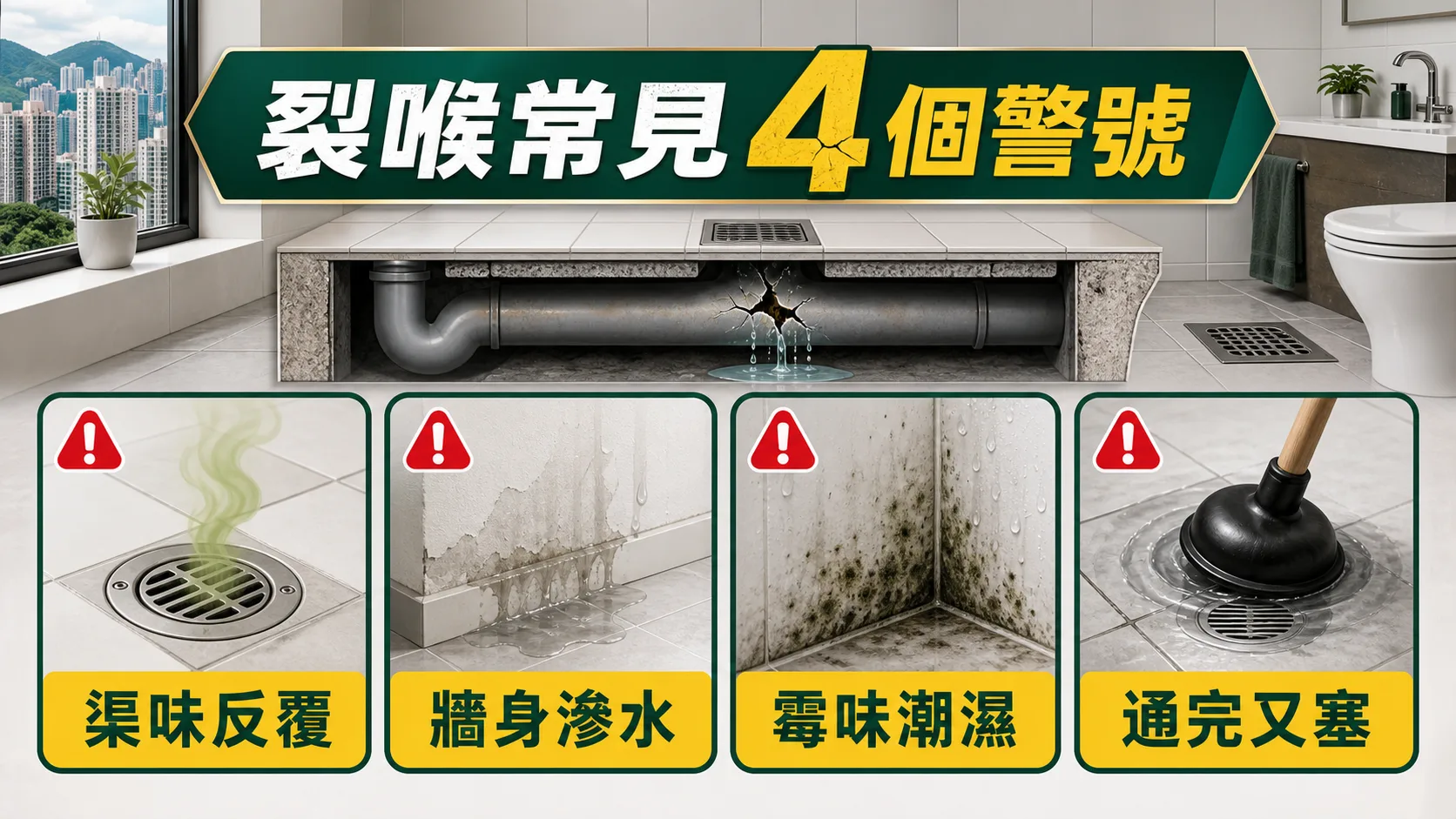
1. Odour returns soon after cleaning
A little-used drain may simply have a dry U-trap. But smells that return soon after replenishment or concentrate at a wall base, cupboard, false ceiling or pipe may involve a crack, loose joint or deeper restriction allowing gases to escape.
2. Damp marks on walls, floors, cupboards or ceilings
Drain leaks can appear as blistered walls, persistently damp tile edges, cupboard stains or brownish marks on the ceiling below. If wetness follows toilet, basin, kitchen sink or washing-machine use, include the drainage pipe in the investigation.
3. Mustiness, black spots and persistent damp
The Chinese source cites CDC mould information emphasising moisture control. Repeated mould after cleaning suggests that surface treatment alone is insufficient. A concealed leak must be located and addressed if it is sustaining the damp.
4. Repeat blockage or several slow outlets
A one-off hair or food blockage usually improves after removal. Rapid recurrence or only temporary improvement from a drain cable can indicate thick deposits, objects, sand, inadequate falls, displaced joints, cracked pipework or shared downstream faults. See repeated blockages and several blocked outlets.
What problems can cracks cause?
A crack can affect more than flow. It may release gases or wastewater into walls and floors, keep building materials damp or allow external water, sand and debris into the pipe. Older buildings, lower floors, shop drainage and newly altered connections deserve careful assessment.
- Odour: cracks, loose joints, failed traps or ventilation faults can admit gases.
- Seepage: wastewater can emerge gradually during use.
- Mould and mustiness: continuing moisture can affect cupboard bases, ceilings, wall bases and floor edges.
- Repeat blockage: cracks, offsets, corrosion and settlement can trap grease, paper, sand and objects.
- Unclear responsibility: disputes involving neighbours, tenants, owners, renovation work or shared pipes need photographic or inspection evidence.
Four things to avoid
1. Repeated strong drain cleaner
Acid or alkaline products cannot repair cracks, offsets, collapsed pipes or loose joints. In standing water, old pipes or leaks, chemicals increase skin, eye, fume and later handling risks. Tell the technician what was used before pipe opening or jetting. Read drain-cleaner safety.
2. Forceful plunging or maximum-pressure jetting without assessment
Jetting can remove grease and sand, but cracked, corroded, loose or possibly collapsed pipes need assessment of condition and access first. Describe previous leaks and recent connections, especially in older buildings, and consider imaging where appropriate.
3. Permanently sealing outlets or masking smells
Tape, plugs or cement can conceal seal, ventilation, blockage and pipe defects, making future backflow harder to diagnose. Replenish a little-used trap first; rapidly returning odour needs investigation.
4. Opening walls or floors without locating the problem
Guesswork can cause unnecessary damage to cupboards, tiles and ceilings. Record evidence and identify affected outlets before deciding on CCTV, moisture assessment, controlled water testing or other site checks.
How should suspected cracks be investigated?
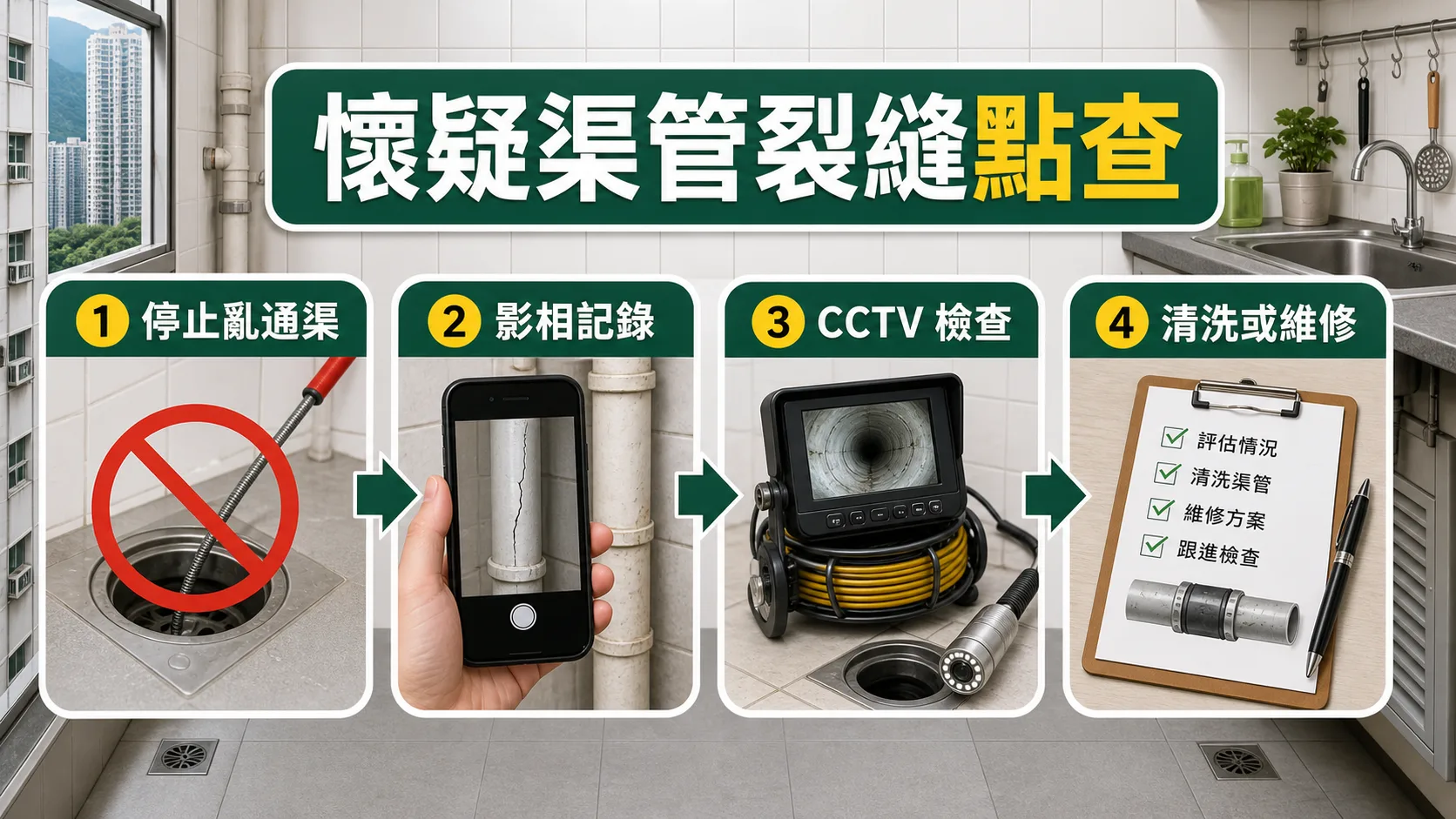
- Stop repeated chemical or forceful clearing: stop water use if there is sewage, obvious leakage or water near electrical equipment, and prioritise safety.
- Record evidence: photograph stains, mould, outlets, pipes, cupboards and ceilings; record backflow and timing, including before-and-after changes during use.
- Establish the extent: one outlet, a room, several outlets or neighbouring/lower units? Wider symptoms can indicate downstream branches, chambers or shared pipes.
- Select checks: inspect seals and traps for odour; consider CCTV for repeat blockage or concealed defects, controlled testing for seepage and desilting for sediment-filled low points.
- Clean or repair: grease and sand may need pipe cleaning; cracks, offsets, loose joints or severe corrosion need an appropriate repair or replacement plan.
When is CCTV useful?
CCTV is valuable where the cause is unclear or evidence is needed: repeat blockage, concealed routes, post-renovation problems, suspected cracks or offsets, low-floor backflow or recurrent shop drainage trouble. Images of grease, sand, objects, cracks, deformation, standing water and connections can support discussions with owners, management, contractors or insurers.
It has limits. Full pipes, narrow access, tight bends, thick grease and an impassable blockage restrict the view. Basic unblocking or removal of standing water may be required first.
How do dry traps differ from cracked pipes?
A smelly floor drain is not proof of damage. Replenish an infrequently used outlet with about half a litre of clean water and remove accessible dirt. Sustained improvement suggests a seal or deposit issue. Rapid recurrence with seepage, mustiness, several smelly outlets or repeat blockage warrants deeper checks. Read water-seal guidance and bathroom drain odour.
Private or shared drainage?
Start locally for one slow basin or floor drain. Several outlets in one bathroom may share a branch; several rooms, lower units, neighbours or a row of commercial outlets may indicate a shared branch, chamber, main drain or public drainage issue. Public-road flooding and public blockages should use 1823 or the relevant department's reporting route.
For shared problems, repeated clearing inside one unit is unlikely to resolve everything. Provide management or owners with images, timing, extent and previous repair records, then coordinate CCTV, chamber inspection, desilting or repair as needed.
Cleaning, local repair, replacement or management coordination?
Grease, sand and soap may respond to cleaning; objects and renovation debris need removal. Cracks, loose joints, offsets, collapse, severe corrosion or poor falls can require local repairs, replacement or new connections. Shared pipework needs coordination. Repeating the same unblocking method is not a solution to every recurrence.
Work planning depends on access, diameter, location, concealed sections, dismantling, out-of-hours access, reporting and common parts. See planning a drainage visit and contact PipeButler with site photos and videos.
Frequently asked questions
Does a crack always visibly leak?
No. Early signs may be odour, damp or repeated blockage, and leakage may occur only during use. Record stains, mould and marks on the ceiling below promptly.
Does drain odour prove a crack?
No. Dry seals, deposits, blockage, siphonage, ventilation and shared drains are other causes. Persistent odour with seepage, mustiness or slow flow deserves closer investigation.
Can I use drain cleaner on a suspected crack?
It is not recommended. Chemicals cannot repair it and may remain in the pipe, increasing corrosion, fume and handling risks. Disclose any previous use.
Is CCTV always necessary?
No. It is valuable for concealed, recurrent or unclear problems and evidence requirements. An obvious visible leak may first need direct inspection and repair assessment.
Can jetting damage a pipe?
Suitable methods and pressure can clean sound pipes, but old, cracked, corroded, loose or possibly collapsed sections need assessment. Equipment settings must match material, diameter, deposits and condition.
What should I send the technician?
Photos of outlets, leaks, mould, stains, cupboard bases and false ceilings; videos of slow flow or backflow; the last clearing date; chemical-use history; affected outlets; floor level and building background.
WhatsApp PipeButler on 5340 0748 with photos, videos, timing and locations to assess whether a site visit, CCTV, cleaning or repair investigation is appropriate.