

Loading page…
Loading page…
Use the affected area and timing to distinguish private outlets, shared stacks, chambers and public drainage.
WhatsApp with the problem and district, and we will confirm available timing.
Drainage problems in older tenement and mixed-use buildings rarely end with a bottle of drain cleaner. Ageing pipes, past alterations, heavily used shared stacks, chamber sediment, shop grease, dry seals and poor ventilation can produce similar symptoms: odour, slow flow, backflow, leakage and mustiness.
Establish whether one outlet, several outlets, neighbours, lower floors or chambers are affected. One point usually starts with local investigation; multiple outlets, low-floor backflow or overflowing chambers suggest shared or downstream drainage. WhatsApp PipeButler on 5340 0748 with building age, floor, affected points, photographs, video and timing to assess odour investigation, unblocking, cleaning, desilting or CCTV.
The five warning signs below help organise evidence for a technician, manager or owner. They do not replace inspection.
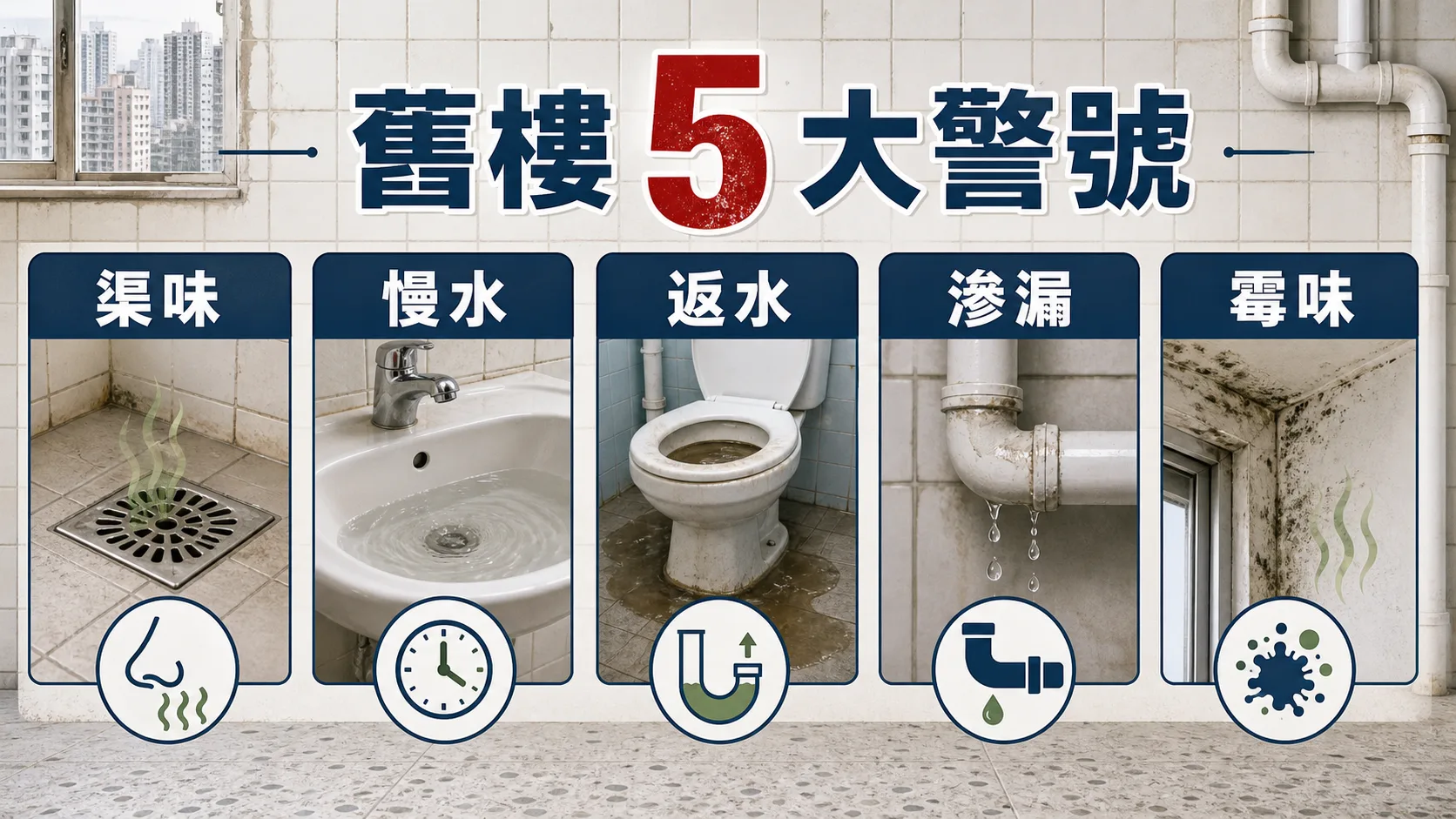
A dry floor-drain seal, grease or soap in traps, inadequate anti-siphonage or a leaking joint in a wall, ceiling or service shaft can cause a local smell.
Record timing. A smell confined to one outlet suggests its trap and nearby joints; smells following flushing, upstairs water use, extractor operation or rain make shared pipework, ventilation and downstream pressure more relevant.
Hair, soap, grease, sand, rough old cast-iron surfaces, inadequate fall, renovation debris and shared-pipe deposits can all reduce flow. Brief improvement after clearance warrants review of recurrence causes, not repetition of the same method without reassessment.
One slow basin starts with its trap and horizontal branch. Bathroom, kitchen and toilet affected together, especially on a low floor, requires shared drainage to be considered.
Water rising through a floor drain during flushing, bathroom gurgling when the kitchen discharges, rain-related low-floor backflow or sewage from a chamber can indicate downstream obstruction, sediment, reduced main capacity or public drainage problems.
Stop affected discharge, record conditions and notify management or the owner. Do not add strong chemicals or open chambers yourself. Depending on the location, assessment may involve clearance, desilting, CCTV or enquiring through 1823 about the public drainage route.
Damp walls, ceiling stains, musty shafts, wet skirting and lower-floor drips can involve cracked waste pipes, loose joints, waterproofing or concealed services. A blockage need not be present for dampness, odour, insects and finish deterioration to develop.
If smell accompanies wet marks, read pipe-crack warning signs before deciding on access, CCTV or a repair report.
Moving sinks or toilets, adding a washer outlet, changing floor drains or enclosing pipes can introduce inadequate traps or falls, venting problems, leaky joints or building debris.
Do not conceal the smell with fragrance or a cover alone. Keep drawings, site photographs and the symptom timeline so the altered private pipework can be assessed.
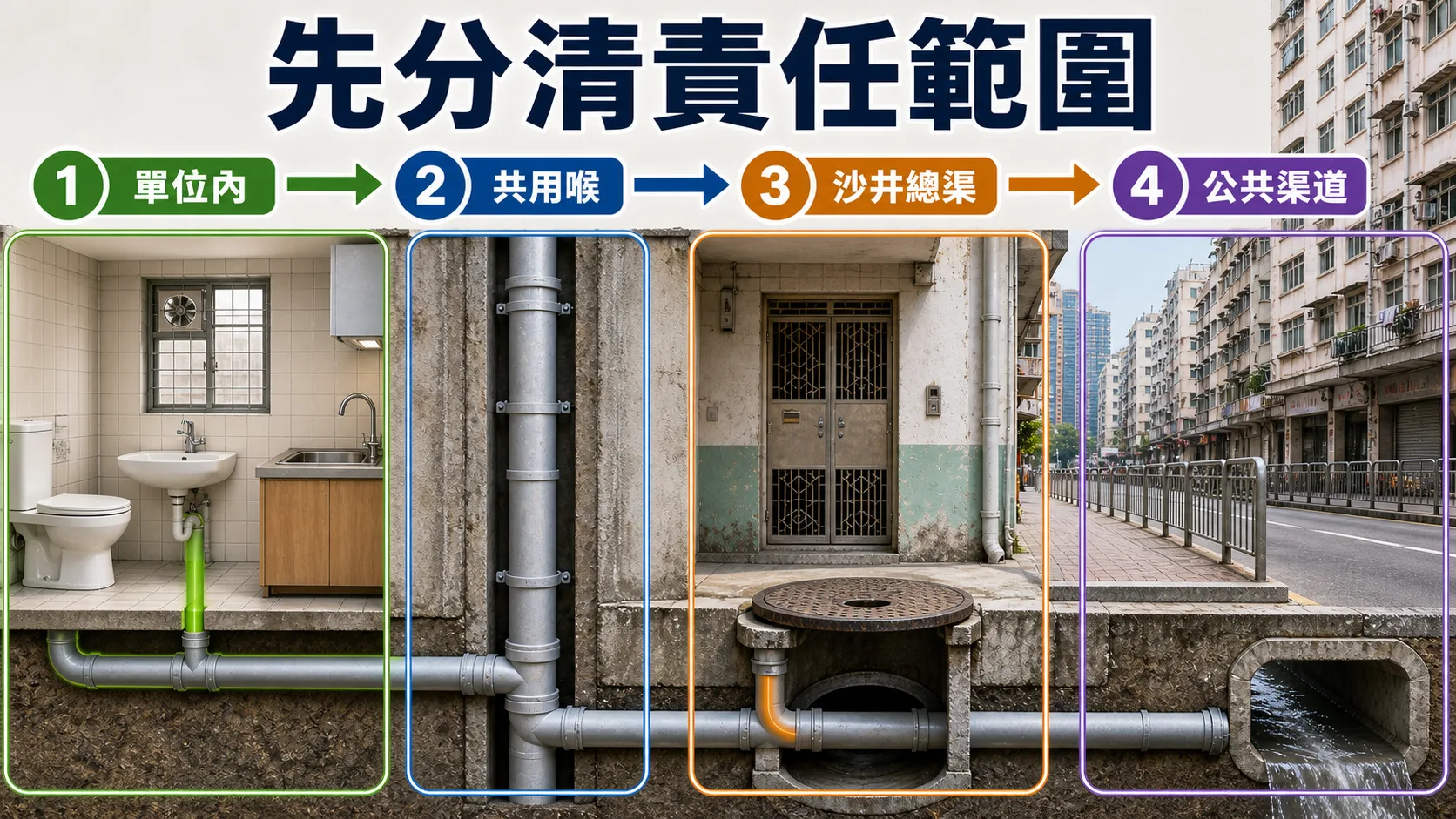
One affected basin, sink, floor drain or washer outlet calls for checks of the trap, seal, cover, visible deposits and nearby branch. Odour investigation, unblocking or cleaning may be suitable.
Noise or smell during upstairs discharge, several households near one shaft or recurrence at the same vertical position suggests a shared stack, vent or branch connection. Gather management and neighbour observations; sectional testing or CCTV may help locate the fault.
Low-floor backflow, smelly shop drains, full rear-lane chambers and grease near food premises often involve underground horizontal drains or mains. Desilting, suitable jetting or sectional inspection may be required, with overflow control.
Street, public-space, stormwater or public-sewer problems follow a different reporting route, often through management, 1823 or the relevant department. Record safe exterior observations, backflow direction, time and location to help establish the boundary.
WhatsApp 5340 0748 with photographs, video and these details. PipeButler will help assess whether the issue is private, shared, chamber-related or public and suggest the next step. Contact us to discuss the scope.
No. Dry seals, dirty traps, cover gaps, cracks, inadequate venting and alterations can all cause it. Several outlets, neighbours or lower floors affected together make shared drainage more likely.
Yes. Shared downstream pipes, chambers and mains may be involved. Stop affected discharge, record conditions and notify the owner, manager or responsible party.
Sometimes, after assessment. Suspected cracks, loose joints, severe deterioration or uncertain concealed routes call for sectional checks and possibly CCTV rather than indiscriminate pressure.
No. A local restriction can start with visible fittings, traps and branches. Recurrence, suspected damage, concealed routes, renovation history and evidence requirements increase its usefulness.
No. Waterproofing, condensation, external water ingress and other pipes can be responsible. A leak near waste pipes, shafts, toilets, floor drains or the ceiling below, accompanied by sewage odour, justifies checking cracks and joints.