
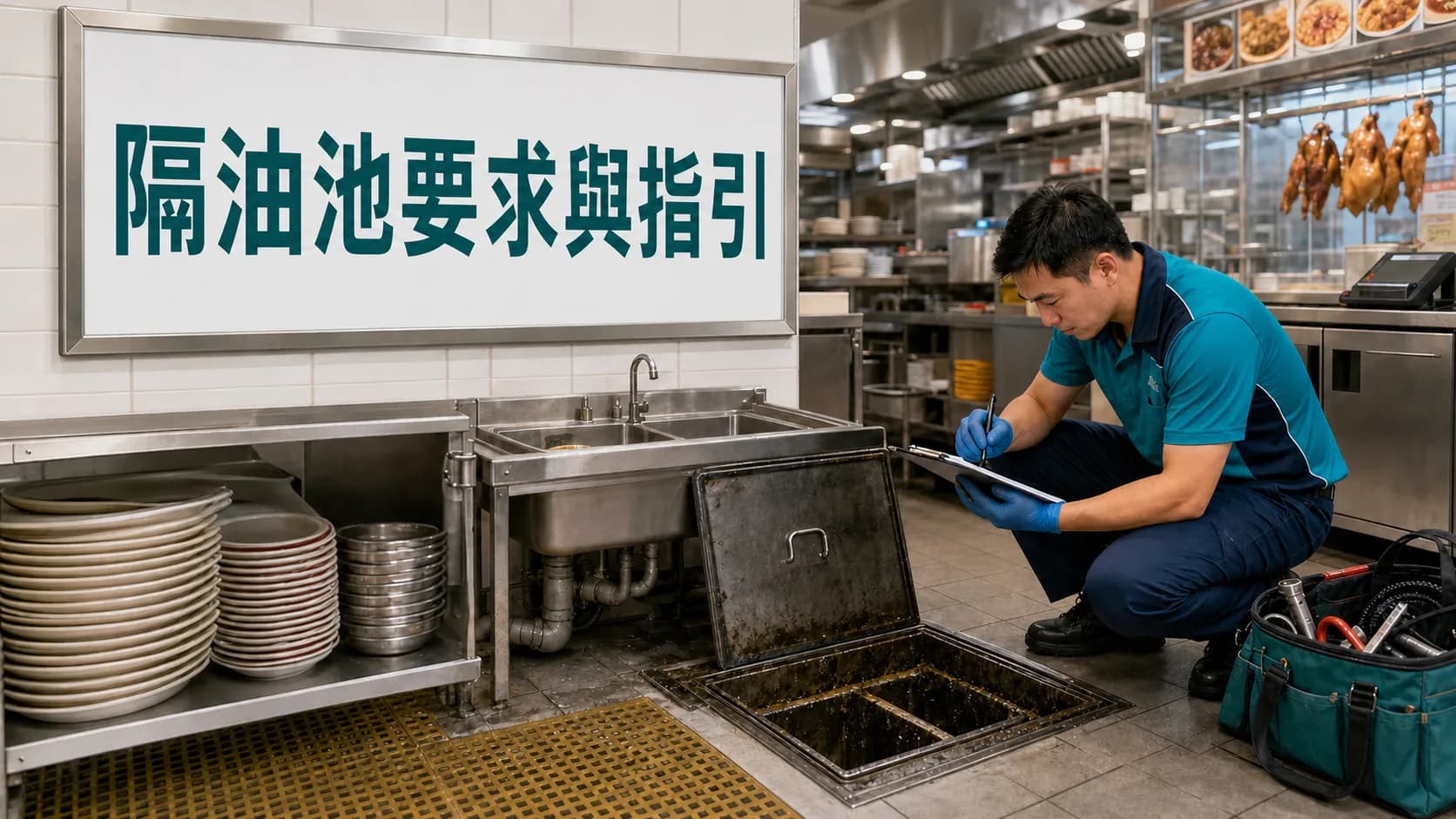
People researching grease-trap requirements usually want practical answers for a restaurant, cafe, food factory or central kitchen: what must the operator manage to avoid grease, odour, blockages and inspection problems? Installing a box is only one part of the answer. Capacity, actual kitchen load, cleaning frequency, waste disposal and downstream drainage must be managed together.
This is an operational and drainage-maintenance guide, not legal advice. For a new licence, plans, alterations, drainage design or a formal compliance determination, consult the relevant professionals, owner, management office or authority. PipeButler can assist with grease-trap cleaning, desilting, downstream pipe cleaning, blockage work and maintenance records.
The practical message from the cited official guidance is that greasy wastewater from food premises, particularly washing sinks and cooking areas, should pass through an appropriate grease trap before entering the foul sewer. The trap needs adequate capacity, accessible inspection and cleaning, and proper disposal of removed grease and sediment. Start with how grease traps work or the restaurant cleaning guide.
Four core management requirements
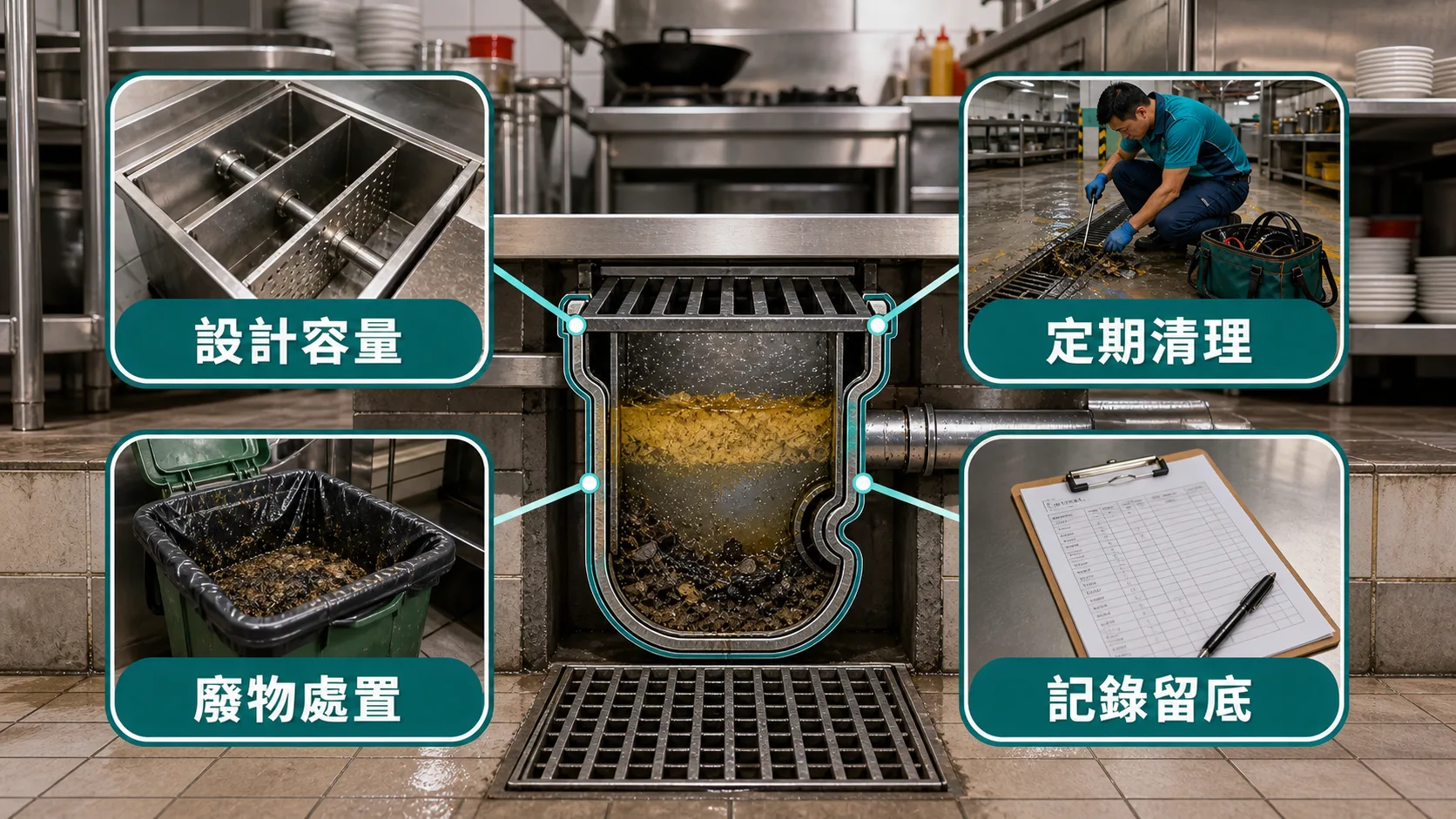
1. Capacity must suit wastewater and grease loads
A grease trap provides time for grease to float and solids to settle. FEHD guidance calls for enough capacity to handle busy-period wastewater and a design that separates grease effectively while allowing cleaning and inspection. If renovation adds sinks or dishwashers or changes discharge volume, check the approved plans and actual load rather than assuming the existing trap remains sufficient.
2. Clean regularly instead of waiting for overflow
Grease and sediment accumulate because the trap is doing its job, and they must be removed. The FEHD Food Hygiene Code recommends regular inspection, preferably at least daily, and prompt removal when grease occupies roughly the upper 30% of the liquid depth. This is a cleaning trigger, not a fixed interval that suits every restaurant. Adjust frequency to meal output, grease loading and inspection records.
3. Removed waste must not go back into drains
EPD guidance warns against disposing of grease-trap waste into toilets, stormwater inlets, open drains or manholes. Its guidance describes sealed, leak-proof bag disposal with other kitchen waste for material removed from small traps, and reputable collection arrangements for large traps. Confirm arrangements applicable to the premises and waste. Keep a record of collection methods, the cleaned scope and photographs so grease is not merely moved downstream. See grease-trap waste disposal.
4. Keep a maintenance record
EPD recommends retaining cleaning records. Useful entries include date, time, responsible person, areas cleaned, material removed, photographs, odour or slow-flow observations and the next inspection. Follow any additional format required by the licence, building management or the operator's own procedures.
The approved layout and actual kitchen must agree
A new operator may know that a grease trap exists without checking plans against the actual sinks, dishwasher, floor drains, discharge route and business model. Review capacity and cleaning frequency after fit-out changes, added equipment, pipe alterations, a tenant change or a switch to food producing more grease.
PipeButler does not replace licensing or design professionals. From a maintenance perspective, we can assess cleaning access, thick grease layers, odour, downstream slow flow and grease in chambers, and discuss desilting or pipe cleaning.
What does the upper 30% of liquid depth mean?
As the floating grease layer thickens, useful space and separation time decrease. Grease can pass through to downstream pipes, cool on their walls and contribute to slow sinks, odour, floor-drain backflow or greasy chambers.
The cited FEHD trigger refers to the upper 30% of liquid depth being occupied by grease, not a vague statement that the trap is 30% full. It is not permission to ignore earlier problems. Different menus and discharge loads produce different accumulation rates, so daily observations are more reliable than one universal cleaning interval.
An operating checklist
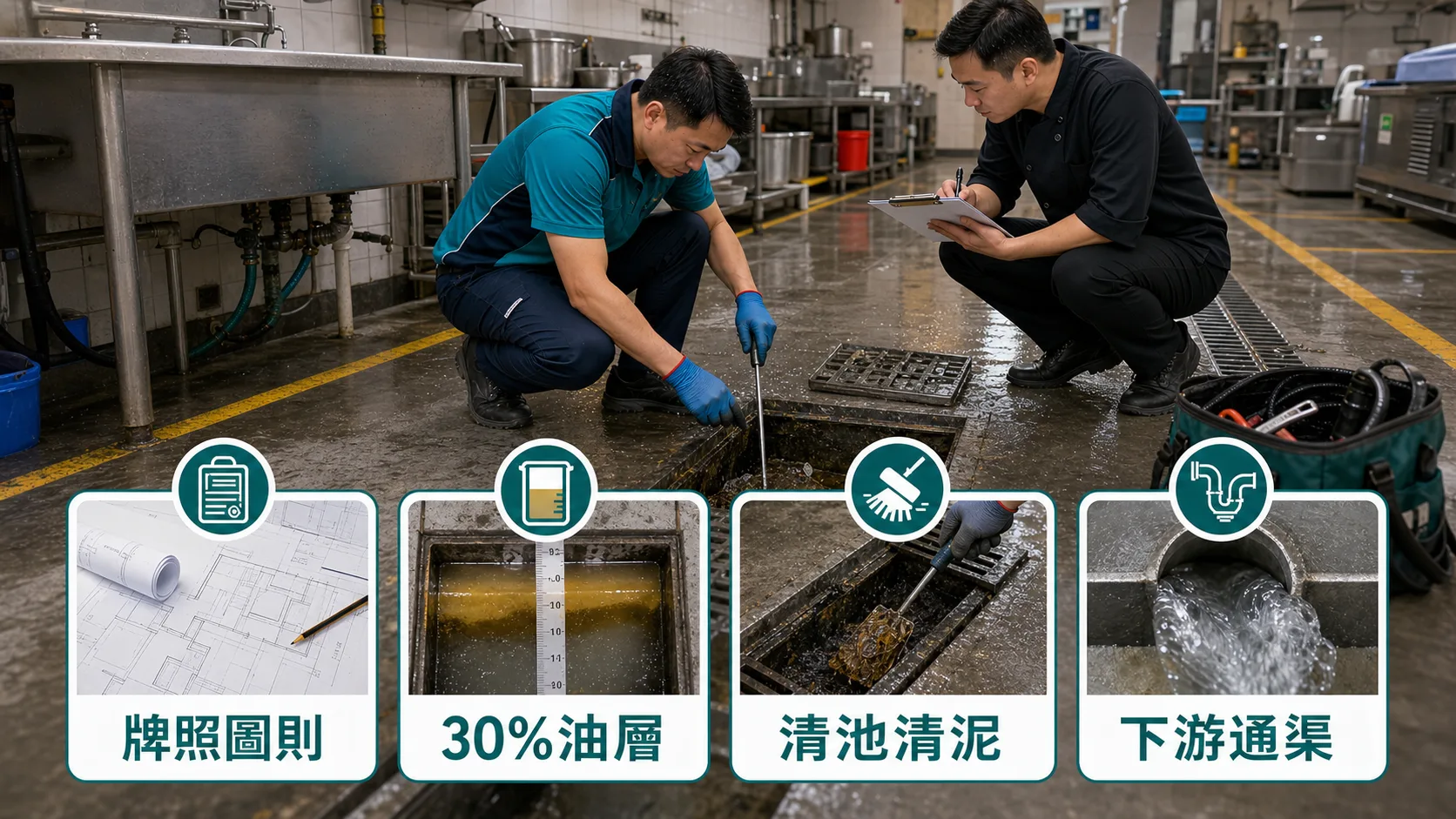
Plans and equipment
Retain current kitchen plans and drainage information. Check the positions of sinks, dishwashers, floor drains, the grease trap and chambers. Resolve differences between drawings and actual equipment, including responsibilities and professional requirements following alterations.
Grease layer and water level
Inspect and record grease, floating material, sediment and water level, preferably daily. Arrange cleaning when the cited grease-depth trigger is reached or earlier if slow discharge, overflow or abnormal accumulation appears. Smell alone is not a reliable indicator.
Clean the trap and sediment
Do not remove only floating grease. Inspect bottom sludge, deposits around inlets and outlets, baffles and channels. A trap that looks skimmed can still have very little effective capacity.
Check downstream drains
If drainage remains slow immediately after cleaning or blocks again within weeks, investigate the downstream pipes. See desilting versus unblocking and assess whether pipe cleaning, jetting or CCTV is appropriate.
Why can drains block despite a grease trap?
- Capacity no longer suits demand: the menu, meal volume or washing process has changed.
- Cleaning is too infrequent: accumulated grease and sludge have reduced useful capacity.
- Greasy waste bypasses the trap: hot oil, soup, sauces and food scraps enter drains directly.
- Only the trap is cleaned: grease already in horizontal pipes or chambers continues causing restrictions.
- Records are incomplete: without dates, scope and layer observations, maintenance intervals cannot be adjusted effectively.
How PipeButler can help
For kitchen odour, repeated blockages or maintenance requested by a shopping centre, discuss site inspection, trap cleaning, grease-sludge removal, downstream cleaning, high-pressure jetting and photographic records. Formal licensing, plans, alterations and design approval need the relevant professional or authority alongside maintenance work.
Include the grease trap, sinks, floor drains, chambers and downstream pipes in one maintenance schedule. See cleaning frequency and the commercial kitchen drainage checklist.
To discuss accumulation, cleaning records, downstream grease or after-hours cleaning, send PipeButler photographs, the kitchen layout, food-service type, last cleaning date and symptoms through WhatsApp 5340 0748. Establish whether the next step is trap cleaning, desilting, pipe cleaning, unblocking or an initial licensing or design review.
Frequently asked questions
Must a food premises have a grease trap?
The cited Food Hygiene Code requires greasy wastewater, particularly from washing sinks and cooking areas, to pass through a suitably sized grease trap before discharge to the foul sewer. Confirm the premises' licence conditions, approved plans, design and current departmental requirements.
Can I size a trap using an online formula?
A formula alone is insufficient. Consider fixtures, dishwashers, flow, grease load, operating hours, meals, available space and drainage routes. Have formal design assessed by an appropriate professional.
How often should it be cleaned?
There is no universal number of days. Inspect preferably daily, use the cited grease-depth trigger, respond earlier to abnormal flow or overflow and adjust cleaning to the records.
Can removed waste be poured back into a drain?
No. Keep floating grease, sludge and sediment out of sinks, floor drains, chambers and street drains. Follow applicable disposal arrangements.
What if the kitchen remains blocked after trap cleaning?
Check accumulated material and restricted inlets or outlets first. If drainage remains slow, investigate downstream pipes and chambers and select cleaning, jetting or CCTV according to the findings.
Official references
- FEHD Food Hygiene Code, section 2.12: grease-trap design and capacity.
- FEHD Food Hygiene Code, section 3.1.8: inspection and cleaning.
- EPD: grease traps for restaurants and food processors.
- EPD: grease-trap maintenance.
- EPD: grease-trap waste.
The Chinese source recorded these references as reviewed on 18 August 2026. Licence conditions, approved plans and departmental requirements vary and may change. Confirm formal compliance with the authority and relevant professionals.